Imperial Castle / History
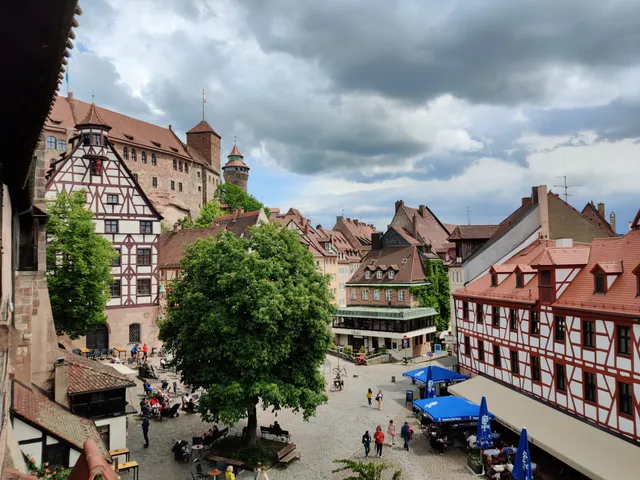
Main information: Imperial Castle of Nuremberg Historical overview The Imperial Castle is the symbol of Nuremberg. Since the Middle Ages its silhouette has represented the power and importance of the Holy Roman Empire of the German Nation and the outstanding role of the imperial city of Nuremberg.
Picture: Aerial view of the Imperial Castle
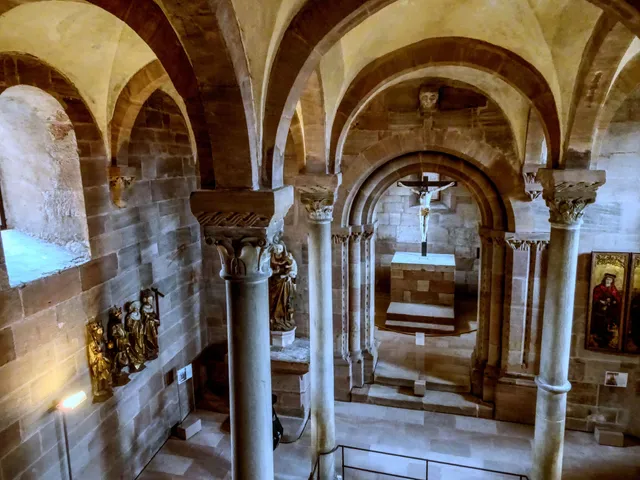
Beginnings Picture: Imperial Chapel
Double Chapel (Imperial Chapel) Photo: Bayerische Schlösserverwaltung
Nuremberg, which was first mentioned in a document as a royal property in 1050, played an important part in the imperial and domestic policy of the Salian and Hohenstaufen kings and emperors. The castle and town were a favourite stopping place for rulers on their journeys through the realm, and court assemblies and Imperial Diets were held here.
In order to provide an appropriate setting for these events, the Hohenstaufens built an extended castle complex on the rocky elevation over the remains of older buildings, which is still largely what we see today. To administer the imperial property and maintain order they installed a burgrave, who resided in the front area of the complex (the so-called Burgrave’s Castle). In 1191 the office of burgrave passed to the Counts of Zollern.
Ownership of the castle With its close connection to royalty and its location at the junction of important highways, Nuremberg soon developed to become an important transit trade and export centre and a financial marketplace. The Letter of Freedom granted by Emperor Friedrich II in 1219 strengthened the civic autonomy of the city, removing it almost entirely from the purview of the burgraves. By the end of the Hohenstaufen period in 1254, it had become an independent imperial city.
It finally emerged victorious from the bitter disputes with the Zollern burgraves, who had acquired extensive territories in Franconia and established seats of government first in the castle of Cadolzburg and later in Ansbach: in 1422 Emperor Sigismund transferred responsibility for the castle to the town, to the benefit of the king and the emperor.
The people of Nuremberg were probably also involved when Ludwig VII of Bavaria-Ingolstadt attacked the Burgrave’s Castle in 1420 and burned it down. In 1427 the city acquired the remains of the Burgrave’s Castle from Burgrave Friedrich VI, who took over a new function as Elector of Brandenburg. From this time on the whole castle complex was in the hands of the city.
Picture: Painting "Maximilian I"
Portal to the Imperial Chapel with portraits of Friedrich III and Maximilian I Photo: Bayerische Schlösserverwaltung
Imperial city and castle in the late Middle Ages In the late Middle Ages Nuremberg ranked as the "most distinguished, best located city of the realm". The city was the scene of numerous Imperial Diets and in 1356 Emperor Charles IV’s "Golden Bull" named Nuremberg as the place where every newly elected ruler had to hold his first Imperial Diet. Nuremberg thus became one of the centres of the empire – in addition to Frankfurt where the kings were elected and Aachen where they were crowned. Most of the emperors paid numerous visits: Ludwig IV "the Bavarian" stayed there 74 times, and Charles IV 52 times. At the same time, however, the castle became less important.
The town hall completed in 1340 was used instead as a place of assembly and from Ludwig the Bavarian on, the emperors preferred the more comfortable accommodation of the patrician houses. In 1423, Sigismund gave the imperial regalia into the keeping of the city, a mark of particular trust. The Habsburgs Friedrich III and his son Maximilian I were the last emperors to reside for longer periods in the castle and city. Their successor Charles V also broke with the tradition of emperors holding their first Imperial Diet in Nuremberg. Because of epidemics raging at Nuremberg he relocated his first Imperial Diet to Worms and did not visit Nuremberg until 1541, on his way to the Regensburg Diet. Nuremberg’s acceptance of the...
Read moreWe recently spent a few days in Nuremburg. One of the most interesting attractions visited was the Imperial Nuremburg Castle. Opening hours are 9am to 6pm (April to Sept) and 10am to 4pm (Oct to March) daily.
Note: You can buy a full combo ticket providing access to all attractions within the Castle (€7 per person). Alternatively, you can buy reduced combo or individual entry tickets for the Double Chapel, Deep Well, Sinwell Tower (temporarily closed) and the Imperial Castle Museum). Wandering the castle area, viewpoints and gardens (free).
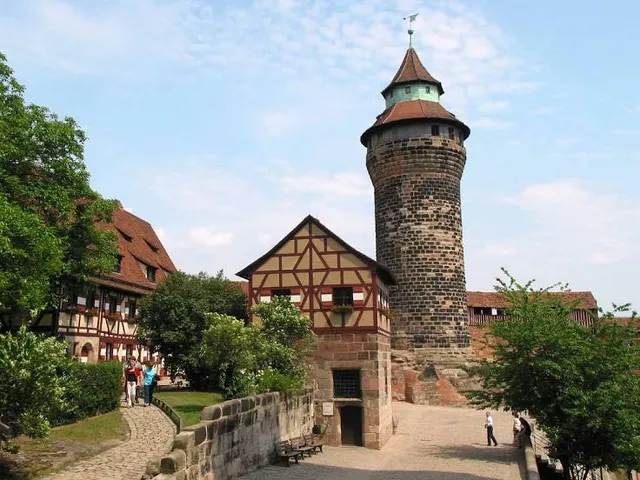
Firstly, the Nuremberg Castle is a medieval period group of buildings perched above sandstone ridges and overlooking the city. It is situated amidst an equally impressive city wall structure which collectively was considered one of Europe's most formidable medieval city fortifications. Today, it is still considered one of Europe's best preserved.
During the Middle Ages, the kings of Germany travelled from one castle to the next throughout the kingdom. This castle in Nuremburg hosted all German kings and Holy Roman Emperors, many on numerous occasions. You can learn about the royals residents and many other interesting facts about Nuremburg's imperial and castle history in the Museum section of the Castle. Entry ticket comes with audio guide, which is very useful if you have time and interest.
We also quite liked the Double Chapel and Palas section of the castle during our visit. This is a neatly preserved section of the castle, again making use of the audio guide helped us better understand what we were viewing. It was a good learning experience.
Another attraction within the castle that requires ticketing is the Deep Well. You'll find it a two-story half-timbered building near the castle entrance. Here you can experience a castle well and independent source of water, reaching 50 metres deep. The well can only be visited by guide every half hour so you need to time your visit if you want to enter.
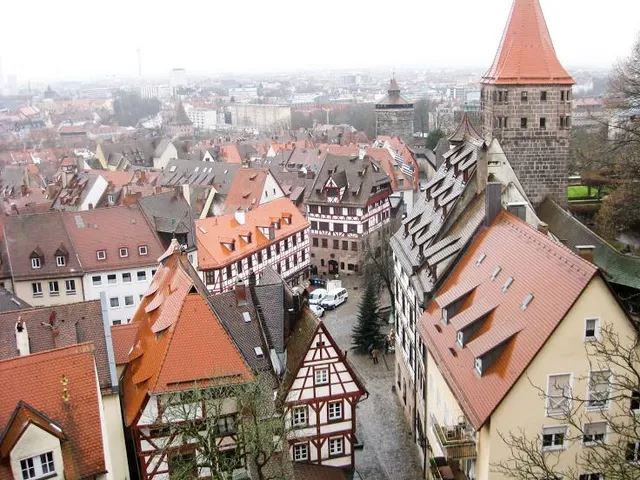
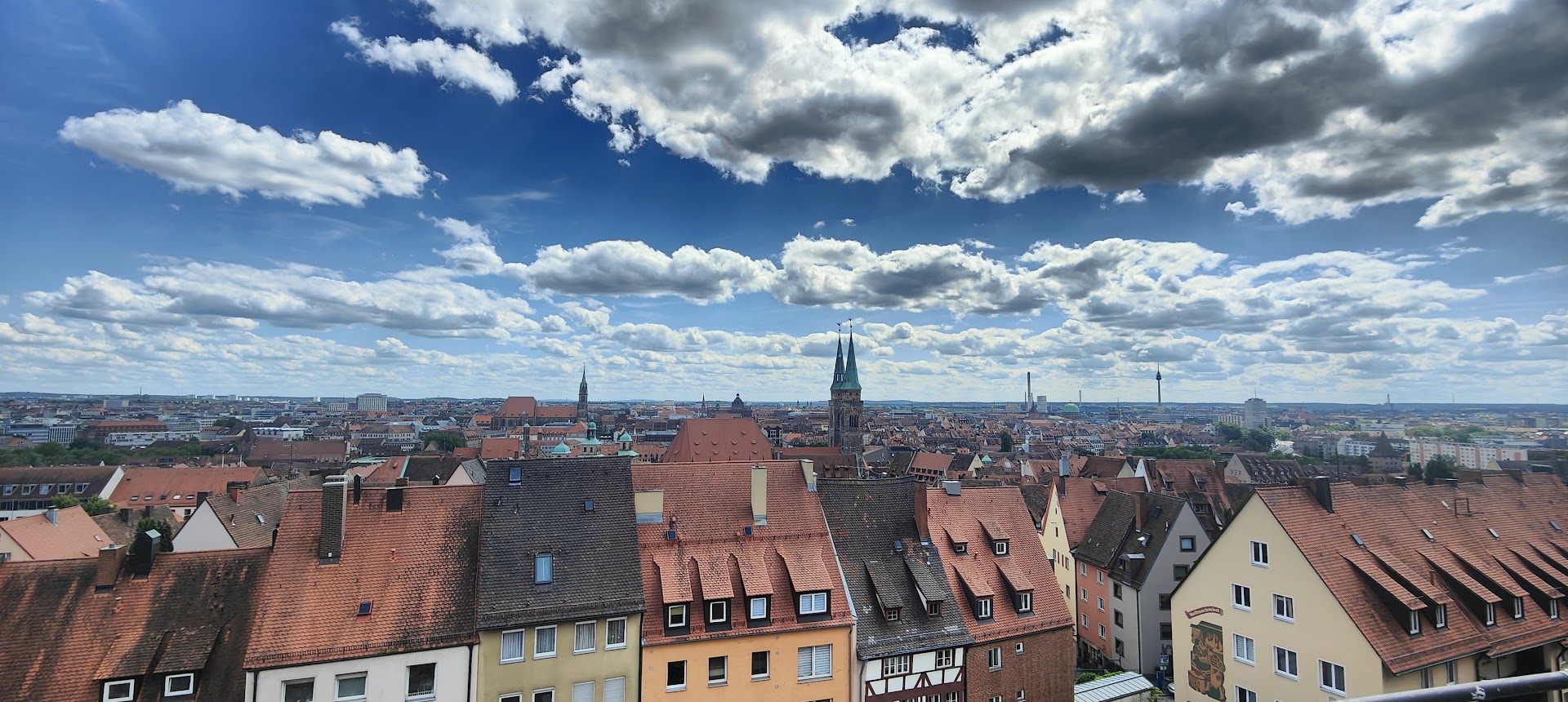
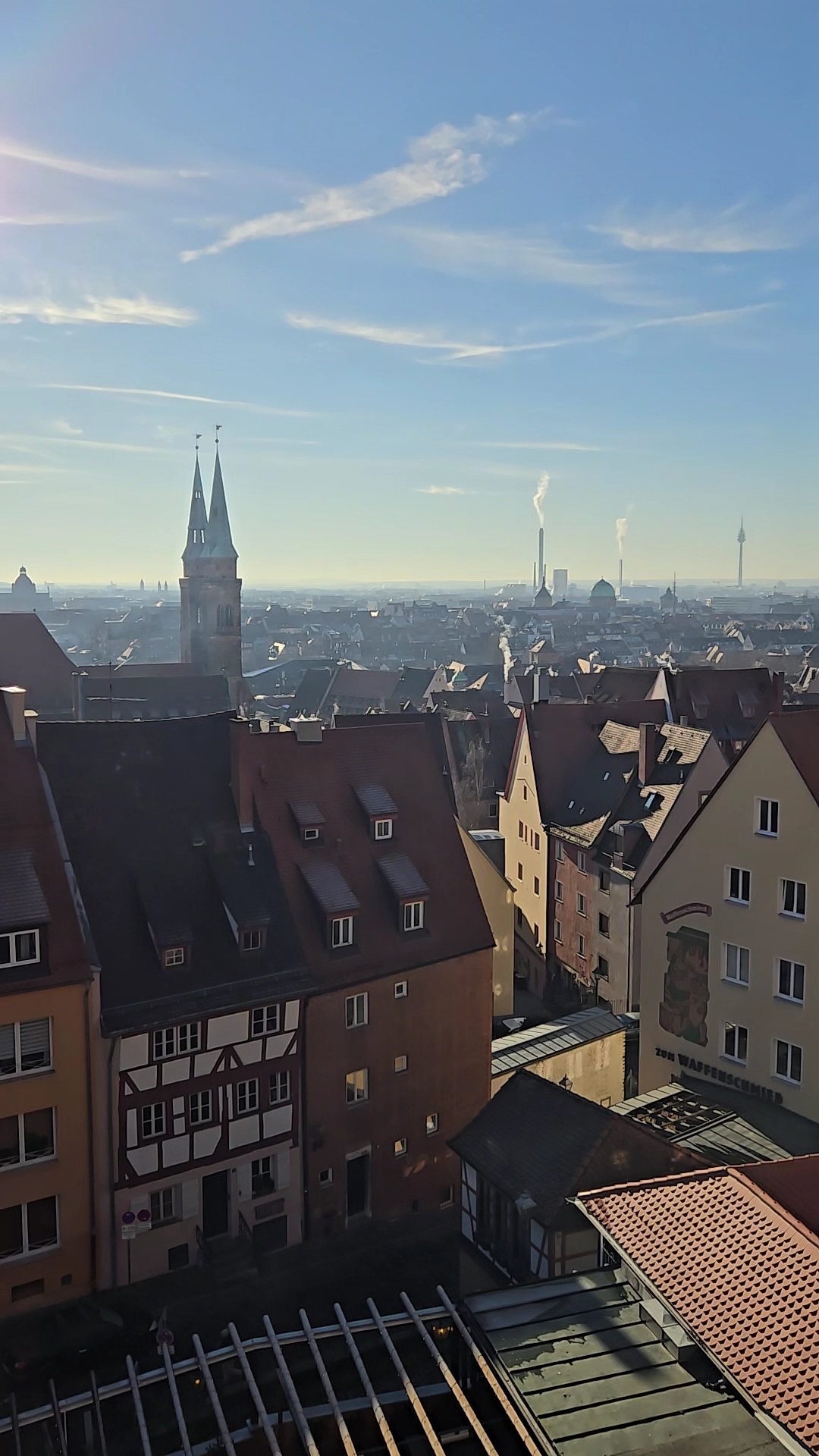
Unfortunately, the 13th-century Sinwell Tower was closed for season or under restorations at the time of our visit, preventing us from visiting this attraction within the Nuremburg Castle. There is a notable viewpoint (free to visit) within the castle grounds from here. Views of the city below were quite impressive from here.
In the end, we quite enjoyed the nearly 2 hours we spent in the Castle and its museum in Nuremburg. This was an educational and entertaining experience well worth making time for during visits...
Read moreVisited this castle on a warm/rainy September 2022 weekend afternoon with our three kids ages 6, 4, and 2 years. FInding parking was horrendous, which we realized during our search was because of a downtown festival of sorts. Much of the street parking is resident-only, and those that were combined for residents/paid ticket holders were full. We ended up finding a spot on Ob.Soldnersgasse, across from the Jugendherberge Nurnberg. We made the 5 minute walk to the castle, and weren't exactly sure where to go, but quickly realized the Imperial component of the castle is the bulk of the sightseeing destination. We walked into the courtyard, found the Kasse across the way past the restaurant on the right, and purchased tickets. Despite being a summer weekend day, there was no line, and the staff was incredibly friendly and spoke English well. We then explored the interior of the imperial castle, which was very well done. Decor, education, information, relics, and art to your heart's content on a pre-determined path through the castle, at your own pace. It was mildly crowded, but not so much so that the experience was negatively affected. There were clean bathrooms near the Kasse, but I don't remember seeing any others elsewhere in the castle. We then visited the Deep Well for one of its guided "tours" (of the one small room) which happen every half hour and last about 15 minutes, before going up to the tower, which has great views and signs pointing to visible landmarks. What was so unique and appreciable were the photos of the scenes before you from WWII era and before. You could look down at a house right in front of you, and then look at a photo and see the destruction caused by WWII bombing. I only wish I could have taken the time to truly appreciate each photo, which was impossible with our three small kids being present. Of note, the tower and well are only accessible with purchased tickets. The grounds and gardens, however, are freely accessible, but we had to give up on our exploration due to rain and my 4 year old's tired state. Walking underneath the castle to the gardens and over what looks like a previous moat then past Hexenhausle was quite fun though! Overall, a fantastic way to spend 1-2 hours even with small children, at a small financial cost, even despite the burden of finding...
Read more