HTML SitemapExplore
logo
Find Things to DoFind The Best Restaurants

Rajon Ki Baoli — Attraction in Delhi

Name
Rajon Ki Baoli
Description
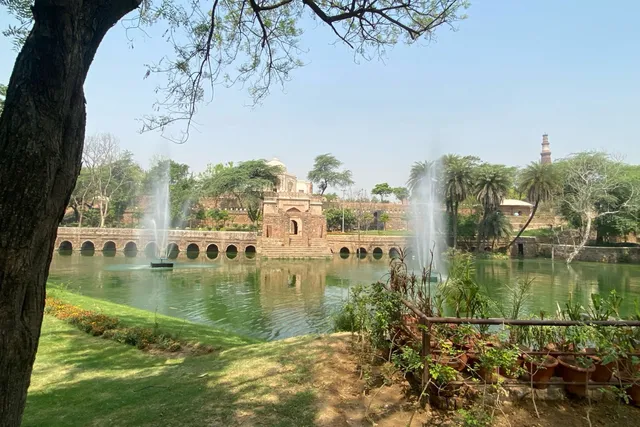
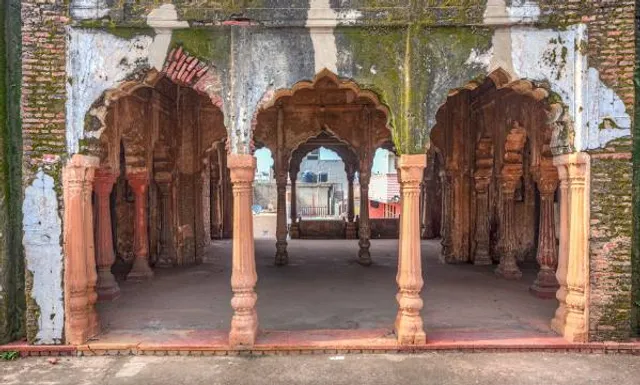
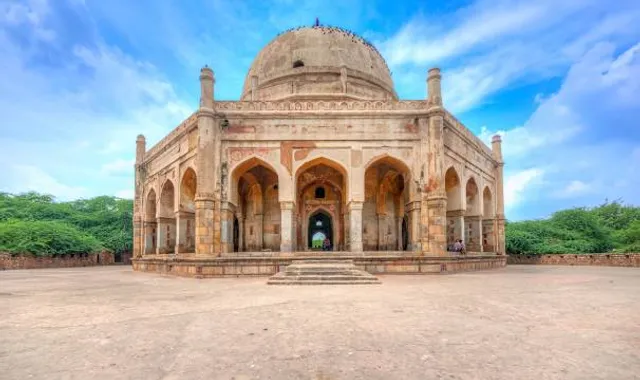
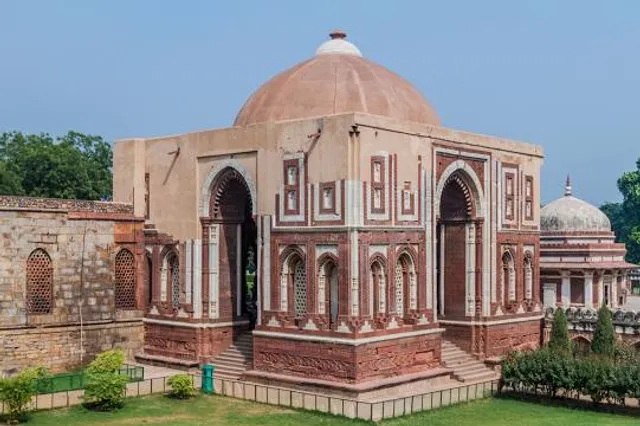
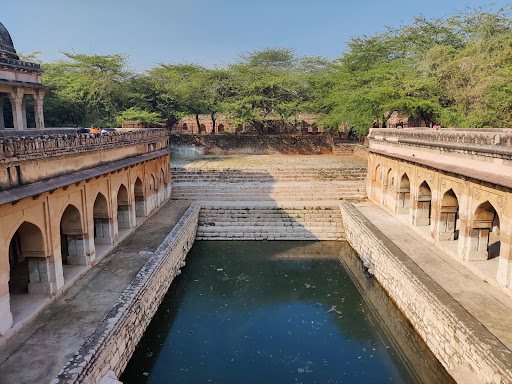
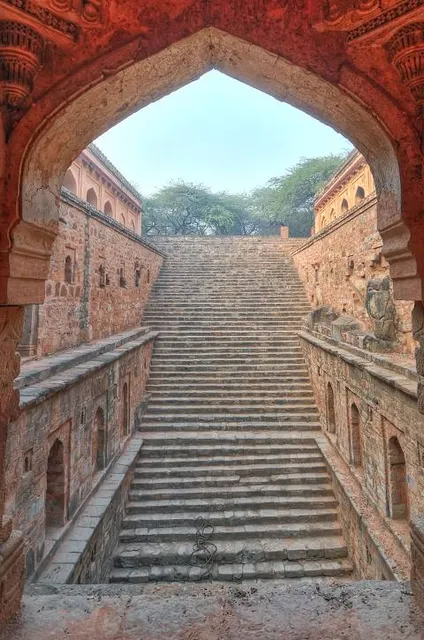
Rajon ki Baoli also referred as Rajon ki Bain is a famous stepwell in Mehrauli Archaeological Park of Delhi, India. It was commissioned by Daulat Khan in 1506 CE, an administrator of the Lodi dynasty of the Delhi Sultanate. The enclosure of Rajon Ki Baoli also includes a mosque and a tomb.
Nearby attractions
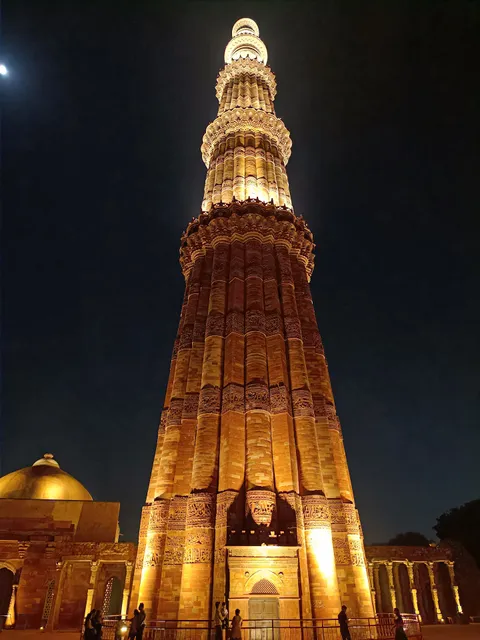
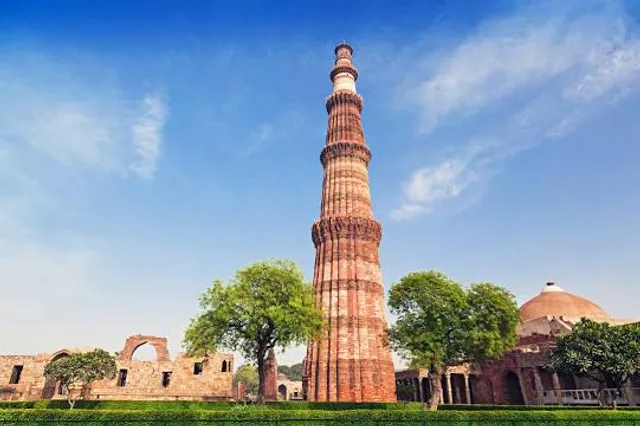
Qutb Minar
Seth Sarai, Mehrauli, New Delhi, Delhi 110030, India
Mehrauli Archaeological Park Heritage Walk
Anuvrat Marg, opposite Qutab Minar Metro Station, Christian Colony, Mehrauli, New Delhi, Delhi 110030, India
Zafar Mahal
Mehrauli Village, Mehrauli, New Delhi, Delhi 110030, India
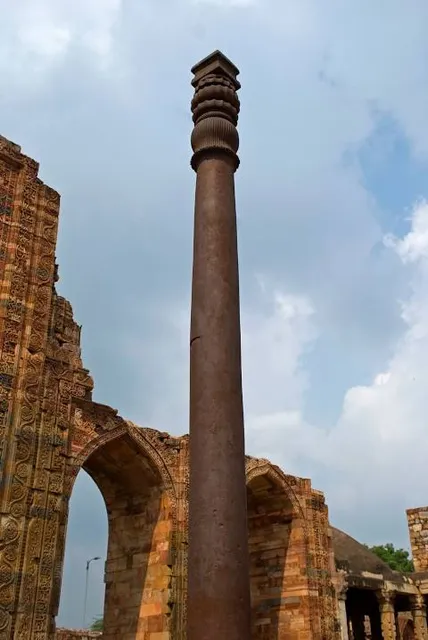
Iron Pillar, Delhi
G5FM+VXW, Mehrauli, New Delhi, Delhi 110030, India
Yog Maya Mandir, Mehrauli
G5FJ+QR2 Yogmaya maa mandir, Seth Sarai, Mehrauli, New Delhi, Delhi 110030, India
Ahinsa Sthal
G5CQ+CW5, Butterfly Park, Qila Rai Pithora, Sainik Farm, New Delhi, Delhi 110030, India
Imam Zamin's Tomb
Qutub Minar Complex Rd, Seth Sarai, Mehrauli, New Delhi, Delhi 110030, India
Sultan Shamsuddin Iltutmish Tomb
G5GM+3RM, Qutub Minar Complex, Qutub Minar Complex Rd, Mehrauli, New Delhi, Delhi 110030, India
Hijron ka Khanqah
G58H+X7P, Paani Tanki Road, Zero Street, Sana'a, 110030, India
Madhi Masjid
G57P+X22, Aam Bagh, Ladha Sarai Village, Mehrauli, New Delhi, Delhi 110030, India
Nearby restaurants
Aban By Thai High
1091, 2nd Floor, Ambawatta Complex, 1, Kalka Das Marg, Mehrauli Village, Mehrauli, New Delhi, Delhi 110030, India
Dramz Delhi
1580/1, KD Marg, Near Qutub Minar, Mehrauli, New Delhi, Delhi 110030, India
Qutab Hotel
Mehrauli Village, Mehrauli, New Delhi, Delhi 110030, India
MALIK DHABA
13/4A, Ward 1, Bhool Bhulayan Road, Mehrauli Village, Mehrauli, New Delhi, Delhi 110030, India
Non veg dhaba
G5CJ+38Q, Ward Number 7, Mehrauli Village, Mehrauli, New Delhi, Delhi 110030, India
SHIVAS CAFE
Ambavata Complex, 1092/5 2nd floor near, Ward Number 1, New Delhi, Delhi 110030, India
Olive Bar & Kitchen
Mile 6, One Style, 8, Kalka Das Marg, Seth Sarai, Mehrauli, New Delhi, Delhi 110030, India
Kathi Rolls
1085/1, Ward Number 1, Mehrauli Village, Mehrauli, New Delhi, Delhi 110030, India
Krunchy Bites
Ward No.1, 1092/1, near Aggarwal Sweets, New Delhi, Delhi 110030, India
PS PIZZA FACTORY
G/Floor, Mehta Chowk, Prop.no.1043, M/18, Ward No 8, Mehrauli, New Delhi, Delhi 110030, India
Nearby hotels
Related posts
Keywords
Rajon Ki Baoli tourism.Rajon Ki Baoli hotels.Rajon Ki Baoli bed and breakfast. flights to Rajon Ki Baoli.Rajon Ki Baoli attractions.Rajon Ki Baoli restaurants.Rajon Ki Baoli travel.Rajon Ki Baoli travel guide.Rajon Ki Baoli travel blog.Rajon Ki Baoli pictures.Rajon Ki Baoli photos.Rajon Ki Baoli travel tips.Rajon Ki Baoli maps.Rajon Ki Baoli things to do.
Rajon Ki Baoli things to do, attractions, restaurants, events info and trip planning
Rajon Ki Baoli
IndiaDelhiRajon Ki Baoli

Basic Info

Rajon Ki Baoli

G5CM+493, Mehrauli Archeological Pk Trl, Mehrauli Village, Mehrauli, New Delhi, Delhi 110030, India
4.1(343)
Open 24 hours
Save
spot

Ratings & Description

Info

Rajon ki Baoli also referred as Rajon ki Bain is a famous stepwell in Mehrauli Archaeological Park of Delhi, India. It was commissioned by Daulat Khan in 1506 CE, an administrator of the Lodi dynasty of the Delhi Sultanate. The enclosure of Rajon Ki Baoli also includes a mosque and a tomb.

Cultural
Scenic
Relaxation
Family friendly
Off the beaten path
attractions: Qutb Minar, Mehrauli Archaeological Park Heritage Walk, Zafar Mahal, Iron Pillar, Delhi, Yog Maya Mandir, Mehrauli, Ahinsa Sthal, Imam Zamin's Tomb, Sultan Shamsuddin Iltutmish Tomb, Hijron ka Khanqah, Madhi Masjid, restaurants: Aban By Thai High, Dramz Delhi, Qutab Hotel, MALIK DHABA, Non veg dhaba, SHIVAS CAFE, Olive Bar & Kitchen, Kathi Rolls, Krunchy Bites, PS PIZZA FACTORY
logoLearn more insights from Wanderboat AI.

Plan your stay

hotel
Pet-friendly Hotels in Delhi
Find a cozy hotel nearby and make it a full experience.

hotel
Affordable Hotels in Delhi
Find a cozy hotel nearby and make it a full experience.

hotel
The Coolest Hotels You Haven't Heard Of (Yet)
Find a cozy hotel nearby and make it a full experience.

hotel
Trending Stays Worth the Hype in Delhi
Find a cozy hotel nearby and make it a full experience.

Reviews

Nearby attractions of Rajon Ki Baoli

Qutb Minar

Mehrauli Archaeological Park Heritage Walk

Zafar Mahal

Iron Pillar, Delhi

Yog Maya Mandir, Mehrauli

Ahinsa Sthal

Imam Zamin's Tomb

Sultan Shamsuddin Iltutmish Tomb

Hijron ka Khanqah

Madhi Masjid

Qutb Minar

Qutb Minar

4.5

(50.1K)

Open 24 hours
Click for details
Mehrauli Archaeological Park Heritage Walk

Mehrauli Archaeological Park Heritage Walk

4.3

(1.7K)

Open 24 hours
Click for details
Zafar Mahal

Zafar Mahal

4.0

(316)

Open 24 hours
Click for details
Iron Pillar, Delhi

Iron Pillar, Delhi

4.6

(1.2K)

Open 24 hours
Click for details

Things to do nearby

Old Delhi Food-Temples-Spice Market & Rickshaw
Tue, Dec 9 • 10:00 AM
New Delhi, Delhi, 110006, India
View details
Same Day Taj Mahal Tour from Delhi by Car
Wed, Dec 10 • 2:30 AM
New Delhi, Delhi, 110001, India
View details
The Chef - Indian Cooking Class
Tue, Dec 9 • 11:30 AM
New Delhi, Delhi, 110063, India
View details

Nearby restaurants of Rajon Ki Baoli

Aban By Thai High

Dramz Delhi

Qutab Hotel

MALIK DHABA

Non veg dhaba

SHIVAS CAFE

Olive Bar & Kitchen

Kathi Rolls

Krunchy Bites

PS PIZZA FACTORY

Aban By Thai High

Aban By Thai High

4.1

(921)

$$$

Click for details
Dramz Delhi

Dramz Delhi

4.1

(3.4K)

Click for details
Qutab Hotel

Qutab Hotel

3.7

(36)

Closed
Click for details
MALIK DHABA

MALIK DHABA

3.6

(179)

Click for details
Get the Appoverlay
Get the AppOne tap to find yournext favorite spots!
Wanderboat LogoWanderboat

Your everyday Al companion for getaway ideas

CompanyAbout Us
InformationAI Trip PlannerSitemap
SocialXInstagramTiktokLinkedin
LegalTerms of ServicePrivacy Policy

Get the app

© 2025 Wanderboat. All rights reserved.
logo

Reviews of Rajon Ki Baoli

4.1
(343)
avatar
5.0
2y

Introduction: Step into the mystical world of Rajon Ki Baoli, where time stands still and echoes of the past reverberate through its ancient walls. This hidden gem in Delhi is more than just a historical site; it's a portal that transports you to a bygone era, enticing you with its enigmatic charm.

Ambiance: As I descended the steps into the depths of Rajon Ki Baoli, a hushed silence enveloped me. The air was thick with anticipation, and the play of light and shadows created an ethereal atmosphere. The intricate stone carvings whispered tales of forgotten civilizations, while the symphony of birdsong mingled with the rustling leaves, offering a serenade to the senses.

Architecture: Every nook and cranny of Rajon Ki Baoli is adorned with architectural marvels, leaving me awestruck. The symmetrical arches and meticulously carved columns showcase the craftsmanship of a bygone era. It's like stepping into a masterpiece where each stone has a story to tell, and every corner is a work of art waiting to be discovered.

Historical Significance: Rajon Ki Baoli bears witness to the passage of time, holding within its walls the secrets of centuries. It served as a reservoir during the Mughal era, ensuring a steady water supply for the inhabitants of this bustling city. Standing here, I couldn't help but feel a profound connection to the generations that have passed, marveling at their ingenuity and foresight.

Serenity Amidst Chaos: Surprisingly, amidst the chaos of Delhi's urban sprawl, Rajon Ki Baoli provides a serene escape. Away from the hustle and bustle, this oasis of tranquility offers respite to weary souls. It's a sanctuary where one can lose themselves in quiet contemplation, away from the cacophony of city life.

A Hidden Treasure: Rajon Ki Baoli is not just a tourist spot; it's a testament to Delhi's rich heritage. While many flock to popular landmarks, this hidden treasure lies waiting, ready to reward the curious and the adventurous. It's a place that deserves to be cherished and protected, for it holds the key to unraveling the mysteries of our past.

In conclusion, Rajon Ki Baoli is a haven for history enthusiasts, architecture admirers, and anyone seeking solace in the midst of Delhi's chaos. It's a unique place that invites you to listen to the whispers of the past and immerse yourself in the beauty of forgotten times. A visit here is an experience unlike any other, leaving an indelible mark on your...

   Read more
avatar
4.0
7y

The Baolis of Mehrauli are three water wells approached through single stage or three stage steps known as stepwellslocated in Mehrauli in Delhi, India, in theMehrauli Archaeological Park mainlined by the Archaeological Survey of India. These are the Anangtal Baoli, the Gandhak Ki Baoli, and the Rajon Ki Baoli. These were built below the ground level as ground water edifices and in the context of Hinduism they were built as shrines in medieval times.

Location

The three baolis in Mehrauli are located in the South West district of Delhi. They lie in the Archaeological Park maintained by the Archaeological Survey of India near Qutab Minar. Gandhak ki Baoli (to the south of theAdham Khan's tomb) is at one extremity of the Archaeological Park.Rajon ki Baoli is 200 metres (660 ft) away from this baoli.

History

The oldest of the three baolis, Anangtal Baoli, was built in the 11th century (1060 AD) by Rajput king Anangpal II of theTomar dynasty in the then capital area of Lalkhot of Delhi. Gandhak ki Baoli is believed to have been built during the 13th century when the slave dynasty of the Delhi Sultanate Iltutmish (1211–1236 AD) ruled over Delhi. The Rajon ki Baoli is named after the rajmistries or masons who used it. It was built during the 16th century, by Daulat Khanduring the rule of Sikander Lodhi of theLodhi Dynasty.

Features

Rajon ki Baoli

Rajon ki Baoli

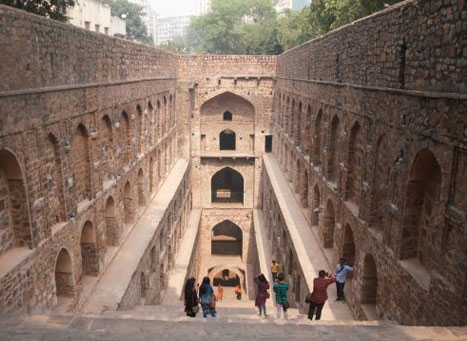
The Rajon ki Baoli (28°31′13″N77°11′00″E), rectangular in plan, is the largest and most ornamented of all the three baolis in Mehrauli. It has a series of steps forming four stages, each in descending size, with floors at each stage, leading to the water level from the surrounding ground level. Its appearance is like a courtyard of the medieval period with passages marked by stylized carved symmetrical arches spanning the columns in North Indian architectural style, which form the three sides of the baoli. There are rooms at each floor which once provided a cool resting place for people. With its incised plaster work, the baoli is an elegant architectural edifice. When built the water used to reach up to the third stage. Over the centuries the well got silted up. It has since been desilted. The Archaeological Survey of India has carried out desilting operations of the well which was silted to a depth of 20 feet (6.1 m), during 2004–05. As a result, the water level has risen by 20 ft and 60 steps in the well lead to the...

   Read more
avatar
5.0
3y

GETTING THERE The nearest metro station is Qutub Minar station on Yellow Line of Delhi Metro. From there you can take an auto to reach Rajon ki Baoli.

THINGS TO DO IN & AROUND The Rajon ki Baoli is located near the Mehrauli Archaeological Park, which is one of the most famous historic sites in Delhi. You can also visit the UNESCO World Heritage Site Qutub complex and witness the famous Qutub Minar

OPENING AND CLOSING TIMING The Baoli is open from 9 am to 5 pm on all days of the week.

ENTRY FEES There is no entry fee.

BEST TIME TO VISIT Winters in Delhi is the best time to explore the city with climate being favourable for a sightseeing tour.

Rajon Ki Baoli Delhi Delhi was never a city with abundant water and despite having the Yamuna as its major source of water, Delhi always faced a water crisis. During medieval times, the kings commissioned the construction of Baolis all across Delhi to tackle the water crisis. The scorching summer heat made most of the surrounding areas of Mehrauli city arid and dry and these Baolis used to serve as water for irrigation and water reserve. Mehrauli has such numerous Baolis made during 15th and 16th century. One such surviving Baoli is the Rajao ki Baoli. Rajon translated means Masons, not kings. This is the common misconception about the origin of the Baoli. Named after the masons that were working there, Rajon Ki Baoli served as an important part of the Mehrauli City. The three-storey structure seems to unfold and emerge as you approach closer. Made out of rocks, the Baoli is similar to other Baolis built during the 15th and 16th century. The three-storeyed structure can be accessed through the steps and each storey has a unique structure. A feat of architecture, the Baoli still remains tall amidst the ruins of other monuments of the Mehrauli Archaeological Park. Visitors can walk across the platforms on...

   Read more
Page 1 of 7
Previous
Next

Posts

Akshay GuptaAkshay Gupta
GETTING THERE The nearest metro station is Qutub Minar station on Yellow Line of Delhi Metro. From there you can take an auto to reach Rajon ki Baoli. THINGS TO DO IN & AROUND The Rajon ki Baoli is located near the Mehrauli Archaeological Park, which is one of the most famous historic sites in Delhi. You can also visit the UNESCO World Heritage Site Qutub complex and witness the famous Qutub Minar OPENING AND CLOSING TIMING The Baoli is open from 9 am to 5 pm on all days of the week. ENTRY FEES There is no entry fee. BEST TIME TO VISIT Winters in Delhi is the best time to explore the city with climate being favourable for a sightseeing tour. Rajon Ki Baoli Delhi Delhi was never a city with abundant water and despite having the Yamuna as its major source of water, Delhi always faced a water crisis. During medieval times, the kings commissioned the construction of Baolis all across Delhi to tackle the water crisis. The scorching summer heat made most of the surrounding areas of Mehrauli city arid and dry and these Baolis used to serve as water for irrigation and water reserve. Mehrauli has such numerous Baolis made during 15th and 16th century. One such surviving Baoli is the Rajao ki Baoli. Rajon translated means Masons, not kings. This is the common misconception about the origin of the Baoli. Named after the masons that were working there, Rajon Ki Baoli served as an important part of the Mehrauli City. The three-storey structure seems to unfold and emerge as you approach closer. Made out of rocks, the Baoli is similar to other Baolis built during the 15th and 16th century. The three-storeyed structure can be accessed through the steps and each storey has a unique structure. A feat of architecture, the Baoli still remains tall amidst the ruins of other monuments of the Mehrauli Archaeological Park. Visitors can walk across the platforms on each storey.
Gautam BanerjeeGautam Banerjee
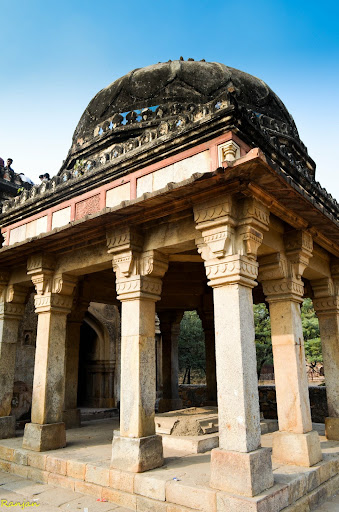
Despite restoration and conservation work in the recent past, the Rajon ki Baoli is now mostly dry—which is why it’s also now known locally as the ‘Sookhi’ (dry) Baoli. This is, however, one of Delhi’s more beautiful baolis. Supposedly built in 1506, during the reign of Sikandar Lodhi, the baoli has lovely arches all along the sides, with some exquisite plasterwork—very distinctive of the Lodhi period—along the arcade at the top of the baoli.The Rajon ki Baoli was obviously meant to act not just as a source of water, but also as a place of rest for thirsty travellers. This is why, besides the small cells (used as rooms) which line the walls, there is a small and pretty mosque here, decorated with more of the finely incised plasterwork. In addition, there’s a small tomb, in the form of a chhatri (a domed pavilion). This, according to an inscription, was built possibly by someone named Daulat Khan, for a certain Khwaja Mohammad, in 1506. It was also meant for the use of the public, and also not too well-known: Rajon ki Baoli (also known as Rajon ki Bain), is located in the Mehrauli Archaeological ‘Rajon ’, does not mean ‘kings’, but ‘masons’; perhaps a group of masons used this for a while) isn’t one of the deepest of baolis: it only consists of three long flights of broad steps leading down to the water.
Jatin ShahJatin Shah
Some Masons had occupied an abandoned mosque adjoining the Baoli. The basis water was used by Masons for cooking and drinking. Till the time Archeological Survey of India find out about this place, the Masons were already using this place to make bricks. The Masons were encouraged to leave this place, but the name 'Rajon ki Baoli' was stuck permanently. Rajon in those times meant Masons. This three stories step well was built during Lodi period. It has a rectangular tank on one end and a circular well on the other end. It has long corridors on both the sides decorated with burrito arches incised with limestone plaster. The Baoli is connected to a Tomb and a mosque via a small flight of steps. The inscription inside the tomb suggests that it was built by Daulat Khan during the reign of Sikandar Lodi in 1506. This tomb is designed as a 12 pillared Cenotaph. The mosque, though small, has some beautiful incised plaster ornamentation. The baoli was probably built at the same time as these buildings, in 1506, and was used for ablution before prayers in the mosque.
See more posts
See more posts
hotel
Find your stay

Pet-friendly Hotels in Delhi

Find a cozy hotel nearby and make it a full experience.

GETTING THERE The nearest metro station is Qutub Minar station on Yellow Line of Delhi Metro. From there you can take an auto to reach Rajon ki Baoli. THINGS TO DO IN & AROUND The Rajon ki Baoli is located near the Mehrauli Archaeological Park, which is one of the most famous historic sites in Delhi. You can also visit the UNESCO World Heritage Site Qutub complex and witness the famous Qutub Minar OPENING AND CLOSING TIMING The Baoli is open from 9 am to 5 pm on all days of the week. ENTRY FEES There is no entry fee. BEST TIME TO VISIT Winters in Delhi is the best time to explore the city with climate being favourable for a sightseeing tour. Rajon Ki Baoli Delhi Delhi was never a city with abundant water and despite having the Yamuna as its major source of water, Delhi always faced a water crisis. During medieval times, the kings commissioned the construction of Baolis all across Delhi to tackle the water crisis. The scorching summer heat made most of the surrounding areas of Mehrauli city arid and dry and these Baolis used to serve as water for irrigation and water reserve. Mehrauli has such numerous Baolis made during 15th and 16th century. One such surviving Baoli is the Rajao ki Baoli. Rajon translated means Masons, not kings. This is the common misconception about the origin of the Baoli. Named after the masons that were working there, Rajon Ki Baoli served as an important part of the Mehrauli City. The three-storey structure seems to unfold and emerge as you approach closer. Made out of rocks, the Baoli is similar to other Baolis built during the 15th and 16th century. The three-storeyed structure can be accessed through the steps and each storey has a unique structure. A feat of architecture, the Baoli still remains tall amidst the ruins of other monuments of the Mehrauli Archaeological Park. Visitors can walk across the platforms on each storey.
Akshay Gupta

Akshay Gupta

hotel
Find your stay

Affordable Hotels in Delhi

Find a cozy hotel nearby and make it a full experience.

Get the Appoverlay
Get the AppOne tap to find yournext favorite spots!
Despite restoration and conservation work in the recent past, the Rajon ki Baoli is now mostly dry—which is why it’s also now known locally as the ‘Sookhi’ (dry) Baoli. This is, however, one of Delhi’s more beautiful baolis. Supposedly built in 1506, during the reign of Sikandar Lodhi, the baoli has lovely arches all along the sides, with some exquisite plasterwork—very distinctive of the Lodhi period—along the arcade at the top of the baoli.The Rajon ki Baoli was obviously meant to act not just as a source of water, but also as a place of rest for thirsty travellers. This is why, besides the small cells (used as rooms) which line the walls, there is a small and pretty mosque here, decorated with more of the finely incised plasterwork. In addition, there’s a small tomb, in the form of a chhatri (a domed pavilion). This, according to an inscription, was built possibly by someone named Daulat Khan, for a certain Khwaja Mohammad, in 1506. It was also meant for the use of the public, and also not too well-known: Rajon ki Baoli (also known as Rajon ki Bain), is located in the Mehrauli Archaeological ‘Rajon ’, does not mean ‘kings’, but ‘masons’; perhaps a group of masons used this for a while) isn’t one of the deepest of baolis: it only consists of three long flights of broad steps leading down to the water.
Gautam Banerjee

Gautam Banerjee

hotel
Find your stay

The Coolest Hotels You Haven't Heard Of (Yet)

Find a cozy hotel nearby and make it a full experience.

hotel
Find your stay

Trending Stays Worth the Hype in Delhi

Find a cozy hotel nearby and make it a full experience.

Some Masons had occupied an abandoned mosque adjoining the Baoli. The basis water was used by Masons for cooking and drinking. Till the time Archeological Survey of India find out about this place, the Masons were already using this place to make bricks. The Masons were encouraged to leave this place, but the name 'Rajon ki Baoli' was stuck permanently. Rajon in those times meant Masons. This three stories step well was built during Lodi period. It has a rectangular tank on one end and a circular well on the other end. It has long corridors on both the sides decorated with burrito arches incised with limestone plaster. The Baoli is connected to a Tomb and a mosque via a small flight of steps. The inscription inside the tomb suggests that it was built by Daulat Khan during the reign of Sikandar Lodi in 1506. This tomb is designed as a 12 pillared Cenotaph. The mosque, though small, has some beautiful incised plaster ornamentation. The baoli was probably built at the same time as these buildings, in 1506, and was used for ablution before prayers in the mosque.
Jatin Shah

Jatin Shah

See more posts
See more posts