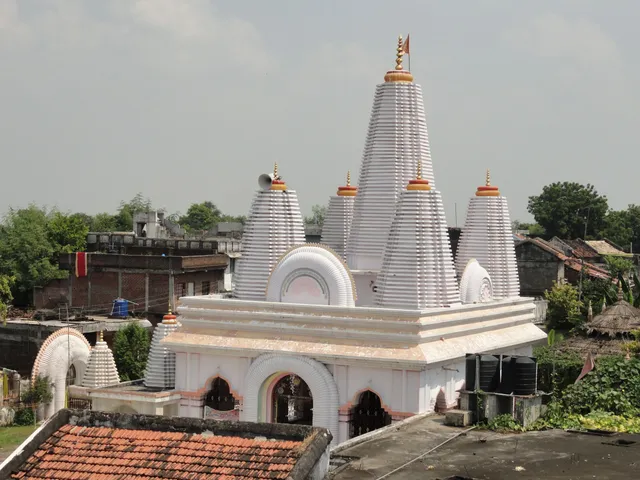
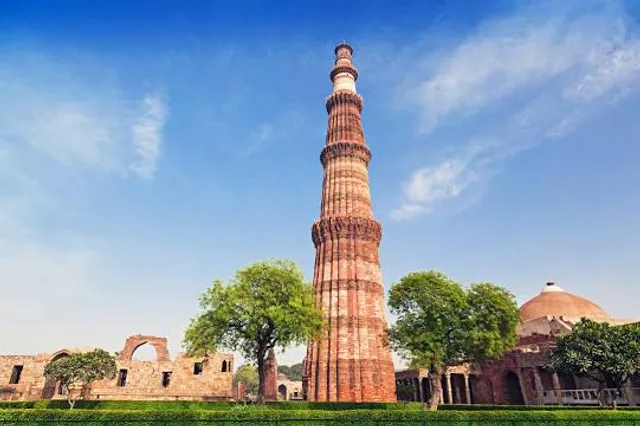
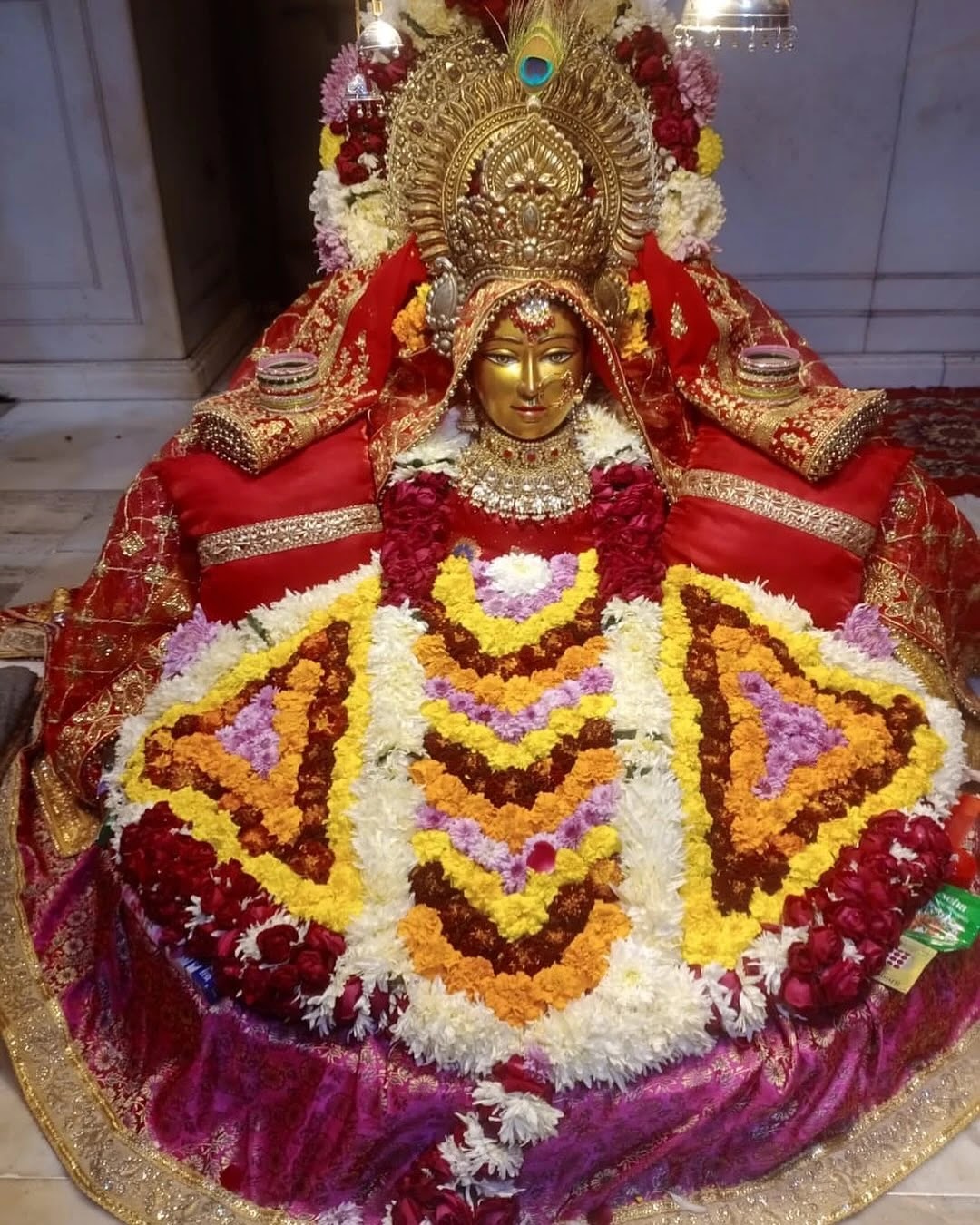
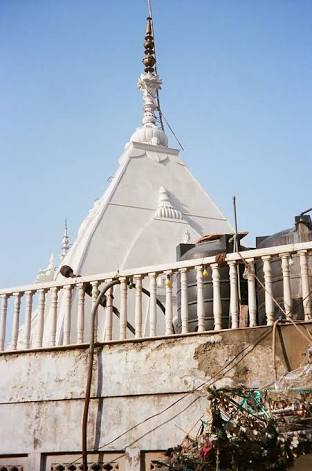
Yogmaya Temple, also Jogmaya temple, is a Hindu temple shakti peetha dedicated to Goddess Yogmaya, the sister of Krishna, and situated in Mehrauli, New Delhi, close to the Qutb complex. According to local priests this is one of those 27 temples destroyed by Mahmud Ghazni and later by Mamluks and it is the only surviving temple belonging to pre-sultanate period which is still in use. Hindu king Samrat Vikramaditya Hemu reconstructed the temple and brought back the temple from ruins. During Aurangzeb's reign a rectangular hall was added to the temple which is a witness of a failed attempt by Mughals to convert this ancient temple into a mosque which was later turned into a store room for Devi's vastra. Though its original (300-200 BC) architecture could never be restored after its deconstruction by Muslims, but its reconstruction had been carried out repetitively by the locals.
Yogmaya or Jogmaya is considered, an aspect of Maya, the illusionary power of God.1 The temple is also venue of a large congregation of devotees during the Navratri celebrations.
The present temple was built in early 19th century and may be the descendant of a much older Devi shrine.3] Adjacent to the temple lies, a water body, johad, known as Anangtal Baoli, after King Anangpal Tomar, and covered by trees from all sides[4] The temple is also an integral part of an important inter-faith festival of Delhi, the annual Phool Walon Ki Sair. It is believed that the main idol in the temple was that of Yogmaya or Pure goddess, sister of god Krishna (according to Bhagavata Purana), an incarnation of god Vishnu. Kansa, cousin of Devaki (mother of Krishna) and uncle of Yogmaya and Kansa attempted to kill Yogmaya on Krishna Janmastami day when Krishna was born. But Yogmaya, who was cleverly substituted for Krishna, vanished after predicting KansaтАЩs death at the hands of her brother Krishna.[810]
Another folk legend is that of Mughal Emperor Akbar II's (r. 1806-1837) association with the temple. His wife was distraught at the incarceration and exile of her son Mirza Jehangir who had fired from a Red Fort window at the then British Resident that had resulted in killing of the residentтАЩs bodyguard. Yogmaya had appeared in her dream and after that the Queen praying for her sonтАЩs safe return had vowed to place pankhas made of flowers at the Yogmaya temple and in the nearby Muslim shrine of Qutbuddin Bhaktiar Khaki. This practice set since then is continued to this day in the name of Phool Walon Ki Sair, a festival held for three days during October every year.[8
Another important fact about this ancient temple is that for more than 5000 years {i.e. the times when the said temple was built}, the people who live around this ancient temple have been taking care of the yogmaya temple. It is said and believed that all these people who are now more than 200 in number had one common ancestor at point in time who, hundreds of years ago started the practice of taking care of the temple by offering prayers to the goddess which includes doing the shingar of the goddess yogmaya twice a day, cleaning the temple, making and distributing prasad to the devotees visiting the temple and other related things. These 200 odd people who now take care of the temple carrying forward the customs and traditions of their forefathers do it voluntarily and amicably. This rich taste of colour and following of customs and tradition and the devotion seen in these people for the goddess Yogmaya is...
┬а┬а┬аRead moreThe Shri Yogmaya Temple, also known as the Yogmaya Mandir, is an ancient Hindu temple dedicated to the goddess Yogmaya, who is considered to be a sister of Krishna. The temple is located in Mehrauli, New Delhi, India, close to the Qutb complex. History: Mythological origins: The temple is believed to have been built by the Pandavas after the Mahabharata war, making it one of the few surviving temples from that period. Rajput era: The temple was renovated by the Rajput king Anandpal in 731 AD. Mughal era: The temple was further renovated by Lala Sathmal during the Mughal era. Architecture: Simple and elegant: The temple has a simple yet elegant modern structure with an entrance hall. Main idol: The main idol of Yogmaya is in the sanctum sanctorum and is made of black stone. Other deities: The temple also houses shrines for other deities such as Rama, Shiva, and Ganesha. Other features: Well: There is a 2 ft wide and 1 ft deep marble well where pilgrims can worship the deity. Tower: There is a tower above the sanctum. Red cloth and flowers: The Yogmaya idol is covered in red cloth and fresh flowers. Pankhas: There are two small fans (Pankhas) above the idol. Significance: One of the few surviving temples from the Mahabharata period: The temple is considered to be one of the few surviving temples from the Mahabharata period, making it an important historical and religious site. Dedicated to Yogmaya: The temple is dedicated to Yogmaya, who is considered to be an incarnation of the goddess Durga and a sister of Krishna. This makes the temple a popular pilgrimage site for devotees of these goddesses. Association with the Qutb complex: The temple is located near the Qutb complex, one of the most important historical sites in Delhi. This association adds to the significance of the temple. Additional information: Opening hours: The temple is open from 5:00 AM to 10:00 PM every day. Photography: Photography is not allowed inside the temple. Location: The temple is located in Mehrauli, New Delhi, India, close to the...
┬а┬а┬аRead moreVisiting the Siddhapeeth Shri Yogmaya Mata Temple in Mehrauli during Navratri is always a profoundly spiritual journey. The temple, believed by many to be one of DelhiтАЩs oldest surviving shrines, traces its origins to the Mahabharata era and is said to have been built by the Pandavas after the war. Situated near the Qutub Minar, this sacred site has miraculously survived centuries of invasions and destruction, with multiple reconstructions led by legendary figures such as King Vikramaditya Hemu and local devotees, who safeguarded its legacy through faith and devotion.
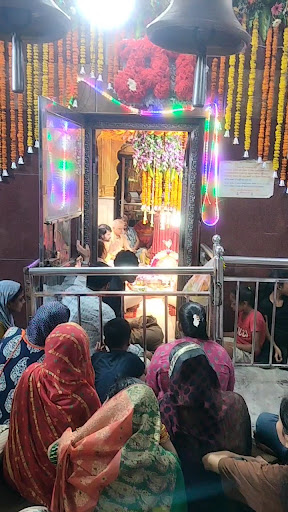
During Navratri, the templeтАЩs atmosphere becomes especially devotional. Thousands of devotees assemble here for the sandhya aarti, a powerful ritual that lasts nearly an hour. The aarti, filled with collective prayers and emotions, precedes open darshan and worship, allowing all to seek blessings. Afterward, the distribution of prasad marks a moment of unity and joy among devotees.
Unique to my recent visits, I noticed the goddessтАЩs swaroop (representation) was changed from last yearтАЩs Navratri to this yearтАФeach form radiated immense beauty and divinity. Legend holds that Yogmaya Mata epitomizes the magical power (maya) of the divine, and her miracles (chamatkar) are revered: from protecting the temple against invadersтАФsometimes with inexplicable events stopping destructionтАФto regularly fulfilling the heartfelt wishes of those who pray with faith. Personally, I have experienced this divine grace, with my wishes granted multiple timesтАФtruly a blessed feeling.
Another remarkable aspect is the templeтАЩs cleanliness and hygiene. The entire premises are well-maintained, creating a serene and inviting spiritual space. Being in this temple during auspicious times like Navratri amplifies the sense of connection with the goddess, the community, and the rich heritage that this historic shrine embodies.
Jai...
┬а┬а┬аRead more