HTML SitemapExplore
logo
Find Things to DoFind The Best Restaurants

Sultan Shamsuddin Iltutmish Tomb — Attraction in Delhi

Name
Sultan Shamsuddin Iltutmish Tomb
Description
Nearby attractions
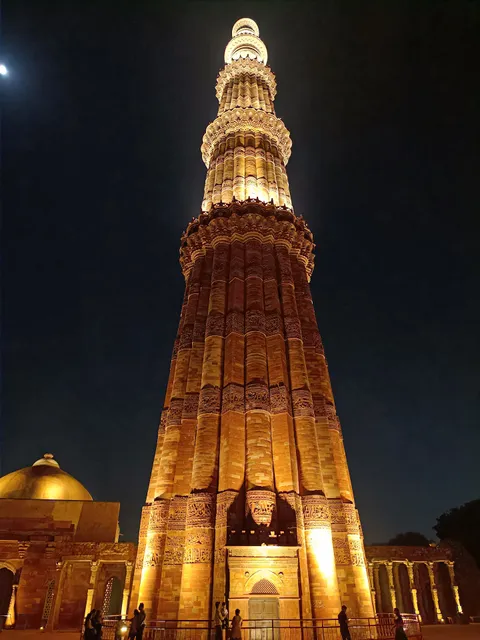
Qutb Minar
Seth Sarai, Mehrauli, New Delhi, Delhi 110030, India
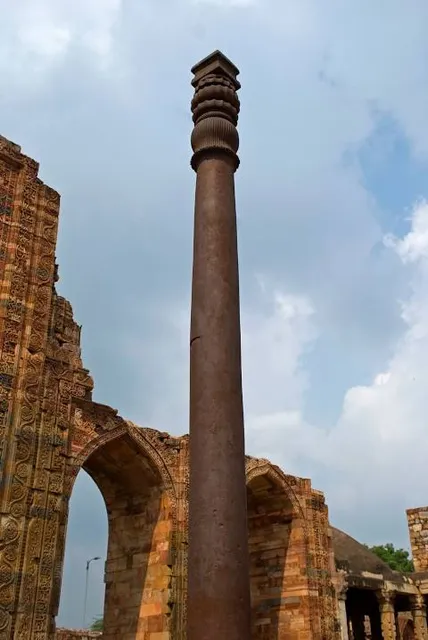
Iron Pillar, Delhi
G5FM+VXW, Mehrauli, New Delhi, Delhi 110030, India
Yog Maya Mandir, Mehrauli
G5FJ+QR2 Yogmaya maa mandir, Seth Sarai, Mehrauli, New Delhi, Delhi 110030, India
Imam Zamin's Tomb
Qutub Minar Complex Rd, Seth Sarai, Mehrauli, New Delhi, Delhi 110030, India
Ojas Art
1AQ, Near Qutb Minar, Mehrauli, New Delhi, Delhi 110030, India
Mehrauli Archaeological Park Heritage Walk
Anuvrat Marg, opposite Qutab Minar Metro Station, Christian Colony, Mehrauli, New Delhi, Delhi 110030, India
Rajon Ki Baoli
G5CM+493, Mehrauli Archeological Pk Trl, Mehrauli Village, Mehrauli, New Delhi, Delhi 110030, India
Ahinsa Sthal
G5CQ+CW5, Butterfly Park, Qila Rai Pithora, Sainik Farm, New Delhi, Delhi 110030, India
Zafar Mahal
Mehrauli Village, Mehrauli, New Delhi, Delhi 110030, India
Gumbad Park
G5FR+8VW, New, Chatri Wala Kuan, Lado Sarai, New Delhi, Delhi 110030, India
Nearby restaurants
Olive Bar & Kitchen
Mile 6, One Style, 8, Kalka Das Marg, Seth Sarai, Mehrauli, New Delhi, Delhi 110030, India
Dramz Delhi
1580/1, KD Marg, Near Qutub Minar, Mehrauli, New Delhi, Delhi 110030, India
Bo tai Qutub
6, 4, Kalka Das Marg, behind Qutab Minar, Seth Sarai, Mehrauli, New Delhi, Delhi 110030, India
The Grammar Room
One Style Mile, Kalka Das Marg, opp. अलाई मीनार, Mehrauli, New Delhi, Delhi 110030, India
Qla
4-A Seven Style Mile, Kalka Das Marg, next to Qutab Minar, Mehrauli, New Delhi, Delhi 110030, India
ROOH
H-5/1, First Floor, Ambawatta One, Kalka Das Marg, Mehrauli, New Delhi, Delhi 110030, India
Diablo
H-05, Diablo Qutab Garden, 12, Kalka Das Marg, Seth Sarai, Mehrauli, New Delhi, Delhi 110030, India
SWAN
ward no 1, Kharsra No 1501, 1st Floor, Kalka Das Marg, Mehrauli, New Delhi, Delhi 110030, India
Kakapo
Ambwatta One Complex, H 5/5 Warn No. 1, Kalka Das Marg, Mehrauli, New Delhi, Delhi 110030, India
CHÔ - Asian Terrace & Cocktail Bar
1st Floor, Ambawatta One, H5/1, Kalka Das Marg, Seth Sarai, Mehrauli, New Delhi, Delhi 110030, India
Nearby hotels
OYO RS Residency
Nai Basti, Lado Sarai, New Delhi, Delhi 110030, India
Related posts
Keywords
Sultan Shamsuddin Iltutmish Tomb tourism.Sultan Shamsuddin Iltutmish Tomb hotels.Sultan Shamsuddin Iltutmish Tomb bed and breakfast. flights to Sultan Shamsuddin Iltutmish Tomb.Sultan Shamsuddin Iltutmish Tomb attractions.Sultan Shamsuddin Iltutmish Tomb restaurants.Sultan Shamsuddin Iltutmish Tomb travel.Sultan Shamsuddin Iltutmish Tomb travel guide.Sultan Shamsuddin Iltutmish Tomb travel blog.Sultan Shamsuddin Iltutmish Tomb pictures.Sultan Shamsuddin Iltutmish Tomb photos.Sultan Shamsuddin Iltutmish Tomb travel tips.Sultan Shamsuddin Iltutmish Tomb maps.Sultan Shamsuddin Iltutmish Tomb things to do.
Sultan Shamsuddin Iltutmish Tomb things to do, attractions, restaurants, events info and trip planning
Sultan Shamsuddin Iltutmish Tomb
IndiaDelhiSultan Shamsuddin Iltutmish Tomb

Basic Info

Sultan Shamsuddin Iltutmish Tomb

G5GM+3RM, Qutub Minar Complex, Qutub Minar Complex Rd, Mehrauli, New Delhi, Delhi 110030, India
4.5(212)
Open 24 hours
Save
spot

Ratings & Description

Info

Cultural
Scenic
Family friendly
Accessibility
attractions: Qutb Minar, Iron Pillar, Delhi, Yog Maya Mandir, Mehrauli, Imam Zamin's Tomb, Ojas Art, Mehrauli Archaeological Park Heritage Walk, Rajon Ki Baoli, Ahinsa Sthal, Zafar Mahal, Gumbad Park, restaurants: Olive Bar & Kitchen, Dramz Delhi, Bo tai Qutub, The Grammar Room, Qla, ROOH, Diablo, SWAN, Kakapo, CHÔ - Asian Terrace & Cocktail Bar
logoLearn more insights from Wanderboat AI.

Plan your stay

hotel
Pet-friendly Hotels in Delhi
Find a cozy hotel nearby and make it a full experience.

hotel
Affordable Hotels in Delhi
Find a cozy hotel nearby and make it a full experience.

hotel
The Coolest Hotels You Haven't Heard Of (Yet)
Find a cozy hotel nearby and make it a full experience.

hotel
Trending Stays Worth the Hype in Delhi
Find a cozy hotel nearby and make it a full experience.

Reviews

Nearby attractions of Sultan Shamsuddin Iltutmish Tomb

Qutb Minar

Iron Pillar, Delhi

Yog Maya Mandir, Mehrauli

Imam Zamin's Tomb

Ojas Art

Mehrauli Archaeological Park Heritage Walk

Rajon Ki Baoli

Ahinsa Sthal

Zafar Mahal

Gumbad Park

Qutb Minar

Qutb Minar

4.5

(50.1K)

Open 24 hours
Click for details
Iron Pillar, Delhi

Iron Pillar, Delhi

4.6

(1.2K)

Open 24 hours
Click for details
Yog Maya Mandir, Mehrauli

Yog Maya Mandir, Mehrauli

4.7

(755)

Closed
Click for details
Imam Zamin's Tomb

Imam Zamin's Tomb

4.4

(84)

Closed
Click for details

Things to do nearby

Old Delhi Food-Temples-Spice Market & Rickshaw
Mon, Dec 8 • 10:00 AM
New Delhi, Delhi, 110006, India
View details
Tuk Tuk Delhi Experience India
Mon, Dec 8 • 10:00 AM
New Delhi, Delhi, 110001, India
View details
Taj Mahal & Agra Tour from Delhi by Express Train
Tue, Dec 9 • 5:30 PM
New Delhi, Delhi, India
View details

Nearby restaurants of Sultan Shamsuddin Iltutmish Tomb

Olive Bar & Kitchen

Dramz Delhi

Bo tai Qutub

The Grammar Room

Qla

ROOH

Diablo

SWAN

Kakapo

CHÔ - Asian Terrace & Cocktail Bar
Olive Bar & Kitchen

Olive Bar & Kitchen

4.6

(3.9K)

Click for details
Dramz Delhi

Dramz Delhi

4.1

(3.4K)

Click for details
Bo tai Qutub

Bo tai Qutub

4.3

(612)

Click for details
The Grammar Room

The Grammar Room

4.4

(570)

Click for details
Get the Appoverlay
Get the AppOne tap to find yournext favorite spots!
Wanderboat LogoWanderboat

Your everyday Al companion for getaway ideas

CompanyAbout Us
InformationAI Trip PlannerSitemap
SocialXInstagramTiktokLinkedin
LegalTerms of ServicePrivacy Policy

Get the app

© 2025 Wanderboat. All rights reserved.
logo

Posts

Muhammad Hassan TahirMuhammad Hassan Tahir
Shamsuddin Iltutmish was a slave of Qutbuddin Aibak. Due to the good education and wide knowledge of the Islamic world, which he acquired during the early days of his adversity, he quickly rose to be the amir- i- shikar and son in law of his master within a decade. In 1206, he held the charge of Badaun as one of the most trusted lieutenants of Aibak. He was manumitted by Aibak long before the latter received such formal manumission, himself. It was done in 1205- 1206 at the instance of Mohammad Ghori who was deeply impressed by the performance of Iltutmish in the campaign against the Khokhars. Iltutmish was not only a soldier but also a man of creative tastes. Often engaged in warfare and happily extended his patronage to the pious and learned. He was further endowed with laudable qualities; he was handsome, intelligent, sagacious and of excellent disposition and manners. He was also just, benevolent, impartial and a zealous warrior. The hereditary succession of Aram Shah was refused by the Turkish nobility of Delhi, as he was an incompetent and unpopular ruler. Iltutmish was invited from Badaun to assume the leadership of Sultanate. Aram Shah refused to abdicate but was defeated and deposed by Iltutmish in 1211. Iltutmish was the real founder of the Delhi Sultanate. He made Delhi his seat of governance in preference to Lahore and proved to be a strong and capable ruler who enjoyed a long reign of twenty- six years. When Iltutmish ascended the throne, the country was full of rivals and hostile chiefs, and the rebellious nobles and the vanquished Rajas and Ranas were threatening the existence of the Sultanate of Delhi. The situation was better handled by Iltutmish and his foresight energy and military skill, proved himself equal to the situation. He suppressed the rebellious nobles with an iron hand,crushed the power of the rivals like Yildiz and Qabacha and recovered the lost provinces. He secured the Sultanate of Delhi diplomatically from the Mongol invasion by warding off their invasion. He not only saved the empire and rescued his people from danger, but also added the provinces of Malwa and Sind to the dominions of has master. In consideration of his contribution to the growth of Muslim rule in India, Iltutmish may rightly be called the real founder of the Sultanate of Delhi. The contribution of Iltutmish to the monetary system of the Sultanate was very great. It was he who introduced the Silver Tanka and the Copper Jital, the two basic coins of the Sultanate period. Besides, he was a builder as well as a conqueror and an administrator, and left monuments both at Delhi and Ajmer displaying his taste in architecture. Iltutmish was a pious Muslim. However, he was intolerant towards the Shias. His treatment of Hindus was also not enlightened. He continued to persecute them. In short, his reign was thus a perpetual series of efforts towards the expansion of an originally small territory. In 1235, Iltutmish made an attempt to bring the Khokhars under his subjugation, but the Khokhars showed no signs of appeasement. Exhausted by continuous warfare, Iltutmish fell sick, returned to Delhi and breathed his last in April, 1236. He was buried in the magnificent tomb which he had got constructed for himself in Delhi.
AJAY HATTEAJAY HATTE
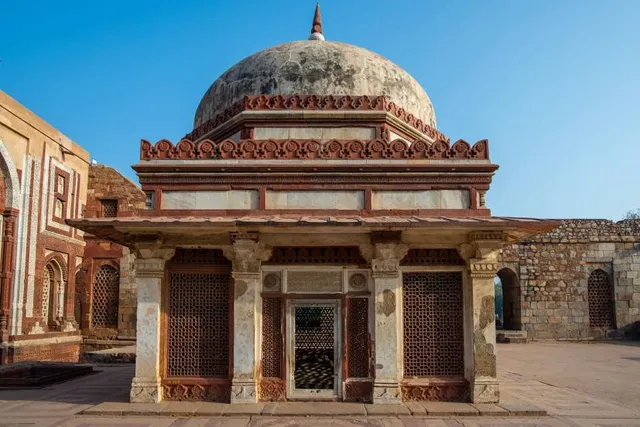
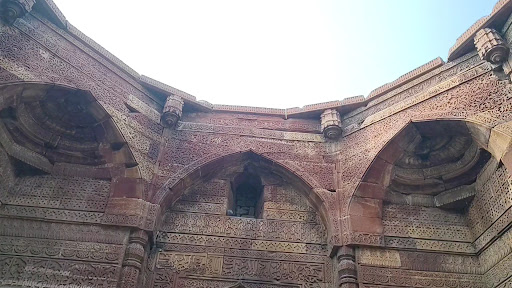
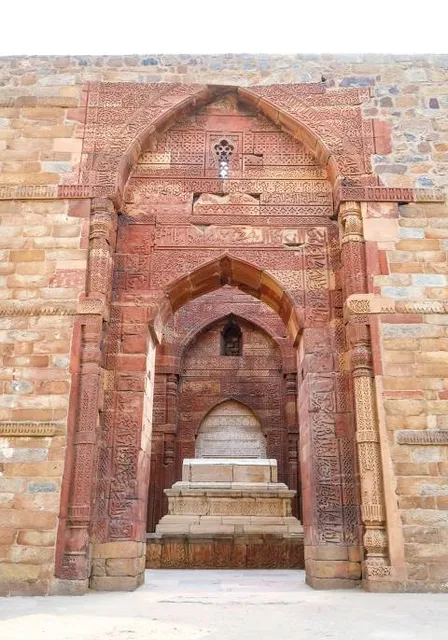
Tomb of Iltutmish Located within the historical precincts of the Qutub Minar Complex in Delhi, the Tomb of Iltutmish is a serene gem that offers a peaceful respite from the bustling city. This ancient mausoleum is steeped in history and exudes an aura of quiet elegance. The tomb, built in the 13th century, is a fine example of Indo-Islamic architecture. Its distinctive features include the use of red sandstone, intricate calligraphy, and delicate arabesque patterns that adorn its façade. The simplicity of its design is offset by the ornate details, showcasing the artistic finesse of that era. Approaching the tomb, you'll be struck by the aura of tranquility that envelops the complex. The well-maintained garden, shaded by ancient trees, adds to the peaceful ambiance. It's a place where you can take a leisurely stroll, soak in the historical atmosphere, or simply find a quiet corner to reflect. The interior of the tomb is equally captivating. The central chamber houses the tomb of Iltutmish, the third ruler of the Delhi Sultanate. The intricately carved pillars and the beautiful mihrab (prayer niche) are captivating, giving you a glimpse into the architectural brilliance of the time. As you explore the tomb and its surroundings, you'll realize that it offers not only a historical experience but also a chance to connect with the spirituality and culture of medieval India. The tomb's modesty in design, compared to the nearby Qutub Minar, speaks volumes about the ruler's legacy. Practical Tips: 1. Visit during the early morning or late afternoon for pleasant weather. 2. Combine your visit to the Tomb of Iltutmish with a tour of the Qutub Minar Complex to make the most of your trip. In conclusion, the Tomb of Iltutmish is a hidden treasure within the Qutub Minar Complex. Its understated beauty, historical significance, and serene environment make it an ideal spot for history buffs, photographers, and those seeking a peaceful escape from the urban hustle and bustle. While it may not be as grand as some other historical sites, it's certainly worth a visit to immerse yourself in the rich history of Delhi's sultanate period.
Think About SuhrawardiThink About Suhrawardi
This is the tomb of that great sultan who ruled India for about 25 years. It is known from historical documents that Shamsuddin Iltutmish was a pious Muslim who spent most of his time in prayer at night. The reason for mentioning him on this day is very special because on this day, 30 April 1236 AD, he left this mortal world. After his death, he was buried near Qutub Minar in Mehrauli. There is a beautiful tomb of his decorated with Quranic verses. His court poet Amir Ruhani has described him as a holy warrior and Ghazi. Shamsuddin Iltutmish respected many Sufi elders during his rule, including Qutbuddin Bakhtiar Kaki, Hamiduddin Nagauri, Jalaluddin Tabreji, Bahauddin Zakariya and Najibuddin Naqshbandi. When a group of Ulema advised him to go all out for the religious conversion of Hindus, he rejected the idea, terming it an inappropriate practice. He did not consult the Ulema when he took the unconventional decision of appointing his daughter Razia as his successor. This balance between Sharia and practical requirements of the time became a characteristic of the Turkish rule in Delhi. When the will of Delhi's famous Sufi elder Khawaja Qutbuddin Bakhtiar Kaki was read after his death, it was emphasized that only that person can lead his Namaaz-e-Janaza who has never done any haram work, nor has ever left the Sunnah of Namaaz-e-Asr. After reading the will, there was silence in the gathering because almost everyone did not follow the things written in the will. Finally, with moist eyes, Sultan Iltutmish came out of the gathering and said that I did not want to reveal my inner self to everyone, but this is what Khwaja Bakhtiar Kaki's wish wanted. Ultimately, Sultan Iltutmish led his Namaaz-e-Janaza because he was the only person who followed the things written in the will of Hazarat Khwaja Bakhtiar Kaki.
See more posts
See more posts
hotel
Find your stay

Pet-friendly Hotels in Delhi

Find a cozy hotel nearby and make it a full experience.

Shamsuddin Iltutmish was a slave of Qutbuddin Aibak. Due to the good education and wide knowledge of the Islamic world, which he acquired during the early days of his adversity, he quickly rose to be the amir- i- shikar and son in law of his master within a decade. In 1206, he held the charge of Badaun as one of the most trusted lieutenants of Aibak. He was manumitted by Aibak long before the latter received such formal manumission, himself. It was done in 1205- 1206 at the instance of Mohammad Ghori who was deeply impressed by the performance of Iltutmish in the campaign against the Khokhars. Iltutmish was not only a soldier but also a man of creative tastes. Often engaged in warfare and happily extended his patronage to the pious and learned. He was further endowed with laudable qualities; he was handsome, intelligent, sagacious and of excellent disposition and manners. He was also just, benevolent, impartial and a zealous warrior. The hereditary succession of Aram Shah was refused by the Turkish nobility of Delhi, as he was an incompetent and unpopular ruler. Iltutmish was invited from Badaun to assume the leadership of Sultanate. Aram Shah refused to abdicate but was defeated and deposed by Iltutmish in 1211. Iltutmish was the real founder of the Delhi Sultanate. He made Delhi his seat of governance in preference to Lahore and proved to be a strong and capable ruler who enjoyed a long reign of twenty- six years. When Iltutmish ascended the throne, the country was full of rivals and hostile chiefs, and the rebellious nobles and the vanquished Rajas and Ranas were threatening the existence of the Sultanate of Delhi. The situation was better handled by Iltutmish and his foresight energy and military skill, proved himself equal to the situation. He suppressed the rebellious nobles with an iron hand,crushed the power of the rivals like Yildiz and Qabacha and recovered the lost provinces. He secured the Sultanate of Delhi diplomatically from the Mongol invasion by warding off their invasion. He not only saved the empire and rescued his people from danger, but also added the provinces of Malwa and Sind to the dominions of has master. In consideration of his contribution to the growth of Muslim rule in India, Iltutmish may rightly be called the real founder of the Sultanate of Delhi. The contribution of Iltutmish to the monetary system of the Sultanate was very great. It was he who introduced the Silver Tanka and the Copper Jital, the two basic coins of the Sultanate period. Besides, he was a builder as well as a conqueror and an administrator, and left monuments both at Delhi and Ajmer displaying his taste in architecture. Iltutmish was a pious Muslim. However, he was intolerant towards the Shias. His treatment of Hindus was also not enlightened. He continued to persecute them. In short, his reign was thus a perpetual series of efforts towards the expansion of an originally small territory. In 1235, Iltutmish made an attempt to bring the Khokhars under his subjugation, but the Khokhars showed no signs of appeasement. Exhausted by continuous warfare, Iltutmish fell sick, returned to Delhi and breathed his last in April, 1236. He was buried in the magnificent tomb which he had got constructed for himself in Delhi.
Muhammad Hassan Tahir

Muhammad Hassan Tahir

hotel
Find your stay

Affordable Hotels in Delhi

Find a cozy hotel nearby and make it a full experience.

Get the Appoverlay
Get the AppOne tap to find yournext favorite spots!
Tomb of Iltutmish Located within the historical precincts of the Qutub Minar Complex in Delhi, the Tomb of Iltutmish is a serene gem that offers a peaceful respite from the bustling city. This ancient mausoleum is steeped in history and exudes an aura of quiet elegance. The tomb, built in the 13th century, is a fine example of Indo-Islamic architecture. Its distinctive features include the use of red sandstone, intricate calligraphy, and delicate arabesque patterns that adorn its façade. The simplicity of its design is offset by the ornate details, showcasing the artistic finesse of that era. Approaching the tomb, you'll be struck by the aura of tranquility that envelops the complex. The well-maintained garden, shaded by ancient trees, adds to the peaceful ambiance. It's a place where you can take a leisurely stroll, soak in the historical atmosphere, or simply find a quiet corner to reflect. The interior of the tomb is equally captivating. The central chamber houses the tomb of Iltutmish, the third ruler of the Delhi Sultanate. The intricately carved pillars and the beautiful mihrab (prayer niche) are captivating, giving you a glimpse into the architectural brilliance of the time. As you explore the tomb and its surroundings, you'll realize that it offers not only a historical experience but also a chance to connect with the spirituality and culture of medieval India. The tomb's modesty in design, compared to the nearby Qutub Minar, speaks volumes about the ruler's legacy. Practical Tips: 1. Visit during the early morning or late afternoon for pleasant weather. 2. Combine your visit to the Tomb of Iltutmish with a tour of the Qutub Minar Complex to make the most of your trip. In conclusion, the Tomb of Iltutmish is a hidden treasure within the Qutub Minar Complex. Its understated beauty, historical significance, and serene environment make it an ideal spot for history buffs, photographers, and those seeking a peaceful escape from the urban hustle and bustle. While it may not be as grand as some other historical sites, it's certainly worth a visit to immerse yourself in the rich history of Delhi's sultanate period.
AJAY HATTE

AJAY HATTE

hotel
Find your stay

The Coolest Hotels You Haven't Heard Of (Yet)

Find a cozy hotel nearby and make it a full experience.

hotel
Find your stay

Trending Stays Worth the Hype in Delhi

Find a cozy hotel nearby and make it a full experience.

This is the tomb of that great sultan who ruled India for about 25 years. It is known from historical documents that Shamsuddin Iltutmish was a pious Muslim who spent most of his time in prayer at night. The reason for mentioning him on this day is very special because on this day, 30 April 1236 AD, he left this mortal world. After his death, he was buried near Qutub Minar in Mehrauli. There is a beautiful tomb of his decorated with Quranic verses. His court poet Amir Ruhani has described him as a holy warrior and Ghazi. Shamsuddin Iltutmish respected many Sufi elders during his rule, including Qutbuddin Bakhtiar Kaki, Hamiduddin Nagauri, Jalaluddin Tabreji, Bahauddin Zakariya and Najibuddin Naqshbandi. When a group of Ulema advised him to go all out for the religious conversion of Hindus, he rejected the idea, terming it an inappropriate practice. He did not consult the Ulema when he took the unconventional decision of appointing his daughter Razia as his successor. This balance between Sharia and practical requirements of the time became a characteristic of the Turkish rule in Delhi. When the will of Delhi's famous Sufi elder Khawaja Qutbuddin Bakhtiar Kaki was read after his death, it was emphasized that only that person can lead his Namaaz-e-Janaza who has never done any haram work, nor has ever left the Sunnah of Namaaz-e-Asr. After reading the will, there was silence in the gathering because almost everyone did not follow the things written in the will. Finally, with moist eyes, Sultan Iltutmish came out of the gathering and said that I did not want to reveal my inner self to everyone, but this is what Khwaja Bakhtiar Kaki's wish wanted. Ultimately, Sultan Iltutmish led his Namaaz-e-Janaza because he was the only person who followed the things written in the will of Hazarat Khwaja Bakhtiar Kaki.
Think About Suhrawardi

Think About Suhrawardi

See more posts
See more posts

Reviews of Sultan Shamsuddin Iltutmish Tomb

4.5
(212)
avatar
4.0
7y

Shams ud-Din Iltutmish (r. 1211–1236) was the third ruler of the Delhi Sultanate, belonging to the Mamluk dynasty. Iltutmish consolidated the position of the sultanate in the Indian subcontinent. He conquered Multan and Bengal from contesting rulers and Ranthambore and Siwalik from their rulers. He expanded his domain by defeating the Muslim rulers of Ghazni, Multan and Bengal, which had previously annexed some of his territories and threatened his domain. He conquered the latter two territories and made further conquests in the Hindu lands, conquering the fort of Ranathambhore and the lands of Gwalior and the fort of Mandur. He added many changes to the Sultanate, re-organising the monetary system and the nobility as well as the distribution of grounds and fiefs, and erected many buildings, including Mosques, Khanqas (Monasteries), Dargahs (Graves) and a Hauz (reservoir) for pilgrims. Shams ud-din Iltutmish much strengthened the power of the Delhi Sultanate and of Islam in India, although his kindred and heirs were not as politically gifted, with no ruler comparable to him in the area until the time of Ghiyasuddin Balban. The name Iltutmish is a Turkic name, meaning "he has held/owned land" (İltutmuş, in modern Turkish). Another theory concerning the meaning of the name suggests a connection with an eclipse that supposedly occurred at his birth (an event of some importance in the view of the people of the time). The other etymologies for his name include Altamash, which denotes the number sixty, or the guard of the army, which is the ancient Turkic Khanates numbered at sixty; but this theory falsely draws its source from that he is often referred to as "Al-Tamash", which is most likely an Arabic variation of his Turkic name. In 1236 Iltutmish died, and was buried in the Qutb complex in Mehrauli. The death of Iltutmish was followed by years of political instability at Delhi. During this period, four descendants of Iltutmish were put on the throne and murdered. Iltutmish's eldest son, Nasir-ud-din Mahmud, had died in 1229 while governing Bengal as his father's deputy. The surviving sons of the Sultan were incapable of the task of administration. In 1236, Iltutmish, on his death-bed, nominated his daughter Razia as his heiress. But, Razia did not have support of the nobles of the court, who did not want a woman ruler. Iltutmish's eldest surviving son, Rukn-ud-din Firuz was raised to the throne. Firuz left governance in the hands of his mother, Shah Turken. Firuz was deposed within six months, and Razia became the ruler. Razia's growing assertiveness brought her in conflict with the nobles. In 1240, a rebellion led to the replacement of Razia by her brother, Muiz ud din Bahram. Bahram ruled for two years before he was overthrown in favour of Firuz's son, Ala ud din Masud in 1242. Order was re-established only after Iltutmish's grandson Nasir-ud-din-Mahmud became Sultan with Iltutmish's prominent slave, Ghias-ud-din-Balban as his Deputy Sultan (Naib) in 1246. Balban held all the power at the time and became Sultan in 1266. There was internal stability from 1246 until 1290 whenJalal-ud-din Khilji overthrew Balban's great-grandson Kayumarath, thus ending the Mamluk Dynasty and founded the Khilji Dynasty. (Source: Wikipedia) This is very old and hysterical place, so must...

   Read more
avatar
5.0
7y

Shamsuddin Iltutmish was a slave of Qutbuddin Aibak. Due to the good education and wide knowledge of the Islamic world, which he acquired during the early days of his adversity, he quickly rose to be the amir- i- shikar and son in law of his master within a decade. In 1206, he held the charge of Badaun as one of the most trusted lieutenants of Aibak. He was manumitted by Aibak long before the latter received such formal manumission, himself. It was done in 1205- 1206 at the instance of Mohammad Ghori who was deeply impressed by the performance of Iltutmish in the campaign against the Khokhars. Iltutmish was not only a soldier but also a man of creative tastes. Often engaged in warfare and happily extended his patronage to the pious and learned. He was further endowed with laudable qualities; he was handsome, intelligent, sagacious and of excellent disposition and manners. He was also just, benevolent, impartial and a zealous warrior.

The hereditary succession of Aram Shah was refused by the Turkish nobility of Delhi, as he was an incompetent and unpopular ruler. Iltutmish was invited from Badaun to assume the leadership of Sultanate. Aram Shah refused to abdicate but was defeated and deposed by Iltutmish in 1211. Iltutmish was the real founder of the Delhi Sultanate. He made Delhi his seat of governance in preference to Lahore and proved to be a strong and capable ruler who enjoyed a long reign of twenty- six years. When Iltutmish ascended the throne, the country was full of rivals and hostile chiefs, and the rebellious nobles and the vanquished Rajas and Ranas were threatening the existence of the Sultanate of Delhi. The situation was better handled by Iltutmish and his foresight energy and military skill, proved himself equal to the situation. He suppressed the rebellious nobles with an iron hand,crushed the power of the rivals like Yildiz and Qabacha and recovered the lost provinces. He secured the Sultanate of Delhi diplomatically from the Mongol invasion by warding off their invasion. He not only saved the empire and rescued his people from danger, but also added the provinces of Malwa and Sind to the dominions of has master. In consideration of his contribution to the growth of Muslim rule in India, Iltutmish may rightly be called the real founder of the Sultanate of Delhi. The contribution of Iltutmish to the monetary system of the Sultanate was very great. It was he who introduced the Silver Tanka and the Copper Jital, the two basic coins of the Sultanate period. Besides, he was a builder as well as a conqueror and an administrator, and left monuments both at Delhi and Ajmer displaying his taste in architecture. Iltutmish was a pious Muslim. However, he was intolerant towards the Shias. His treatment of Hindus was also not enlightened. He continued to persecute them. In short, his reign was thus a perpetual series of efforts towards the expansion of an originally small territory. In 1235, Iltutmish made an attempt to bring the Khokhars under his subjugation, but the Khokhars showed no signs of appeasement. Exhausted by continuous warfare, Iltutmish fell sick, returned to Delhi and breathed his last in April, 1236. He was buried in the magnificent tomb which he had got constructed for...

   Read more
avatar
4.0
5y

Shams Ud-Din Iltutmish was the third of the Mamluk kings who ruled the former Ghurid territories in northern India. He was the first Muslim sovereign to rule from Delhi and is thus considered the effective founder of Delhi Sultanate.

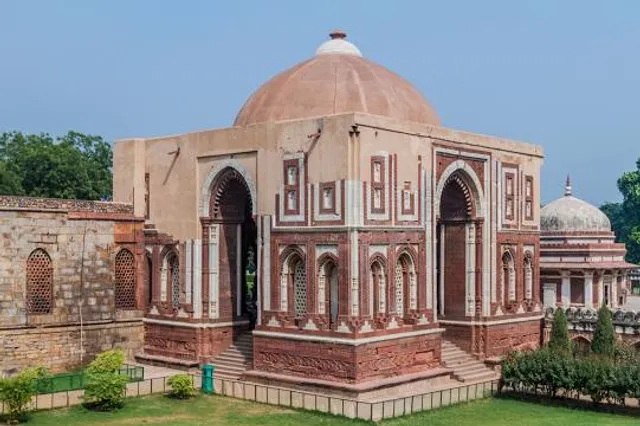
The tomb of Iltutmish, Qutub Minar Complex, was built in 1235 A.D. It is situated just outside the north-west corner of the Quwwat-ul-Islam near the Qutub Minar. The central one of these is located higher than the other two and is profusely decorated with marble.

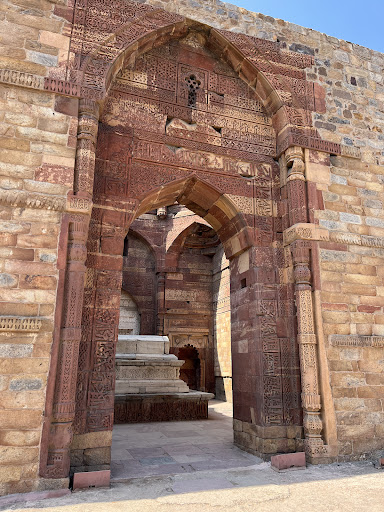
Inside the tomb of Iltutlish, there are three prayer niches. This tomb is quite simple, but its entrance is intricately carved with geometrical and arabesque patterns make it a beautiful example of India’s heritage to the world. Basically, the area surrounding the Qutub Minar is called Qutub Complex.

Tomb of Iltutmish History

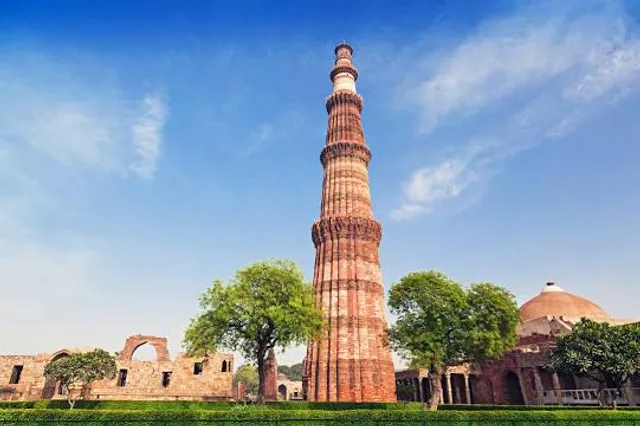
There have many important pieces of information about the tomb of Iltutmish. Qutbu’d-Din Aibak laid the foundation of Minar in AD 1199 for the use of the muezzin (crier) to give calls for prayer. In 1220, Aibak’s successor and son-in-law Iltutmish added three tiers to the tower.

It is the highest tower in India. In 1369, lightning destroyed its top tier completely and Firoz Shah Tughlaq carried out restoration work replacing the damaged tier with two new tiers every year.

There are many proverbs about the naming of this tower. Some historians say that it was named after the first Turkic sultan Qutub-Ud-din Aibak and some claims that it was named to honor Qutubuddin Bakhtiar Kaki, a saint.

It is surrounded by several historically significant monuments, which are historically connected with the tower and are part of the Qutub Complex. Tomb of Iltutmish information includes the Iron Pillar of Delhi, Quwwat-ul-Islam Mosque, Alai Darwaza, the Tomb of Iltutmish, Alai Minar, Ala-Ud-din’s Madrasa and Tomb. The iron pillar in the Qutub Minar complex has not rusted after some 2000 years.

This 4th-century pillar, originally made as a flagstaff in Vishnu’s honor, is a tribute to ancient Indian metallurgy. This 7m-high pillar stands in the courtyard of the mosque and it was here a long time prior to the mosque’s construction.

The Qutub Minar complex is large and includes Qutub Minar, Quwwat-ul-Islam Masjid, Ala’i Minar, Ala’i Darwaza, Iron Pillar, Iltutmish’s Tomb. At the foot of the Qutub Minar stands the first mosque to be built in India, known as Quwwat-ul-Islam Masjid.

Ala-Ud-din ensures the completion of the south gateway of the building, the Ala’i Darwaza; it was built of red sandstone in 1311 and located just southwest of the Qutub Minar.

Tomb of Iltutmish (Built-in 1235,) lies in the northwest of the compound, midway along the west wall of the mosque. It is the first surviving tomb of a Muslim ruler in India. It got the tag of the world heritage site in 1993. From this, you can know about the tomb of Iltutmish...

   Read more
Page 1 of 7
Previous
Next