HTML SitemapExplore
logo
Find Things to DoFind The Best Restaurants

Qutb Minar — Attraction in Delhi

Name
Qutb Minar
Description
Nearby attractions
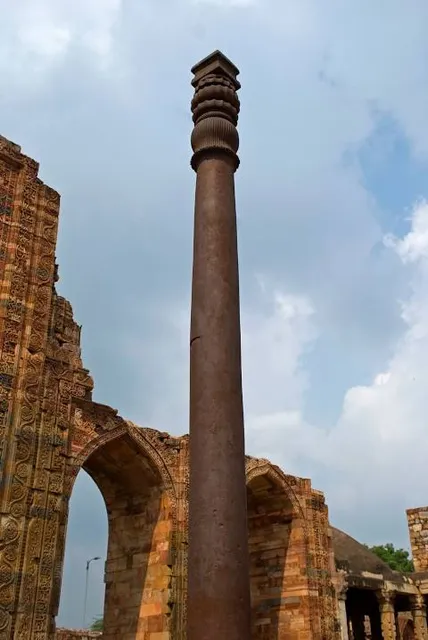
Iron Pillar, Delhi
G5FM+VXW, Mehrauli, New Delhi, Delhi 110030, India
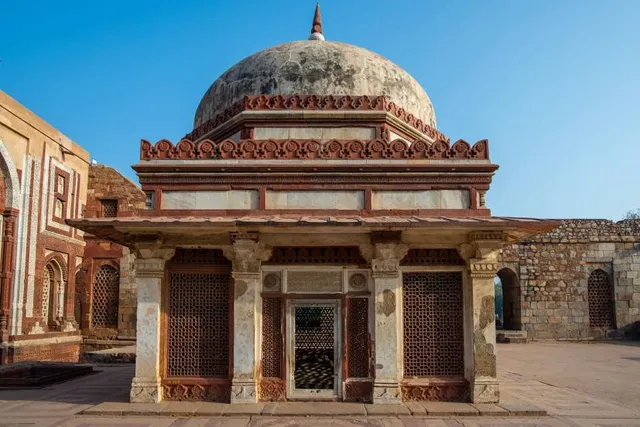
Imam Zamin's Tomb
Qutub Minar Complex Rd, Seth Sarai, Mehrauli, New Delhi, Delhi 110030, India
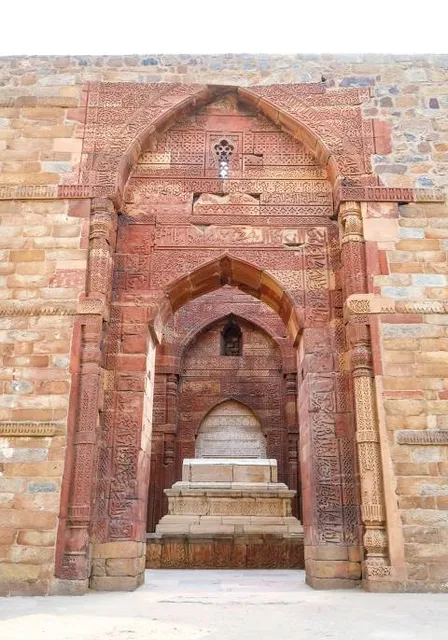
Sultan Shamsuddin Iltutmish Tomb
G5GM+3RM, Qutub Minar Complex, Qutub Minar Complex Rd, Mehrauli, New Delhi, Delhi 110030, India
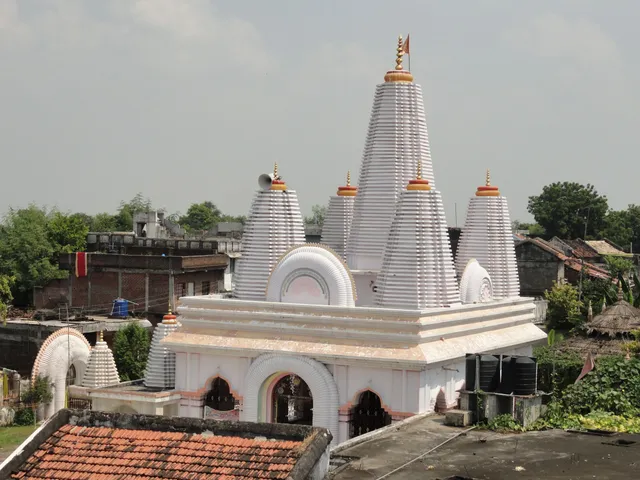
Yog Maya Mandir, Mehrauli
G5FJ+QR2 Yogmaya maa mandir, Seth Sarai, Mehrauli, New Delhi, Delhi 110030, India
Mehrauli Archaeological Park Heritage Walk
Anuvrat Marg, opposite Qutab Minar Metro Station, Christian Colony, Mehrauli, New Delhi, Delhi 110030, India
Ojas Art
1AQ, Near Qutb Minar, Mehrauli, New Delhi, Delhi 110030, India
Ahinsa Sthal
G5CQ+CW5, Butterfly Park, Qila Rai Pithora, Sainik Farm, New Delhi, Delhi 110030, India
Rajon Ki Baoli
G5CM+493, Mehrauli Archeological Pk Trl, Mehrauli Village, Mehrauli, New Delhi, Delhi 110030, India
Gumbad Park
G5FR+8VW, New, Chatri Wala Kuan, Lado Sarai, New Delhi, Delhi 110030, India
Zafar Mahal
Mehrauli Village, Mehrauli, New Delhi, Delhi 110030, India
Nearby restaurants
Dramz Delhi
1580/1, KD Marg, Near Qutub Minar, Mehrauli, New Delhi, Delhi 110030, India
Olive Bar & Kitchen
Mile 6, One Style, 8, Kalka Das Marg, Seth Sarai, Mehrauli, New Delhi, Delhi 110030, India
Bo tai Qutub
6, 4, Kalka Das Marg, behind Qutab Minar, Seth Sarai, Mehrauli, New Delhi, Delhi 110030, India
The Grammar Room
One Style Mile, Kalka Das Marg, opp. अलाई मीनार, Mehrauli, New Delhi, Delhi 110030, India
Qla
4-A Seven Style Mile, Kalka Das Marg, next to Qutab Minar, Mehrauli, New Delhi, Delhi 110030, India
ROOH
H-5/1, First Floor, Ambawatta One, Kalka Das Marg, Mehrauli, New Delhi, Delhi 110030, India
SWAN
ward no 1, Kharsra No 1501, 1st Floor, Kalka Das Marg, Mehrauli, New Delhi, Delhi 110030, India
Diablo
H-05, Diablo Qutab Garden, 12, Kalka Das Marg, Seth Sarai, Mehrauli, New Delhi, Delhi 110030, India
Kakapo
Ambwatta One Complex, H 5/5 Warn No. 1, Kalka Das Marg, Mehrauli, New Delhi, Delhi 110030, India
CHÔ - Asian Terrace & Cocktail Bar
1st Floor, Ambawatta One, H5/1, Kalka Das Marg, Seth Sarai, Mehrauli, New Delhi, Delhi 110030, India
Nearby hotels
Onnyx Rooftop Luxury Penthouse
F, 208/1, Old M B Road, Nai Basti, Lado Sarai, New Delhi, Delhi 110030, India
Hotel Kings Court
F-316, Old M B Road, opposite Carpet Show Room, Nai Basti, Lado Sarai, New Delhi, Delhi 110030, India
OYO RS Residency
Nai Basti, Lado Sarai, New Delhi, Delhi 110030, India
Related posts
Keywords
Qutb Minar tourism.Qutb Minar hotels.Qutb Minar bed and breakfast. flights to Qutb Minar.Qutb Minar attractions.Qutb Minar restaurants.Qutb Minar travel.Qutb Minar travel guide.Qutb Minar travel blog.Qutb Minar pictures.Qutb Minar photos.Qutb Minar travel tips.Qutb Minar maps.Qutb Minar things to do.
Qutb Minar things to do, attractions, restaurants, events info and trip planning
Qutb Minar
IndiaDelhiQutb Minar

Basic Info

Qutb Minar

Seth Sarai, Mehrauli, New Delhi, Delhi 110030, India
4.5(50.1K)
Open 24 hours
Save
spot

Ratings & Description

Info

Cultural
Scenic
Family friendly
Accessibility
attractions: Iron Pillar, Delhi, Imam Zamin's Tomb, Sultan Shamsuddin Iltutmish Tomb, Yog Maya Mandir, Mehrauli, Mehrauli Archaeological Park Heritage Walk, Ojas Art, Ahinsa Sthal, Rajon Ki Baoli, Gumbad Park, Zafar Mahal, restaurants: Dramz Delhi, Olive Bar & Kitchen, Bo tai Qutub, The Grammar Room, Qla, ROOH, SWAN, Diablo, Kakapo, CHÔ - Asian Terrace & Cocktail Bar
logoLearn more insights from Wanderboat AI.
Phone
+91 11 2336 5358
Website
delhitourism.gov.in

Plan your stay

hotel
Pet-friendly Hotels in Delhi
Find a cozy hotel nearby and make it a full experience.

hotel
Affordable Hotels in Delhi
Find a cozy hotel nearby and make it a full experience.

hotel
The Coolest Hotels You Haven't Heard Of (Yet)
Find a cozy hotel nearby and make it a full experience.

hotel
Trending Stays Worth the Hype in Delhi
Find a cozy hotel nearby and make it a full experience.

Reviews

Nearby attractions of Qutb Minar

Iron Pillar, Delhi

Imam Zamin's Tomb

Sultan Shamsuddin Iltutmish Tomb

Yog Maya Mandir, Mehrauli

Mehrauli Archaeological Park Heritage Walk

Ojas Art

Ahinsa Sthal

Rajon Ki Baoli

Gumbad Park

Zafar Mahal

Iron Pillar, Delhi

Iron Pillar, Delhi

4.6

(1.2K)

Open 24 hours
Click for details
Imam Zamin's Tomb

Imam Zamin's Tomb

4.4

(84)

Closed
Click for details
Sultan Shamsuddin Iltutmish Tomb

Sultan Shamsuddin Iltutmish Tomb

4.5

(212)

Open 24 hours
Click for details
Yog Maya Mandir, Mehrauli

Yog Maya Mandir, Mehrauli

4.7

(755)

Closed
Click for details

Things to do nearby

Old Delhi Food-Temples-Spice Market & Rickshaw
Sat, Dec 6 • 10:00 AM
New Delhi, Delhi, 110006, India
View details
Witness spiritual musing with a boatman
Sat, Dec 6 • 6:00 AM
Delhi, Delhi, 110094, India
View details
Taj Mahal Tour From Delhi
Sat, Dec 6 • 2:00 AM
Connaught Place New Delhi, Delhi, 110001, India
View details

Nearby restaurants of Qutb Minar

Dramz Delhi

Olive Bar & Kitchen

Bo tai Qutub

The Grammar Room

Qla

ROOH

SWAN

Diablo

Kakapo

CHÔ - Asian Terrace & Cocktail Bar
Dramz Delhi

Dramz Delhi

4.1

(3.4K)

Click for details
Olive Bar & Kitchen

Olive Bar & Kitchen

4.6

(3.9K)

Click for details
Bo tai Qutub

Bo tai Qutub

4.3

(612)

Click for details
The Grammar Room

The Grammar Room

4.4

(570)

Click for details
Get the Appoverlay
Get the AppOne tap to find yournext favorite spots!
Wanderboat LogoWanderboat

Your everyday Al companion for getaway ideas

CompanyAbout Us
InformationAI Trip PlannerSitemap
SocialXInstagramTiktokLinkedin
LegalTerms of ServicePrivacy Policy

Get the app

© 2025 Wanderboat. All rights reserved.
logo

Reviews of Qutb Minar

4.5
(50,070)
avatar
5.0
1y

🕓 Timings: Open all days of the week 7:00 AM to 8:00 PM

🎟️ Entry Fee: Indian Citizens: ₹40 Foreigners: ₹600 Children (up to 15 years): Free

📌 Book the ticket for this place in advance before reaching the place, as the internet absolutely doesn't work there. Book the tickets online from the Archaeological Survey of India's official website, as the ticket counter is always super crowded! And tickets are a little cheaper in online mode.

🚇 Nearest Metro Station: Qutub Minar (Yellow Line) 1.5 Km from Qutub Minar metro station.

📸 Photography and Videography: Allowed

♿ Accessibility: Certain areas are accessible to specially-abled persons.

🚻 Washrooms: Separate washrooms for ladies and gents. Toilets are accessible to specially-abled persons.♿

🚰 Drinking Water: Drinking water is available inside the premises.

🅿️ Parking: Parking space for cars and two-wheelers is available near the entrance.

🚫 Restrictions: Bringing food items and pet animals is not allowed.🍱🐶 Smoking and drinking alcohol is not allowed inside the premises.

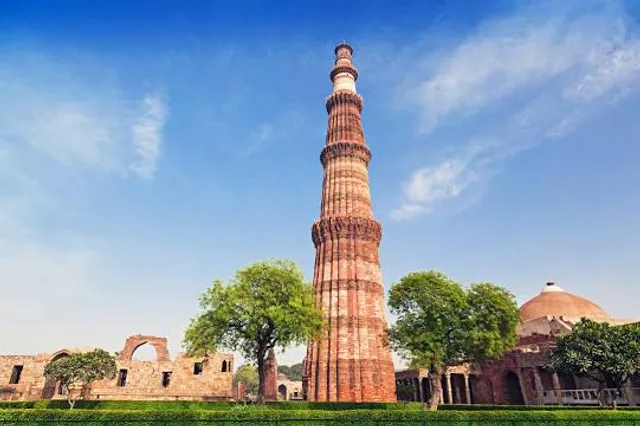
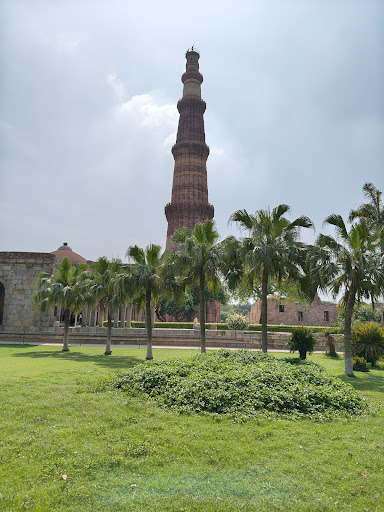
Qutub Minar is one of the most iconic historical monuments in Delhi and a UNESCO World Heritage Site. Standing tall at 73 meters, this magnificent minaret was constructed in 1193 by Qutb-ud-din Aibak and later completed by his successors. The intricate carvings and detailed inscriptions in Arabic along the red sandstone structure are a testament to the exquisite craftsmanship of the era.

Before entering the main complex, security checks are conducted to ensure the safety of all visitors. Once inside, you can explore the various architectural marvels at your own pace. The information plaques near each structure provide valuable insights into their historical and cultural significance.👮

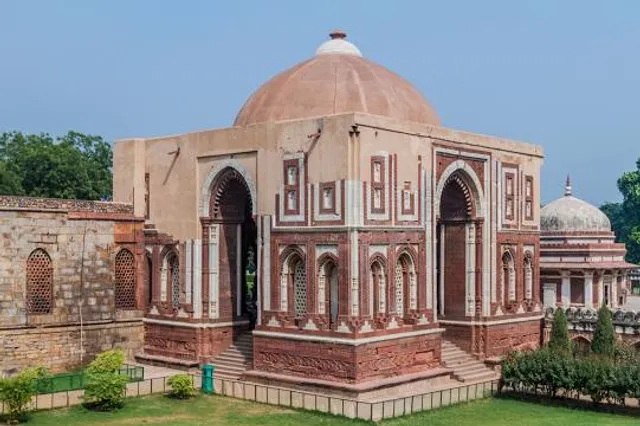
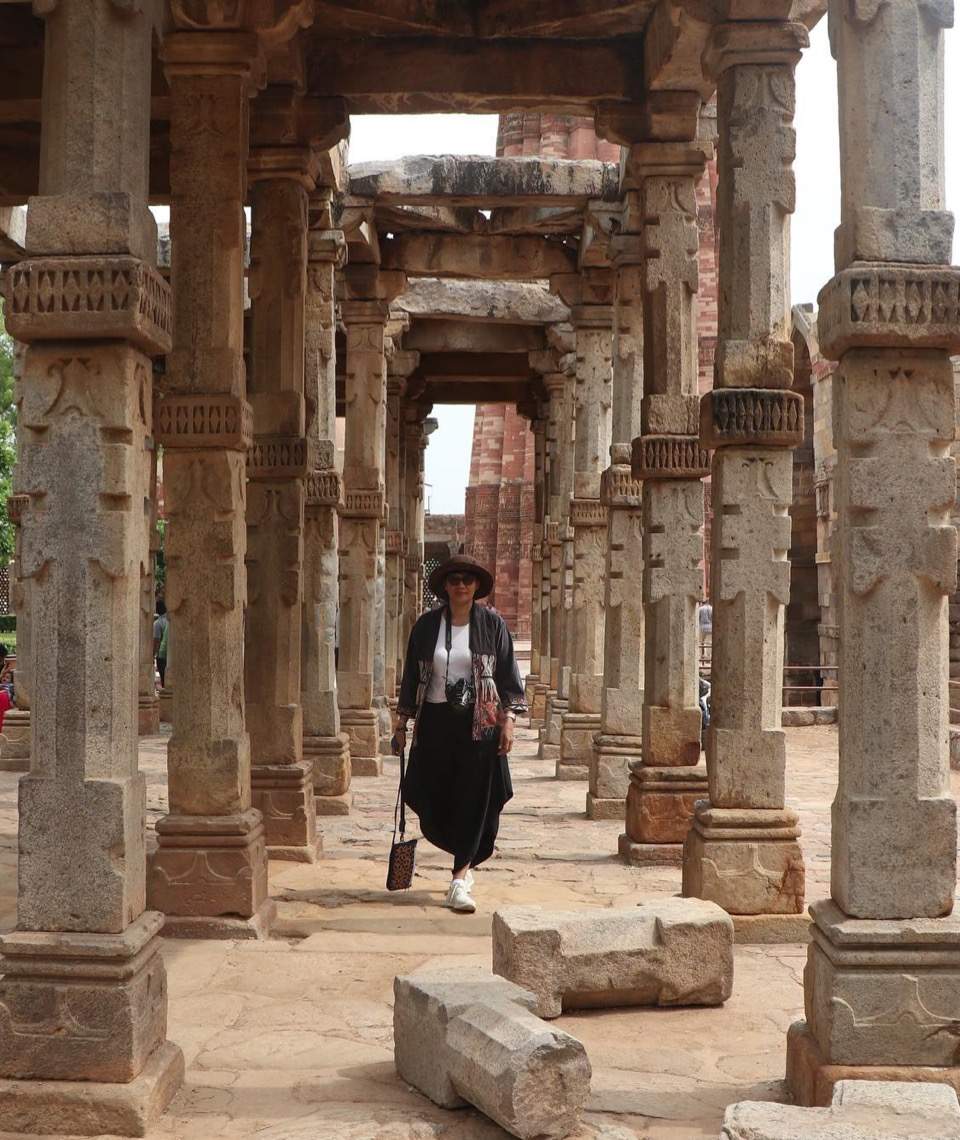
The minaret is surrounded by several other historically significant structures, including the Quwwat-ul-Islam Mosque, the first mosque to be built in India, and the Iron Pillar of Delhi, famous for its rust-resistant composition.

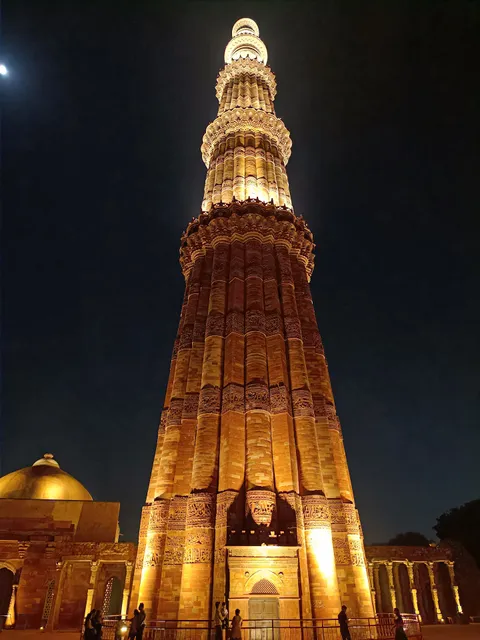
My visit to Qutub Minar was an enriching experience. I visited this place with my friend and enjoyed it to the fullest. We also explored the place during the daytime and the evening. Qutub Minar looks absolutely stunning in the evening! As the sun sets, they flash lights over the Qutub Minar, and it looks breathtaking. So, Qutub Minar is a place that should be visited during the day and in the late evening. You must witness this beauty in the evening as well.

The towering minaret set against the backdrop of a clear blue sky is a sight to behold. As you walk through the complex, you can feel the rich history emanating from every corner. The lush gardens around the monument provide a serene environment for visitors to sit and obserbe the beauty and history of the place.🌳⛅

📌 Practical Tips: Footwear: Comfortable walking shoes are recommended as the site involves a fair amount of walking.

Best Time to Visit: Early morning or late afternoon to avoid the midday heat and to enjoy the site with fewer crowds.

Guided Tours: Hiring a guide or using an audio guide can greatly enhance your understanding of the site’s history.

Qutub Minar is a family-friendly place, offering educational and fun experiences for visitors of all ages. The spacious gardens provide ample space for kids to play, while adults can appreciate the historical and architectural significance of the site. 🌳🍃

Take out at least 2 hours to entirely explore this beautiful place. ⏳

Overall, Qutub Minar is not just a monument but a gateway to India’s rich past. It’s a must-visit for history enthusiasts, photographers, families, and anyone interested in exploring the cultural heritage of India. Allow yourself at least 2-3 hours to fully explore and appreciate this...

   Read more
avatar
5.0
30w

Qutb Minar, the tallest stone tower in India was conceived by Qutbud-Din Aibak (A.D. 1192-1210) as a tower of victory attached to Quwwat-ul-Islam Mosque. Qutbud-Din completed the first storey while the second, third and fourth were completed by his successor Iltutmish (A.D. 1211-36). When it was damaged by lighting in 1326 and 1368, the fourth storey was dismantled and reconstructed by Firuz Tughluq (A.D. 1351-88) with an additional storey, making it a five storied structure. Later on in 1503 Sikandar Lodi (A.D. 1489-1517) also carried out stone restorations in the upper stories,

With a height of 238 ft and 379 steps, although it is the highest stone tower in India, it would be a pleasant surprise to know that its height is 5 ft less than that of the Taj Mahal (243ft).

The lowest storey with alternate angular and circular flutings, the second with round ones and the third with angular ones only, keeping through-out the same alignment, gives a pleasing vertical look to the Minar. The projecting balconies with beautiful stalactite pendentives and its tiny alcoves further heightens its pleasing effect. The decorative inscriptional bands defines each storey with its undulating curves, It has a diameter of 46 ft at the base and about 9 ft at the top.

Iron Pillar 4th Century A.D.

In the courtyard of the Quwwatu'l-Islam mosque stands the famous 'Iron Pillar which bears a Sanskrit inscription in Gupta Brahmt script, palaeographically assignable to the fourth century, a date which is also confirmed by the peculiar style of its amalaka-capital. The inscription records that the pillar was set up as a standard (dhvaja) of god Vishnu on the hill known as Vishnupada, in the memory of mighty king, Chandra, who is now regarded as identical with Chandragupta II (375-413 A.D.) of the imperial Gupta dynasty.

It is said to have been brought to Delhi by the Tomar king Anangpal, somewhere in the 11th century. It is also said that Iltutmish shifted it from Udaigiri in district Vidisa, Madhya Pradesh in 1233 A.D. The total height of this slightly tapering shaft is 24 ft of which 3 ft is buried below the ground. It is composed of seven distinct parls It is agreed that the high phosphorous content of the pillar from the protective film over it made it a rustless wonder, A deep hole on the top of the pillar Indicates that an image of Garuda, the vahana (vehicle) of Vishnu, eriginally fitted into it is now lost.

Weighing about 6000 kg and made of corrosion free wrought iron, the pillar is a metallurgical marvel of ancient India and is unique In the annals of metallurgical research. Even the most technologically advanced centuries could not have produced such a column of wrought iron before 1851 A,D which India had already produced 1600 years ago. The first systematic study of the pillar was made by Sir Robert Hatfield in 1912 A. D. followed by National Metallurgical Laboratory and Tata Iron and...

   Read more
avatar
5.0
1y

This UNESCO World Heritage Site is the tallest brick Minaret in the world. I believe 🤔no concrete has been use in its construction, stones are simply slotted in. There are around 6 less known monuments within the grounds that surround this marvel. For photographers, you can take in your mobile phones and still cameras, video cameras are not permitted, however you are free to use the video capability of you phone to capture the show, so set it on your highest resolution. I saw this complex after sunset as I was advised that they had spend considerable time creating a light show. I was expecting some form of a multitude of dancing coloured spotlights. Before the show started there seemed to be 2 or 3 attempts to start this show. Between 15 seconds and 1 minute, perhaps this is a trial prequal to the actual show. Find an unintrusive spot to capture this show from, preferable with the least number of people around as where I stood, although initially very sparsely populated, soon filled up. My phone video footage however, is full up unnecessary nonsensical chatter of people in the background when they should simply zip up their oriphises and enjoy the "Projection" spectable in front of them as one expects that is what they came to see. Anyhow, I recorded the spectacle for a tad under 10.5 minutes, file size is 1.05gb. (A monopod with a tiltsble phone mount would be ideal here and save one a backache).

I did manage to see bits of the show with my own eyes, that was mesmerising.

Look out for the numerous low flying aircraft that seem to virtually kiss the Minaret.

Also as it was a clear night, I saw many stars and so went around the Minaret, adjusting my focal length until I was able to line up a star over its right shoulder.

Apart from the unnecessary chatter, the show was superb. Well worth the trouble.

Take time walking around all the surrounding buildings, very grand and eye catching. In a few places however the spot lights seem to be designed to blind you rather than spot light the monuments. Also be careful when walking, because of some of these spotlights, it somewhat blinds you to the approaching steps along the walkways.

Hope you get a nice clear day when it is not raining and you will thoroughly enjoy you visit. I believe there is just the one light show.

The approx 10.5 minutes of my Filmed material shows a file capture capture time of 19:10. I assume this is time of year dependant. So best to check the sunset time for the time of year you are going there and be there 15 minutes prior or that so you can locate your ideal viewing/ filing spot. I personally spent 1 hr 15 minutes there, predominantly focused around the Minaret. I would suggest atleast 2+ hours if you want to see the other buildings as this is a very large well maintained complex.

Enjoy your...

   Read more
Page 1 of 7
Previous
Next

Posts

Qutb Minar
New Delhi
wulan_dewi_sunuwulan_dewi_sunu
Qutb Minar New Delhi
LokeshLokesh
🕓 Timings: Open all days of the week 7:00 AM to 8:00 PM 🎟️ Entry Fee: Indian Citizens: ₹40 Foreigners: ₹600 Children (up to 15 years): Free 📌 Book the ticket for this place in advance before reaching the place, as the internet absolutely doesn't work there. Book the tickets online from the Archaeological Survey of India's official website, as the ticket counter is always super crowded! And tickets are a little cheaper in online mode. 🚇 Nearest Metro Station: Qutub Minar (Yellow Line) 1.5 Km from Qutub Minar metro station. 📸 Photography and Videography: Allowed ♿ Accessibility: Certain areas are accessible to specially-abled persons. 🚻 Washrooms: Separate washrooms for ladies and gents. Toilets are accessible to specially-abled persons.♿ 🚰 Drinking Water: Drinking water is available inside the premises. 🅿️ Parking: Parking space for cars and two-wheelers is available near the entrance. 🚫 Restrictions: Bringing food items and pet animals is not allowed.🍱🐶 Smoking and drinking alcohol is not allowed inside the premises. Qutub Minar is one of the most iconic historical monuments in Delhi and a UNESCO World Heritage Site. Standing tall at 73 meters, this magnificent minaret was constructed in 1193 by Qutb-ud-din Aibak and later completed by his successors. The intricate carvings and detailed inscriptions in Arabic along the red sandstone structure are a testament to the exquisite craftsmanship of the era. Before entering the main complex, security checks are conducted to ensure the safety of all visitors. Once inside, you can explore the various architectural marvels at your own pace. The information plaques near each structure provide valuable insights into their historical and cultural significance.👮 The minaret is surrounded by several other historically significant structures, including the Quwwat-ul-Islam Mosque, the first mosque to be built in India, and the Iron Pillar of Delhi, famous for its rust-resistant composition. My visit to Qutub Minar was an enriching experience. I visited this place with my friend and enjoyed it to the fullest. We also explored the place during the daytime and the evening. Qutub Minar looks absolutely stunning in the evening! As the sun sets, they flash lights over the Qutub Minar, and it looks breathtaking. So, Qutub Minar is a place that should be visited during the day and in the late evening. You must witness this beauty in the evening as well. The towering minaret set against the backdrop of a clear blue sky is a sight to behold. As you walk through the complex, you can feel the rich history emanating from every corner. The lush gardens around the monument provide a serene environment for visitors to sit and obserbe the beauty and history of the place.🌳⛅ 📌 Practical Tips: Footwear: Comfortable walking shoes are recommended as the site involves a fair amount of walking. Best Time to Visit: Early morning or late afternoon to avoid the midday heat and to enjoy the site with fewer crowds. Guided Tours: Hiring a guide or using an audio guide can greatly enhance your understanding of the site’s history. Qutub Minar is a family-friendly place, offering educational and fun experiences for visitors of all ages. The spacious gardens provide ample space for kids to play, while adults can appreciate the historical and architectural significance of the site. 🌳🍃 Take out at least 2 hours to entirely explore this beautiful place. ⏳ Overall, Qutub Minar is not just a monument but a gateway to India’s rich past. It’s a must-visit for history enthusiasts, photographers, families, and anyone interested in exploring the cultural heritage of India. Allow yourself at least 2-3 hours to fully explore and appreciate this historical treasure.✨
Shaikh SadequeShaikh Sadeque
Qutb Minar, the tallest stone tower in India was conceived by Qutbud-Din Aibak (A.D. 1192-1210) as a tower of victory attached to Quwwat-ul-Islam Mosque. Qutbud-Din completed the first storey while the second, third and fourth were completed by his successor Iltutmish (A.D. 1211-36). When it was damaged by lighting in 1326 and 1368, the fourth storey was dismantled and reconstructed by Firuz Tughluq (A.D. 1351-88) with an additional storey, making it a five storied structure. Later on in 1503 Sikandar Lodi (A.D. 1489-1517) also carried out stone restorations in the upper stories, With a height of 238 ft and 379 steps, although it is the highest stone tower in India, it would be a pleasant surprise to know that its height is 5 ft less than that of the Taj Mahal (243ft). The lowest storey with alternate angular and circular flutings, the second with round ones and the third with angular ones only, keeping through-out the same alignment, gives a pleasing vertical look to the Minar. The projecting balconies with beautiful stalactite pendentives and its tiny alcoves further heightens its pleasing effect. The decorative inscriptional bands defines each storey with its undulating curves, It has a diameter of 46 ft at the base and about 9 ft at the top. Iron Pillar 4th Century A.D. In the courtyard of the Quwwatu'l-Islam mosque stands the famous 'Iron Pillar which bears a Sanskrit inscription in Gupta Brahmt script, palaeographically assignable to the fourth century, a date which is also confirmed by the peculiar style of its amalaka-capital. The inscription records that the pillar was set up as a standard (dhvaja) of god Vishnu on the hill known as Vishnupada, in the memory of mighty king, Chandra, who is now regarded as identical with Chandragupta II (375-413 A.D.) of the imperial Gupta dynasty. It is said to have been brought to Delhi by the Tomar king Anangpal, somewhere in the 11th century. It is also said that Iltutmish shifted it from Udaigiri in district Vidisa, Madhya Pradesh in 1233 A.D. The total height of this slightly tapering shaft is 24 ft of which 3 ft is buried below the ground. It is composed of seven distinct parls It is agreed that the high phosphorous content of the pillar from the protective film over it made it a rustless wonder, A deep hole on the top of the pillar Indicates that an image of Garuda, the vahana (vehicle) of Vishnu, eriginally fitted into it is now lost. Weighing about 6000 kg and made of corrosion free wrought iron, the pillar is a metallurgical marvel of ancient India and is unique In the annals of metallurgical research. Even the most technologically advanced centuries could not have produced such a column of wrought iron before 1851 A,D which India had already produced 1600 years ago. The first systematic study of the pillar was made by Sir Robert Hatfield in 1912 A. D. followed by National Metallurgical Laboratory and Tata Iron and Steel Company.
See more posts
See more posts
hotel
Find your stay

Pet-friendly Hotels in Delhi

Find a cozy hotel nearby and make it a full experience.

Qutb Minar New Delhi
wulan_dewi_sunu

wulan_dewi_sunu

hotel
Find your stay

Affordable Hotels in Delhi

Find a cozy hotel nearby and make it a full experience.

Get the Appoverlay
Get the AppOne tap to find yournext favorite spots!
🕓 Timings: Open all days of the week 7:00 AM to 8:00 PM 🎟️ Entry Fee: Indian Citizens: ₹40 Foreigners: ₹600 Children (up to 15 years): Free 📌 Book the ticket for this place in advance before reaching the place, as the internet absolutely doesn't work there. Book the tickets online from the Archaeological Survey of India's official website, as the ticket counter is always super crowded! And tickets are a little cheaper in online mode. 🚇 Nearest Metro Station: Qutub Minar (Yellow Line) 1.5 Km from Qutub Minar metro station. 📸 Photography and Videography: Allowed ♿ Accessibility: Certain areas are accessible to specially-abled persons. 🚻 Washrooms: Separate washrooms for ladies and gents. Toilets are accessible to specially-abled persons.♿ 🚰 Drinking Water: Drinking water is available inside the premises. 🅿️ Parking: Parking space for cars and two-wheelers is available near the entrance. 🚫 Restrictions: Bringing food items and pet animals is not allowed.🍱🐶 Smoking and drinking alcohol is not allowed inside the premises. Qutub Minar is one of the most iconic historical monuments in Delhi and a UNESCO World Heritage Site. Standing tall at 73 meters, this magnificent minaret was constructed in 1193 by Qutb-ud-din Aibak and later completed by his successors. The intricate carvings and detailed inscriptions in Arabic along the red sandstone structure are a testament to the exquisite craftsmanship of the era. Before entering the main complex, security checks are conducted to ensure the safety of all visitors. Once inside, you can explore the various architectural marvels at your own pace. The information plaques near each structure provide valuable insights into their historical and cultural significance.👮 The minaret is surrounded by several other historically significant structures, including the Quwwat-ul-Islam Mosque, the first mosque to be built in India, and the Iron Pillar of Delhi, famous for its rust-resistant composition. My visit to Qutub Minar was an enriching experience. I visited this place with my friend and enjoyed it to the fullest. We also explored the place during the daytime and the evening. Qutub Minar looks absolutely stunning in the evening! As the sun sets, they flash lights over the Qutub Minar, and it looks breathtaking. So, Qutub Minar is a place that should be visited during the day and in the late evening. You must witness this beauty in the evening as well. The towering minaret set against the backdrop of a clear blue sky is a sight to behold. As you walk through the complex, you can feel the rich history emanating from every corner. The lush gardens around the monument provide a serene environment for visitors to sit and obserbe the beauty and history of the place.🌳⛅ 📌 Practical Tips: Footwear: Comfortable walking shoes are recommended as the site involves a fair amount of walking. Best Time to Visit: Early morning or late afternoon to avoid the midday heat and to enjoy the site with fewer crowds. Guided Tours: Hiring a guide or using an audio guide can greatly enhance your understanding of the site’s history. Qutub Minar is a family-friendly place, offering educational and fun experiences for visitors of all ages. The spacious gardens provide ample space for kids to play, while adults can appreciate the historical and architectural significance of the site. 🌳🍃 Take out at least 2 hours to entirely explore this beautiful place. ⏳ Overall, Qutub Minar is not just a monument but a gateway to India’s rich past. It’s a must-visit for history enthusiasts, photographers, families, and anyone interested in exploring the cultural heritage of India. Allow yourself at least 2-3 hours to fully explore and appreciate this historical treasure.✨
Lokesh

Lokesh

hotel
Find your stay

The Coolest Hotels You Haven't Heard Of (Yet)

Find a cozy hotel nearby and make it a full experience.

hotel
Find your stay

Trending Stays Worth the Hype in Delhi

Find a cozy hotel nearby and make it a full experience.

Qutb Minar, the tallest stone tower in India was conceived by Qutbud-Din Aibak (A.D. 1192-1210) as a tower of victory attached to Quwwat-ul-Islam Mosque. Qutbud-Din completed the first storey while the second, third and fourth were completed by his successor Iltutmish (A.D. 1211-36). When it was damaged by lighting in 1326 and 1368, the fourth storey was dismantled and reconstructed by Firuz Tughluq (A.D. 1351-88) with an additional storey, making it a five storied structure. Later on in 1503 Sikandar Lodi (A.D. 1489-1517) also carried out stone restorations in the upper stories, With a height of 238 ft and 379 steps, although it is the highest stone tower in India, it would be a pleasant surprise to know that its height is 5 ft less than that of the Taj Mahal (243ft). The lowest storey with alternate angular and circular flutings, the second with round ones and the third with angular ones only, keeping through-out the same alignment, gives a pleasing vertical look to the Minar. The projecting balconies with beautiful stalactite pendentives and its tiny alcoves further heightens its pleasing effect. The decorative inscriptional bands defines each storey with its undulating curves, It has a diameter of 46 ft at the base and about 9 ft at the top. Iron Pillar 4th Century A.D. In the courtyard of the Quwwatu'l-Islam mosque stands the famous 'Iron Pillar which bears a Sanskrit inscription in Gupta Brahmt script, palaeographically assignable to the fourth century, a date which is also confirmed by the peculiar style of its amalaka-capital. The inscription records that the pillar was set up as a standard (dhvaja) of god Vishnu on the hill known as Vishnupada, in the memory of mighty king, Chandra, who is now regarded as identical with Chandragupta II (375-413 A.D.) of the imperial Gupta dynasty. It is said to have been brought to Delhi by the Tomar king Anangpal, somewhere in the 11th century. It is also said that Iltutmish shifted it from Udaigiri in district Vidisa, Madhya Pradesh in 1233 A.D. The total height of this slightly tapering shaft is 24 ft of which 3 ft is buried below the ground. It is composed of seven distinct parls It is agreed that the high phosphorous content of the pillar from the protective film over it made it a rustless wonder, A deep hole on the top of the pillar Indicates that an image of Garuda, the vahana (vehicle) of Vishnu, eriginally fitted into it is now lost. Weighing about 6000 kg and made of corrosion free wrought iron, the pillar is a metallurgical marvel of ancient India and is unique In the annals of metallurgical research. Even the most technologically advanced centuries could not have produced such a column of wrought iron before 1851 A,D which India had already produced 1600 years ago. The first systematic study of the pillar was made by Sir Robert Hatfield in 1912 A. D. followed by National Metallurgical Laboratory and Tata Iron and Steel Company.
Shaikh Sadeque

Shaikh Sadeque

See more posts
See more posts