HTML SitemapExplore
logo
Find Things to DoFind The Best Restaurants

Baths of Caracalla — Attraction in Rome

Name
Baths of Caracalla
Description
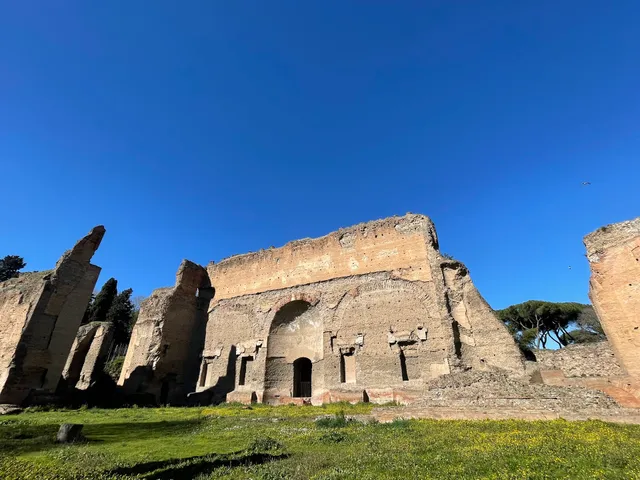
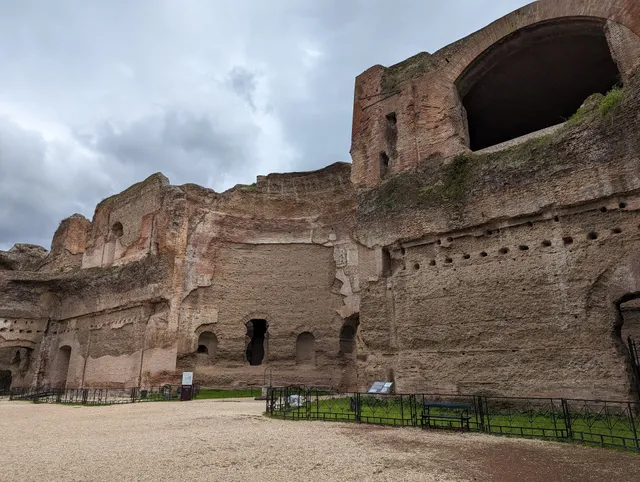
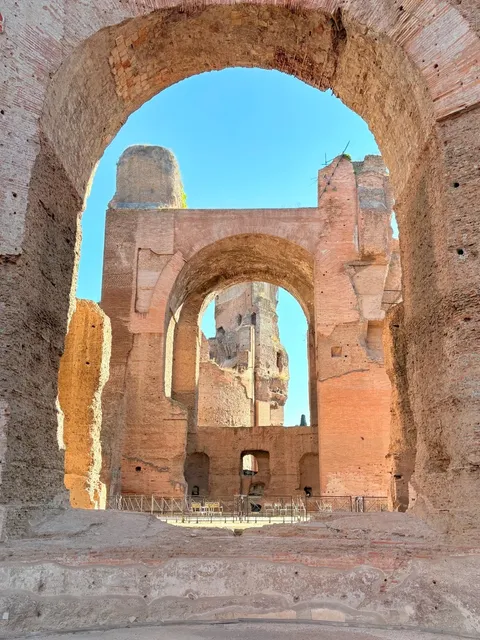
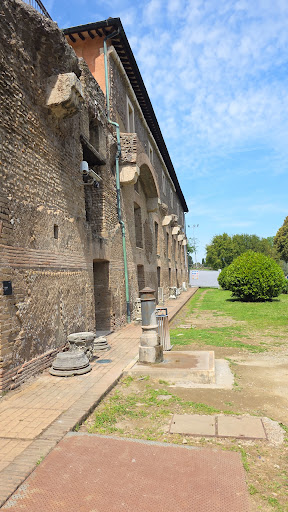
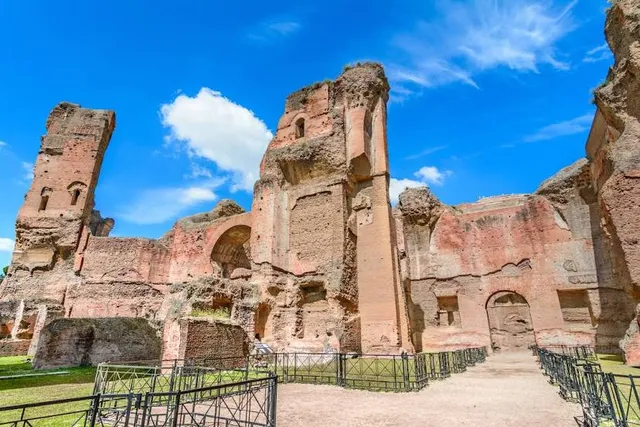
The Baths of Caracalla in Rome, Italy, were the city's second largest Roman public baths, or thermae, after the Baths of Diocletian. The baths were likely built between AD 212 and 216/217, during the reigns of emperors Septimius Severus and Caracalla.
Nearby attractions
Terme di Caracalla
Viale delle Terme di Caracalla, 52, 00153 Roma RM, Italy
Auditorium Caracalla
Viale delle Terme di Caracalla, 52, 00153 Roma RM, Italy
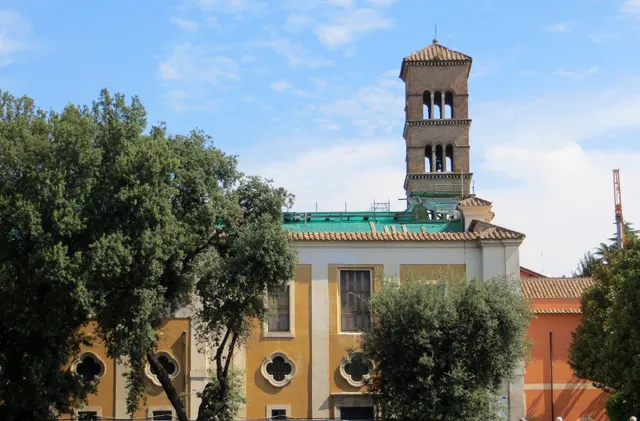
Santa Maria in Tempulo
Via di Valle delle Camene, 00184 Caracalla, Roma RM, Italy
Contemporary Cluster
Via Odoardo Beccari, 8/10 - 12, 00154 Roma RM, Italy
Circus Maximus
00186 Rome, Metropolitan City of Rome Capital, Italy
Santa Maria in Domnica
Via della Navicella, 10, 00184 Roma RM, Italy
Basilica Santi Giovanni e Paolo
Piazza Dei SS. Giovanni e Paolo, 00184 Roma RM, Italy
Fontana della Navicella
Via della Navicella, 00184 Roma RM, Italy
Aurelian Walls
Via di Porta San Sebastiano, 18, 00179 Roma RM, Italy
Porta San Paolo
P.za Ostiense, 00154 Roma RM, Italy
Nearby restaurants
Al Callarello
Via Salvator Rosa, 8, 00153 Roma RM, Italy
ViMi Ristorante
Viale Aventino, 14, 00153 Roma RM, Italy
Rosso Eat Drink Stay
Viale Aventino, 32, 00153 Roma RM, Italy
Bull Steak
Viale di Porta Ardeatina, 114/115, 00154 Roma RM, Italy
Elleniko® Cucina Greca
Viale Aventino, 83, 00153 Roma RM, Italy
NUMA al Circo
Viale Aventino, 20, 00153 Roma RM, Italy
Court Delicati Roma
Viale Aventino, 39/41/43, 00153 Roma RM, Italy
La Renardiere
Viale Aventino, 31, 00153 Roma RM, Italy
Sushi e Noodles - Aventino
Viale Aventino, 117, 00153 Roma RM, Italy
Ristorante e Pinseria - Saba Caffè & Cucina
Via di S. Saba, 30- 32, 00153 Roma RM, Italy
Nearby hotels
Casa per ferie Suore Domenicane
Via Druso, 2, 00184 Roma RM, Italy
The Corner Townhouse
Viale Aventino, 121, 00153 Roma RM, Italy
B&B Circus Maximus
Viale Aventino, 61, 00153 Roma RM, Italy
Aventino Contemporary Apartment
Via Aventina, 19, 00153 Roma RM, Italy
Druso Dream Apartment Colosseo
Via Druso, 41, 00184 Roma RM, Italy
Aventino Guest House
Viale Aventino, 98, 00153 Roma RM, Italy
Hotel Valeri
L.go dell'Amba Aradam, 3, 00184 Roma RM, Italy
ELISA's HOUSE
Via Costantino Beltrami, 10, 00154 Roma RM, Italy
Fauno Urban Resort Roma
Via della Fonte di Fauno, 31, 00153 Roma RM, Italy
BePlace Aventino
Via di S. Saba, 22, 00153 Roma RM, Italy
Related posts
🇮🇹 Rome's Hidden Gems: A Quiet Escape from the CrowdsRome’s Places of Serenity (A Short Travelogue)
Keywords
Baths of Caracalla tourism.Baths of Caracalla hotels.Baths of Caracalla bed and breakfast. flights to Baths of Caracalla.Baths of Caracalla attractions.Baths of Caracalla restaurants.Baths of Caracalla travel.Baths of Caracalla travel guide.Baths of Caracalla travel blog.Baths of Caracalla pictures.Baths of Caracalla photos.Baths of Caracalla travel tips.Baths of Caracalla maps.Baths of Caracalla things to do.
Baths of Caracalla things to do, attractions, restaurants, events info and trip planning
Baths of Caracalla
ItalyLazioRomeBaths of Caracalla

Basic Info

Baths of Caracalla

Viale delle Terme di Caracalla, 00153 Roma RM, Italy
4.6(9.4K)
Closed
Save
spot

Ratings & Description

Info

The Baths of Caracalla in Rome, Italy, were the city's second largest Roman public baths, or thermae, after the Baths of Diocletian. The baths were likely built between AD 212 and 216/217, during the reigns of emperors Septimius Severus and Caracalla.

Cultural
Outdoor
Accessibility
attractions: Terme di Caracalla, Auditorium Caracalla, Santa Maria in Tempulo, Contemporary Cluster, Circus Maximus, Santa Maria in Domnica, Basilica Santi Giovanni e Paolo, Fontana della Navicella, Aurelian Walls, Porta San Paolo, restaurants: Al Callarello, ViMi Ristorante, Rosso Eat Drink Stay, Bull Steak, Elleniko® Cucina Greca, NUMA al Circo, Court Delicati Roma, La Renardiere, Sushi e Noodles - Aventino, Ristorante e Pinseria - Saba Caffè & Cucina
logoLearn more insights from Wanderboat AI.
Phone
+39 06 5717 4520
Website
turismoroma.it
Open hoursSee all hours
Fri9 AM - 7:15 PMClosed

Plan your stay

hotel
Pet-friendly Hotels in Rome
Find a cozy hotel nearby and make it a full experience.

hotel
Affordable Hotels in Rome
Find a cozy hotel nearby and make it a full experience.

hotel
The Coolest Hotels You Haven't Heard Of (Yet)
Find a cozy hotel nearby and make it a full experience.

hotel
Trending Stays Worth the Hype in Rome
Find a cozy hotel nearby and make it a full experience.

Reviews

Nearby attractions of Baths of Caracalla

Terme di Caracalla

Auditorium Caracalla

Santa Maria in Tempulo

Contemporary Cluster

Circus Maximus

Santa Maria in Domnica

Basilica Santi Giovanni e Paolo

Fontana della Navicella

Aurelian Walls

Porta San Paolo

Terme di Caracalla

Terme di Caracalla

4.5

(65)

Closed
Click for details
Auditorium Caracalla

Auditorium Caracalla

4.6

(94)

Open 24 hours
Click for details
Santa Maria in Tempulo

Santa Maria in Tempulo

4.7

(189)

Open 24 hours
Click for details
Contemporary Cluster

Contemporary Cluster

4.3

(128)

Open 24 hours
Click for details

Things to do nearby

Catacombs: The Coolest Underground Tour in Rome
Sat, Dec 6 • 10:00 AM
00147, Rome, Lazio, Italy
View details
Pasta-making class, wine tasting and dinner
Fri, Dec 5 • 7:30 PM
00044, Frascati, Lazio, Italy
View details
Pasta and Pizza cooking class with wine and more
Sun, Dec 7 • 10:30 AM
00142, Rome, Lazio, Italy
View details

Nearby restaurants of Baths of Caracalla

Al Callarello

ViMi Ristorante

Rosso Eat Drink Stay

Bull Steak

Elleniko® Cucina Greca

NUMA al Circo

Court Delicati Roma

La Renardiere

Sushi e Noodles - Aventino
Ristorante e Pinseria - Saba Caffè & Cucina

Al Callarello

Al Callarello

4.0

(429)

Click for details
ViMi Ristorante

ViMi Ristorante

4.4

(1.7K)

Click for details
Rosso Eat Drink Stay

Rosso Eat Drink Stay

4.0

(1.6K)

Click for details
Bull Steak

Bull Steak

4.4

(1.0K)

Click for details
Get the Appoverlay
Get the AppOne tap to find yournext favorite spots!

The hit list

restaurant
Best 10 Restaurants to Visit in Rome
February 12 · 5 min read
attraction
Best 10 Attractions to Visit in Rome
February 12 · 5 min read
Rome

Plan your trip with Wanderboat

Welcome to Wanderboat AI, your AI search for local Eats and Fun, designed to help you explore your city and the world with ease.

Powered by Wanderboat AI trip planner.
Wanderboat LogoWanderboat

Your everyday Al companion for getaway ideas

CompanyAbout Us
InformationAI Trip PlannerSitemap
SocialXInstagramTiktokLinkedin
LegalTerms of ServicePrivacy Policy

Get the app

© 2025 Wanderboat. All rights reserved.
logo

Reviews of Baths of Caracalla

4.6
(9,439)
avatar
5.0
30w

MUSEUMS BUILDING

The structure that completes and closes the western side of the Canopus-Serapeum complex is an complicated building from the Hadrianic period, little known until recently, consisting of two phases of construction established on adjoining terraces and supported along the side facing the valley by imposing substructures.

Both structures consisted of a rectangular 'U' shape, with a garden in the centre and two storeys rising above ground. The presence of two rooms with multiple latrines indicates that the building was of a residential type, but as confirmed by the flooring-white mosaic with a black perimeter band not intended for imperial usage: the graffiti inscriptions preserved on the walls of one of the two latrines could support a oport hypothesis that those housed there were soldiers stationed at the Villa.

The best-preserved part of the ancient structure, located in the north-eastern corner, was converted Into a farmhouse in the early 19th century by the Dukes of Braschi Onesti, then owners of this part of the Villa; and it remained in use as a residence use even after the acquisition of the Hadrian's Villa complex by the State (1870). At the end of the 1950s, the substructures were utilised as an Antiquarium to house the works found in the excavation campaigns that had brought to light the lengthy stretch of of wate water in front of the so-called Sorapoum and a considerable body of sculptural decoration that adorned its banks and surrounding area. Currently, the building, which was restored in its entirety in the 1980s and 1990s, is part of the Mousela project, which aims to make locations and artworks accessible to visitors, including inclu items in storage, that have resulted from historic and recent excavations throughout the...

   Read more
avatar
2.0
42w

Experience was fair only because we did research of the place. There is barely any signposting inside the site that informs you of what you're looking at. If you as a visitor didn't somehow know Roman bathing history, then it is essentially a pile of giant rocks built 2,000 years ago. But as a "museum" charging for entry, shouldn't the experience at least involve telling the visitor where they are, what these things used to be, and how they have changed through history? As a historical site, it is worth visiting, but prior research is strongly suggested.

The staff at the counter was staunchly unfriendly. We purchased, as "18-25 year olds", the reduced ticket, as written clearly on their website (which was the exact same requirements as any other place in Rome). But upon arrival, we were told that they only accepted EU citizens even though this was explicitly not worded on their website. When we offered to pay the difference, we were told condescendingly that there was no way to do so as "there is nothing in the system that costs 6 euros". Intentional or not, I do not feel respected as a tourist, an Asian, and a student. This experience was much worse than similarly worth experiences such as the Roman Forum and Palatine Hill.

Taking the bus to the site is fairly convenient but there is little to no signposting from the stop(s) to the site. For a supposed tourist attraction, the lack of effort to make this a good experience was disappointing. For a historical site practically reliant on historical tourism from foreigners, they really should know better.

I do not recommend buying tickets before entering if you are going in a quieter time such as February. They will do everything to make...

   Read more
avatar
5.0
1y

The Baths of Caracalla, or Terme di Caracalla, stand as an awe-inspiring testament to the grandeur of ancient Roman engineering and culture. Built between AD 212 and 216, these vast thermal baths once served as a luxurious retreat for the citizens of Rome, offering not just bathing facilities but also libraries, gardens, and even art galleries. Today, wandering through the imposing ruins, visitors can still sense the opulence and sophistication that characterized Roman society at its peak. The sheer scale of the baths is breathtaking, with towering walls and expansive courtyards that speak volumes about the ambition and vision of the ancient architects. For history enthusiasts and architecture aficionados alike, the Baths of Caracalla provide a fascinating glimpse into the past, offering a tangible connection to the glory days of the Roman Empire.

Stepping into the Baths of Caracalla is like stepping back in time, as the ruins transport visitors to a bygone era of indulgence and extravagance. The intricate mosaics, intricate frescoes, and imposing columns serve as reminders of the artistic prowess and cultural richness of ancient Rome. Despite the ravages of time, the baths still exude a sense of grandeur and majesty, making them a must-visit attraction for anyone exploring the Eternal City. Whether you're a history buff, an architecture enthusiast, or simply someone who appreciates the beauty of the past, a visit to the Baths of Caracalla promises an unforgettable experience. This place is recommended for anyone seeking to immerse themselves in the splendor of ancient Roman...

   Read more
Page 1 of 7
Previous
Next

Posts

🇮🇹 Rome's Hidden Gems: A Quiet Escape from the Crowds
Astrid VeraAstrid Vera
🇮🇹 Rome's Hidden Gems: A Quiet Escape from the Crowds
Rome’s Places of Serenity (A Short Travelogue)
Valeria GómezValeria Gómez
Rome’s Places of Serenity (A Short Travelogue)
St. IvanSt. Ivan
MUSEUMS BUILDING The structure that completes and closes the western side of the Canopus-Serapeum complex is an complicated building from the Hadrianic period, little known until recently, consisting of two phases of construction established on adjoining terraces and supported along the side facing the valley by imposing substructures. Both structures consisted of a rectangular 'U' shape, with a garden in the centre and two storeys rising above ground. The presence of two rooms with multiple latrines indicates that the building was of a residential type, but as confirmed by the flooring-white mosaic with a black perimeter band not intended for imperial usage: the graffiti inscriptions preserved on the walls of one of the two latrines could support a oport hypothesis that those housed there were soldiers stationed at the Villa. The best-preserved part of the ancient structure, located in the north-eastern corner, was converted Into a farmhouse in the early 19th century by the Dukes of Braschi Onesti, then owners of this part of the Villa; and it remained in use as a residence use even after the acquisition of the Hadrian's Villa complex by the State (1870). At the end of the 1950s, the substructures were utilised as an Antiquarium to house the works found in the excavation campaigns that had brought to light the lengthy stretch of of wate water in front of the so-called Sorapoum and a considerable body of sculptural decoration that adorned its banks and surrounding area. Currently, the building, which was restored in its entirety in the 1980s and 1990s, is part of the Mousela project, which aims to make locations and artworks accessible to visitors, including inclu items in storage, that have resulted from historic and recent excavations throughout the imperial residence.
See more posts
See more posts
hotel
Find your stay

Pet-friendly Hotels in Rome

Find a cozy hotel nearby and make it a full experience.

🇮🇹 Rome's Hidden Gems: A Quiet Escape from the Crowds
Astrid Vera

Astrid Vera

hotel
Find your stay

Affordable Hotels in Rome

Find a cozy hotel nearby and make it a full experience.

Get the Appoverlay
Get the AppOne tap to find yournext favorite spots!
Rome’s Places of Serenity (A Short Travelogue)
Valeria Gómez

Valeria Gómez

hotel
Find your stay

The Coolest Hotels You Haven't Heard Of (Yet)

Find a cozy hotel nearby and make it a full experience.

hotel
Find your stay

Trending Stays Worth the Hype in Rome

Find a cozy hotel nearby and make it a full experience.

MUSEUMS BUILDING The structure that completes and closes the western side of the Canopus-Serapeum complex is an complicated building from the Hadrianic period, little known until recently, consisting of two phases of construction established on adjoining terraces and supported along the side facing the valley by imposing substructures. Both structures consisted of a rectangular 'U' shape, with a garden in the centre and two storeys rising above ground. The presence of two rooms with multiple latrines indicates that the building was of a residential type, but as confirmed by the flooring-white mosaic with a black perimeter band not intended for imperial usage: the graffiti inscriptions preserved on the walls of one of the two latrines could support a oport hypothesis that those housed there were soldiers stationed at the Villa. The best-preserved part of the ancient structure, located in the north-eastern corner, was converted Into a farmhouse in the early 19th century by the Dukes of Braschi Onesti, then owners of this part of the Villa; and it remained in use as a residence use even after the acquisition of the Hadrian's Villa complex by the State (1870). At the end of the 1950s, the substructures were utilised as an Antiquarium to house the works found in the excavation campaigns that had brought to light the lengthy stretch of of wate water in front of the so-called Sorapoum and a considerable body of sculptural decoration that adorned its banks and surrounding area. Currently, the building, which was restored in its entirety in the 1980s and 1990s, is part of the Mousela project, which aims to make locations and artworks accessible to visitors, including inclu items in storage, that have resulted from historic and recent excavations throughout the imperial residence.
St. Ivan

St. Ivan

See more posts
See more posts