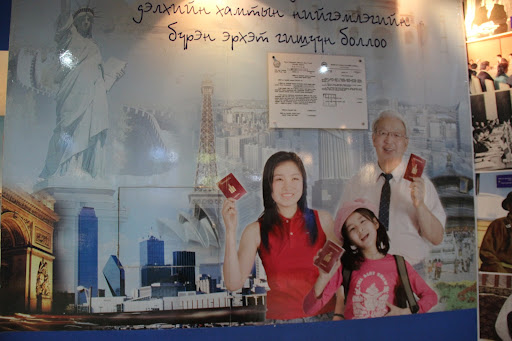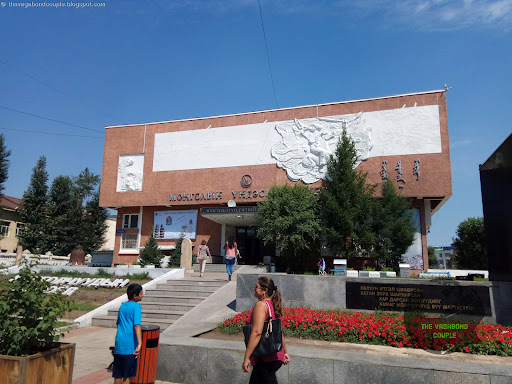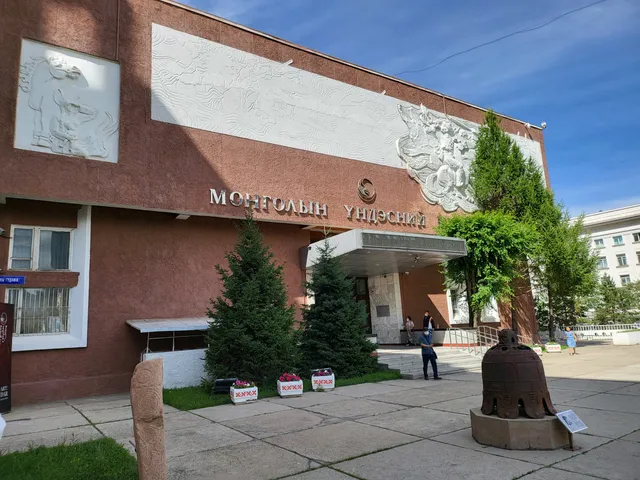
The National Museum of Mongolia; formerly the National Museum of Mongolian History is located in Ulaanbaatar. It characterizes itself as "a cultural, scientific, and educational organization, which is responsible for the collection, care and interpretation of the objects."
 Learn more insights from Wanderboat AI.



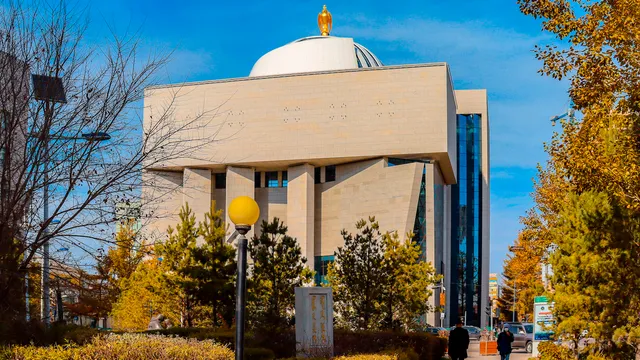
Chinggis Khan National Museum Mongolia
4.5
(698)
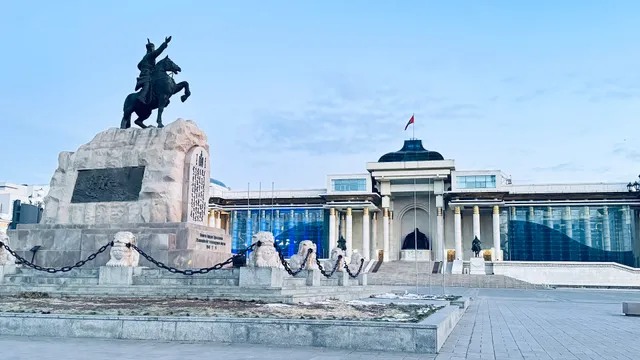
Sükhbaatar Square
4.6
(328)
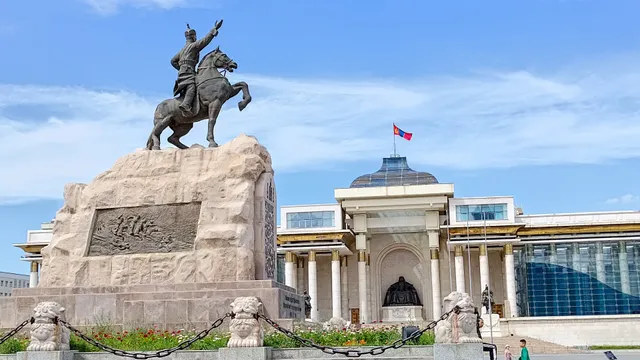
Sukhbaatar square
4.6
(50)
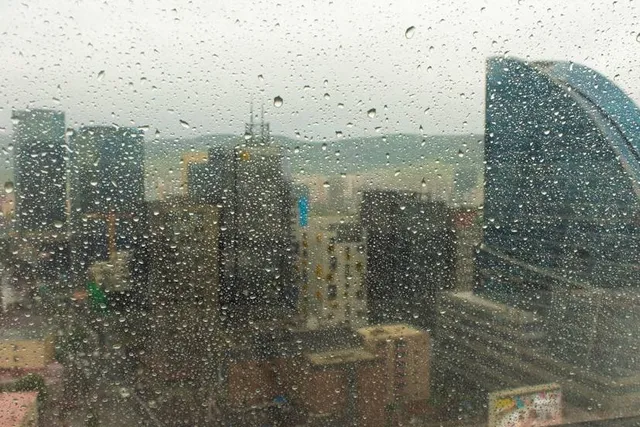
Zanabazar Museum of Fine Arts
4.4
(247)
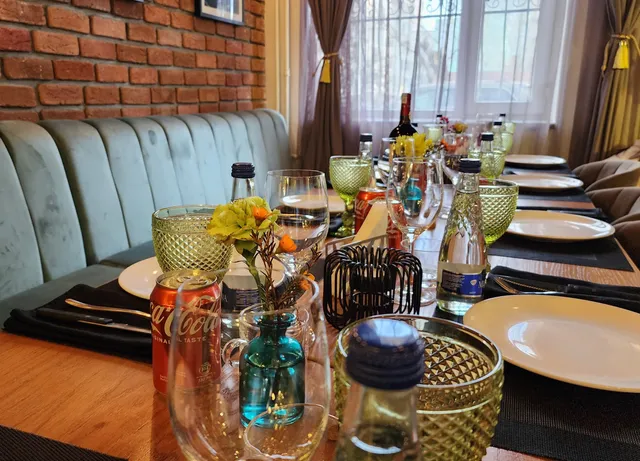
Route 22 Restaurant & Wine Lounge
4.0
(213)
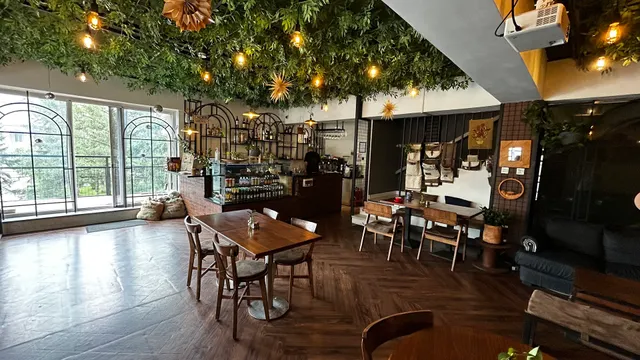
BITES
4.2
(97)
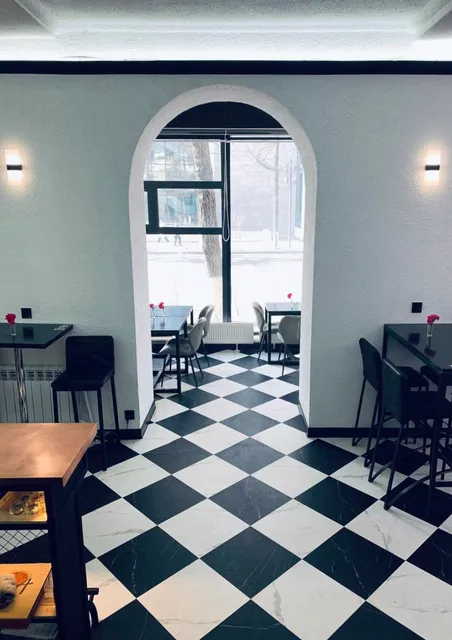
Ciao Ciao, The Art of Cuisine
4.3
(59)
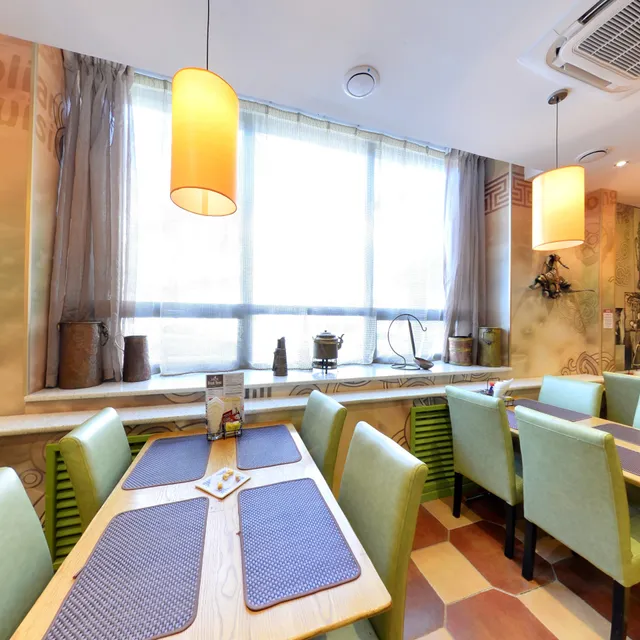
Modern nomads - 3 restaurant
3.5
(93)
$$

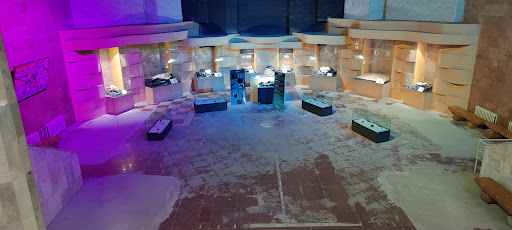
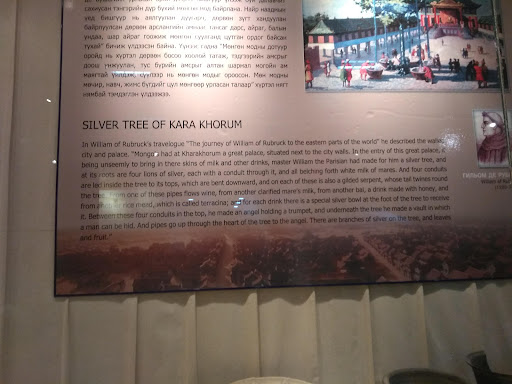
The National Museum of Mongolia (Mongolian: Монголын үндэсний түүхийн музей); formerly the National Museum of Mongolian History is located in Ulaanbaatar. This museum is a cultural, scientific, and educational organization, which is responsible for the collection, conservation and interpretation of the objects under its curation. The first museum in Mongolia, the Mongolian National Museum (now the Mongolian Natural History Museum), was established in 1924 and became the basis for other museums, including the National Museum of Mongolian History. Russian scholars, such as Pyotr Kozlov, V. I. Lisovskii, A. D. Simukov, and the American researcher Roy Chapman Andrews contributed to the museum's early collections and exhibits. The modern National Museum of Mongolian History was established after the merger of the historical, archaeological and ethnographical departments of the State Central Museum and the Museum of the Revolution in 1991. It is now located in a facility built for the Museum of the Revolution, which was founded in 1971. The National Museum of Mongolia is currently recognized as one of the leading museums in Mongolia. The significant responsibility for preserving Mongolian cultural heritage therefore lies with the museum. It is also responsible for developing museological guidelines for museums in the nation. Exhibitions cover prehistory, pre-Mongol Empire history, Mongol Empire, Mongolia during Qing rule, ethnography and traditional life, and twentieth-century history. The ethnographic collection has significant displays of the traditional dress of various Mongolian ethnic groups and of snuff bottles. Most exhibits have labels in both Mongolian and English. The museum publishes one or more issues of its in-house journal each year, with articles in Mongolian and foreign languages, including Russian...
Read more
All in all, it was worth of viewing. But wishing more improvement, I will comment some criticism. I went there today after seeing a review posted a year ago. But the ticket price was 20,000, exactly doubled than a year ago. And on their website, the ticjet price is still 10,000. It is natural to have some rise but never expected a ticket price to be doubled just at once. Evenmore, Those want to take photograph are requested to pay extra 20,000(ticket 20,000+another 20,000) . Also there was no enough light to read explanations properly . I know that some relics should not be exposed to too bright light to prevent damage. But even considering this, still there was no enough light to even just explanation on the wall, not the relics. Also, some explanation of the first room was covered by furniture or even computer etc.if there is not enough time and therefore just look around quickly without thoroughly reading like myself, it won't be any problem. But for those really want to learn will not satisfy with the light. Hope they equip more spot light and also check whether any explanation in English is covered by other object and correct if not...
Read more
If you’re enthusiastic about archeological & historical artifacts and keen on mostly reading information, this museum will provide a snapshot of Mongolian National history from Ancient times through to independence and on towards modern day history. Presentation of exhibits is a bit dry i.e. presenting the ‘what’/‘facts’ without delving much into the ‘why’/‘relevance’. Rooms were rather stuffy on a hot summer day.
Entry for 1 adult as of July 2018 is 8000T with additional 3000T for the audio guide which I opted for. Audio guide vocals were quite mechanical with a lot of static but did provide slightly more info than the printed info posters in the museum. About 1.5 - 2hr is sufficient to listen to the whole audio guide & view all exhibit rooms + read all info. Some visitors had private guides explaining exhibits to them - I listened in on some of these and gained more info from those private guides than from my audio guide/exhibit info.
Highlight was the costumes & adornment section showing different traditional dress from...
Read more