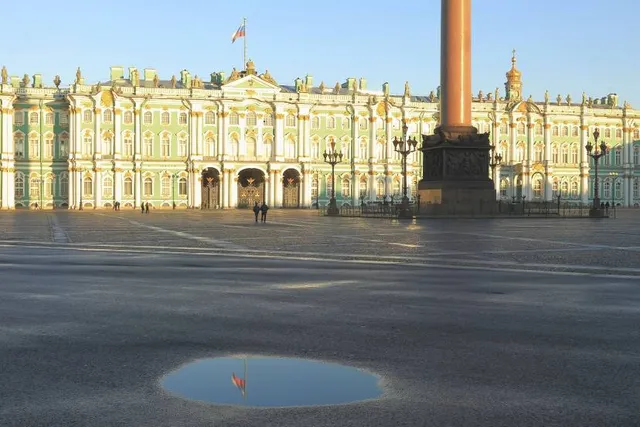
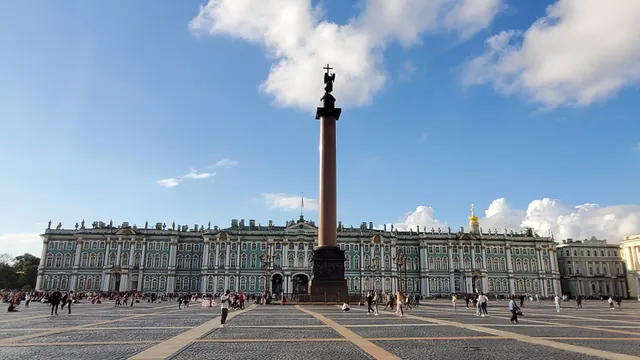
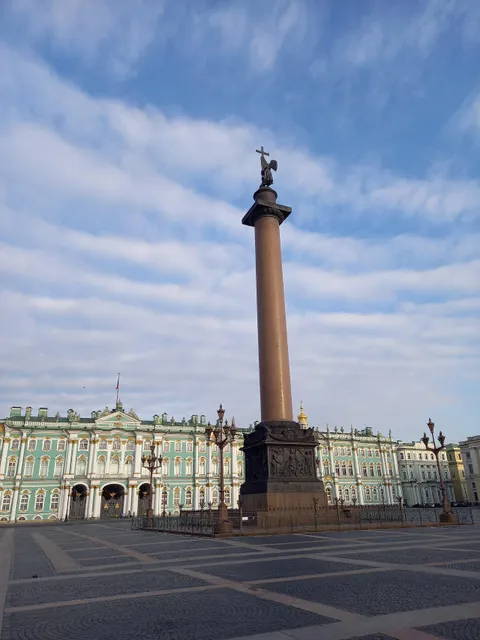
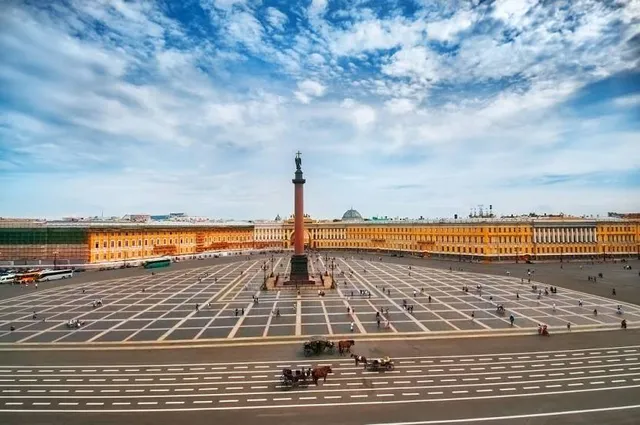
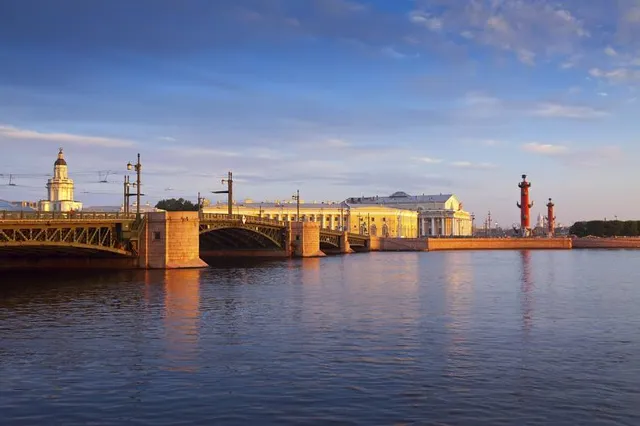
Having traveled extensively round East Europe I ,without any doubt, believe that just behind The Louvre Museé en Paris, The British Museum en London, El prado in Madrid, The Metropolitan Museum of Art in New York and the Pergamo in Berlín ,The Hermitage does get a place as one of the most beautiful museums in the word displaying a wide array of art.
Undoubtedly visiting the Hermitage is but a must when coming to Russia. I’ve visited twice Russia though the first time I didn’t visit it and. If you are going to Russia do not miss it.
As with large museums around the world, you may need to come round more than twice to get to see and appreciate the vast array which is displayed here, however, I have a few mentions which I personally find amusing and appealing. Go and admire the Cameo Gonzaga from Alexandria, Egypt, corresponding to 3rd century BC. This unique double portrait was presented in 1814 to Emperor Alexander I by Josephine, wife of Napoleon Bonaparte, as an act of gratitude for the Russian tsar’s personal visit to her palace near Paris to guarantee her safety while the victorious allied troops entered the city. It is on display in the Cameo Gallery on the first floor of the New Hermitage building.
2.Aphrodite (Venus Tauride). Ancient Greece, from the 2nd century BC.This 167-cm high marble statue was a gift to Peter the Great from the Vatican (other sources say it was exchanged for the relics of St. Bridget of Sweden). The "pagan idol" was initially put on public display in the Summer Garden, before being moved to the Tauride Palace, home of Prince Potemkin. The statue was transferred to the Hermitage in 1852 to mark the opening of the New Hermitage (where it still stands in Room 109). Statue of Jupiter. Ancient Rome, late 1st century AD.This colossal sculpture of the ancient God was acquired for the Hermitage in 1861 by Alexander II from the bankrupt Marquis of Campana. One of the largest statues in the museum, it is on display in Room 107 of the New Hermitage.
Leonardo da Vinci. Madonna Litta, 1490s. One of the first works of the High Renaissance, this painting was created for the rulers of Milan. The Hermitage bought it in 1864 from the Duke of Litta, a member of an aristocratic Milanese family, whose collection had held the painting for several centuries. The work is exhibited in Room 214 of the Large (Old) Hermitage.
Raphael. Conestabile Madonna, 1504 This early work by the great Raphael was in the collection of Count Conestabile della Stafa in Perugia, Italy. In 1871, the painting was bought by Tsar Alexander II for his wife, Maria Alexandrovna. The work was moved to the Hermitage in 1881 at the behest of the empress. See it in Room 229 of the New Hermitage.
6.Michelangelo. Crouching Boy, 1530–34. Sculpture by Michelangelo in Russia. Boy was bought by Catherine the Great in 1785.In 1851 it joined the museum in honor of the opening of the New Hermitage, where it is on display in Room 230.
Caravaggio. The Lute Player, 1596–96 The picture exists in three versions. The other two are housed in the Metropolitan Museum of Art in New York and Badminton House in England. The third version, kept in the collection of Italian collector Vincenzo Giustiniani, was acquired by Alexander I in 1808. The Lute Player can be found in Room 232 of the New Hermitage.
8.Diego Velazquez. The Lunch, 1617 Catherine the Great had it ,so it dates back to the early days of the museum, although there is still some debate about its true authorship. This chef d'oeuvre by the Spanish master is on display in Room 239 of the New Hermitage.
Peter Paul Rubens. Perseus Releases Andromeda, 1622. This masterpiece, dedicated to the ancient Greek myth of Perseus, it is exhibited in Room 247 of the New Hermitage.
The Peacock Clock Automaton. London, 1770s This luxurious mechanical clock made by English jeweler James Cox was ordered for Catherine the Great by her courtier (and favorite)...
Read moreThis was the most amazing experience. Never in my life had I ever seen as much gold as I had that day. From the inner halls to the out walls and stair case entry to the museum along with the exit. The most captivating art pieces, and the most beautiful ceiling ever made. The craftsmanship and creative generation that layed in front of me. The collections where so magnificent. Unparalleled to anyones true desire for art and history. With strict procedures followed by alot of restrictions and decisions upon entering the museum, there was, shoe covers given to us. We where screened. And then guided in on a walking tour. With walky talkies to listen to the guide, especially if we got lost, and easy way to find the group by the sound of the guides voice. The experience was a wow for me. Especially to see the world famous golden peacock clock. From the 1770 designed by a british lock smith James Cocks, thats uniquely known for this creation as the Automatar. The crowd we where with was anticipating the clock master to manually turn the clock mechanisms, as this only happened every Wednesday only. This clock has been kept in this museum for 2 centuries in St Petersburg @the Hermitage meseum and I got to see it with my own eyes. Its so outstandingly beautiful. The little owls face was beyond gorgeous along with the whole peacock clock was also a Cockrell and squirrels as they sit on a golden oak tree. The whole clock is encased in a glass aviary. When sped up it comes to life and all become animated and start to move and sing and the peacock even opens its feathers up and down, its so lifelike. As the clock turns u can see the numbers in arabic and roman numerals. Hidden by a mushroom cover . With the 2nd hand as a dragonfly. This clock was order by the prince for St Catherine the Great. There is truly nothing like it in the world. The Enchanted garden is so beautiful. I am so lucky to have seen this art in my...
Read moreThe second largest museum in the world is spectacular not just for its collection but also for the splendid rooms showcasing the glory days of the Tsardom in Russia. Needless to say, it is usually packed with people but fortunately does not feel stuffy. You will not be able to see most of the collection in a single day. I suggest visitors to look up the must see exhibits before visiting the museum. It would be a pity if you do not see the Malachite room, Kolyvan vase (biggest and spectacular at 20 tonnes), Da Vinci room and the main staircase. I entered the museum at 11AM in the morning and left at 1800 in the evening. I didn't have to stand in line for the ticket because I stayed at the official hermitage hotel which has a machine to buy tickets in its lobby. From the long lines that I saw on Saturday morning, I suggest buying a ticket beforehand to gain time and also peace of mind. However, please keep in mind that the tickets purchased online will cost more. Carry a water bottle with you (the security at the gate let me pass with one water bottle) and take regular breaks with at least one long break for lunch. The cafe food was average and overpriced but is better than staying hungry. I am not sure if you are allowed to carry your own food but who wants to eat food while appreciating art anyways? The art pieces from the modern era can be found in the new general staff building on the Eastern side of the square. You will get lost many times but consider that a part of the adventure of hermitage. If you have the time and can afford it, try breaking up the visits in two or three sessions rather than a one day marathon. (I...
Read more