The Torre Del Oro (The Gold Tower) Sights
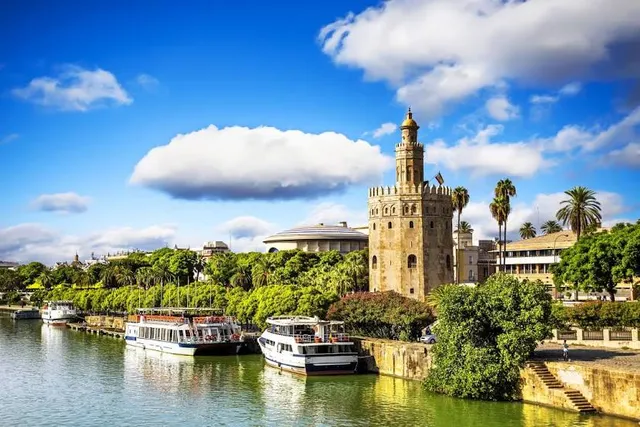
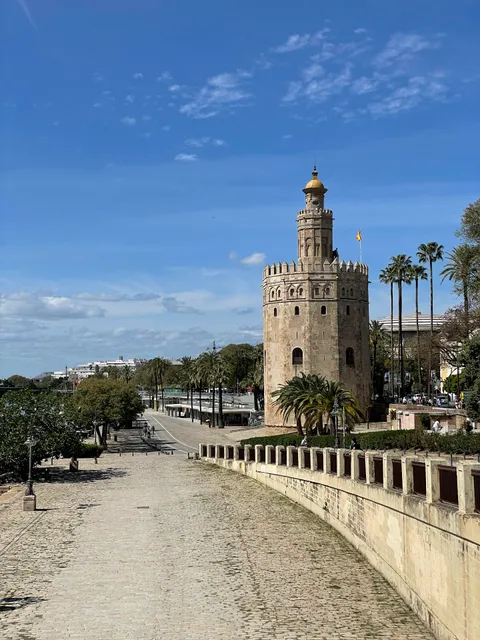
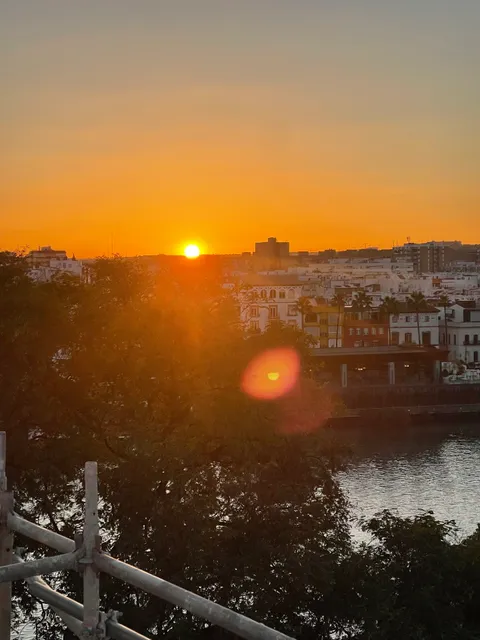
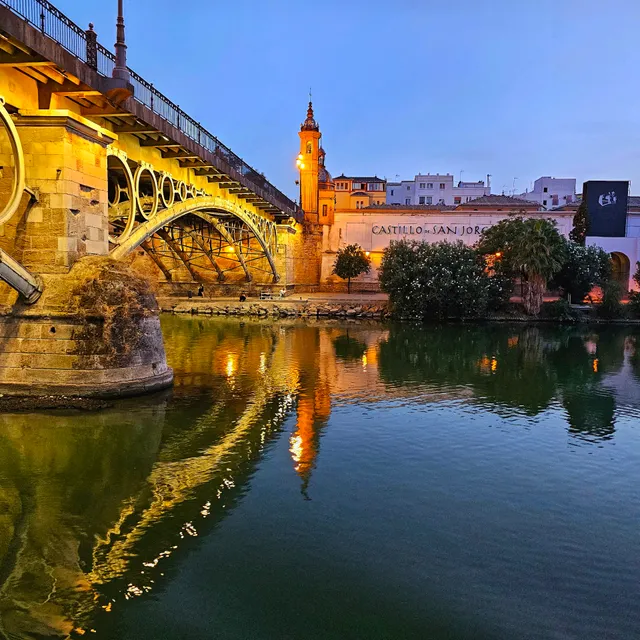
The Torre del Oro, one of Seville’s most recognisable landmarks, means the gold tower. It dominates the Guadalquivir river banks and it’s probably one of the most photographed sights of the city. You can enjoy some spectacular views from the top so bring your camera with you.
The Torre del Oro was built in the 13th century (1220-1221) during the reign of the Taifa Kings, a time when Spain was invaded by the Moors. The main body has a 12-side floor, whereas the upper part has a 6-side floor and was an addition of Pedro I of Castile (the same that ordered the construction of the Mudejar Palace). The circular top end was added during the 18th century (around 1760).
General Information Address: Paseo de Cristobal Colon
Entrance:
General admission: 3 €
Reduced ticket (Seniors and Students with proof of status): 1.50 €
Free on Mondays and for children under 6 years
Opening hours: Mondays to Fridays 9:30 to 19:00; Saturdays & Sundays 10:30 to 19:00. Closed in August.
It is currently a Naval Museum. Among the things that you can see are prints, nautical charts, models, navigational instruments and ancient and historical documents. It showcases the naval history of Seville, the importance of the Guadalquivir river and the footprint of the illustrious Spanish marine history.
The History Of The Torre Del Oro Being part of the city walls, its purpose was to protect Seville and prevent the Christians to attack it from the river. Actually, there was a twin tower on the opposite bank of the river (Triana) in order to draw a large chain to block the River Guadalquivir. Unfortunately, nothing remains of the Gold Tower’s twin sister, probably because it was destroyed by the 1755 Lisbon earthquake.
The origin of the name, Torre del Oro, is still uncertain. Some claim it is because the tower was used as a storage depot for precious metals (mainly gold and silver) and other riches brought to Spain from the Indies (i.e. the Americas). However, after its restoration in 2005, experts discovered that the building was covered with a lime and straw mortar, giving it this golden reflection.
Currently, it is one of the symbols of Seville although it has been traditionally underestimated compared to the Giralda tower. However, Sevillians have always proved its love and have saved it from demolition in many occasions.
After Fernando III of Castile conquered the city in 1248, the tower was completely abandoned. In the 16th century it almost collapsed and some works kept it standing. The earthquake of 1755 caused serious damages to the structure and in 1760 an architect planned to level it down. The inhabitants of the city protested against and wrote a letter to the King, who finally decided to save it.
During the 1868 Revolution, part of the city walls were put up for sale and the tower was again threatened with demolition. Once more Sevillians intervened and saved the Torre del Oro, resulting in a symbol of fight and survival.
The tower has been used as a fortress, a chapel, a warehouse, a prison and even as...
Read moreAs one meanders along the picturesque banks of the Guadalquivir River in the heart of Seville, the Torre del Oro, or Tower of Gold, emerges as a beacon of the city’s affluent maritime past. This dodecagonal military watchtower, dating back to the early 13th century, is not only a symbol of Seville’s historical landscape but also a testament to the city’s strategic importance in naval defense and trade during the Almohad dynasty.
Historical Significance
The Torre del Oro’s original purpose was military, serving as part of the city’s defensive fortifications. Constructed under the rule of the Almohad Caliphate, its strategic location by the river was pivotal in controlling access to Seville via the Guadalquivir. Over the centuries, the tower has witnessed numerous historical events and has undergone several renovations, including a notable restoration in the 18th century that preserved its structure for future generations.
A Journey Through Time
Visiting the Torre del Oro is akin to stepping back in time. The tower houses a maritime museum that showcases Seville’s naval history, with a collection that spans several centuries. Exhibits include navigational instruments, scale models of ships, and historical documents that narrate the tale of Seville’s evolution into a major trading port following the discovery of the Americas.
The Tower’s Unique Architecture
The tower’s architecture is a mix of Berber, Christian, and Islamic influences, reflective of the various cultures that have left their mark on Seville. The golden reflection it casts on the river at sunset is believed to have given the tower its name, creating a mesmerizing sight that enchants visitors and locals alike.
A Must-Visit Attraction
For those exploring Seville, the Torre del Oro offers a unique glimpse into the city’s maritime heritage. It stands not just as a historical monument but as a cultural icon that embodies the spirit of Seville. The panoramic views of the city from the top of the tower are breathtaking and offer an unparalleled perspective of the city’s landscape.
Inclusion in a Travel Itinerary
The Torre del Oro is an essential stop for anyone visiting Seville. Its proximity to other historical sites, such as the Seville Cathedral and the Alcázar, makes it a convenient addition to any travel itinerary. Whether you’re a history enthusiast, an architecture aficionado, or simply someone who appreciates the beauty of ancient landmarks, the Torre del Oro is sure to enrich your experience of Seville.
In conclusion, the Torre del Oro is not merely a monument but a vibrant piece of Seville’s historical fabric. Its golden hue, reflecting centuries of history, maritime prowess, and cultural confluence, offers a captivating narrative for all who visit. A symbol of resilience and beauty, the tower continues to stand tall, inviting explorers from around the globe to discover the stories etched...
Read moreDuring my recent visit to Seville, I had the opportunity to explore the Torre del Oro, a fascinating historical landmark located along the Guadalquivir River. This iconic tower, whose name translates to "Tower of Gold," has a rich and storied past that adds to its allure.
The Torre del Oro was constructed in the early 13th century by the Almohad Caliphate as part of the city's defensive system. Its primary purpose was to control access to Seville via the river, serving as a watchtower and a critical part of the city's fortifications. The tower's strategic location allowed it to play a crucial role in protecting the city from naval invasions.
One of the most intriguing aspects of the Torre del Oro is its dual structure. The tower comprises a dodecagonal base, and a second level added in the 14th century, followed by a cylindrical upper section added in the 18th century. This unique architectural design reflects the various historical periods and influences that have shaped the tower over the centuries.
The tower is also enveloped in legends, one of which suggests that it was once covered in golden tiles that glistened in the sunlight, giving it the name "Tower of Gold." Another theory is that the name refers to the gold brought from the Americas and stored in the tower before being transported to other parts of Spain.
Today, the Torre del Oro is home to a maritime museum that offers visitors a glimpse into Seville's naval history and the tower's role in it. The museum's exhibits include navigational instruments, historical documents, and models of ships, providing a comprehensive overview of the region's maritime heritage.
Climbing to the top of the tower rewards visitors with stunning panoramic views of Seville and the Guadalquivir River, making it a must-visit for anyone interested in history, architecture, or simply enjoying breathtaking vistas.
The Torre del Oro stands as a testament to Seville's rich history and cultural legacy, and it is an essential stop for any traveler looking to immerse themselves in the...
Read more