In Sri Lanka, St. Anthony has many devotees and several Churches have been erected in his honour. Perhaps the most popular one that daily attracts people of every cast, creed or race is the one at Kochchikade, in the heart of the city of Colombo One has only to visit this church on any Tuesday of the year, to see the thousands from North, South, East & West who come to pray to St. Anthony, to ask his help for some need, to fulfil promises made, to thank him for answering their prayers and show their love and respect. The history of this church at Kochchikade as handed down by tradition and gleaned from the documents preserved in the Archdiocesan Archives in Colombo is as follows. In the 18th Century, Catholicism was still a proscribed religion in Sri Lanka and priests could not exercise their ministry in public. The Dutch were persecuting the Catholics but who preferred to be degraded, impoverished and ridiculed rather than giving up their Faith; Shrines such as Madhu, Talawila and Kochchikade are souvenirs of those dark days of the persecution. (S.G. Perera, S J Historical Sketches page 14) A few Orations from Goa, visited the faithful in Ceylon at the risk at their lives. Fr. Jacome Gonsalves the Superior of Orations who is affectionately remembered in Ceylon as the ‘father of Sinhala Catholic Literature, lamented the fact that the Catholics of Colombohad no resident priest. However a zealous priest, Fr. Antonio, disguised as a merchant took up his abode in a house in Maliban Street, Colombo, close to St. Philip Neris Church. (The old Church faced the road) The Dutch discovered his hiding place, but Fr. Antonio, disguised, fled towards Mutwal. He met some fishermen who knew him and his reputation for Sanctity, and volunteered to protect him from the Dutch. When the pursuers arrived, the fishermen refused to hand over Fr. Antonio until he had granted them the favour they were asking for. Fr. Antonio then returned to his home at Maliban Street, and came to the shore, clad in his priestly garments and with a large wooden Cross in his hand. Planting the Cross at the spot most threatened by the advancing Sea, he prayed to God to manifest His Glory, by working this miracle. On the third day the waves receded and an extensive sand bank was exposed to the view of all. The Dutch Government appreciated this favour and offered a reward to the people’s benefactor. The humble priest asked permission to live and die near the Cross he had planted. This was granted and the priest built a Chapel with mud in honour of his patron, St. Anthony of Padua. When he died after many years, he was buried there. The little Chapel which was made of mud was enlarged in 1806. And in 1822 one of the members of the Congregation went to Goa and brought a Statue of St. Anthony and it was solemnly placed on the altar of the small Church. This is the very image that is today held great veneration at St. Anthony’s Church, Kochchikade, and the side altar on which it rests, is the altar of the ancient Church and stands on the very spot Sanctified by miraculous event to which the origin of the same Sanctuary is due. A tiny piece of the incorrupt tongue of St. Anthony of Padua is enshrined is a special reliquary and placed in one of the glass cases with a statue of the saint, at the entrance to the Church. Soon after the arrival of the statue of St. Anthony the work of building of a large Church commenced and the Church was completed in 1828. The blessing of the new Church took place on Sunday the 1st June 1834, presided over by the Vicar General Very Rev. Fr. Caetano Antonio. It would appear that people of all creeds, government and military authorities too included, lent their support towards the erection of this Church which continues to be a centre of deep devotion to the Wonder-Worker. With the devotees of the Saint increasing, this Church too became congested. In 1938 plans were made to improve and enlarge the structure. A Chorister’s gallery, large wings on side, the Mission house and meeting room behind the main...
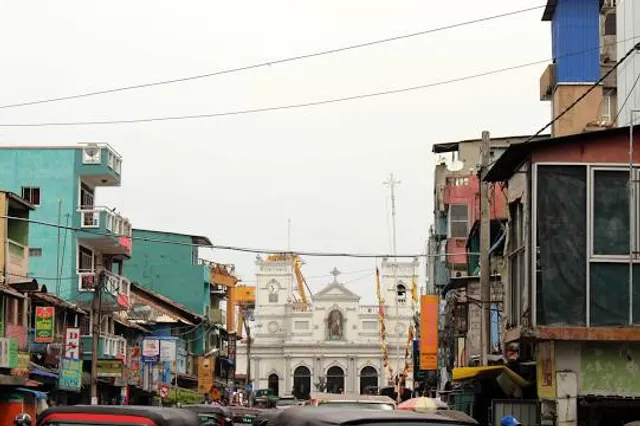
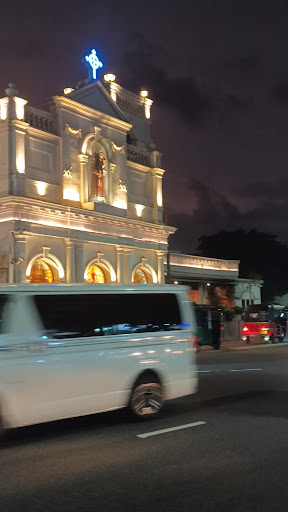
Read moreSt. Anthony's Shrine (Sinhala: ශාන්ත අන්තෝනි සිද්ධස්ථානය, romanized: Śānta Antōni Siddhasthānaya; Tamil: புனித அந்தோனியார் திருத்தலம், romanized: Puṉita Antōṉiyār Tiruttalam) is a Roman Catholic church in the Archdiocese of Colombo in Sri Lanka. The church is located at Kochchikade, Kotahena, Colombo 13, and is dedicated to Saint Anthony of Padua. The church is designated a national shrine2] and minor basilica.[3] A tiny piece of St. Anthony's tongue is preserved in a special reliquary, which is located in a glass case together with a statue of the saint, at the entrance to the church.
The church's origins relate to the early Dutch colonial period when Catholicism was banned from the island, with Catholic priests carrying out sermons from hiding places. Fr. Antonio disguised himself as a local merchant, finding refuge with a local fishing community at Mutwal. According to local legends the community sought his help to stop the sea eroding their village, and Fr. Antonio planted a cross and prayed at the beach, resulting in the sea receding and the community converting to Catholicism. The Dutch authorities then allocated him some land to carry out his sermons, whereupon he built a mud brick chapel dedicated to St. Anthony of Padua (Sant'Antonio da Padova). Fr. Antonio is buried within the church.
In 1806, the chapel was enlarged, and in 1822 one of the members of the Congregation went to Goa and brought back a statue of St. Anthony, which still resides on one of the church's altars. Construction of a new church commenced in 1828 and it was consecrated on 1 June 1834. The church was built in the Neoclassical style.[4] In 1938 the church was improved and enlarged, with the addition of a chorister's gallery, large wings on side, and a mission house and meeting room behind the main altar. The enlarged church was consecrated on 16 February 1940.
Postal stamps worth five rupees were issued by the Sri Lankan government to commemorate the 175th anniversary of the church on 13 June 2010.[5]
2019 attack
edit
On 21 April 2019, Easter Sunday, the church was one in a series of targets of a string of suicide bomb blasts across Sri Lanka.[6] At least 93 people were killed in the blast. On 9 June, Indian Prime Minister Narendra Modi visited the church, and paid tribute to the victims.[7]
On 12 June 2019, the sacred historical church was renovated solely by the Sri Lanka Navy and was opened for the public for the first time since the attacks.[8 Archbishop Malcolm Ranjith conducted a special liturgy, remembering the Easter Sunday attack victims. He addressed what he called failures of the Sri Lankan government and its leadership during the...
Read moreSt. Anthony’s Shrine in Kochchikade, Colombo, is a beautiful and serene place that holds a special place in the hearts of many. As one of the most famous and historic churches in Sri Lanka, it attracts not only devotees but also tourists who want to experience its peaceful and sacred atmosphere.
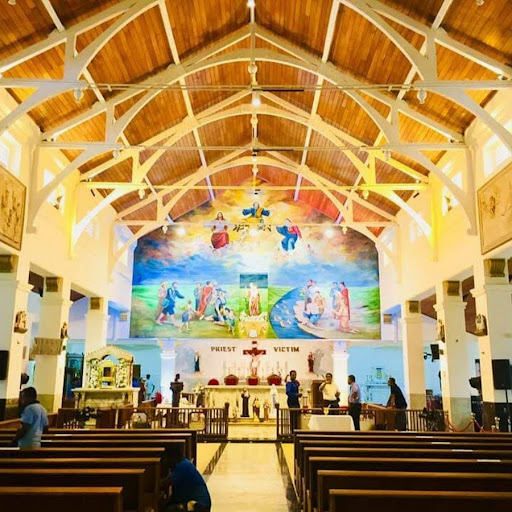
The church's architecture is stunning, with its grand facade, beautiful stained glass windows, and intricate details that reflect a rich history. Inside, the atmosphere is calm and spiritual, providing a perfect space for prayer and reflection. The main altar dedicated to St. Anthony is impressive, and it’s heartwarming to see so many people light candles, pray, and leave offerings as a sign of their faith and gratitude.
What stands out about St. Anthony’s Shrine is the sense of community and devotion. You can feel the strong faith of the people who come here, whether it’s for daily mass, a special novena, or just a quiet moment of reflection. The church is known for its miraculous history, and many people visit seeking blessings, healing, and protection, making it a truly special place.
The shrine is also very well-maintained, with a clean and welcoming environment. The staff and volunteers are always friendly and helpful, guiding visitors and ensuring everyone feels comfortable. There are also small shops nearby selling religious items, candles, and souvenirs, which add to the experience.
Visiting St. Anthony’s Shrine was a deeply moving experience, and I would highly recommend it to anyone looking for a place of peace and spirituality in Colombo. Whether you’re a believer or just curious, the church’s rich history, beautiful architecture, and the sense of hope it offers make it a must-visit. It’s more than just a church—it’s a place where faith and community come together...
Read more