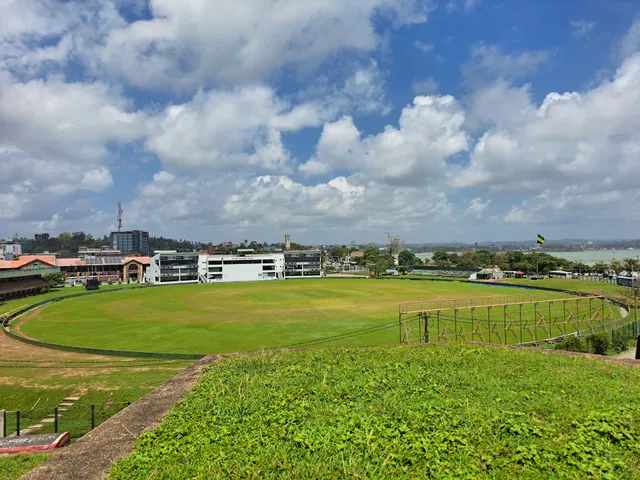
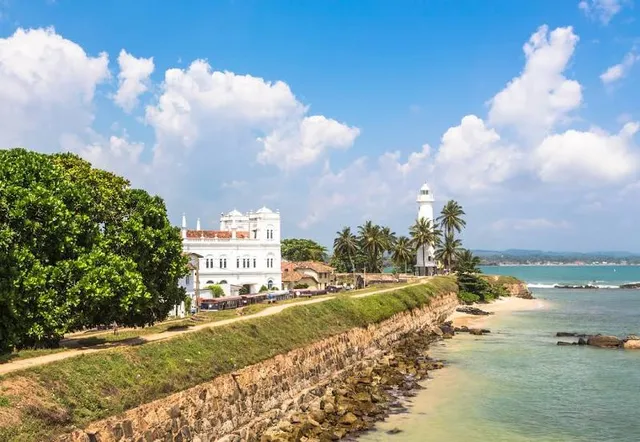
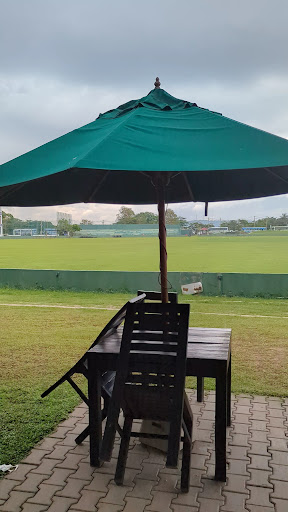
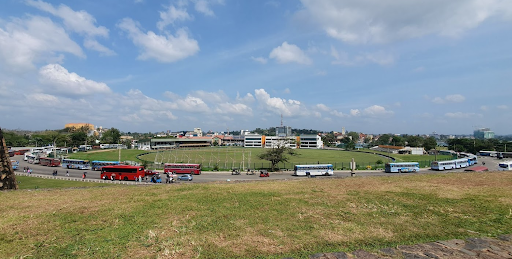
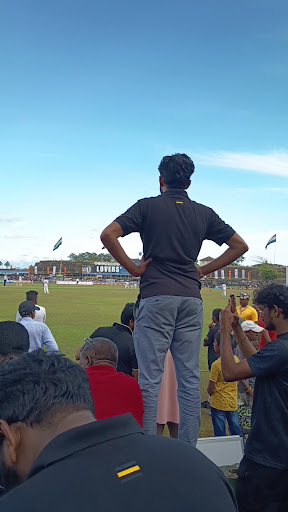
Galle International Stadium (Sinhalese: ගාල්ල ජාත්යන්තර ක්රිකට් ක්රීඩාංගණය) (Tamil: காலி சர்வதேச கிரிக்கெட் விளையாட்டு மைதானம்) is a cricketstadium in Galle, Sri Lanka, situated near the Galle fort and fringed on two sides by the Indian Ocean. It is considered to be one of the most picturesque cricket grounds in the world. Before being brought up to international cricket standards, it was known as ‘The Esplanade’, and is the home ground of the Galle Cricket Club. The ground was built in 1876 as a race course. There was no permanent pavilion until 1892, when a ‘grand stand’ was built according to a suggestion of Mr. P A Templer, the then Secretary of the Galle Municipal Council. Eventually the racing ceased and the ground was used for cricket matches more than races. In 1927, the ground was officially declared as a cricket stadium.
The ground hosted its first first-class match on 29 February 1984. A turf wicket was introduced to the stadium in 1945 under the guidance of Mr. Dhanapala Lorensu Hewa who was then secretary of the Galle Cricket Ground. The assistance of the Colombo Cricket Club was also taken for this.[1]
The ground was later upgraded to international cricket standards, and became the seventh international cricket stadium in Sri Lanka able to host Test matches. The first test match was played on the ground on 3 June 1998. It was played between Sri Lankaand New Zealand, resulting in a win for Sri Lanka by an innings and 16 runs. The first ODImatch was scheduled to be held on 25 June 1998 between India and Sri Lanka, but was abandoned due to the ground being waterlogged from overnight rain and heavy raining in the morning.
On 26 December, the ground was devastated by the tsunami resulting from the 2004 Indian Ocean earthquake.[2] Most of the buildings in the stadium were damaged, and the ground was damaged substantially. In the weeks that followed, the stadium became a temporary shelter for hundreds of people displaced from the tsunami. A temporary camp and a helipadwere constructed there in order to assist the survivors.
Renovation of the Galle International Stadium began on 8 May 2006. The renovation included several new buildings including a new pavilion and a media centre. The seating capacity was also increased. The re-constructed stadium was opened by His Excellency Mr. Mahinda Rajapakse, the Sri Lankan President on 17 December 2007. After the reopening of the stadium, the first Test match was held between Sri Lanka and England on the same day, which resulted in a draw.
The Galle stadium is also noted for the fact that in 2010 it was the stadium that hosted the last match of arguably one of the best cricketer produced by Sri Lanka, Muttiah Muralitharan. Muralitharan needed eight wickets to reach the 800 mark. His first wicket of the match and 793rd casualty overall was Sachin Tendulkar. He then took a further four wickets in the first innings of that Test match. In the second innings, he took two wickets quickly, but had to bowl a long spell to finally get his 800th wicket, which was that of Pragyan Ojha, who was caught by Mahela Jayawardene at first slip.
On 11 March 2017, the stadium witnessed another milestone for one of the greatest left-arm spinners to ever produced. Rangana Herath became the best left-arm spinner in test cricket history by surpassing 262 wickets by Daniel Vettori after he dismissed Bangladeshi Litton Das.
In June 2017, Sri Lanka Cricket announced that Galle will host its first One Day International after 20 years, when Zimbabwe tour Sri Lanka. The first two ODIs will be held on 30 June and 2 July.[3] In the first ODI, Zimbabwe won the match posting the highest ODI chase ever in Sri Lankan soil. The first ODI century at the venue was scored by Zimbabwean opener Solomon...
Read moreGalle International Cricket Stadium is a magnificent venue that truly embodies the spirit of cricket. Located in Galle, Sri Lanka, this stadium is renowned for its picturesque surroundings and rich cricketing history. Having had the opportunity to witness a match here, I must say it was an unforgettable experience.
The first thing that struck me upon entering the stadium was its stunning setting. Situated near the coast, the stadium offers breathtaking views of the Indian Ocean, creating a serene and tranquil atmosphere. The lush green outfield, meticulously maintained pitch, and the iconic Dutch Fort as a backdrop add to the charm of this venue.
The infrastructure and facilities at Galle International Cricket Stadium are top-notch. The seating arrangements are comfortable, providing an unobstructed view of the action from any vantage point. The stadium has excellent amenities, including clean restrooms, spacious concourses, and a wide range of food and beverage options. The efficient management and friendly staff ensure a smooth and enjoyable experience for spectators.
The acoustics at Galle International Cricket Stadium are remarkable. The roaring crowd, chanting slogans, and the distinct sound of leather hitting the willow create an electrifying atmosphere that sends shivers down your spine. The passionate Sri Lankan cricket fans contribute to the vibrant ambiance, making it a truly immersive experience for cricket enthusiasts.
The pitch at Galle International Cricket Stadium is renowned for its spin-friendly nature. It offers a challenging contest between bat and ball, favoring spinners due to its dusty and crumbling surface. This unique characteristic adds an element of excitement and unpredictability to the game, making it a paradise for spin bowlers and a true test for batsmen.
Moreover, the historical significance of Galle International Cricket Stadium cannot be overlooked. It has witnessed numerous memorable matches, including Sri Lanka's iconic victory against Australia in 2011. The stadium stands as a symbol of resilience, having been rebuilt after the devastating tsunami in 2004, showcasing the unwavering spirit of the Sri Lankan people.
In conclusion, Galle International Cricket Stadium is a cricket lover's paradise. With its stunning location, excellent facilities, passionate crowd, and challenging pitch, it offers an unforgettable experience for spectators. Whether you are a cricket fan or simply appreciate the beauty of the game, a visit to Galle International Cricket...
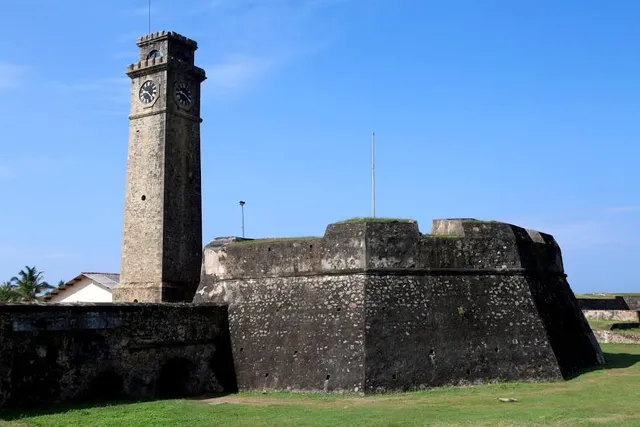
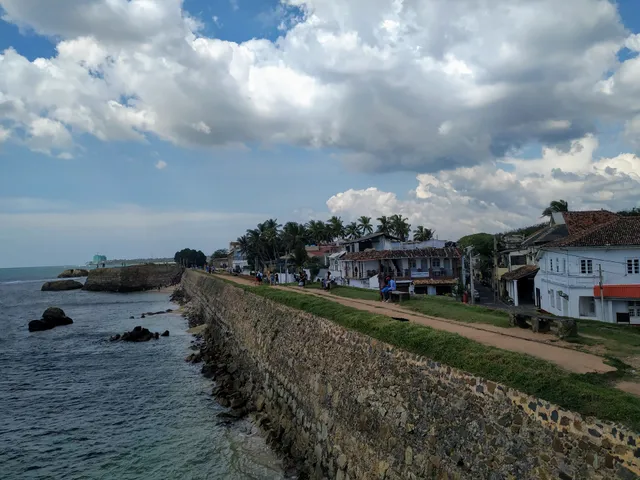
Read moreGalle International Cricket Stadium is undoubtedly one of the most picturesque cricket grounds in the world. Nestled between the historic Galle Fort and the vast Indian Ocean, this venue offers a stunning panoramic view that makes watching cricket here a truly unforgettable experience.
What makes this stadium so unique is not just its scenic backdrop, but also the intimate atmosphere it offers. The ground is compact compared to many international venues, which allows spectators to feel incredibly close to the action. Whether you're sitting in the stands or viewing from the Galle Fort ramparts, the view of the pitch is clear and engaging. The cool sea breeze adds to the charm, especially during longer Test matches.
The stadium has seen some iconic moments in cricket history, especially in Sri Lankan cricket. It's often been a stronghold for spin bowlers, and the local crowd brings an infectious energy during matches. For cricket fans, it's like visiting a sacred ground of the sport.
The surrounding area is equally worth exploring. Just across the road is the majestic Galle Fort, a UNESCO World Heritage site, and the quaint streets filled with cafes, colonial architecture, and small shops make it a perfect place to stroll before or after a match.
Facilities at the stadium are decent, and though basic in some areas, the overall experience more than makes up for it. If you are a cricket lover visiting Sri Lanka, Galle International Stadium is a must-visit. Highly...
Read more