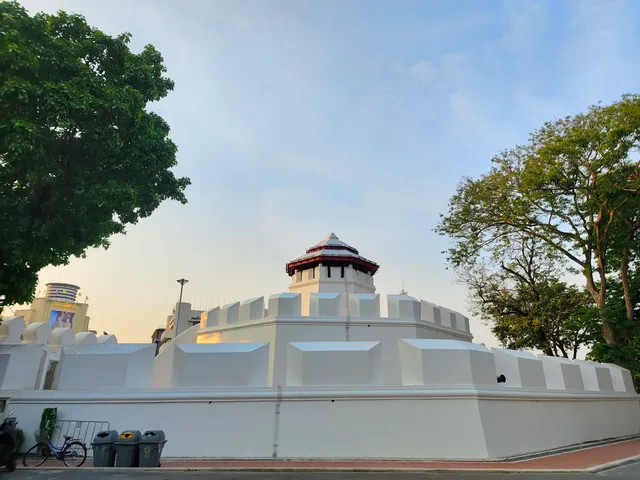
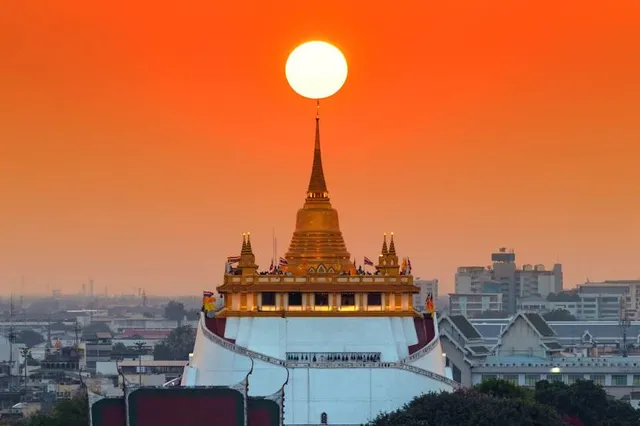
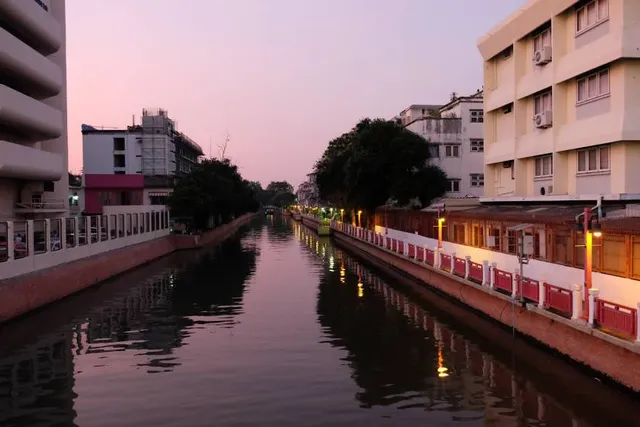
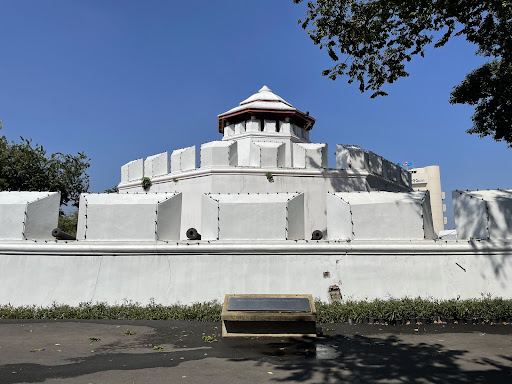
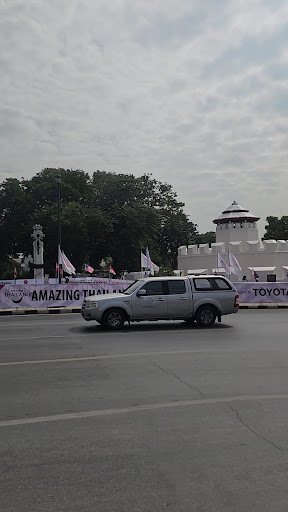
Mahakan Fort, located next to Wat Ratchanaddaram, is just one of the two remaining fortresses of medieval Bangkok ( the other being Phra Sumen Fortress ). It was built when the old city of Bangkok was protected by moats. There were three moats radiating from the Royal Palace. In the olden days, there were 16 gates and 14 forts into the old city of Bangkok It has a width of 38 metres and a height of 4.9 metres. It has three floors with staircases leading to the first two. The highest floor is an octagonal tower with an entrance. In addition, part of the old city wall is still standing. It runs for about 200 metres along Maha Chai Road. Today only Phra Sumen and Mahakan remain. Mahakan Fort is octagonal in shape. Mahakan Fort was raised in status to a National Ancient Monument of Thailand by the Fine Arts Department in 1949. The government wanted to turn the area between the canal and the city wall into a park, but were met with resistance from the community that stay on that land. Now the authorities are looking into turning it into a living museum of vintage houses. Rattanakosin also known as Rattanakosin Island, is the historic centre of Bangkok, where most of Bangkok's must see sights can be found, including the Grand Palace and Wat Pho. Rattanakosin was established in 1782 when King Rama I moved the Siamese capital across the river from Thonburi, starting a period in Thai history known as the Rattanakosin Period. Spending a few days in this remarkable district does not just show you dozens of traditional Buddhist temples, palaces, museums, parks and monuments, but also gives you a better understanding of the culture, history and religion of the Thai people. The Rattanakosin Kingdom was the fourth Thai Kingdom, after the Sukhothai, Ayutthaya and Thonburi Kingdoms that preceded it. When the powerful Ayutthaya Kingdom was destroyed and burnt down by Burmese armies in 1767, a small period of chaos and Burmese occupation ensued in the lands of Siam. The resistance was led by General Taksin, a capable military leader who defeated the Burmese within one year and established the new Siamese capital in Thonburi, right across the Chao Phraya River from Rattanakosin. When Phraya Chakri, a popular general under King Taksin who had successfully managed the invasion of Cambodia, returned, he was offered the throne. He was crowned King Rama I, the first King of the Chakri dynasty that started the Rattanakosin Period. One of his first actions was to move the capital across the river, from Thonburi to Rattanakosin. According to him, Rattanakosin had a more strategic location, as he turned it into an artificial island with the Chao Phraya River in the west and man-made canals in the east. Previously, Chinese merchants had occupied Rattanakosin, but they were now relocated outside the new city walls. King Rama I restored the social and political system of the Ayutthaya Period, even copying that city's layout and architecture in Rattanakosin. For example, the Grand Palace's building plan closely resembled that of the Grand Palace in Ayutthaya. Even the bricks from the ruins in Ayutthaya were moved downstream to be incorporated into the new capital's...
Read moreMahakan Fort, located in the historic heart of Bangkok, is a significant landmark that offers a glimpse into the city’s rich history and architectural heritage. Constructed during the reign of King Rama I in the late 18th century, the fort is part of the city's original defensive system and has been meticulously preserved as a cultural and historical site.
Historical Significance: Mahakan Fort was one of the original forts built to protect the Rattanakosin Island, where the Grand Palace and the core of Bangkok were established. Its construction reflects the strategic importance of the area during the early years of the Chakri Dynasty. The fort's historical value is evident in its well-preserved architecture and the role it played in safeguarding the city from potential threats.
Architecture and Design: The fort features classic late Ayutthaya-era military architecture, characterized by its imposing walls and round towers. The design is both functional and aesthetically pleasing, with its whitewashed walls and crenellated battlements standing as a testament to the fort’s defensive purpose. The fort is built from brick and mortar and includes a moat that once added an additional layer of defense.
Visitor Experience: Visiting Mahakan Fort provides a serene and educational experience. The fort is less crowded than other tourist attractions, allowing for a leisurely exploration of its grounds and a chance to reflect on its historical significance. The fort’s open spaces and historical features make it an excellent spot for photography and leisurely walks. Informational plaques and signage around the fort provide context and historical details, enhancing the visitor’s understanding of the site.
Surrounding Area: The fort is located in a historically rich area of Bangkok, near other significant landmarks such as the Grand Palace and Wat Pho. Its proximity to these sites makes it a convenient stop for those exploring the city's historical and cultural attractions. The area around the fort is relatively quiet, offering a peaceful retreat from the hustle and bustle of Bangkok’s busy streets.
Accessibility and Facilities: Mahakan Fort is accessible by public transportation, including the BTS Skytrain and local buses. The fort’s central location makes it easy to reach from various parts of the city. While the site itself is modest, it is well-maintained and offers basic amenities for visitors. However, there are limited facilities directly at the fort, so it’s advisable to visit with any necessary supplies or plan to explore nearby areas for additional amenities.
Overall Impression: Mahakan Fort is a noteworthy historical site that provides valuable insights into Bangkok’s early defensive strategies and architectural style. Its well-preserved structure and serene surroundings make it an excellent destination for history enthusiasts and those interested in exploring Bangkok’s cultural heritage. The fort’s historical significance, combined with its accessible location and peaceful ambiance, make it a rewarding addition to any historical...
Read moreป้อมมหากาฬสร้างขึ้นในรัชสมัยพระบาทสมเด็จพระพุทธยอดฟ้าจุฬาโลกมหาราช (รัชกาลที่ 1) ในปี พ.ศ. 2326 เป็นป้อม 1 ใน 14 ป้อมที่โปรดเกล้าฯ ให้สร้างขึ้นเพื่อป้องกันรักษาพระนคร มีลักษณะรูปแปดเหลี่ยม มีกำแพงล้อมรอบ 2 ชั้น เป็นป้อมประจำพระนครด้านตะวันออก ปัจจุบันป้อมมหากาฬเป็น 1 ใน 2 ป้อมที่ยังคงเหลืออยู่ในกรุงเทพมหานคร อีกป้อมหนึ่งคือป้อมพระสุเมรุ ทางกรุงเทพมหานคร และกรมศิลปากรได้บูรณะซ่อมแซมป้อมมหากาฬเมื่อคราวพระราชพิธีสมโภชกรุงรัตนโกสินทร์ 200 ปี ในปี พ.ศ. 2525 และได้มีการบูรณะเรื่อยมาจนมีสภาพที่เห็นในปัจจุบัน
ที่ตั้งด้านหนึ่งของป้อมเป็นที่อยู่ของชุมชนของผู้คนที่ตั้งรกรากอยู่มาตั้งแต่แรกสถาปนากรุงรัตนโกสินทร์ และเป็นชุมชนที่มีชื่อเสียงด้านลิเกโบราณ รวมถึงเป็นแหล่งจำหน่ายดอกไม้ไฟ หรือพลุต่าง ๆ โดยเป็นแหล่งซื้อขายที่ได้รับความนิยมโดยเฉพาะในวันลอยกระทง ในช่วงรัชกาลที่ 1–4 เป็นบ้านพักขุนนางชั้นสูงหลายท่าน เช่น เจ้าพระยายมราช (ครุฑ) เสนาบดีกรมเวียง (กรมเมือง) ฯลฯ เป็นต้น โดยชุมชนป้อมมหากาฬนี้ ผู้ที่ศึกษาด้านการมีส่วนร่วมของชุมชนทั้งชาวไทยและต่างประเทศมักจะมาสำรวจและทำวิจัยเรื่องการมีส่วนร่วมฯ ณ ชุมชนแห่งนี้ โดยมีประวัติการชุมนุมและต่อสู้มายาวนานกว่า 20 ปี โดยเริ่มมาตั้งแต่ปี พ.ศ. 2535 หลังจากที่คณะรัฐบาลที่มี พล.อ.ชาติชาย ชุณหะวัณ เป็นนายกรัฐมนตรีได้มีมติคณะรัฐมนตรีออกมา โดยรัฐบาลต้องการปรับปรุงภูมิทัศน์ และปรับพื้นที่ให้เป็นสวนสาธารณะ
แต่ทว่าชาวชุมชนได้ต่อสู้คัดค้านเรื่อยมา แต่ทว่าก็ได้มีการรื้อถอนบ้านเรือนต่างๆ ออกไปเรื่อยๆ จนกระทั่งเสร็จสิ้นในปี พ.ศ. 2561 และในวันที่ 24 กรกฎาคม ปีเดียวกันนั้น กรุงเทพมหานครได้เปิดสวนสาธารณะแห่งใหม่ คือ สวนป้อมมหากาฬ...
Read more