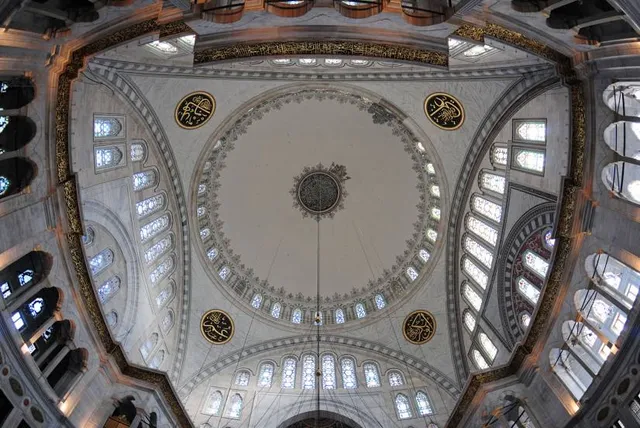
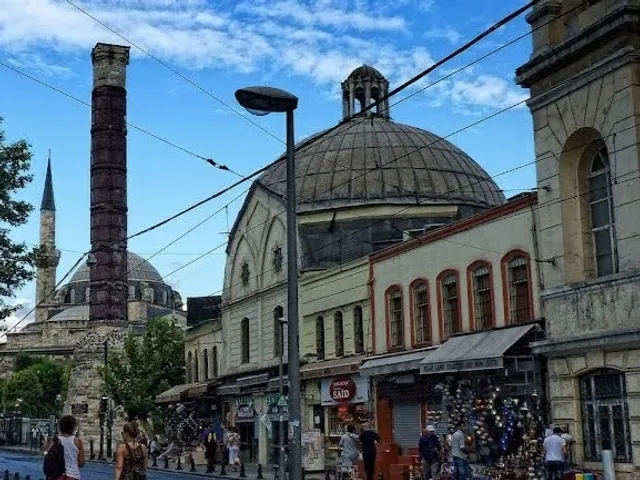
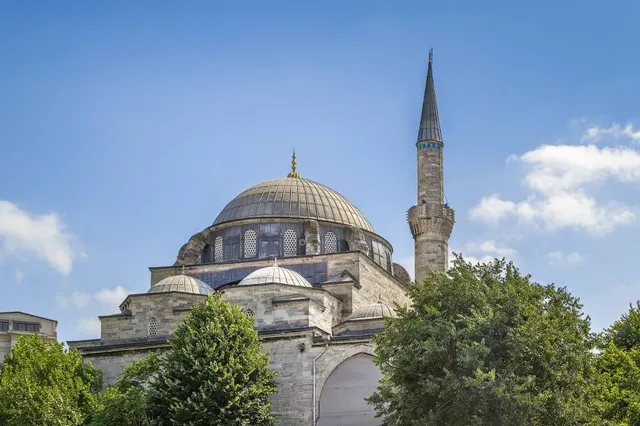
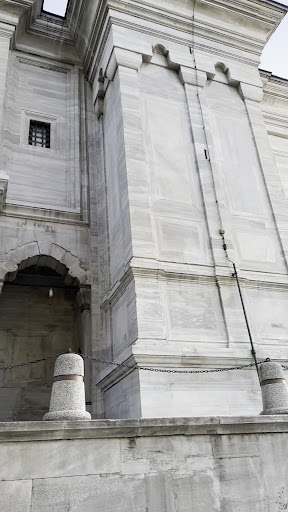
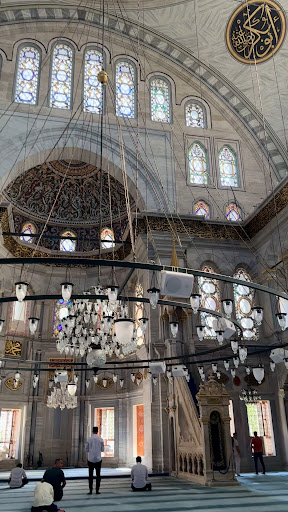
NURUOSMANIYE SOCIAL COMPLEX The mosque is the first to be constructed in baroque style in Istanbul. The mosque was completed with the name of "Nur-u Osmani" in the era of Osman III. following the death of his brother Mahmud I. It was built by Mustafa Aga and his assistant Simeon Kalfa (Master Builder Simeon) between 1749 and 1755. TORNFORATON CARS The mosque and its social complex, which were constructed in a period when the architecture was under the influence of westernization, are considered as a milestone in the Ottoman architecture. Besides the mosque, a social complex composed of a madrasa, an imarethane (soup kitchen), a library, a tomb, a fountain and a sebil (public fountain) was constructed. The social complex also includes some shops in its environment. The impact of the baroque style can also be seen on the library, the tomb, the fountain and the sebil (public fountain). There are high stairs on two sides in order to go up to the mosque. The outer court of the mosque, which was built on a square plan, is covered by a single dome. The arcade passages on both sides lead to the entrance of harim (area reserved for prayer). The main dome of the mosque has a diameter of 26 meters. The mosque is lightened with 174 windows placed as five lines. The jut-out mihrab is polygonal and different from other mihrabs in classical Ottoman mosques. It is covered with a half-dome. Hunkar mahfili (area reserved for the Sultan to perform his prayers) is located at the end of the eastern corridor. The two minarets that are adjacent to the building have two galleries and stone cones. The crescent was made of stone instead of lead for the first time in this mosque. The courtyard of the mosque has arcades and a polygonal structure which makes it unique in the Ottoman architecture. The mosque has no sadirvan however it has places reserved for ablution in the front and back. In the south of the mosque, madrasa and imaret stand next to each other. The madrasa is the last of the sultan madrasas. Inside the tomb, there are coffins of Sehsuvar Sultan and some shahzadas. The two-storey library is considered as one of the unique samples of baroque design. The upper floor functions as a library while the ground floor is a store. Nuruosmaniye Sebil (public fountain) is a marble structure. It covers the circular main location and the rectangular...
Read moreThe Nuruosmaniye Mosque is an important Ottoman mosque located near the entrance of the Grand Bazaar in Istanbul, Turkey. It was commissioned by Sultan Mahmud I and completed in 1755 under the reign of Sultan Osman III, from whom the mosque gets its name. The word “Nuruosmaniye” means “Light of Osman,” symbolizing the mosque’s bright and airy interior.
Architectural Features
The mosque is notable for its unique Baroque-influenced Ottoman architecture, a departure from the classical Ottoman style. Some key architectural elements include: • Large Central Dome: The mosque has a 25-meter-wide dome, supported by four massive arches, giving it an open and spacious feel. • Extensive Use of Windows: There are 174 windows, allowing natural light to flood the interior, which is why it is associated with “light.” • Baroque Influence: The mosque’s curved arches, elaborate decorations, and detailed stone carvings reflect European Baroque and Rococo influences. • Elegant Courtyard: The outer courtyard has a series of marble columns and arches, giving it a grand appearance. • Calligraphy and Decoration: The mosque features beautiful Arabic calligraphy, floral motifs, and traditional Iznik tiles.
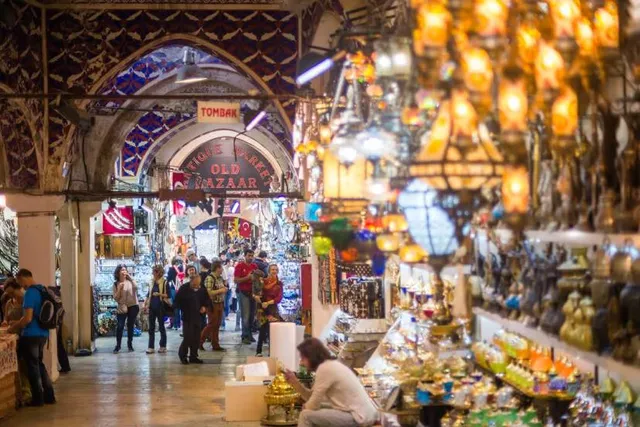
Significance and Location • Strategic Location: It is located at the entrance of the Grand Bazaar, one of the world’s oldest and largest covered markets. • Endowment Complex (Külliye): The mosque is part of a larger religious and commercial complex, including a madrasa (Islamic school), soup kitchen, and library.
The Nuruosmaniye Mosque represents a transitional period in Ottoman architecture, blending classical elements with Western European styles. It is one of the most distinctive and historically significant mosques...
Read moreNuruosmaniye camii yedi tepeli şehrin ikinci tepesinde Çemberlitaş ve Kapalıçarşı arasında yer alır.İstanbul’da inşa edilmiş ilk barok özellikli camidir.1748-1755 yıllarında inşa edilmiştir.1.Mahmut zamanında yapımına başlanan camii inşaatı,kardeşi 3.Osman zamanında ‘’Nur-u Osmani’’(Osmanlı’nın Nuru) adıyla tamamlandı.Adını,padişah 3.Osman’dan ce caminin içindeki ışıktan aldığı söylenir.Mustafa Ağa ve yardımcısı Simon Kalfa (Mimar Simeon) tarafından yapımı gerçekleştirilen camide;medrese,imarethane,kütüphane,türbe,çeşme ve sebilden oluşan bir külliye inşa edilmiştir.
Nuruosmaniye Camii’nin Mimari Özellikleri
Yüksek mermer merdivenlerle iki yönden camiye çıkılır.Barok üslüpta inşa edilen camii,kare plan üzerine inşa edilmiştir.Harim kısmı (Namaz kılmaya ayrılmış alan) tek bir kubbe ile örtülmüştür.İki yanda revaklı biber koridor bulunur ve bu koridorlardan harim kısmına birer giriş vardır.Eteği 32 pencere ile çevrili olan ana kubbe 26 metre çapındadır.Osmanlı camilerinde kullanılan en büyük kubbelerden biri olan bu kubbe,duvarların üstüne oturan kemerler tarafından taşınır.Kubbe kemerlerinin duvar üzerindeki bitiminde bir kulşak halinde Fetih Suresi yazılır.Kubbede ise En-Nur Suresi’nin 35,ayeti yer alır.’’Allah,göklerin ve yerin nurudur’’
Cami,beş sıra halindeki 174 pencere ile aydınlatılır.Pencereler,barok stilinde ve alçıdandır.Beş kubbeli son cemaat yeri U biçimindedir.Cami yazıları Hattat Rasim Abdülhalim,Müzehhip Ali,Mehmet Refi Efendi tarafından yapılmıştır.
Mihrap çıkıntılıdır ve klasik Osmanlı camilerinden farklı olarak çok köşelidir ve bir yarım kubbe ile kapanmıştır.
Mahfil katına,ana giriş kapısının iki yanındaki mermer merdivenlerden çıkılır.Mahfil katı balkonları doğu ve batı cephelerindeki iki koridor üzerinde uzanır.Hünkar mafhili,doğu koridorunun sonunda bulunur.Mahfile dışardan,padişahın atı üstünde camiye girişine yol veren rampalı bir giriş bağlanmıştır.Hünkar mahfili günümüzde Eminöni Müftülüğüne hizmet verir.
Yapıya bitişik iki şerefeli iki minaresinin taş külahları bulunur.Kurşun yerine taş alemler ilk defa bu camide kullanılmıştır.Cami,revaklı ve çok köşeli bir avluya sahiptir.Bu özelliği ile Osmanlı mimarisinde türünün tek örneğidir.Şadırvanı yoktur,önde ve arkada abdestlikleri vardır,ayrıca ek bir abdestlik giriş kapısı karşısında bodrumdadır.
Nuruosmaniye Camii’nin Külliye Yapıları
Caminin güneyinde medrese ve imaret yapıları yan yana bulunur.Medrese,Osmanlı’daki sultani medreselerin (Sultan’ın yaptırdığı medrese) sonuncusudur.İmaretin olağanüstü büyük bacaları Nuruosmaniye’nin kent içindeki görsel etkisine katkıda bulunur.Bu iki yapı,günümüzde yatılı bir Kur’an kursu olarak kullanılır.
Nuruosmaniye Camii Türbesi;1.Mahmut için inşa edilmeye başlamış,külliye inşaatı tamamlanmadan vefat eden padişah,Yeni Camii’nin avlusundaki,babasının da mezarının bulunduğu Valide Turhan Sultan türbesine gömülmüştür.3 sene sonra şirpençeden vefat eden 3.Osman’da kendi adının verildiği türbesine gömdürülmeyip babası ve kardeşinin mezarlarının bulunduğu Valide Sultan Türbesine gömüldü.Nuruosmaniye Camii içindeki türbede 3.Osman’dan bir yıl önce hayatını kaybeden annesi Şehsuvar Sultan ile bazı şehzadelerin sandukaları bulunur.
Nuruosmaniye Camii Kütüphanesi,Türkiye’de barok tasarımın en özgün örneklerinden birisi kabul edilir.Caminin iç avlusundaki iki katlı bir yapıdır.Üst katı kütüphane,alt katı dükkan olarak kullanılır.Birisi okuyuculara,diğeri ise padişaha ayrılmış iki giriş kapısı vardır.Kütüphanede 5000’den fazla yazma ve basma eser vardır.
Nuruosmaniye Camii Sebili,dairesel bir ana mekan ve yanındaki dikdörtgen bir alandan oluşan mermer bir yapıdır.2003 yılında geçirdiği onarımdan sonra halı satış mekanı olarak kullanılmaktadır.
Nuruosmaniye Camii 1890'lar #istanbul
#İstanbul'da inşa edilmiş ilk barok özellikli camidir. Çemberlitaş semtinde, Kapalıçarşı girişinde yer alır. 1748-1755 yıllarında...
Read more