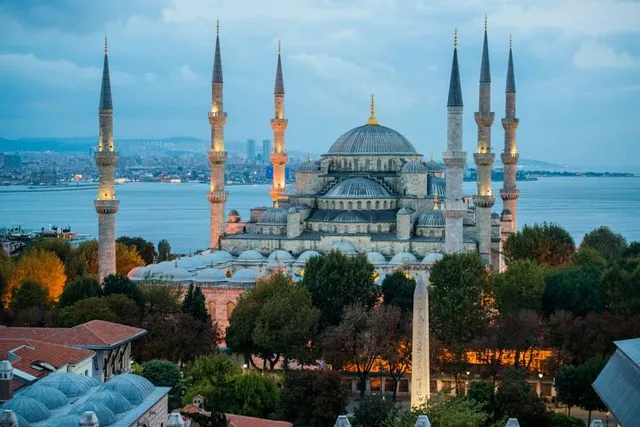
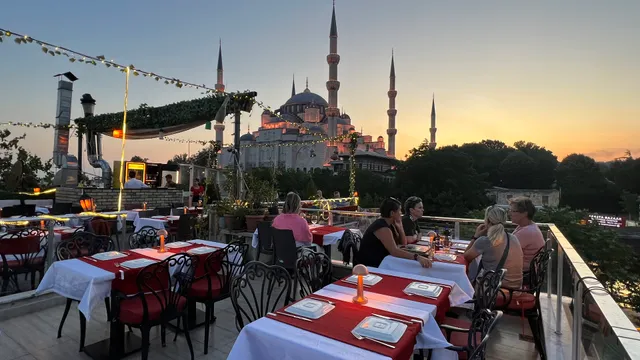
The Blue Mosque, or Sultan Ahmed Mosque, is not only an architectural marvel but also a living symbol of Istanbul’s rich history and vibrant culture. This review aims to delve into its historical significance while capturing the essence of what makes a visit to this iconic site an unforgettable experience.
Historical Significance
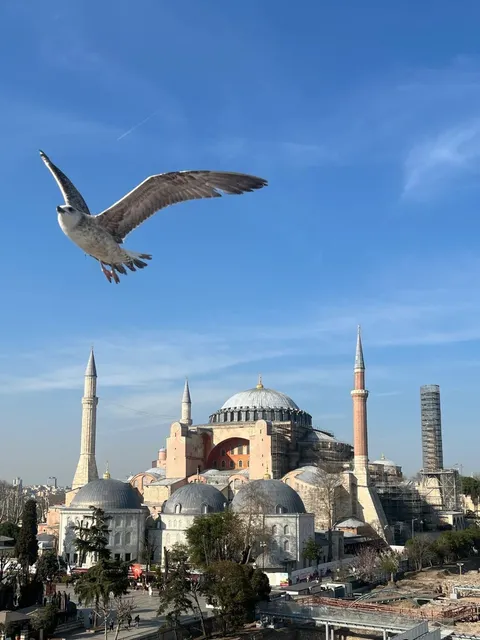
Commissioned by Sultan Ahmed I and completed in 1616, the Blue Mosque stands as a testament to the grandeur of the Ottoman Empire. Designed by the imperial architect Sedefkâr Mehmed Ağa, a student of the legendary Mimar Sinan, the mosque reflects the zenith of classical Ottoman architecture. It was built to reassert Ottoman power following the empire’s military setbacks and to rival the grandeur of the Hagia Sophia, which stands just opposite it.
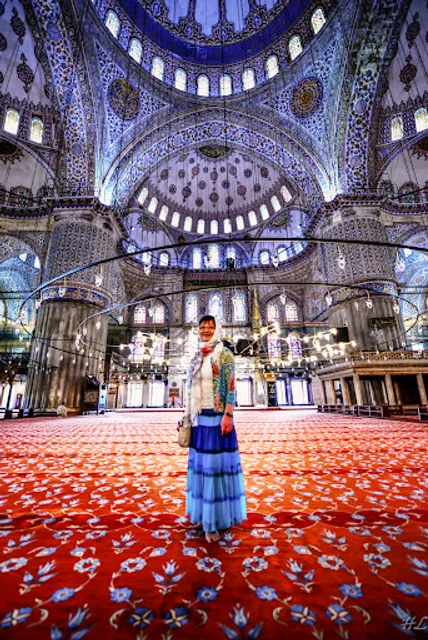
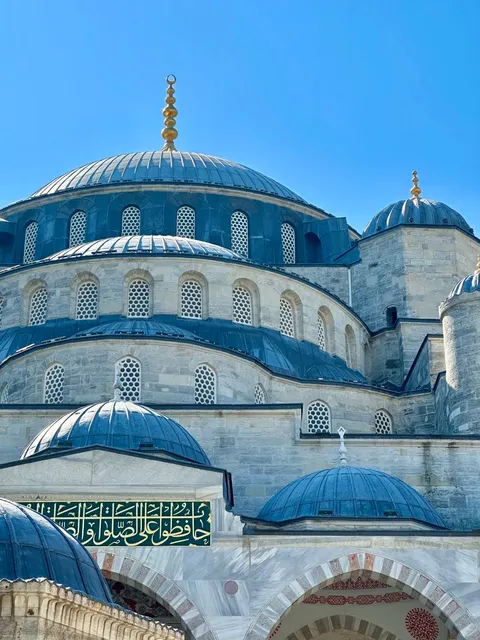
The mosque derives its popular name from the stunning blue İznik tiles adorning its interior. These tiles, numbering over 20,000, feature intricate floral and geometric patterns that create a serene and captivating ambiance. The mosque’s six minarets were a bold architectural statement, as most mosques typically featured four or fewer. This unique feature initially stirred controversy, as it matched the number of minarets of the Kaaba in Mecca. However, an additional minaret was subsequently added to the Kaaba to resolve this issue .
Architectural Splendor
The exterior of the Blue Mosque, with its cascading domes and semi-domes, is a visual feast that perfectly harmonizes with the skyline of Istanbul. The central dome, supported by four massive pillars known as “elephant feet,” rises to an impressive height, creating a spacious and airy interior. The mosque’s layout follows a traditional Ottoman design with a large courtyard, a central prayer hall, and a series of auxiliary buildings, including a madrasa (Islamic school), a hospital, and a hospice for travelers .
The interplay of light and color inside the mosque is particularly mesmerizing. The stained-glass windows allow natural light to filter through, illuminating the blue tiles and creating a dynamic and tranquil atmosphere. The chandeliers, originally lit by oil lamps, now feature electric lights but still retain their historical charm.
Visitor Experience
Stepping into the Blue Mosque is like stepping back in time. The sense of history is palpable as you walk through its vast courtyard and into the main prayer hall. Visitors are required to remove their shoes and women are asked to cover their heads, adhering to the respectful customs of this still-active place of worship.
One of the standout features of a visit to the Blue Mosque is the opportunity to experience the call to prayer, which echoes across the city five times a day. This hauntingly beautiful call, coupled with the visual splendor of the mosque, creates a deeply moving experience that resonates with visitors of all backgrounds and faiths.
While the Blue Mosque attracts millions of tourists each year, it still serves as a vital center of Islamic worship and education. This dual role adds to its unique charm, as you witness both the devout in prayer and visitors marveling at its beauty. It’s recommended to visit early in the morning or late afternoon to avoid the peak tourist hours and to experience a more tranquil atmosphere.
Final Thoughts
The Blue Mosque is more than just a historical site; it’s a living monument that encapsulates the spirit of Istanbul. Its rich history, architectural beauty, and spiritual significance make it a must-visit for anyone traveling to this enchanting city. Whether you’re an architecture enthusiast, a history buff, or simply a curious traveler, the Blue Mosque offers an immersive experience that is both educational and profoundly moving.
Visiting the Blue Mosque is not just about seeing a famous landmark; it’s about connecting with the rich tapestry of history and culture that defines Istanbul. This connection is what sets the Blue Mosque apart and makes it an unforgettable part of any...
Read moreThe always crowded Sultanahmet Mosque, which gives its name to the historical district of Istanbul, is at the top of foreign "must-see places in Istanbul" lists. If you ask me, there are more aesthetic mosques in Istanbul, especially Rüstem Pasha and Ortaköy Mosques, but of course, the Sultanahmet Mosque has a completely different weight with its place in history and the city skyline. Sultan Ahmet I, who had the mosque built, wanted to do exactly this: to leave his mark on Istanbul with an imposing mosque that would be visible from all over Istanbul.
Thus, the only mosque with 6 minarets in the Ottoman Empire was built. It is decorated from top to bottom with more than 20 thousand Iznik tiles. These tiles are the reason why foreigners call this mosque "Blue Mosque". When the mosque was first built, it was met with a lot of reaction both at home and abroad. The people are upset that the state coffers are being emptied with unnecessary expenses, and the Muslim world is being flooded with the world's only mosque with 6 minarets in the Kaaba. So much so that the Sultan had to build a 7th minaret for the mosque in the Kaaba.
Sultan Ahmet I, who came to the throne at the age of 14 and wanted a mosque built in his name at the age of 19, wanted this mosque to be built in his name to be a mosque that would be visible from all over Istanbul. In addition, since Ahmet I wanted the art aspect of this mosque to be at the forefront as well as architecture, he made an agreement with Architect Sedefkar Mehmet Ağa, who was both an architect and a mother-of-pearl master. Mehmet Agha was aware that his work would compete with two important giants such as Suleymaniye and Hagia Sophia. This sweet competition resulted in the Sultanahmet Mosque, where art and liveliness are visible at every point.
We know that in the early 17th century, when the social complex was built, the economic power of the Ottoman Empire was greatly reduced, there were territorial losses, and rebellions began in Anatolia. You can imagine how much such a large structure cost the state in such a painful period. Moreover, the Sultanahmet Mosque was built with money from the state treasury, not from war spoils. This caused public reaction.
The mosque, arasta and hünkar pavilion sections of the building, which was built as a social complex between 1590-1617, were opened with a ceremony. The construction of other buildings continued until 1920. According to a rumor, on the day of the foundation laying, the sultan himself filled his skirt with stones and helped the workers. When Ahmet I died in 1617 at the age of 27, his tomb was built and he was buried here.
Sultanahmet Mosque also has a sensational side. Throughout history, Hagia Sophia wanted to surpass the Temple of Solomon in Jerusalem, and Suleymaniye wanted to surpass Hagia Sophia. At the end of this competition, it was decided that the Sultanahmet Mosque would surpass Hagia Sophia only, so as not to disrespect its ancestors, and the mosque was built with 6 minarets, unlike any other in the Ottoman Empire. However, these 6 minarets added much magnificence to it and caused some conflicts. This situation, which was considered disrespectful to the mosque in the Kaaba, which had 6 minarets at that time, ended when Sultan Ahmet I added a 7th minaret to the mosque in the Kaaba.
According to another rumor, Ahmet I wanted to have the minarets of the mosque made of gold. However, since this decision would exceed the state's budget, Architect Sedefkar Mehmet Ağa pretended to understand the word "gold" as "six" and built the mosque...
Read moreThe Shopaholic’s Paradise
From silk ribbons to ornate carpets, from delicate Turkish teapots to ornate Ottoman lamps, the lantern-lined alleys of İstanbul’s Kapalı Çarşı or Grand Bazaar are home to the city’s finest treasures. In this historic shopper’s paradise, the arched doorways are covered from wall to wall with traditional Turkish antiquities, mementos of your visit and produce.
There are twenty-two gates leading into the covered bazaar from all directions. The Beyazıt Gate is marked with the tuğra (imperial sign) of Sultan Abdülhamit II and the assurance that “God loves the merchants".
A stroll through the hive of activity of the vendors and sellers haggling and bargaining like their life depended on it all the while sipping tea brings as much wonder and delight as a little entertainment. The Bedestens or warehouses date back to the prosperous times of the 15th century, when Sultan Mehmet proposed the construction of the Grand Bazaar to promote economic progress and the crossroads of trade in the city at the time. Today, the bazaar is one of the oldest and largest covered markets in the world, its winding labyrinth filled with up to 4,000 shops and spanning nearly 61 shopping streets and alleys is a feast of retail therapy for the hardy tourist and locals alike. A Masterpiece of Tantalised Senses
But the best vantage point is, of course inside, İstanbul’s Grand Bazaar is the ultimate covered market and is one of the largest buildings in the world. It comprises a network of 61 covered streets and covers an area of 307,000 m². In this teeming marketplace, up to 30,000 traders bustle daily in 4,500 shops, haggling with up to 400,000 buyers - locals and visitors from all over the world.
It is one of the oldest covered markets in the world, dating back to the 15th century. At that time, merchants travelling on the trade routes met here, and the market grew in size. The core of the original covered structure is still intact today.
One might feel transported back to Ottoman times like in a science fiction film, as you stroll through the main bazaar alleys and smaller side streets. Admire hand-woven carpets and beautifully patterned textiles such as towels and blankets. Be bedazzled by the bright and ornate Turkish lamps and look at the expertly hand-painted ceramics. You’ll find leather jackets, handbags, copperware, bolts of silk, antiques, chess sets, and even wedding dresses.
In and Out of The Maze
The maze-like bazaar is divided into different areas. The core consists of several covered shopping areas known as ‘bedesten’. These bedestens are then divided into smaller sections where specific items are sold. The oldest are the İç Bedesten and the Sandal Bedesten, which together form the foundation of the Grand Bazaar. After their construction was completed, other local merchants began to set up their own stalls in the surrounding streets selling jewellery, antiques, food, textiles, and much more, with some areas merging into others. You soon see why İstanbul is one of the best shopping cities in Europe.
Perhaps one of the largest selections you’ll see is jewellery. There are many sparkling pieces of ornate accessories for sale in the many silver and gold shops. If you’re interested in jewellery with gemstones mined in Türkiye, look out for Zultanite, a rare gemstone that seems to change colour.
You’re expected to haggle over prices at any market; this is part of Turkish culture and a pleasant exchange for Turks over an offering of rose-coloured tea in...
Read more