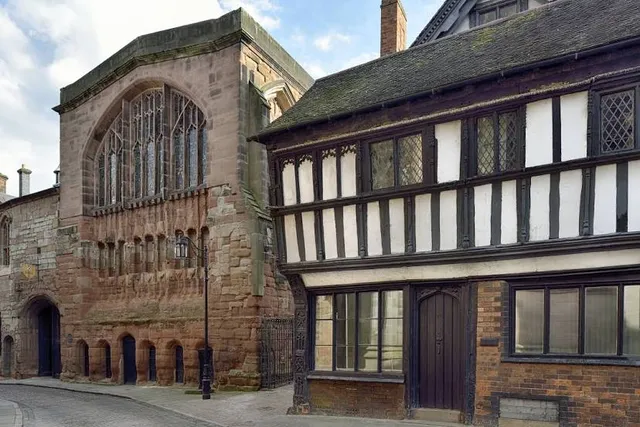
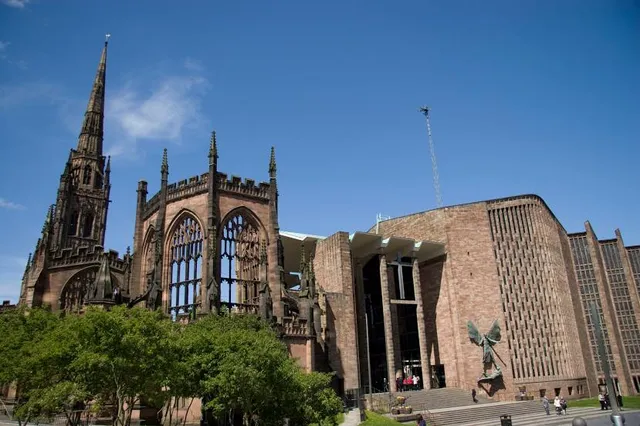
Saint Mary’s Guildhall is located in the heart of Coventry’s Cathedral Quarter, this historic site remains much as it would have looked in medieval times. The building is beautiful both inside and out, featuring original oak beams and leaded windows. It sits conveniently across from the old Coventry Cathedral, itself a stunning example of 12th-century English architecture.
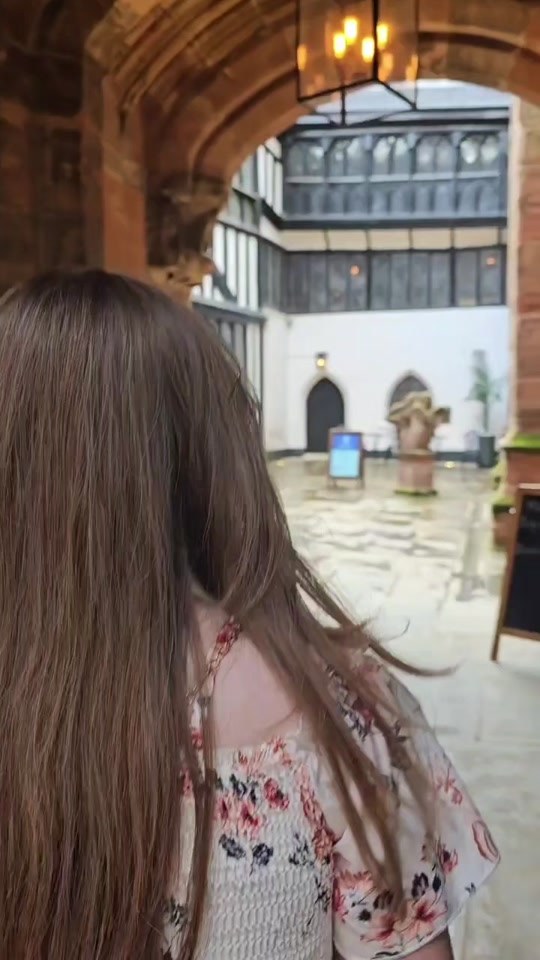
Built between 1340 and 1460, Saint Mary’s Guildhall is one of the last surviving parts of Coventry’s 12th-century castle. Originally constructed for the merchants of Saint Mary and Holy Trinity, it may not look particularly imposing from the outside and could easily be mistaken for just another medieval structure. However, once you enter the well-preserved courtyard, the significance of the Guildhall quickly becomes apparent. The view is almost exactly as it would have been for visitors many centuries ago.
Upon entering and heading up the staircase to the right, you are greeted by the impressive Great Hall. The striking ceiling and large stained glass windows immediately catch the eye, while the grand portraits, tapestries, and intricate décor create a truly regal atmosphere.
In the Muniment Room, a short video gives some historical background and explains how to use the interactive tablets available. If you prefer not to use a tablet, there are plaques with the Elephant and Castle symbol in each room. Scanning these with a tablet provides information about the room, and in some areas, augmented reality offers a glimpse into how the space would have looked in the past.
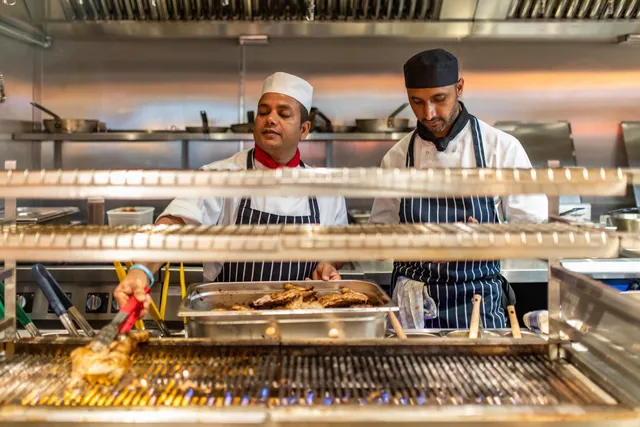
The guided tour features costumed guides in the kitchens, demonstrating medieval cooking techniques such as butter churning and explaining the types of food and spices used at the time. There are also engaging activities for children, including learning about historical kitchen jobs and a jigsaw puzzle showing foods that might have been served at a Guild banquet. Impressively, they’ve even recreated the smell of food cooking in the kitchens!
Augmented reality brings the kitchen hearths back to life, showing virtual fires and figures preparing food. After spending time in the kitchen, we returned through the Muniment Room and headed back up to the Great Hall. This is an awe-inspiring space, with its vast stained glass window and a magnificent tapestry at one end, and a Minstrel’s Gallery at the other, adorned with suits of armour.
The Coventry Tapestry, an enormous early 16th-century work of immense historical value, is on display here. It depicts 75 individual characters, along with various animals and mythical creatures. In front of the tapestry, there are interactive paddles that allow you to learn about the symbols within the artwork. One side of each paddle shows a small section of the tapestry to locate, while the other side explains its meaning. This is an effective way to keep younger visitors engaged.
From the Great Hall, a new spiral staircase leads to the second floor. In the Armoury, there’s a fascinating modern feature: a talking ‘painting.’ There are also dressing-up clothes for children to enjoy, adding a fun element to the tour.
Visitors can explore various rooms of the Guildhall, including the old council chamber, the Prince’s Room, the Treasury, the Tanner’s Room, the Drapers Room, and the Gallery.
The Guildhall sustained damage during the Second World War bombing raids. Caesar’s Tower, which was largely destroyed, was rebuilt, and the roof of the Great Hall and the Armoury were also repaired. The craftsmanship is so remarkable that it’s difficult to spot the restorations.
If you’re interested, you can book afternoon tea or an evening meal at the Guildhall. We opted for afternoon tea, and it was a real treat, with a selection of delicious sandwiches, lovely cakes, and excellent coffee. Since the Guildhall hosts official events throughout the year, it’s wise to check their website to ensure it’s open when you plan your visit. You can also purchase tickets in advance and receive a discount. Visit their website at...
Read moreDice que está abierto los domingos, pero ahí que estuve esperando ,más de una hora y no había nadie. Una lástima…. Ubicado en el histórico barrio de la catedral, los magníficos interiores medievales y las bellas obras de arte ofrecen una ventana al glorioso pasado de Coventry. Mary, Queen of Scots y Shakespeare están en la larga lista de visitantes que han pasado por estas puertas.
Construido por primera vez en la década de 1340 para el gremio de mercaderes de Santa María, se amplió entre 1394 y 1414 y se embelleció ampliamente a fines del S.XV. Poco después de su construcción, también se adoptó como la sede del alcalde y los líderes de la ciudad, y la corporación de Coventry permaneció aquí hasta principios del S.XX. En el interior, una serie de habitaciones ofrecen una visión del pasado de Coventry, con colecciones de armas y armaduras tempranas, muebles y obras de arte. Pero la atracción principal es el magnífico Gran Salón, con sus vidrieras medievales, un techo de ángeles tallados y, dominando toda una pared, uno de los tapices más raros e importantes del país. La escena representa la Asunción de la Virgen María, e incluye 75 personajes individuales, incluidos miembros de una corte real, ángeles, santos y apóstoles, junto con una variedad de perros, ratones, demonios y dragones. Hay evidencia de que se modificó después, con cambios en la figura de Cristo y la eliminación de representaciones de rosarios, para hacer que la escena fuese más aceptable durante los trastornos religiosos de los años 1500. También incorpora numerosas referencias ocultas a personas y eventos de la época, aunque gran parte del simbolismo permanece sin explicación hasta el día de hoy.
Se sabe que, por un breve período, María Reina de Escocia fue detenida en el Guildhall. Sin embargo, debe recordarse que María estaba prisionera no como un castigo, sino para mantenerla fuera de la vista de aquellos que podrían dañarla como una amenaza para la nación, o verla como un punto de encuentro para el derrocamiento de Elizabeth. Como reina, todavía habría sido tratada con respeto, y los registros de la época sugieren que en realidad pudo haber estado detenida en el Old Mayores's Parlour (ahora conocida como Drapers' Room).
Una ciudad de tal estatus, en un momento la cuarta más grande de Inglaterra, era un destino atractivo para muchas compañías de actores de gira durante la era Tudor y Jacobea. Los archivos de la ciudad registran muchas de esas actuaciones, que continuaron con una tradición de drama que había comenzado con el ciclo de obras medievales de 'misterio' (realizadas por los gremios de artesanos o 'misterios'), por las cuales Coventry se había hecho famoso en siglos pasados. Como un joven que crece en las cercanías de Stratford upon Avon, Shakespeare seguramente habrá viajado a Coventry para presenciar estas obras públicas, evidencia que algunos estudiosos de Shakespeare han identificado en sus obras. En compañía de su padre, que ocupaba un puesto cívico en Stratford, un joven Shakespeare también pudo haber estado presente en obras de teatro de actores de giras profesionales interpretados en el gremio de Stratford, generando un interés y una elección de carrera que produciría el dramaturgo más...
Read moreDeath, intrigue, scandal and spilt custard...are not compulsory when you visit St. Mary's Guildhall, but can be discovered in more than 600 years worth of stories from the finest medieval guildhall in the country. Located in the city's historic Cathedral Quarter, St. Mary's Guildhall miraculously survived the Second World War bombing raids, and stands as a monument to the power and wealth of medieval Coventry. With magnificent interiors, collections of armour, historic furniture, artworks and internationally important tapestries, the Guildhall offers a window into Coventry's glorious past. A prison to Mary, Queen of Scots, a theatre for Shakespeare and an inspiration to George Eliot, St. Mary's Guildhall is a fascinating free experience for all ages, at the historic heart of the city of Coventry. Is currently closed for renovations and will reopen at the...
Read more