HTML SitemapExplore
logo
Find Things to DoFind The Best Restaurants

The Bottle Kiln — Attraction in London

Name
The Bottle Kiln
Description
Nearby attractions
Avondale Park
8 Walmer Rd, London W11 4EY, United Kingdom
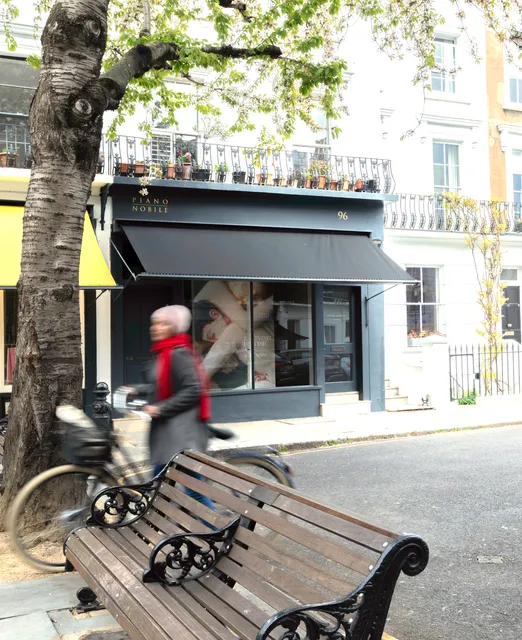
Piano Nobile
96 and 129 Portland Rd, London W11 4LW, United Kingdom
Temple Gallery
6 Clarendon Cross, London W11 4AP, United Kingdom
Second Home Holland Park
48-49 Princes Pl, London W11 4QA, United Kingdom
The Cosmic House
19 Lansdowne Walk, London W11 3AH, United Kingdom
Museum of Brands
111-117 Lancaster Rd, London W11 1QT, United Kingdom
Michael Hoppen
10 Portland Rd, London W11 4LA, United Kingdom
Royal Crescent Gardens
171-199 Holland Park Ave, London W11 4UL, United Kingdom
Frestonian Gallery
2 Olaf St, London W11 4BE, United Kingdom
Kyoto Garden
Holland Park, Holland Park Ave, London W11 4UA, United Kingdom
Nearby restaurants
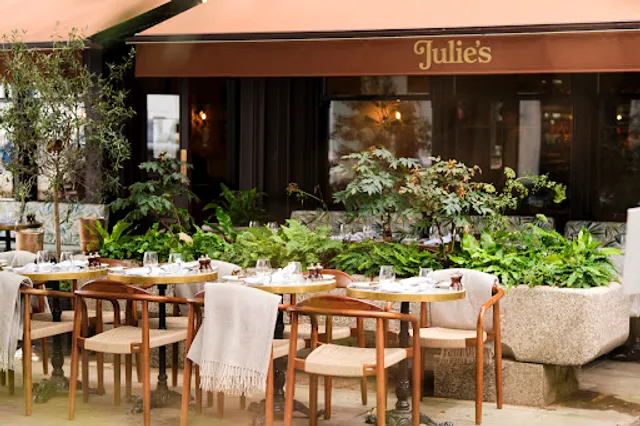
Julie's Restaurant
135 Portland Rd, London W11 4LW, United Kingdom
Casa Cruz
123A Clarendon Rd, London W11 4JG, United Kingdom
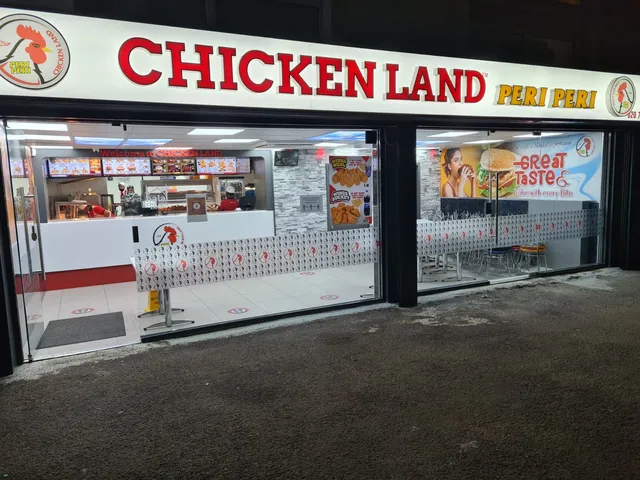
Chicken Land
29 St Ann's Rd, London W11 4ST, United Kingdom
Edera Restaurant
148 Holland Park Ave, London W11 4UE, United Kingdom
Mister Pumpernink
116 Holland Park Ave, London W11 4UA, United Kingdom
Vori
120 Holland Park Ave, London W11 4UA, United Kingdom
Core by Clare Smyth
92 Kensington Park Rd, London W11 2PN, United Kingdom
The Ladbroke Arms
54 Ladbroke Rd, London W11 3NW, United Kingdom
Osteria Napoletana
186 Kensington Park Rd, ES W11 2ES, United Kingdom
Garden Bar
41 Bramley Rd, London W10 6SZ, United Kingdom
Nearby hotels
Yara Students
27 St Ann's Rd, London W11 4ST, United Kingdom
Hilton London Kensington
179-199 Holland Park Ave, London W11 4UL, United Kingdom
Notting Hill - Concept Serviced Apartments
74 Ladbroke Grove, London W11 2HF, United Kingdom
Ravna Gora Hotel
29 Holland Park Ave, London W11 3RW, United Kingdom
Portobello Hotel | A Curious Group of Hotels
22 Stanley Gardens, London W11 2NG, United Kingdom
St James House Serviced Apartments by Concept Apartments
173 Holland Park Ave, London W11 4UR, United Kingdom
Ruby Zoe Hotel & Bar
146, 164 Notting Hill Gate, London W11 3QG, United Kingdom
St Christopher's Inn Shepherds Bush
13-15 Shepherd's Bush Grn, London W12 8PH, United Kingdom
W12 Rooms
54 Uxbridge Rd, London W12 8LP, United Kingdom
ibis London Shepherds Bush - Hammersmith
3-5 Rockley Rd, London W14 0DJ, United Kingdom
Related posts
Keywords
The Bottle Kiln tourism.The Bottle Kiln hotels.The Bottle Kiln bed and breakfast. flights to The Bottle Kiln.The Bottle Kiln attractions.The Bottle Kiln restaurants.The Bottle Kiln travel.The Bottle Kiln travel guide.The Bottle Kiln travel blog.The Bottle Kiln pictures.The Bottle Kiln photos.The Bottle Kiln travel tips.The Bottle Kiln maps.The Bottle Kiln things to do.
The Bottle Kiln things to do, attractions, restaurants, events info and trip planning
The Bottle Kiln
United KingdomEnglandLondonThe Bottle Kiln

Basic Info

The Bottle Kiln

Walmer Rd, London W11 4NN, United Kingdom
4.2(10)
Open 24 hours
Save
spot

Ratings & Description

Info

Cultural
attractions: Avondale Park, Piano Nobile, Temple Gallery, Second Home Holland Park, The Cosmic House, Museum of Brands, Michael Hoppen, Royal Crescent Gardens, Frestonian Gallery, Kyoto Garden, restaurants: Julie's Restaurant, Casa Cruz, Chicken Land, Edera Restaurant, Mister Pumpernink, Vori, Core by Clare Smyth, The Ladbroke Arms, Osteria Napoletana, Garden Bar
logoLearn more insights from Wanderboat AI.

Plan your stay

hotel
Pet-friendly Hotels in London
Find a cozy hotel nearby and make it a full experience.

hotel
Affordable Hotels in London
Find a cozy hotel nearby and make it a full experience.

hotel
The Coolest Hotels You Haven't Heard Of (Yet)
Find a cozy hotel nearby and make it a full experience.

hotel
Trending Stays Worth the Hype in London
Find a cozy hotel nearby and make it a full experience.

Reviews

Nearby attractions of The Bottle Kiln

Avondale Park

Piano Nobile

Temple Gallery

Second Home Holland Park

The Cosmic House

Museum of Brands

Michael Hoppen

Royal Crescent Gardens

Frestonian Gallery
Kyoto Garden

Avondale Park

Avondale Park

4.3

(273)

Open 24 hours
Click for details
Piano Nobile

Piano Nobile

4.7

(20)

Closed
Click for details
Temple Gallery

Temple Gallery

4.9

(10)

Open 24 hours
Click for details
Second Home Holland Park

Second Home Holland Park

4.5

(56)

Open 24 hours
Click for details

Things to do nearby

Explore Soho music and historic pubs
Mon, Dec 8 • 2:00 PM
Greater London, W1J 9HS, United Kingdom
View details
London sightseeing walking tour with 30 sights
Mon, Dec 8 • 10:00 AM
Greater London, SW1E 5EA, United Kingdom
View details
Thrift with Fashion Stylist
Mon, Dec 8 • 10:30 AM
Greater London, NW5 2AA, United Kingdom
View details

Nearby restaurants of The Bottle Kiln

Julie's Restaurant

Casa Cruz

Chicken Land

Edera Restaurant

Mister Pumpernink

Vori

Core by Clare Smyth

The Ladbroke Arms

Osteria Napoletana

Garden Bar

Julie's Restaurant

Julie's Restaurant

4.2

(260)

Click for details
Casa Cruz

Casa Cruz

4.2

(235)

Click for details
Chicken Land

Chicken Land

4.2

(117)

Click for details
Edera Restaurant

Edera Restaurant

4.4

(162)

Click for details
Get the Appoverlay
Get the AppOne tap to find yournext favorite spots!

The hit list

restaurant
Best 10 Restaurants to Visit in London
February 21 · 5 min read
attraction
Best 10 Attractions to Visit in London
February 21 · 5 min read
London

Plan your trip with Wanderboat

Welcome to Wanderboat AI, your AI search for local Eats and Fun, designed to help you explore your city and the world with ease.

Powered by Wanderboat AI trip planner.
Wanderboat LogoWanderboat

Your everyday Al companion for getaway ideas

CompanyAbout Us
InformationAI Trip PlannerSitemap
SocialXInstagramTiktokLinkedin
LegalTerms of ServicePrivacy Policy

Get the app

© 2025 Wanderboat. All rights reserved.
logo

Posts

Kate BurtonKate Burton
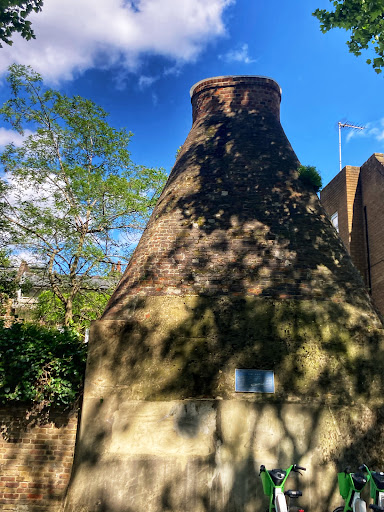
You can easily walk by this on your way to the festivals, but it's worth a quick glance! This kiln, built in about 1824, is all that is left of a slum that was once one of the worst places to live in London. The area was called the “Potteries and Piggeries,” though even before that it was known as “Cut-throat Lane.” The slum started with the pig keepers who had recently been forced out of Tottenham Court Road, but the community expanded with the arrival of the infamously rowdy brick makers. They built large kilns to fire up their tiles and bricks, and supplied these to line London’s houses. Even though the population of the area grew, there was no increase in sanitation or fresh water. By 1849 the community was in such a state that child mortality was at 87 percent and the average life expectancy had sunk to 11 years and seven months (the rest of London averaged 37 years). It was so bad that in 1850, Charles Dickens called the area, “a plague spot scarcely equalled for its insalubrity by any other in London.” The clay holes caused the area to become rife with stagnant pools filled with water, sewage, and pig slurry. One hole was so large and foul it was dubbed “the ocean.” The road wasn’t so much a road as a set of small hills, and was sometimes used by people in the street to hide from drunks and other questionable personalities. A Poor Law Commissioners’ report from 1838 mentioned houses where the floors had sunk and rested, “at one end of the room in the stagnant pool, while at the other end, being still dry, contains the bed or straw mattress on which the family sleep.” Slowly, improvements were made to the area. Local authorities began to upgrade the housing, and church schools arrived. By the end of the 1800s, people had started to live above stables, something that’s evidenced by the current houses along the road. Nowadays, the homes sell for hundreds of thousands of pounds. One kiln belonging to the original resident brick makers survived and has been extended and turned into a house.
jeff benjaminjeff benjamin
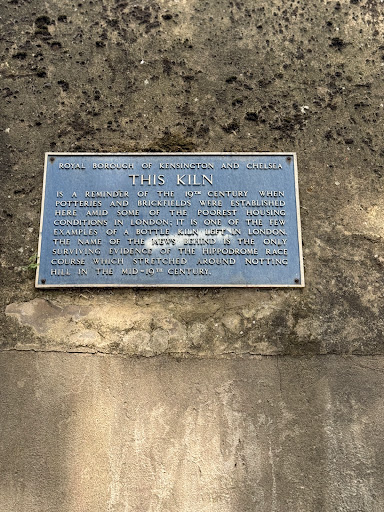
The only surviving kiln located on brick-earth field digs manufacturing the bricks, tiles and pottery for the local house building boom in the 19th.Century. The surrounding area including Avondale Park, called the “Potteries and Piggeries”, a notorious blighted slum .. “ a plague-spot, scarcely equaled for its insalubrity by any other in London..”** Today, this peculiar remaining remnant - its primal contours and sulfurous texture - an evocation of this past. Feasibly, numerous buildings in the surroundings constructed from bricks and tiles originating from the local mire, misery and the kilns: it’s embedded in their DNA. ** Charles Dickens.
Tommy NyTommy Ny
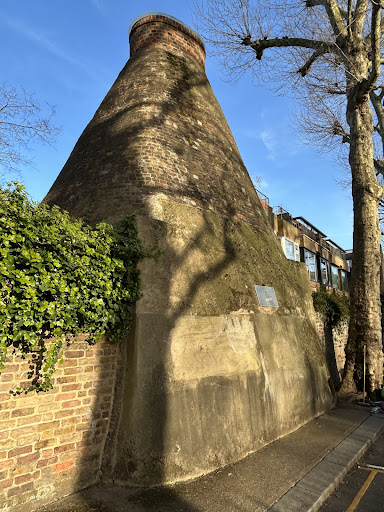
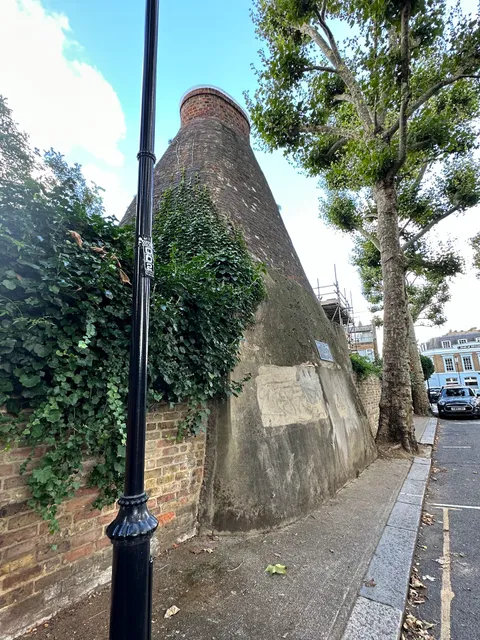
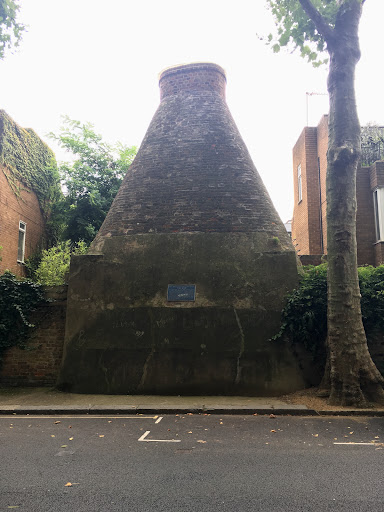
A mid‑19th‑century bottle kiln, a tall, conical brick kiln on Walmer Road, just north of Pottery Lane. It’s the only surviving structure of the old brick and pottery industry in the area.
See more posts
See more posts
hotel
Find your stay

Pet-friendly Hotels in London

Find a cozy hotel nearby and make it a full experience.

You can easily walk by this on your way to the festivals, but it's worth a quick glance! This kiln, built in about 1824, is all that is left of a slum that was once one of the worst places to live in London. The area was called the “Potteries and Piggeries,” though even before that it was known as “Cut-throat Lane.” The slum started with the pig keepers who had recently been forced out of Tottenham Court Road, but the community expanded with the arrival of the infamously rowdy brick makers. They built large kilns to fire up their tiles and bricks, and supplied these to line London’s houses. Even though the population of the area grew, there was no increase in sanitation or fresh water. By 1849 the community was in such a state that child mortality was at 87 percent and the average life expectancy had sunk to 11 years and seven months (the rest of London averaged 37 years). It was so bad that in 1850, Charles Dickens called the area, “a plague spot scarcely equalled for its insalubrity by any other in London.” The clay holes caused the area to become rife with stagnant pools filled with water, sewage, and pig slurry. One hole was so large and foul it was dubbed “the ocean.” The road wasn’t so much a road as a set of small hills, and was sometimes used by people in the street to hide from drunks and other questionable personalities. A Poor Law Commissioners’ report from 1838 mentioned houses where the floors had sunk and rested, “at one end of the room in the stagnant pool, while at the other end, being still dry, contains the bed or straw mattress on which the family sleep.” Slowly, improvements were made to the area. Local authorities began to upgrade the housing, and church schools arrived. By the end of the 1800s, people had started to live above stables, something that’s evidenced by the current houses along the road. Nowadays, the homes sell for hundreds of thousands of pounds. One kiln belonging to the original resident brick makers survived and has been extended and turned into a house.
Kate Burton

Kate Burton

hotel
Find your stay

Affordable Hotels in London

Find a cozy hotel nearby and make it a full experience.

Get the Appoverlay
Get the AppOne tap to find yournext favorite spots!
The only surviving kiln located on brick-earth field digs manufacturing the bricks, tiles and pottery for the local house building boom in the 19th.Century. The surrounding area including Avondale Park, called the “Potteries and Piggeries”, a notorious blighted slum .. “ a plague-spot, scarcely equaled for its insalubrity by any other in London..”** Today, this peculiar remaining remnant - its primal contours and sulfurous texture - an evocation of this past. Feasibly, numerous buildings in the surroundings constructed from bricks and tiles originating from the local mire, misery and the kilns: it’s embedded in their DNA. ** Charles Dickens.
jeff benjamin

jeff benjamin

hotel
Find your stay

The Coolest Hotels You Haven't Heard Of (Yet)

Find a cozy hotel nearby and make it a full experience.

hotel
Find your stay

Trending Stays Worth the Hype in London

Find a cozy hotel nearby and make it a full experience.

A mid‑19th‑century bottle kiln, a tall, conical brick kiln on Walmer Road, just north of Pottery Lane. It’s the only surviving structure of the old brick and pottery industry in the area.
Tommy Ny

Tommy Ny

See more posts
See more posts

Reviews of The Bottle Kiln

4.2
(10)
avatar
4.0
8y

You can easily walk by this on your way to the festivals, but it's worth a quick glance!

This kiln, built in about 1824, is all that is left of a slum that was once one of the worst places to live in London. The area was called the “Potteries and Piggeries,” though even before that it was known as “Cut-throat Lane.”

The slum started with the pig keepers who had recently been forced out of Tottenham Court Road, but the community expanded with the arrival of the infamously rowdy brick makers. They built large kilns to fire up their tiles and bricks, and supplied these to line London’s houses.

Even though the population of the area grew, there was no increase in sanitation or fresh water. By 1849 the community was in such a state that child mortality was at 87 percent and the average life expectancy had sunk to 11 years and seven months (the rest of London averaged 37 years). It was so bad that in 1850, Charles Dickens called the area, “a plague spot scarcely equalled for its insalubrity by any other in London.”

The clay holes caused the area to become rife with stagnant pools filled with water, sewage, and pig slurry. One hole was so large and foul it was dubbed “the ocean.” The road wasn’t so much a road as a set of small hills, and was sometimes used by people in the street to hide from drunks and other questionable personalities. A Poor Law Commissioners’ report from 1838 mentioned houses where the floors had sunk and rested, “at one end of the room in the stagnant pool, while at the other end, being still dry, contains the bed or straw mattress on which the family sleep.”

Slowly, improvements were made to the area. Local authorities began to upgrade the housing, and church schools arrived. By the end of the 1800s, people had started to live above stables, something that’s evidenced by the current houses along the road. Nowadays, the homes sell for hundreds of thousands of pounds. One kiln belonging to the original resident brick makers survived and has been extended and turned...

   Read more
avatar
3.0
1y

The only surviving kiln located on brick-earth field digs manufacturing the bricks, tiles and pottery for the local house building boom in the 19th.Century. The surrounding area including Avondale Park, called the “Potteries and Piggeries”, a notorious blighted slum .. “ a plague-spot, scarcely equaled for its insalubrity by any other in London..”** Today, this peculiar remaining remnant - its primal contours and sulfurous texture - an evocation of this past. Feasibly, numerous buildings in the surroundings constructed from bricks and tiles originating from the local mire, misery and the kilns: it’s embedded in their DNA. **...

   Read more
avatar
5.0
20w

A mid‑19th‑century bottle kiln, a tall, conical brick kiln on Walmer Road, just north of Pottery Lane. It’s the only surviving structure of the old brick and pottery industry...

   Read more
Page 1 of 3
Previous
Next