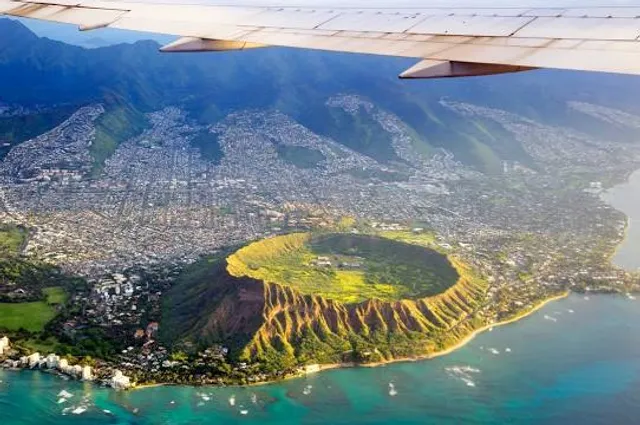
Diamond Head, or Lēʻahi, is one of Oahu’s most iconic landmarks and a must-do hike for visitors. Located on the southeastern edge of Waikiki, it’s just a short drive or bus ride from the heart of Honolulu, making it very accessible for tourists. The trailhead is within the Diamond Head State Monument, where a small parking lot is available for $10 per vehicle, or $5 for walk-ins. However, the parking lot can fill up quickly, especially in the mornings, so arriving early is recommended. If you’re staying in Waikiki, you can also walk to the park, which takes about 30-45 minutes depending on your starting point.
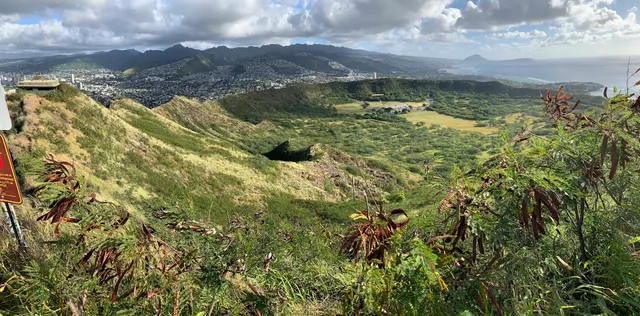
History and Background: Diamond Head Crater is a volcanic tuff cone that was formed around 300,000 years ago during a single explosive eruption. The name “Diamond Head” was given by 19th-century British sailors who mistook the sparkling calcite crystals in the rocks for diamonds. In Hawaiian, the crater is known as Lēʻahi, meaning “brow of the tuna,” due to its shape. The site was once a military lookout, and remnants of its historical significance, such as bunkers and a lighthouse, can still be seen along the hike.
Trail Overview: The hike up Diamond Head is a moderate 1.6-mile round trip that usually takes about 1.5 to 2 hours to complete, including time to enjoy the views at the summit. The trail is well-maintained but can be steep and uneven in places, with switchbacks, stairs, and a tunnel adding to the challenge. The ascent involves climbing approximately 560 feet from the crater floor to the summit. Despite its moderate difficulty, the hike is doable for most people with a basic level of fitness, though it’s important to take your time and stay hydrated, especially in the hot Hawaiian sun.
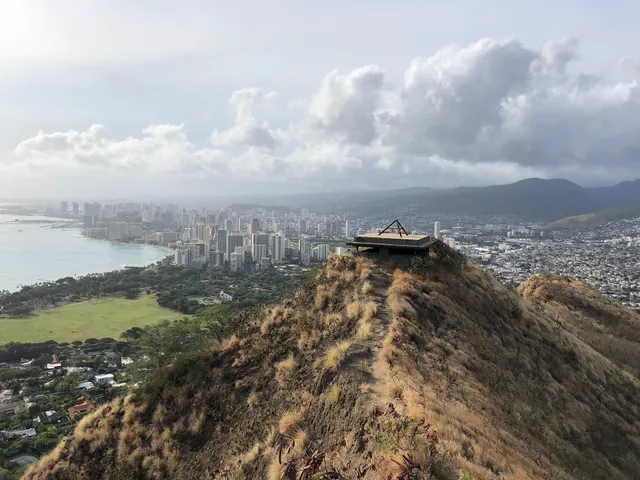
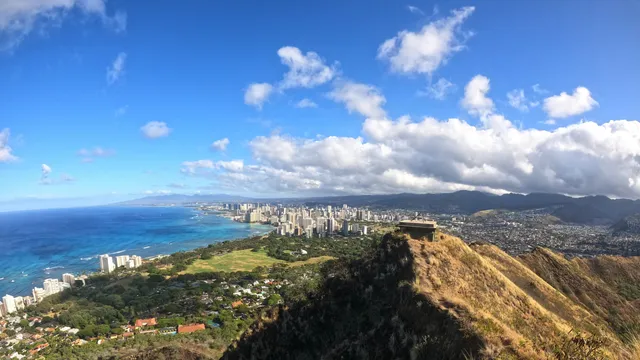
Scenic Views: The views from the top of Diamond Head are nothing short of spectacular and are the main reward for your efforts. As you ascend, you’ll start to catch glimpses of Waikiki and the surrounding coastline. Once at the summit, you’re treated to panoramic vistas of the Pacific Ocean, Waikiki Beach, and Honolulu’s skyline, with the Koʻolau Mountains serving as a stunning backdrop. The 360-degree views also include Koko Head, the neighboring crater, and, on a clear day, even parts of the island’s windward side. The summit is a popular spot for sunrise hikes, offering a breathtaking view as the sun rises over the ocean.
Crowd and Atmosphere: Diamond Head is one of Oahu’s most popular hikes, so it’s no surprise that it can get crowded, especially during peak hours in the morning and early afternoon. However, the crowds tend to move at a steady pace, and there’s plenty of space at the summit for everyone to take in the views and snap some photos. The atmosphere is generally friendly and lively, with hikers of all ages and backgrounds sharing the experience. If you prefer a quieter hike, consider going early in the morning before the park opens or later in the afternoon.
Facilities: Diamond Head State Monument has basic facilities, including restrooms, water fountains, and a small gift shop near the trailhead where you can buy snacks, drinks, and souvenirs. There’s also a food truck near the entrance selling fresh fruit, smoothies, and other refreshments, which is perfect for a post-hike treat. However, there are no facilities along the trail itself, so be sure to use the restroom and fill up your water bottle before starting your hike.
Parking: As mentioned earlier, parking at Diamond Head can be tricky due to the limited spaces. The parking lot tends to fill up quickly, especially in the morning, so arriving early (before 8 AM) is advisable. If the lot is full, there is limited street parking outside the crater, but this will require a bit of a walk to reach the trailhead. Alternatively, taking a rideshare or the bus can help avoid parking hassles altogether.
The Diamond Head Crater hike is a must-do for anyone visiting Oahu. It offers a perfect combination of history, natural beauty, and stunning views, all within a relatively short and...
Read moreDiamond Head is a popular hiking spot in Honolulu because of its history and one of the most scenic views of Hawaii's west coast.
This is the site of an extinct volcano and one of the military defense vigilance points during the WWII. It takes about 45 minutes to an hour to walk from the visitor center at the foot of the mountain to the top of the mountain.
The official website releases tickets 2 days in advance. There are two types of ticket purchases: with parking ticket and without parking ticket. Those with parking tickets are easily sold out, and you can buy tickets for the next day without a parking ticket. If you live at a hotel in the Wakikii area, you can consider taking the bus. There are many buses, the stops are dense, and the journey time is not long. From the nearest station near our hotel to the foot of Diamond Head, it costs $3 for adults and $1.50 for children. No changes. It's a 12-minute walk from the bus stop to the ticket gate. If you must drive and can arrive early, you can consider parking at the Kahala Lookout, which charges a metered fee. Tunnel traffic is released in turns in one direction according to traffic lights. Parking lots, visitor center, and ticket gates are all in one area.
The trail is winding all the way, and the road is fairly easy to walk. There are more than 100 steps leading directly to the top of the mountain. The steps on the mountain are probably straight up and down and are much easier to walk on. If the weather is sunny, remember to prepare water and sun protection.
On the way down the mountain, I met an old lady whose accent sounded like British. When I reached the foot of the mountain, She asked me what my mother said in Chinese "chin chin che or chin chin chu" on the way. I told her I didn't remember what I had said. When I came back, my husband said that people in the past few decades thought that when Chinese people spoke Chinese, it sounded like "chin chin che". If someone asked this, it would be considered offensive and discriminated against. Presumably the reason why the old lady asked was because she had heard about it from others without more info and curiosity, or maybe she knew the history and showed superiority and privileges. Except for that, it’s a...
Read moreThe Diamond Head Crater hike is a great short workout with an amazing payoff at the top. The trail itself is just under a mile to the summit, making for a total journey of less than two miles, but don’t underestimate it—this hike is definitely a bit of a challenge. The incline builds gradually, and toward the end, you'll face around 200 steep steps that really get your legs burning. It’s a great cardio push, especially if you’re looking for a quick but effective outdoor workout.
The sweeping views at the top are more than worth the effort. From the summit, you can take in the full stretch of Waikiki to the west and stunning beaches to the east—absolutely picture-perfect.
That said, a few things could be improved. Parking is a bit of a hassle. We were lucky enough to find a spot just outside the tunnel, but it's not the most straightforward setup. Also, I wasn't thrilled that reservations are required to enter the trail. I understand it’s necessary to manage the crowd size (and it does help keep the trail from getting too packed), but there really should be large, clear signage stating that you cannot pass the check-in gate without a reservation. We assumed you could walk in and pay on-site, but that’s not the case at all. Thankfully, there’s a QR code at the gate that links to the reservation site—but if you’re just finding that out when you arrive, chances are the time slots are already booked out for several hours. That’s exactly what happened to us, and we had to come back in the late afternoon. Not ideal, but it worked out in the end.
If you forget to bring drinks, don’t worry—there are vending machines at the base. The Dole Lemonade was a nice, refreshing treat after the hike.
All in all, Diamond Head is a must-do if you’re in Oahu. Just be sure to book your reservation in advance, arrive early, and prepare for those final 200 steps. The views at the top make every...
Read more