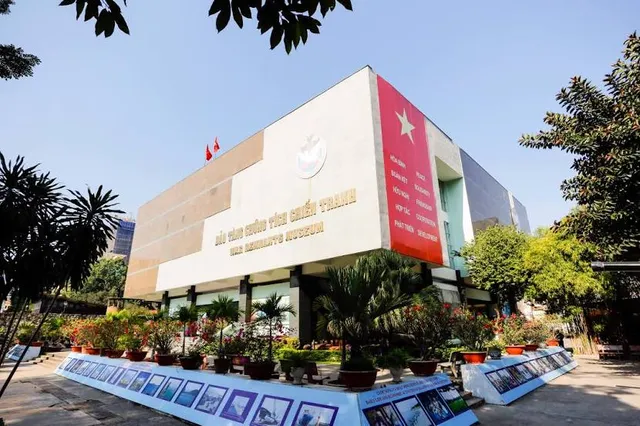
The Ho Chi Minh War Remnants Museum: A Masterclass in Guilt Tourism with a Side of Irony
Let’s be honest: the War Remnants Museum in Ho Chi Minh City is less a museum and more a photo album of American regrets, curated with the subtlety of a sledgehammer. If you’re here for a balanced historical narrative, you’ve stumbled into the wrong gallery. This place is Vietnam’s ultimate flex—a triumphant, unapologetic shrine to “Look What You Did,” complete with enough graphic imagery to make even the most stoic visitor question humanity.
"Exhibit A: Your Atrocities, Courtesy of Your Own Cameras" The museum’s pièce de résistance? Its extensive collection of American-sourced photos documenting war crimes. Who needs original artifacts when you can weaponize the enemy’s own snapshots? From the iconic image of the napalm-scarred girl fleeing naked to jars of formaldehyde-preserved deformed fetuses (thanks, Agent Orange!), the curation screams: “We didn’t even need to Photoshop—you did this to yourselves!” . It’s like a morbid episode of Antiques Roadshow, where every relic comes with a side of moral indictment.
DIY Trauma: Low-Budget, High-Impact Forget climate-controlled galleries or interactive displays. This museum runs on sweat and existential dread. Visitors huddle under wheezing fans, chugging water like it’s holy communion, while toddlers nap obliviously next to photos of dismembered soldiers. The lack of aesthetic finesse? A feature, not a bug. Why bother with fancy exhibits when a rusty Huey helicopter and a few propaganda posters can do the heavy lifting? It’s the IKEA of war museums—assemble your own trauma! .
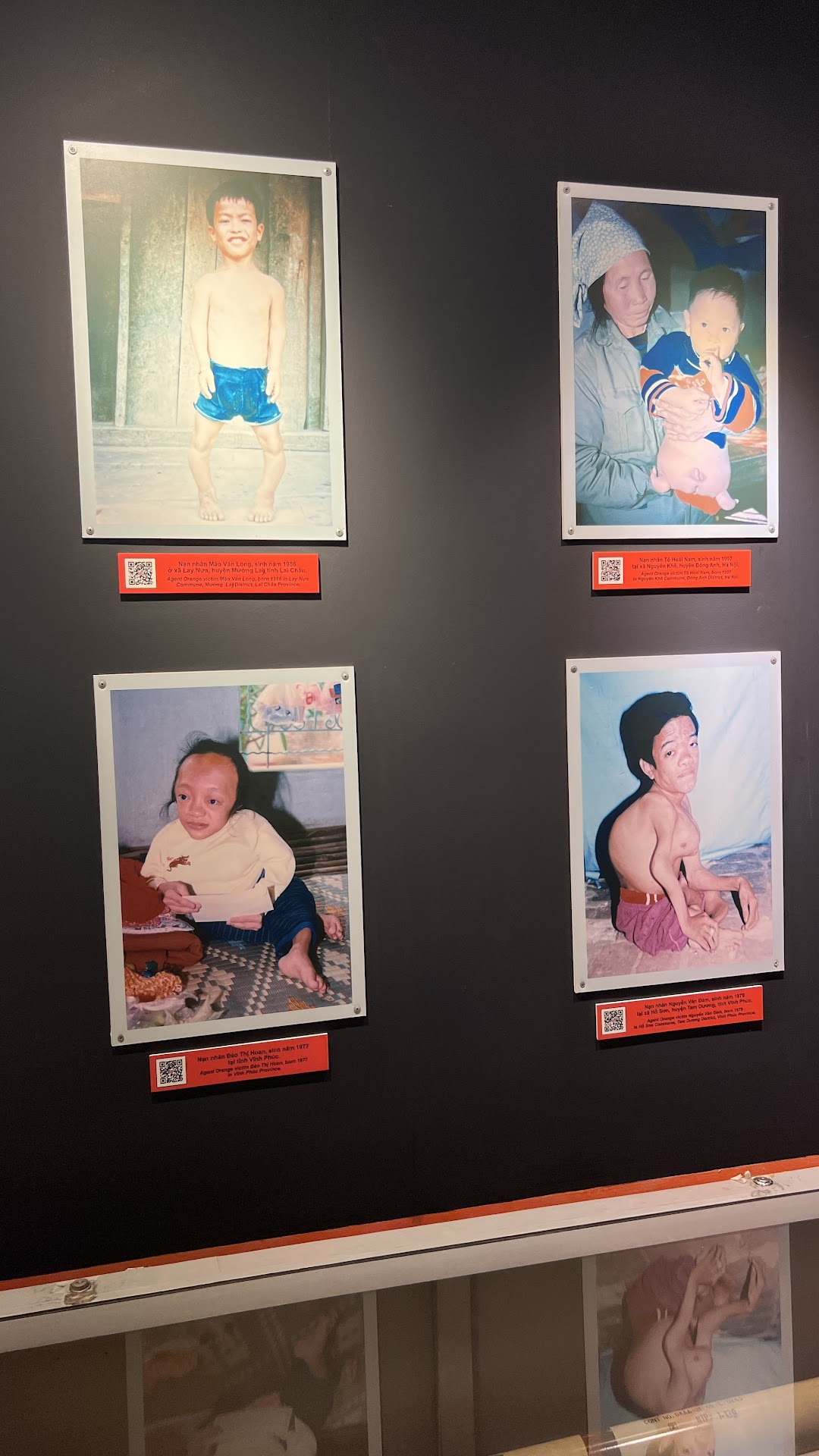
Agent Orange: The Gift That Keeps on Giving The museum’s crown jewel is its Agent Orange exhibit—a cheerful reminder that chemical warfare is the gift that keeps on giving (for generations, literally). Learn how the U.S. turned Vietnam into a science experiment, spraying enough dioxin to make Monsanto blush. The pièce de résistance? A diorama of limbless dolls and jars of deformed fetuses, because nothing says “Never Again” like a formaldehyde-soaked nightmare. Bonus points for the subtle caption: “Thanks for the mutations, Uncle Sam!” .
War Tourism with a Side of Schadenfreude This isn’t just a museum—it’s Vietnam’s victory lap. While American tourists shuffle through, muttering apologies under their breath, the subtext is clear: “You came, you bombed, you lost.” The museum’s original name, “Museum of American War Crimes,” was softened for diplomatic PR, but the vibe remains unchanged. It’s like renaming a haunted house “Spooky Fun Zone” and still filling it with jump scares .
The Irony of Humanitarian Heroism Amid the carnage, don’t miss the Buang-Ly exhibit—a token feel-good story about a South Vietnamese pilot rescued by a noble U.S. Navy captain. It’s the museum’s cheeky nod to American exceptionalism: “Sure, we dropped 80 million liters of poison, but look how nice we are to this one family!” Cue the violins and strategic amnesia about the 500,000+ birth defects still plaguing the countryside .
Final Verdict: A+ for Audacity, C- for Nuance The War Remnants Museum is less a historical archive and more a theatrical indictment—a place where nuance goes to die, replaced by visceral, guilt-tripping spectacle. It’s the ultimate “Well, well, well, if it isn’t the consequences of my actions” experience. Come for the shock value, stay for the existential crisis. Just don’t expect a balanced perspective—unless you count “America: Bad, Vietnam: Victorious” as nuanced discourse.
Rating: ★★★☆☆ (Would lose a star for lack of air conditioning, but the moral high ground is...
Read moreThe War Remnants Museum in Ho Chi Minh City, Vietnam, is a poignant and powerful institution dedicated to documenting the impact of the Vietnam War. Here’s a detailed review:
Exhibits and Collections The museum features a wide array of exhibits, including photographs, military equipment, and personal artifacts from the Vietnam War. The collections are well-curated, providing a comprehensive and often harrowing look at the war's effects on soldiers and civilians alike. Key exhibits include:
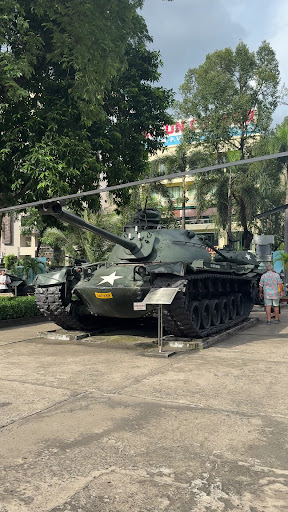
Tiger Cages: A replication of the infamous prison cells used to detain Viet Cong prisoners. War Photography: A vast collection of photographs taken by journalists and photographers, showcasing the brutal realities of war. Military Equipment: Displays of helicopters, tanks, and bombs used during the conflict. Agent Orange Effects: Exhibits detailing the devastating impact of chemical warfare on the Vietnamese population.
Educational Value The museum serves as an important educational resource, offering a detailed and balanced perspective on the war. Information is presented in both Vietnamese and English, making it accessible to a broad audience. The exhibits are accompanied by extensive descriptions and historical context, helping visitors understand the complex history and consequences of the conflict.
Emotional Impact Visiting the War Remnants Museum can be an emotionally intense experience. The graphic images and personal stories of suffering provide a stark reminder of the human cost of war. It's a place of reflection and learning, encouraging visitors to consider the impact of war on both soldiers and civilians.
Facilities and Accessibility The museum is well-maintained and easily accessible. It has several floors, with exhibits spread across multiple levels. There are rest areas and a small café on-site, offering a place to rest and process the information. The museum also provides facilities for disabled visitors, including ramps and elevators.
Visitor Experience The staff at the museum are knowledgeable and helpful, ensuring a smooth visit. The museum can get crowded, especially during peak tourist seasons, so it's advisable to visit early in the day. There are guided tours available, which can enhance the experience by providing deeper insights into the exhibits.
Overall Impression The War Remnants Museum is a must-visit for anyone interested in history and the Vietnam War. It offers a powerful and sobering look at the war's impact, encouraging reflection and understanding. While the experience can be intense, it is also profoundly educational and thought-provoking, making it an essential stop for visitors to Ho...
Read moreAlmost everyone’s heard of the Vietnam War. It’s taught in schools, dramatized in films, and many veterans are still alive today. But most people, including myself, don’t actually know much about it beyond a handful of images and slogans.
The War Remnants Museum doesn't hold back.
Some exhibits are hard to look at. They don’t just show the destruction left behind in Vietnam; they lay bare the raw impact of the war on everyone it touched. The Vietnamese, the Americans, and neighbouring countries. Soldiers and civilians, including children. It’s not one-sided, but it is brutally honest.
Of course, the museum details the horrific effects of the war on the Vietnamese population. The "justification" for the war. The napalm that turned jungle to ash. The Agent Orange that poisoned the land and the people. The civilian casualties. The decimation of rural communities.
One section honours the journalists who died reporting the war, both foreign and domestic, North and South. At least 63 reporters were killed across the 20-year conflict.1 Their deaths are a reminder that war doesn’t just kill soldiers. It kills the truth-tellers too.
What hit me hardest, though, were the long-term effects of Agent Orange. I knew it was a defoliant meant to strip the enemy of jungle cover and food. But I hadn’t realised how toxic it was to people. It causes cancer, stillbirths and birth defects. Genetic mutations caused by Agent Orange would last for generations. It didn’t just poison the Vietnamese: U.S. soldiers exposed to it suffered too. And they brought the consequences home with them.
The final exhibit focuses on the Tet Offensive, a turning point that helped the Viet Cong reclaim ground in the South. It shattered the illusion that the war was winnable. As protests exploded across the U.S.A., public opinion turned. The U.S.A. withdrew. The war ended.
War is good for nothing. Maybe the only way to end war is to truly...
Read more