In the sprawling landscape of American airports, Portland International has quietly cultivated something rare: an architectural identity that resonates deeply with its community. The latest $2 billion expansion, nearing completion in 2025, may be its most eloquent statement yet.
Since 1956, when the main terminal first opened with humble brown terrazzo floors, PDX has undergone constant reinvention. But no relationship has shaped this evolution more than its 60-year partnership with ZGF Architects, which began in 1965 when the Port of Portland commissioned the firm to reimagine the 1958 terminal.
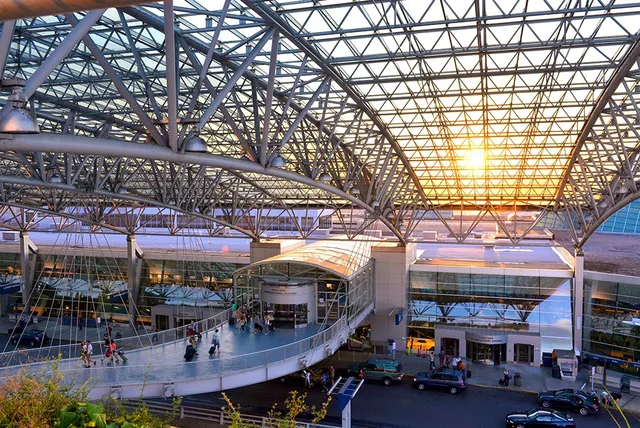
The current expansion represents the airport's most ambitious transformation, doubling its capacity while creating a structure that feels distinctly of its place. Entering the new main terminal, one encounters what ZGF partner Gene Sandoval describes as "your first walk in an Oregon forest" – a 9-acre mass timber roof that undulates above travelers' heads like a canopy of trees.
This isn't mere aesthetic posturing. The roof's 34,000 timber elements were sourced within 300 miles of Portland, supporting local economies while reducing carbon footprint. Its construction required genuine innovation: the entire structure was built on the ground adjacent to the existing terminal, then "unzipped" into 18 massive "cassettes" and installed during narrow nighttime windows when flights were suspended.
The engineering challenges were formidable. KPFF Consulting Engineers developed unprecedented moment connections for the wood-steel hybrids and mounted seismic isolators at column tops rather than bases, allowing the roof to move up to 22 inches during earthquakes. This solution required 160 building code appeals but ensures the terminal remains operational after a major seismic event – critical for a region anticipating a Cascadian subduction zone earthquake.
Beneath this technical virtuosity lies a deeper narrative about regional identity. The terminal's layout draws inspiration from Portland's human-scaled city blocks and walkable neighborhoods. Local firms like Timberlab (formerly Swinerton Mass Timber) and century-old Freres Lumber developed new capabilities to manufacture components never before attempted. Even Eugene-based Zip-O-Laminators stretched its expertise to create 80-foot glulam beams with dramatic 15-foot arches.
Perhaps nothing reflects PDX's distinctive relationship with its public better than the saga of its carpet. When the Port announced in 2013 that the teal geometric carpet designed by SRG Partnership in 1987 would be replaced, the response was unprecedented. The pattern – based on the air traffic controller's view of intersecting runways – had become a genuine cultural touchstone. Portlanders took "foot selfies" on the carpet to announce their return home. The pattern appeared on merchandise from socks to sneakers, inspiring its own hashtag with over 20,000 posts.
In a remarkable concession to public sentiment, the new terminal incorporates sections of the original pattern in designated areas – a strange but moving acknowledgment of how infrastructure can transcend function to become symbol.
The expansion emphasizes sustainability throughout, using 50% less energy per square foot while doubling in size. The interior features 70 large trees and 5,000 plants, creating an environment designed to reduce traveler stress.
As airports increasingly become generic non-places, Portland has created something increasingly rare: public infrastructure with a distinctive sense of place, crafted through genuine dialogue between architects, engineers, and the community they serve. In its timber lattice and even its carpet, PDX offers a model for how airports might once again become sources of civic pride rather than mere...
Read moreUpdated Review: New terminal, who dis?
With its fresh coat of paint, a new open floorplan (much better than the linear ordeal of the previous version), and some fantastic pre-security shops and restaurants, this terrific timber terminal. There's still a lot of construction going on, plenty of places still off-limits, and don't look too closely, or you'll see a few cut-corners here and there, but PDX is finally trying to put on it's big-boy pants and join the ranks of international airports worthy of mention purely for its aesthetic alone!
PDX has always been an clean, navigable, and efficiently-run airport; there's a reason it was voted America's best airport, what...six times in a row? I mean, what other airport has a Therapy Dog program on-site, instead of just canines sniffing through your luggage looking for that artisanal weed you were trying to smuggle back to your lame home state where it's still not legal?
It's still not the premier choice as a hub for most international flights, but those overseas destinations that are serviced directly (Tokyo, Amsterdam, Frankfurt, Costa Rica, and a few others) are still reasonably priced, meaning you won't need to drive or take a hopper flight to depart from a heavier-trafficked airport like SAN, SEA, VYR.
Like a microcosm of Portland itself, PDX is earnest, friendly, and welcoming, showcasing the best of the northwest while keeping its skeletons hidden in its closet...or behind a band of construction tape. Sure, it has home field advantage, but even with its limitations, it's still among my favorite airports, mostly because, even with all the pomp and circumstance removed, it does best the one thing that airports absolutely should do well: keep people moving. In that aspect alone, PDX is world-class; everything else is just gilding the lily, or in this case, the Rose City.
Original Review: PDX is a domestic airport trying to fit into the big boy pants of an international one. Sure, it's technically an international airport, but many of its flights end up riding through other major hubs such as L.A., San Francisco, Seattle or Vancouver, BC. The few international locations people actually want to travel to that it directly services (Tokyo, Amsterdam and Costa Rica, for some reason), have come and gone and come again over the years, so even they can be inconsistent.
Still, because it is a smaller airport, it's not without its unique charms. It has a pretty stellar selection of shops and restaurants, a micro-version of the Hollywood Theater (showing mostly local short films and documentaries), relatively short lines and reasonably efficient security, as far as TSA agents go. It's still among my favorite airports, despite its simplicity...or maybe...
Read moreThe new Portland International Airport (PDX) is a stunning example of how modern design and functionality can come together to enhance the travel experience. From the moment you walk in, it's clear that the focus is on comfort, efficiency, and showcasing the unique culture of Portland.
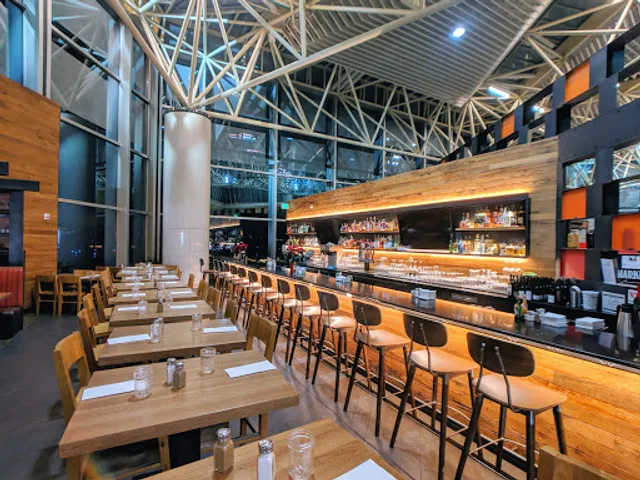
Design and Atmosphere The architecture of the new PDX is both sleek and inviting, blending natural materials like wood and stone with expansive glass windows that allow natural light to flood the space. This gives the terminal a warm, welcoming feel that is a refreshing change from the often sterile environments of other airports. The new layout is open and spacious, making it easy to navigate while also reducing the stress of crowds.
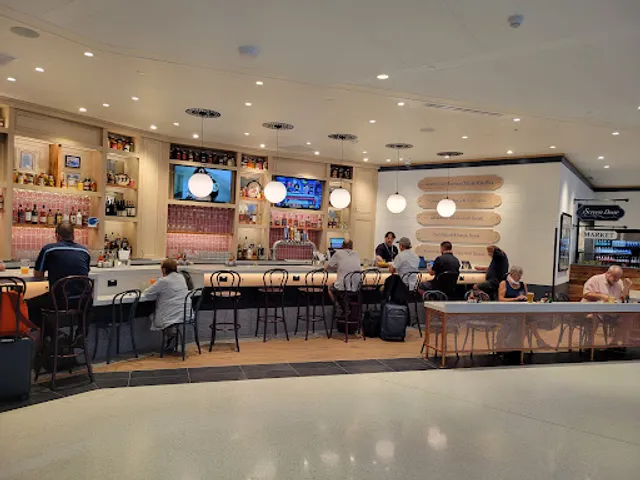
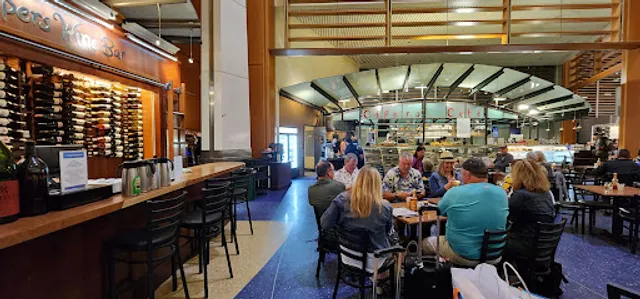
Local Flavor and Amenities One of the standout features of the new Portland airport is its dedication to highlighting local businesses. Many of the food and retail options are local favorites, which provides travelers a taste of Portland even if they're just passing through. From craft breweries and artisanal coffee shops to a variety of local restaurants, there's something for everyone. The airport also features artwork by local artists, adding a touch of Portland’s creative spirit to the space.
Technology and Convenience PDX has embraced technology in its redesign, with numerous charging stations, free high-speed Wi-Fi, and digital kiosks for a quick and easy check-in process. The security area has been thoughtfully reimagined to streamline the screening process, reducing wait times significantly. The signage is clear and plentiful, and there are ample seating areas with comfortable chairs, many of which have built-in charging ports.
Sustainability Initiatives Another highlight of the new PDX is its commitment to sustainability. The terminal uses energy-efficient lighting and climate control systems, and there are numerous recycling stations throughout the airport. Additionally, the use of local materials in construction and a focus on eco-friendly practices throughout operations demonstrate a strong commitment to environmental responsibility.
Overall Experience Overall, the new Portland airport is a fantastic upgrade that reflects the city’s unique character and values. It manages to be both modern and welcoming, with a strong emphasis on local culture, sustainability, and traveler convenience. Whether you’re a frequent flyer or just visiting Portland, the new PDX offers a memorable and pleasant experience from...
Read more