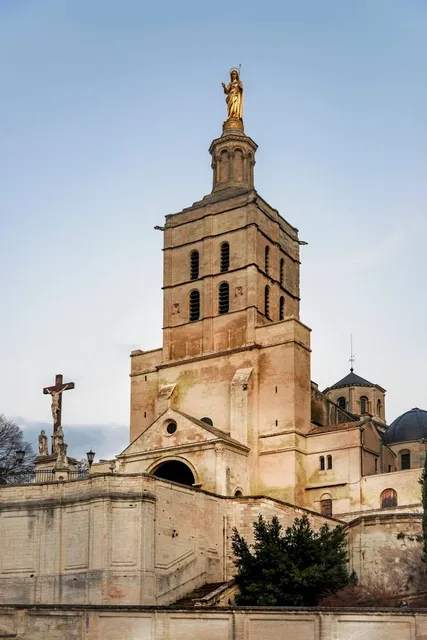
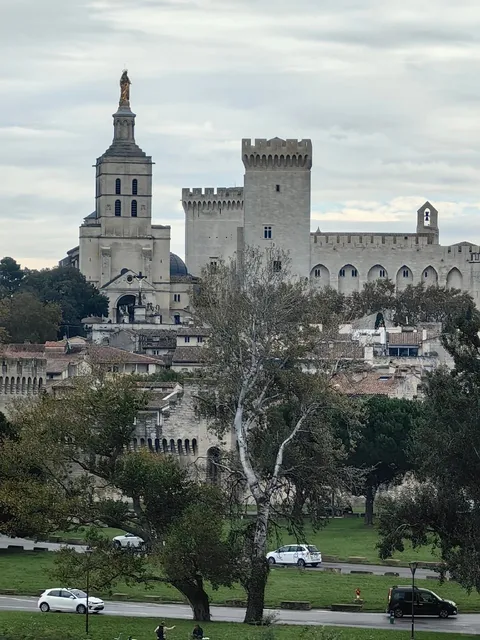
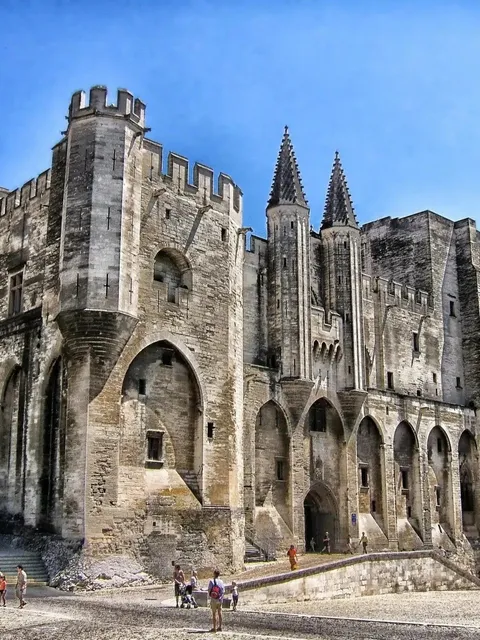
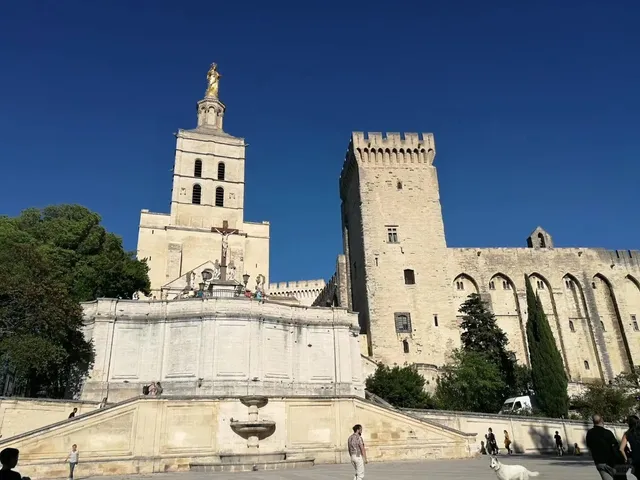
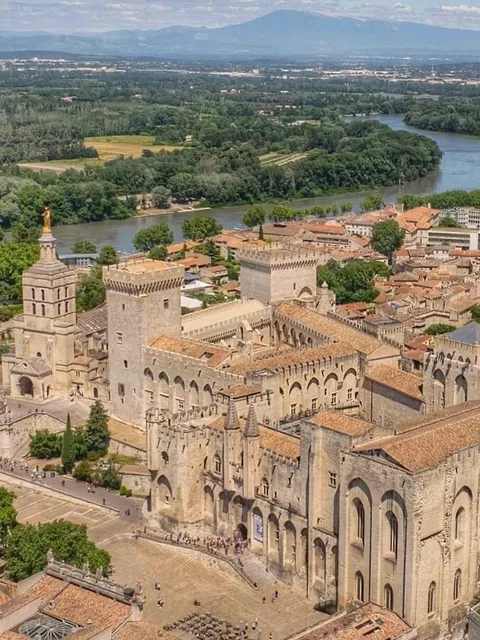
Visiting the Palais des Papes in Avignon is not merely a tour through stone corridors—it’s a captivating passage through the very heart of medieval European history. As the largest Gothic palace in Europe, the Palais des Papes stands not only as a symbol of religious power but also as a breathtaking architectural and cultural landmark that continues to inspire awe and reflection.
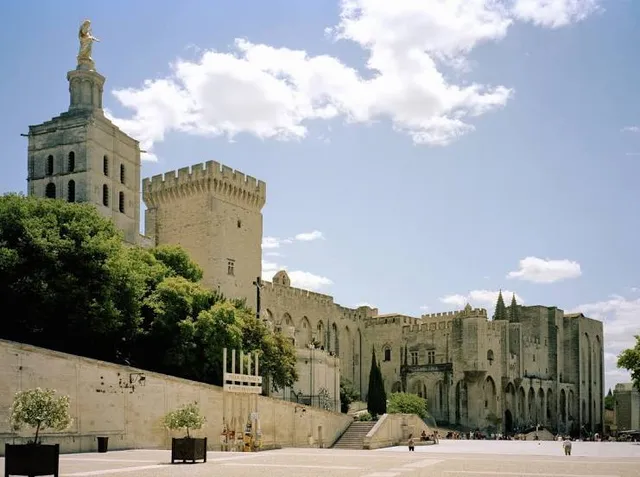
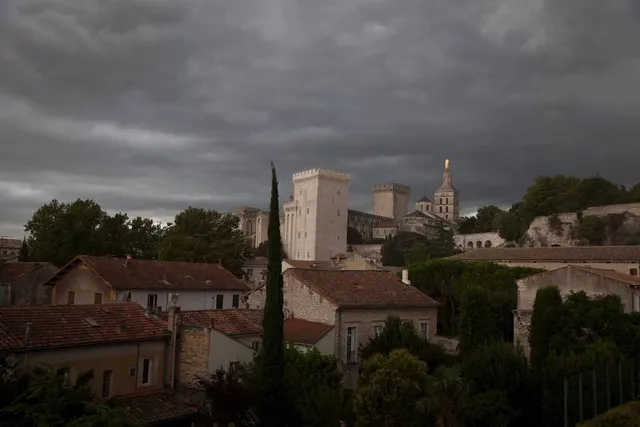
From the moment you approach the palace’s grand façade, there is a palpable sense of scale and majesty. Towering above the surrounding city with its crenellated walls and formidable presence, it’s hard not to feel transported to the 14th century, when Avignon was, astonishingly, the centre of the Catholic world. This sense of historic immersion is one of the greatest strengths of the Palais—the ability to blend sheer physical grandeur with the subtle storytelling of the centuries.
The interior does not disappoint. The vast halls—particularly the Grand Chapel and the Consistory Hall—are stunning in their austere beauty and scale. Wandering through these stone expanses, one can almost hear the echoes of papal ceremonies, diplomatic intrigues, and artistic patronage. While many original furnishings are long gone, the palace’s architectural features—the soaring vaults, spiral staircases, and secret passageways—offer compelling visual and intellectual interest.
One of the highlights is the audioguide and augmented reality tablet (HistoPad), which is both engaging and enlightening. It reconstructs the rooms with their original colours, furnishings, and tapestries, offering visitors a rich layer of interpretation that truly brings the past to life. Rather than merely observing ruins, you’re immersed in re-creations that provide context and spark the imagination.
What elevates the Palais des Papes further is its deep historical significance. The period during which the popes resided in Avignon (1309–1377) was one of profound transformation and controversy in the Church. The palace became the epicentre of Christendom, and understanding this chapter adds incredible depth to the visit. The informative displays and carefully curated exhibits explain this complex history with honesty and clarity, without overwhelming the visitor.
The surrounding environment complements the visit perfectly. The palace is located in the heart of Avignon’s UNESCO World Heritage site, adjacent to the charming Place du Palais and just a short stroll from the Pont d’Avignon. The panoramic views from the palace’s upper terraces—overlooking the Rhône River and the rolling Provence countryside—are simply unforgettable, especially at sunset.
A few tips for prospective visitors: arrive early in the day to avoid crowds, wear comfortable shoes (as the floors are uneven and there are many stairs), and take your time—this is not a place to rush. Budget at least two to three hours for a thorough visit, longer if you’re an architecture or history enthusiast.
In conclusion, the Palais des Papes is a triumph of historical preservation and interpretative presentation. It’s a must-see not only for those drawn to religious or political history but for anyone seeking to experience a living monument that still resonates with the grandeur and complexity of its past. Far from being a static relic, the palace breathes with stories—of power, of devotion, of art and of conflict. It leaves visitors not just impressed, but...
Read moreIt is hard to express how disappointing this visit was. The educational content is so poorly done that I have a hard time believing they have any professionals responsible for it at all (or they receive funding that is nowhere near the necessary amount).
The panels contain texts that use vocabularies that don't consider the public it was written for: people who probably don't know the technical names for the specific furniture a pope might use. They explain virtually nothing of the politics and conflicts between popes and kings other than "a conflict existed". There is no furniture, no paintings, not even reproductions of illustrations from the time: records that would have certainly included the decoration of the time and/or architectural plans. It seems that the museum's direction felt the need to add tablets only to follow a trend. Unfortunately, they don't add much to the visit. The text is only a description of what the visitor can already see or read on the panels. Though the idea of a simulation of the decor from the time is nice, the software constantly interrupts the simulation, because the location detection is inaccurate, making it impossible to use. There are only two rooms with frescoes from the time. The panels with explanations are very hard to see, so you can't actually learn much about the illustrations without straining your eyes. Also, they are the only rooms with something to look at, but photos are not allowed. The tower is the most dangerous part of the visit because people could fall over. However, there is no museum staff dedicated to that area. The contemporary art exhibition that was installed does not respect the historical site that it is in. The lighting necessary for the works make it impossible to see some of the signage and the few erased frescoes on the wall.
In summary, this is one of the largest, most historically important buildings I have ever been to, and yet it is the only one where I have learned and seen virtually nothing. It is beautiful on the outside. Don't bother going in.
One last thing: the garden is basically empty. Don't get a...
Read moreProbably the worst thing I’ve visited in France. I bought the tix online, a combined ticket for the palace, the garden and the bridge. No option was offered for audio tour but the implication was that we would have one. It turned out that only applied to the bridge.
We got there on Sunday at 8:50 for a 9AM entrance. The entrance is well away from the more popular area, where you buy walk up tix. So you walk about 3 blocks around to the back where there is a poorly signed gate. Then up a corridor that leads to a little plaza and a u turn up a driveway where there is a big gate that says Jardin. We wanted to see the Palace first but, after staring at the signs, I asked the guards and they said it was also the entrance to the palace as well. (How do they control those that just want to see the garden alone or the palace alone is a mystery.) Although they opened the gates and set up a table, they did not start to allow people in until almost 9:15am.
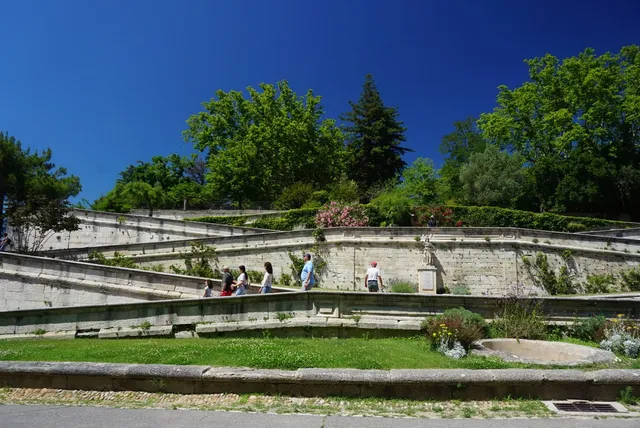
The garden is a nothing burger. Maybe 50 yards by 30 yards of nothing particularly interesting. In the far corner of the garden, there are narrow steps going up to a second story of the building. No sign. Nothing. But indeed, we were in the palace.
Exhibits, if any, were signed only in French, aside from the main sign indicating what hall. Most rooms were cavernous 3 story rooms with little if anything to display. No period furniture, since the palace was gutted and used for military purposes in the 1800s. Fine, but the empty rooms suggest a lack of effort to tell the story of the palace. The pontiff’s chapel was closed. Another large room, the banquet hall had 8 foot high curtain barriers all around. The cloister was singularly uninteresting.
All very disappointing. The bridge was a bit more interesting. But the other two parts of the tripartite ticket were a major letdown.
I guess the good news is that we had a full day planned and we finished the palace in about 40 minutes, much earlier...
Read more