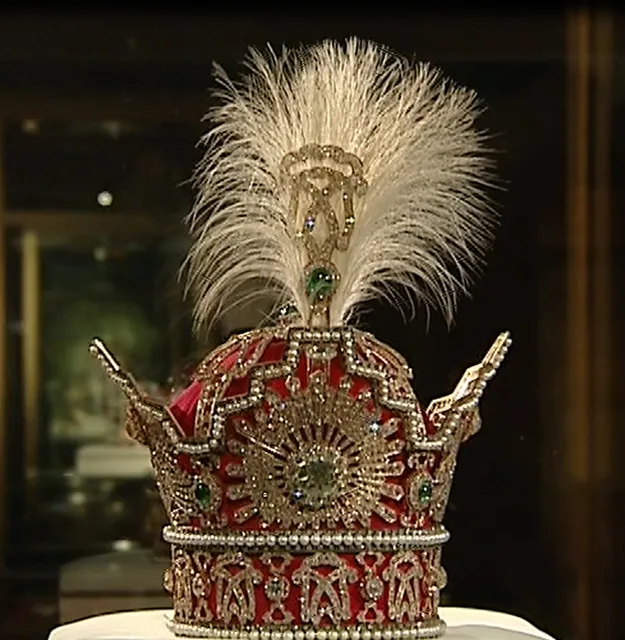
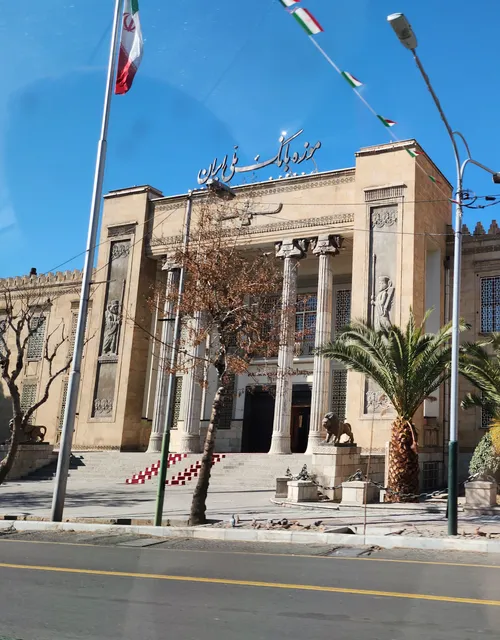
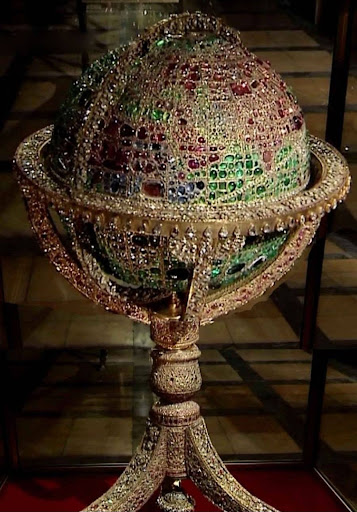
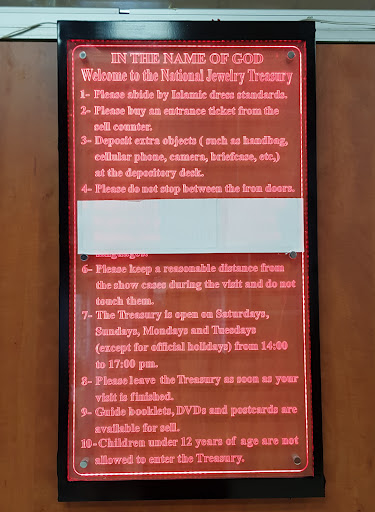
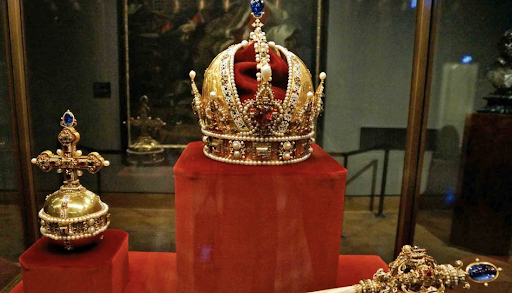
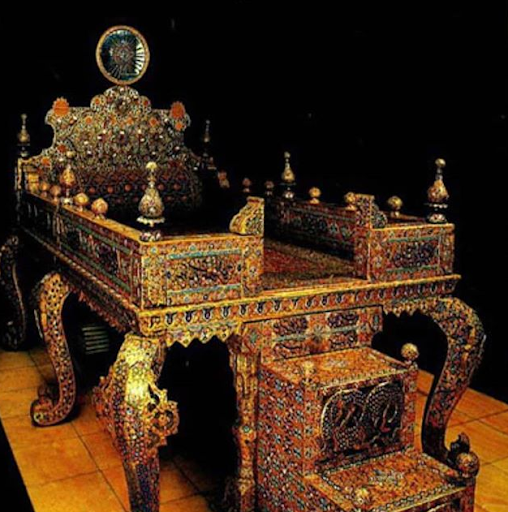
موزه ملی جواهرات یکی از بی نظیرترین مجموعه های ارزشمند از جواهرات و سنگهای قیمتی دوره های قاجاریه و پهلوی را دارا میباشد و هر ایرانی حتما باید این مجموعه زیبا را ببیند . اما متاسفانه به دلیل امنیت بالای خزانه و موزه اجازه همراه داشتن موبایل نیست و نمیتوانید از این مجوعه عکس شخصی داشته باشید. The value of the objects in the Treasury of National Jewels is not limited to their economic value, but is also a reflection of the creativity and taste of Iranian craftsmen and artist over the different eras of history, and represents the artistic and cultural heritage of the vast country on Iran. Before the Safavid dynasty, certain jewels existed in the government treasuries, but it was with the Safavid dynasty that foreign travelers (Jean-Baptiste Tavernier, Chevalier Chardin, the Shirley brothers. George Mainwaring and others) began to mention these treasuries. The Safavid monarchs, over two centuries (907 to 1148 LH equal to about 1502 to 1735 AD), started to collect rare and beautiful gems. The gem specialists of the Safavid court brought fine stones to Isfahan, the capital of Iran at that time from the markets of India the Ottoman Empire and European countries like France and Italy. After the rule of Shah Soltan Hossein and the entry of Mahmoud the Afghan to Iran, the treasury was scattered and some of the jewels were taken by Mahmoud the Afghan and transferred to Ashraf the Afghan. After the entry of Shah Tahmasb Π and Nadir to Isfahan, these jewels fell into the hands of Nadir, and thus were preserved inside the country. Later, in order to regain the jewels that had been transported to India, Nadir wrote several letters to the India court, but did not receive any favorable reply. After Nadir’s victory in India in 1158 LH (1745 AD), Mohammad Shah delivered cash amounts, jewels and weapons to Nadir as booty. Part of the treasures, which were obtained in India never, reached Iran, and was lost during transportation. According to the tradition of that time, after returning to Iran, Nadir send part of the booty as gifts to neighboring rulers. He also presented some beautiful and rare objects to the Holy Shrine of Imam Reza, while some were distributed among the soldiers of his army. After the assassination of Nadir in 1160 LH (1747 AD), Ahmad Beg Afghan Abdali, one of his commanders, looted the treasury of Nadir. One of the famous jewels that left Iran at this time and never returned was the famous "Kooh-e-Nur" (Mountain of Light) diamond. This diamond passed on to the hands of Ahmed Shah Durrani and then to Ranjit Singh of Punjab. After his defeat by the British government, the Kooh-e-Nur diamond fell into the hands of the East India Company, and in 1266 LH (1850 AD) it was given to Queen Victoria as a gift. After this event, there was no major change in the treasury until the time of the Qajar dynasty. During the Qajar period, the Treasury was collected and recorded. Some of the stones were mounted on the Kiani Crown, the Nadir Throne, the Globe of jewels, and the Peacock Throne (or the Sun Throne). Two others items that were gradually added to this Treasury, are the turquoises, the genuine precious stone of Iran, extracted from the local turquoise mines, and the other are pearls, hunted from the Persian Gulf. According to the law approved on 25th Aban 1316 SH (1937 AD) a major portion of the Treasury was transferred to Bank Melli Iran, and formed part of the reserves for note issues, and later became collateral for government liabilities to the Bank. The present collection was constructed in 1334 SH (1955 AD). In 1339 SH (1960 AD), by the establishment of Central Bank of Iran the Treasury was transferred and deposited with the...
Read moreI arrived at 1245 hrs for the opening at 1300 hrs and there were already around 30 people waiting at the entrance. I went on Saturday so maybe that is why but be ready to be in the queue!
No bags and phones are allowed as cited by many ( you can leave inside the bank before going to the safe: they will give you a key so I suppose it is very safe), and two security checks (after you pay for the ticket and after you enter secure room) after, you will be grouped and usher by the guide. At any time, you are not left alone.
Excellent English speaking guide was taking us around but certainly there are many people in confined place so be prepared to be a bit warm inside. You cannot touch display windows or you would be told off! But that’s understandable as there are so many of jewels! It’s only one floor which is divided three sections but basically one big room ( bank safe).
No doubt amazing and beautiful jewels and so many of them. To be honest, after seeing first three displays (a Globe with diamond ruby and emerald), I just had a funny feeling of not being amazed anymore by the amount of diamonds and emerald in each jewelry. Basically there are too many precious stones in the safe of the Central Bank, after few minutes I stared not to appreciate all amazing jewels. Scale, volume and numbers of gemstones in each display was is like thousands in each pieces, far more than my brain can take. Still amazing really : for my simple life, it was just too many.
Anyways it is an experience and if you have a time, it is a nice reminder of the wealth as well as skilled art of jewelry Iran possess.
I kept thinking being a king is not easy if you have to wear all those beautiful but precious jewelry in...
Read moreThe Iranian Jewels Museum is located at Tehran's Ferdowsi Avenue, and of course, the building is related to the Central Bank of Iran. This place is known as the national treasury of jewels, but also known as the museum of treasures. This treasure depicts the history and ancient culture of Iran, and, of course, some of them has their own horrific stories.
Perhaps in Iran, the history of collecting precious jewels comes back to the Safavid dynasty. Until the Safavids, precious jewels did not have a place in the state treasury, and the kings of this period tried to collect jewels for about two centuries, and even experts from this government bought jewels from the markets of India, Ottoman, Italy, France and other countries, and to Isfahan, the capital The Safavid rule. With the end of the reign of King Soltan Hussein and the arrival of Mahmoud Afghan in Iran, state treasuries were plundered and some of these gains that were held by Ashraf Afghan after the arrival of Shah Tahmasb II to Isfahan became rare, and therefore Their departure from Iran was prevented. Some time later, he decided to retrieve some of the jewels that had been transmitted to the India, so wrote a letter to the imperial court of India, and, of course, the court replied negative, and then Nader Shah attacked India, and take back some jewelries as well as large...
Read more