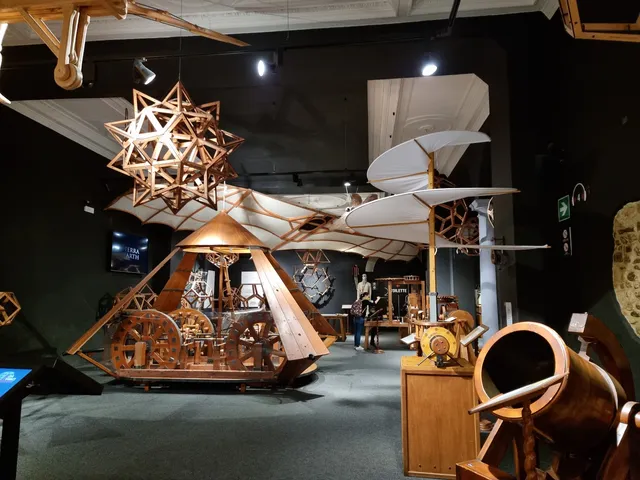
Student 6 euro. Really small exhibition. Only for those who interested.
Perhaps the most important section of the palace is the Magi Chapel, famously frescoed by Benozzo Gozzoli, who completed it around 1459. Gozzoli adorned the frescos with a wealth of anecdotal detail and portraits of members of the Medici family and their allies, along with Byzantine emperor John VIII Palaiologos and Holy Roman Emperor Sigismund of Luxemburg parading through Tuscany in the guise of the Three Wise Men. Regardless of its biblical allusions, many of the depictions allude to the Council of Florence(1438-1439), an event that brought prestige to both Florence and the Medici.
The chapel also used to host Filippo Lippi's Adoration in the Forest as its altarpiece. Lippi's original is now in Berlin, while a copy by a follower of Lippi has replaced the original.
Other decorations of the palazzo included two lunettes by Filippo Lippi, depicting Seven Saintsand the Annunciation, both now at the National Gallery, London.
The Magi are popularly referred to as wise menand kings. The word magi is the plural of Latinmagus, borrowed from Greek μάγος magos, as used in the original Greek text of the Gospel of Matthew ("μάγοι"). Greek magos itself is derived from Old Persian maguŝ from the Avestanmagâunô, i.e., the religious caste into which Zoroaster was born (see Yasna 33.7: "ýâ sruyê parê magâunô" = "so I can be heard beyond Magi"). The term refers to the Persian priestly caste of Zoroastrianism. As part of their religion, these priests paid particular attention to the stars and gained an international reputation for astrology, which was at that time highly regarded as a science. Their religious practices and use of astrology caused derivatives of the term Magi to be applied to the occult in general and led to the English term magic, although Zoroastrianism was in fact strongly opposed to sorcery. The King James Version translates the term as wise men; the same translation is applied to the wise men led by Daniel of earlier Hebrew Scriptures (Daniel 2:48). The same word is given as sorcerer and sorcery when describing "Elymas the sorcerer" in Acts 13:6–11, and Simon Magus, considered a heretic by the early Church, in Acts 8:9–13. Several translations refer to the men outright as astrologers at Matthew Chapter 2, including New English Bible (1961); Phillips New Testament in Modern English (J.B.Phillips, 1972); Twentieth Century New Testament (1904 revised edition); Amplified Bible (1958-New Testament); An American Translation (1935, Goodspeed); and The Living Bible (K. Taylor, 1962-New Testament).
Although the Magi are commonly referred to as "kings," there is nothing in the account from the Gospel of Matthew that implies that they were rulers of any kind. The identification of the Magi as kings is linked to Old Testament prophecies that describe the Messiah being worshipped by kings in Isaiah 60:3, Psalm 68:29, and Psalm 72:10, which reads, "Yea, all kings shall fall down before him: all nations serve him." Early readers reinterpreted Matthew in light of these prophecies and elevated the Magi to kings. By AD 500 all commentators adopted the prevalent tradition that the three were kings. Later Christian interpretation stressed the Adorations of the Magi and shepherds as the first recognition by the people of the earth of Christ as the Redeemer, but the reformer John Calvin was vehemently opposed to referring to the Magi as kings. He once wrote: "But the most ridiculous contrivance of the Papists on this subject is, that those men were kings... Beyond all doubt, they have been stupefied by a righteous judgment of God, that all might laugh at [their]...
Read moreDuring my visit to Italy in 2006, I had the privilege of exploring the Riccardi Medici Palace, a remarkable architectural masterpiece that embodies the grandeur and elegance of the Renaissance era. Nestled in the heart of Florence, this palatial gem stood as a testament to the power, wealth, and artistic patronage of the illustrious Medici family. From its opulent interiors to its rich historical significance, the Riccardi Medici Palace left an indelible impression on my journey through Italy.
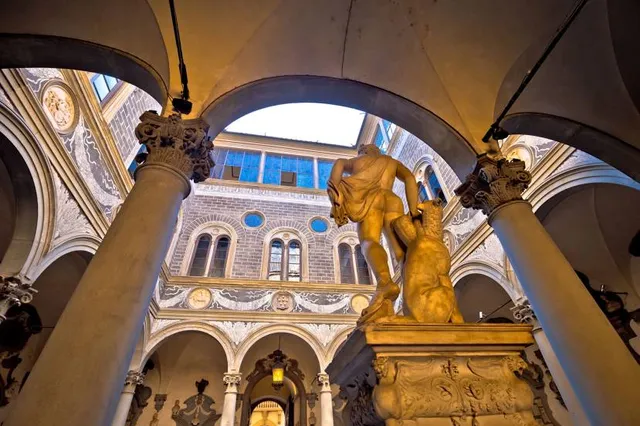
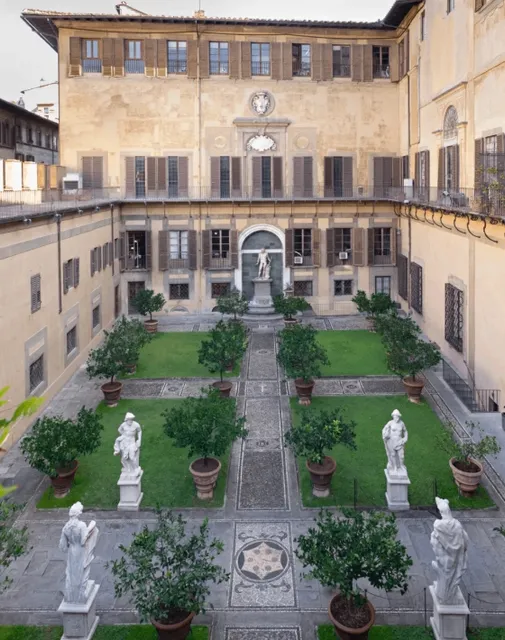
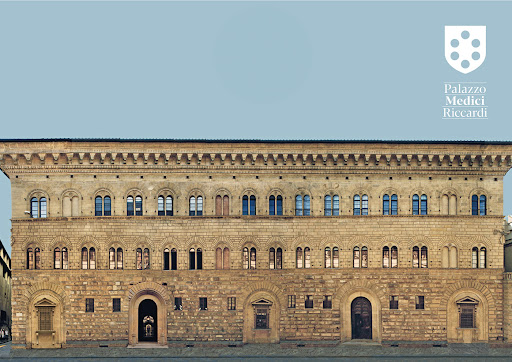
Stepping into the palace, I was immediately transported to a bygone era of splendor and refinement. The architecture, designed by Michelozzo di Bartolomeo, showcased the harmonious blend of Renaissance aesthetics and classical influences. The symmetrical facades, adorned with decorative elements and graceful arches, exuded an air of elegance and timeless beauty.
Exploring the palace's opulent interiors was a feast for the senses. The richly decorated rooms, adorned with exquisite frescoes and ornate tapestries, testified to the Medici family's love for art and their status as one of the most influential patrons of the Renaissance. The attention to detail and the meticulous craftsmanship evident in every corner of the palace spoke volumes about the era's artistic and cultural achievements.
The highlight of my visit was undoubtedly the Magi Chapel, adorned with breathtaking frescoes by Benozzo Gozzoli. The vibrant colors, intricate details, and captivating storytelling of the frescoes left me in awe. It was a visual symphony that depicted the journey of the Magi, transporting me into a world of biblical wonder and Renaissance artistry.
The historical significance of the Riccardi Medici Palace added another layer of fascination to the visit. As the Medici family's primary residence, it served as a center of political power and intellectual exchange. Walking through the very halls that hosted renowned scholars, artists, and thinkers of the time brought history to life and provided a deeper appreciation for the impact of the Medici family on Florentine society.
The palace's compact size and well-preserved state allowed for an intimate and immersive experience. Unlike some of the larger museums and palaces, the Riccardi Medici Palace offered a more personal encounter with its treasures, providing a glimpse into the daily lives and cultural milieu of the Renaissance elite.
While the palace may not attract the same level of crowds as other famous sites in Florence, its relative tranquility added to the allure of the visit. Taking the time to appreciate the architectural details, to study the intricate artwork, and to absorb the historical significance of the palace created a more profound and personal connection to its legacy.
My visit to the Riccardi Medici Palace was an enchanting journey into the splendor of the Renaissance. It was a celebration of human creativity, intellectual pursuits, and the enduring legacy of the Medici family. The palace stands as a testament to the power of art and culture to transcend time, leaving an indelible mark on all who have the privilege of stepping into its regal halls.
For anyone with a passion for art, history, and the Renaissance, a visit to the Riccardi Medici Palace is an absolute must. It is an opportunity to immerse oneself in the opulence and grandeur of a bygone era, to witness masterpieces of art and architecture, and to gain a deeper understanding of the Medici family's impact on Florence's cultural heritage. The Riccardi Medici Palace is a true jewel in the crown of Florence—an unforgettable destination that deserves the...
Read moreWe had the pleasure of accompanying Alessio and his girlfriend on their tour to the Palazzo Medici Riccardi (Museum) when they were in Florence. The Palazzo Medici Riccardi, a famous representation of the Renaissance that is tucked away in the center of the city, provides tourists with a fascinating look into the Medici family's lives and the thriving culture of the period. The museum's historical significance excited us, and we were eager to explore it.
We were astounded by the palazzo's spectacular façade as we drew near it; it is evidence of Michelozzo di Bartolomeo's skill as an architect. The structure exudes elegance and sophistication because to the tasteful fusion of rusticated brickwork and polished ashlar work.
When we first entered the museum, we were welcomed by a collection of exquisitely decorated rooms and courtyards, each of which included gorgeous frescoes, sculptures, and other pieces of art. The Magi Chapel, which features beautiful Benozzo Gozzoli murals that portray the Magi's Journey, is unquestionably the most well-known of these. We had the impression that we were part of the procession, following the Three Wise Men because of the paintings' meticulous intricacies and vivid colors.
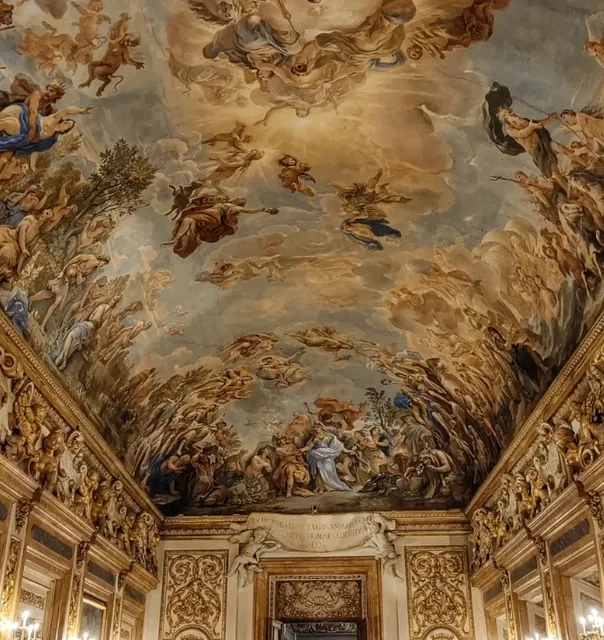
The museum is home to a number of other notable rooms, including the Luca Giordano Gallery and the Galleria degli Specchi. (Hall of Mirrors). The ceiling of the Luca Giordano Gallery, which bears the name of the Baroque artist who painted it, is covered with a magnificent fresco that depicts the classic tale of the fall of the giants. In contrast, the Galleria degli Specchi, which is reminiscent of the Hall of Mirrors at Versailles, exudes a regal mood with its mirror-covered walls and sparkling chandeliers.
The palazzo's immaculately kept gardens also left an impression on us as we continued our tour. These calm areas gave us the chance to stop, take a moment, and consider the numerous works of art we had just seen.
Despite the museum's unquestionable appeal and historical significance, Alessio thought the 13 euros per person admission fee was a bit exorbitant given the size and breadth of the holdings. We acknowledge the high maintenance costs associated with such a historic monument, but we couldn't help but think that a slightly lower price would have made the experience more affordable to a wider spectrum of people.
In closing, we heartily advise anybody interested in learning more about the rich history and art of the Renaissance period to pay a visit to the Palazzo Medici Riccardi. Everyone who enters will undoubtedly be impressed by the magnificent architecture, mesmerizing frescoes, and serene gardens. To better represent the value the museum offers, we do believe that the admission price may be reduced. As a result, we give our experience a rating...
Read more