HTML SitemapExplore
logo
Find Things to DoFind The Best Restaurants

Foro di Augusto — Attraction in Rome

Name
Foro di Augusto
Description
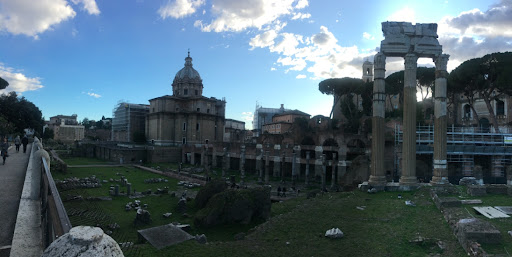
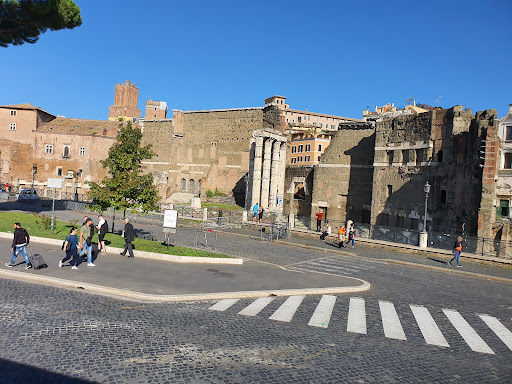
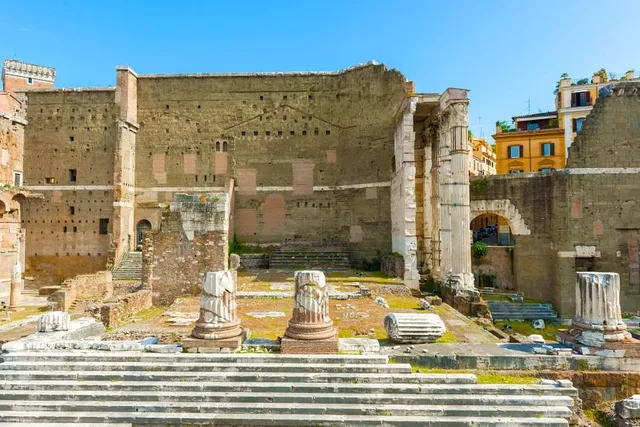
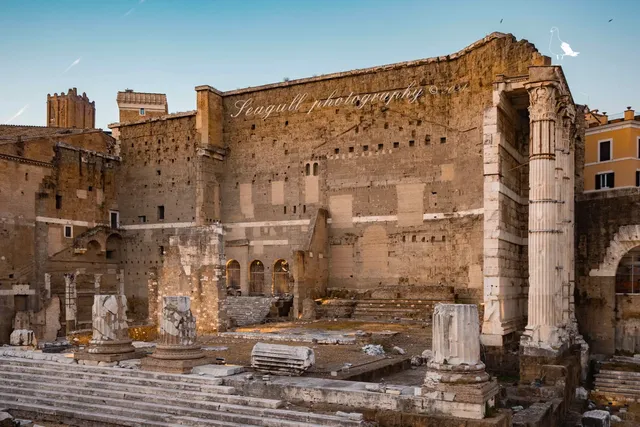
The Forum of Augustus is one of the Imperial fora of Rome, Italy, built by Augustus. It includes the Temple of Mars Ultor. The incomplete forum and its temple were inaugurated in 2 BC, 40 years after they were first vowed.
Nearby attractions
Roman Forum
00186 Rome, Metropolitan City of Rome Capital, Italy
Trajan Forum
Via dei Fori Imperiali, 00186 Roma RM, Italy
Mercati di Traiano Museo dei Fori Imperiali
Via Quattro Novembre, 94, 00187 Roma RM, Italy
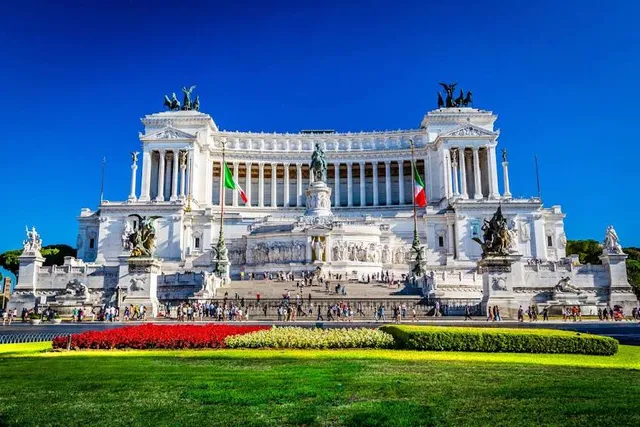
Monument to Victor Emmanuel II
Piazza Venezia, 00186 Roma RM, Italy
Piazza del Campidoglio
Piazza del Campidoglio, 00186 Roma RM, Italy
Forum of Nerva
Via dei Fori Imperiali, 00184 Roma RM, Italy
Santi Cosma e Damiano
Via dei Fori Imperiali, 1, 00186 Roma RM, Italy
Trajan's Column
Via dei Fori Imperiali, 00187 Roma RM, Italy
Piazza Venezia
Piazza Venezia, 00187 Roma RM, Italy
Capitoline Museums
Piazza del Campidoglio, 1, 00186 Roma RM, Italy
Nearby restaurants
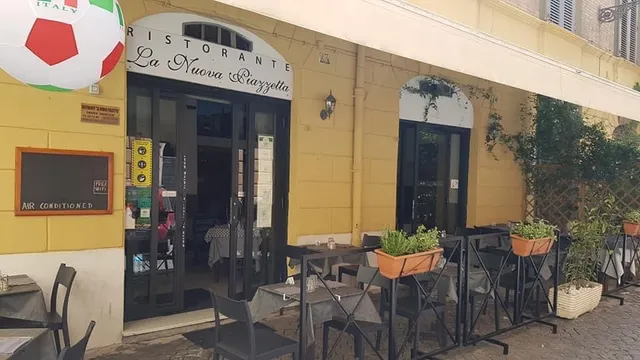
La Nuova Piazzetta
Vicolo del Buon Consiglio, 23/a, 00184 Roma RM, Italy
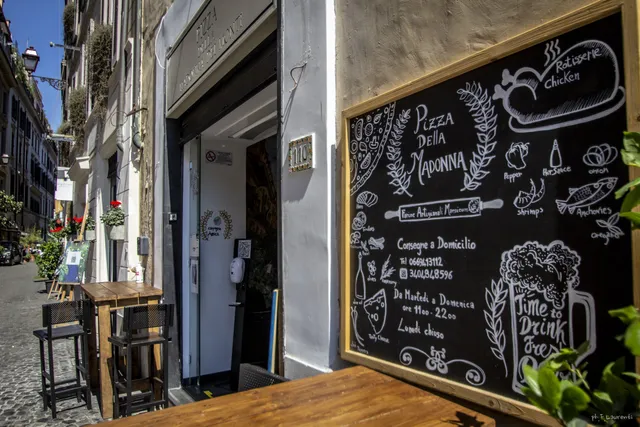
Pizzeria della Madonna dei Monti
Via della Madonna dei Monti, 110, 00184 Roma RM, Italy
Ristorante Pizzeria Imperiale
Largo Corrado Ricci, 37, 00184 Roma RM, Italy
Angelino "ai Fori" dal 1947
Largo Corrado Ricci, 40, Via dei Fori Imperiali, 25/42 43, 00184 Roma RM, Italy
Il Giardino ai Fori
Largo Corrado Ricci, 37A, 00184 Roma RM, Italy
Alle Carrette
Via della Madonna dei Monti, 95, 00184 Roma RM, Italy
La Taverna Madonna Dei Monti 16
Via della Madonna dei Monti, 16, 00184 Roma RM, Italy
Osteria Maracuja
Largo Corrado Ricci, 1, 00184 Roma RM, Italy
La Taverna dei Fori Imperiali
Via della Madonna dei Monti, 9, 00184 Roma RM, Italy
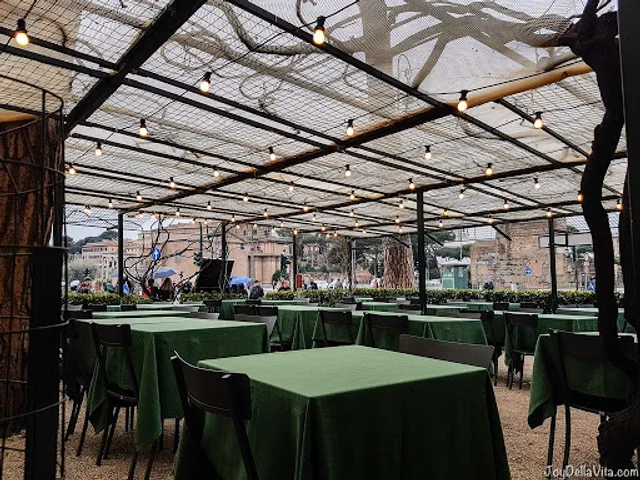
Ristorante Roof Garden
Via Tor de' Conti, 25, 00184 Roma RM, Italy
Related posts
These Ruins Are Legendary Testimonies of the Golden Age
Keywords
Foro di Augusto tourism.Foro di Augusto hotels.Foro di Augusto bed and breakfast. flights to Foro di Augusto.Foro di Augusto attractions.Foro di Augusto restaurants.Foro di Augusto travel.Foro di Augusto travel guide.Foro di Augusto travel blog.Foro di Augusto pictures.Foro di Augusto photos.Foro di Augusto travel tips.Foro di Augusto maps.Foro di Augusto things to do.
Foro di Augusto things to do, attractions, restaurants, events info and trip planning
Foro di Augusto
ItalyLazioRomeForo di Augusto

Basic Info

Foro di Augusto

Piazza del Grillo, 1, 00184 Roma RM, Italy
4.7(670)
Open 24 hours
Save
spot

Ratings & Description

Info

The Forum of Augustus is one of the Imperial fora of Rome, Italy, built by Augustus. It includes the Temple of Mars Ultor. The incomplete forum and its temple were inaugurated in 2 BC, 40 years after they were first vowed.

Cultural
Scenic
Family friendly
Accessibility
attractions: Roman Forum, Trajan Forum, Mercati di Traiano Museo dei Fori Imperiali, Monument to Victor Emmanuel II, Piazza del Campidoglio, Forum of Nerva, Santi Cosma e Damiano, Trajan's Column, Piazza Venezia, Capitoline Museums, restaurants: La Nuova Piazzetta, Pizzeria della Madonna dei Monti, Ristorante Pizzeria Imperiale, Angelino "ai Fori" dal 1947, Il Giardino ai Fori, Alle Carrette, La Taverna Madonna Dei Monti 16, Osteria Maracuja, La Taverna dei Fori Imperiali, Ristorante Roof Garden
logoLearn more insights from Wanderboat AI.
Website
060608.it

Plan your stay

hotel
Pet-friendly Hotels in Rome
Find a cozy hotel nearby and make it a full experience.

hotel
Affordable Hotels in Rome
Find a cozy hotel nearby and make it a full experience.

hotel
The Coolest Hotels You Haven't Heard Of (Yet)
Find a cozy hotel nearby and make it a full experience.

hotel
Trending Stays Worth the Hype in Rome
Find a cozy hotel nearby and make it a full experience.

Reviews

Nearby attractions of Foro di Augusto

Roman Forum

Trajan Forum

Mercati di Traiano Museo dei Fori Imperiali

Monument to Victor Emmanuel II

Piazza del Campidoglio

Forum of Nerva

Santi Cosma e Damiano

Trajan's Column

Piazza Venezia

Capitoline Museums

Roman Forum

Roman Forum

4.8

(44.8K)

Open 24 hours
Click for details
Trajan Forum

Trajan Forum

4.7

(3.9K)

Open 24 hours
Click for details
Mercati di Traiano Museo dei Fori Imperiali

Mercati di Traiano Museo dei Fori Imperiali

4.6

(3.8K)

Open 24 hours
Click for details
Monument to Victor Emmanuel II

Monument to Victor Emmanuel II

4.8

(23.9K)

Open 24 hours
Click for details

Things to do nearby

Catacombs: The Coolest Underground Tour in Rome
Fri, Dec 5 • 10:00 AM
00147, Rome, Lazio, Italy
View details
Pasta and Pizza cooking class with wine and more
Sun, Dec 7 • 10:30 AM
00142, Rome, Lazio, Italy
View details
Visit a 16th-century boutique winery
Sat, Dec 6 • 10:00 AM
00044, Frascati, Lazio, Italy
View details

Nearby restaurants of Foro di Augusto

La Nuova Piazzetta

Pizzeria della Madonna dei Monti

Ristorante Pizzeria Imperiale

Angelino "ai Fori" dal 1947

Il Giardino ai Fori

Alle Carrette

La Taverna Madonna Dei Monti 16

Osteria Maracuja

La Taverna dei Fori Imperiali

Ristorante Roof Garden

La Nuova Piazzetta

La Nuova Piazzetta

4.8

(15.4K)

$$

Click for details
Pizzeria della Madonna dei Monti

Pizzeria della Madonna dei Monti

4.7

(1.9K)

Click for details
Ristorante Pizzeria Imperiale

Ristorante Pizzeria Imperiale

4.6

(4.3K)

$$

Click for details
Angelino "ai Fori" dal 1947

Angelino "ai Fori" dal 1947

4.5

(4.4K)

$$

Click for details
Get the Appoverlay
Get the AppOne tap to find yournext favorite spots!

The hit list

restaurant
Best 10 Restaurants to Visit in Rome
February 12 · 5 min read
attraction
Best 10 Attractions to Visit in Rome
February 12 · 5 min read
Rome

Plan your trip with Wanderboat

Welcome to Wanderboat AI, your AI search for local Eats and Fun, designed to help you explore your city and the world with ease.

Powered by Wanderboat AI trip planner.
Wanderboat LogoWanderboat

Your everyday Al companion for getaway ideas

CompanyAbout Us
InformationAI Trip PlannerSitemap
SocialXInstagramTiktokLinkedin
LegalTerms of ServicePrivacy Policy

Get the app

© 2025 Wanderboat. All rights reserved.
logo

Posts

These Ruins Are Legendary Testimonies of the Golden Age
VivienneVivienne
These Ruins Are Legendary Testimonies of the Golden Age
Matúš KomarňanskýMatúš Komarňanský
The Forum of Augustus (Latin: Forum Augustum) is one of the Imperial Forums in Rome, built by Emperor Augustus between 27 and 2 BC. It was the second of the Imperial Forums to be constructed, following the Forum of Julius Caesar, and it was designed to honor Augustus’ military victories, particularly the conquest of Gaul and Egypt, and to reinforce his image as Rome’s first emperor. Key Features: 1. Architecture: • Size: The forum measures approximately 120 meters by 75 meters (394 feet by 246 feet). • Design: It was a rectangular plaza surrounded by a colonnade of Corinthian columns with a large open space in the center, which was used for various public functions. • Temple of Mars Ultor: The forum’s most significant feature was the Temple of Mars Ultor (Mars the Avenger), dedicated to the god of war. It was built to honor Mars for aiding Augustus in avenging the murder of his adoptive father, Julius Caesar, and avenging his killers in the Battle of Philippi (42 BC). The temple stood at the far end of the forum. 2. Monumental Decorations: • Statues of Roman Heroes: Around the forum were statues of Roman gods, emperors, and military leaders, including Augustus, Julius Caesar, and other important figures from Roman history. • The Battle of Actium: The forum’s decoration also celebrated Augustus’ victory over Mark Antony and Cleopatra at the Battle of Actium (31 BC). The victory in this battle consolidated Augustus’ power and marked the beginning of the Roman Empire. 3. Function: • The Forum of Augustus served as a space for public ceremonies, including legal proceedings, speeches, and military celebrations. It also played a symbolic role in asserting Augustus’ power and legitimacy. Purpose and Significance: • Political Symbolism: The forum was a tool for Augustus to project his authority and legitimize his power as emperor, connecting his rule to Rome’s military successes and divine favor. • Religious and Military Function: The Temple of Mars Ultor was central to Roman propaganda, emphasizing Augustus as both a military leader and a bringer of peace. • Architectural Innovation: It was one of the most impressive displays of Roman architecture, demonstrating the power and cultural achievement of the Roman Empire under Augustus. The Forum of Augustus was an integral part of the urban landscape of ancient Rome and contributed to shaping the image of Rome as the center of the ancient world. While much of the forum is in ruins today, the Temple of Mars Ultor and its surrounding structures remain significant examples of Roman imperial architecture.
Misha SmileyMisha Smiley
The Forum of Augustus is a fascinating glimpse into ancient Roman history. The ruins are well-preserved and give a strong sense of the scale of the original structures. I visited on a weekday, which meant fewer crowds and a relaxed atmosphere. The Temple of Mars Ultor is especially impressive and worth taking time to admire. Informative signs around the site help explain the historical significance. Walking along Via dei Fori Imperiali provides a great view of the forum from different angles. There are plenty of photo opportunities, especially in good weather. It’s a peaceful and educational stop in the heart of Rome. Highly recommended for history lovers and curious travelers alike.
See more posts
See more posts
hotel
Find your stay

Pet-friendly Hotels in Rome

Find a cozy hotel nearby and make it a full experience.

These Ruins Are Legendary Testimonies of the Golden Age
Vivienne

Vivienne

hotel
Find your stay

Affordable Hotels in Rome

Find a cozy hotel nearby and make it a full experience.

Get the Appoverlay
Get the AppOne tap to find yournext favorite spots!
The Forum of Augustus (Latin: Forum Augustum) is one of the Imperial Forums in Rome, built by Emperor Augustus between 27 and 2 BC. It was the second of the Imperial Forums to be constructed, following the Forum of Julius Caesar, and it was designed to honor Augustus’ military victories, particularly the conquest of Gaul and Egypt, and to reinforce his image as Rome’s first emperor. Key Features: 1. Architecture: • Size: The forum measures approximately 120 meters by 75 meters (394 feet by 246 feet). • Design: It was a rectangular plaza surrounded by a colonnade of Corinthian columns with a large open space in the center, which was used for various public functions. • Temple of Mars Ultor: The forum’s most significant feature was the Temple of Mars Ultor (Mars the Avenger), dedicated to the god of war. It was built to honor Mars for aiding Augustus in avenging the murder of his adoptive father, Julius Caesar, and avenging his killers in the Battle of Philippi (42 BC). The temple stood at the far end of the forum. 2. Monumental Decorations: • Statues of Roman Heroes: Around the forum were statues of Roman gods, emperors, and military leaders, including Augustus, Julius Caesar, and other important figures from Roman history. • The Battle of Actium: The forum’s decoration also celebrated Augustus’ victory over Mark Antony and Cleopatra at the Battle of Actium (31 BC). The victory in this battle consolidated Augustus’ power and marked the beginning of the Roman Empire. 3. Function: • The Forum of Augustus served as a space for public ceremonies, including legal proceedings, speeches, and military celebrations. It also played a symbolic role in asserting Augustus’ power and legitimacy. Purpose and Significance: • Political Symbolism: The forum was a tool for Augustus to project his authority and legitimize his power as emperor, connecting his rule to Rome’s military successes and divine favor. • Religious and Military Function: The Temple of Mars Ultor was central to Roman propaganda, emphasizing Augustus as both a military leader and a bringer of peace. • Architectural Innovation: It was one of the most impressive displays of Roman architecture, demonstrating the power and cultural achievement of the Roman Empire under Augustus. The Forum of Augustus was an integral part of the urban landscape of ancient Rome and contributed to shaping the image of Rome as the center of the ancient world. While much of the forum is in ruins today, the Temple of Mars Ultor and its surrounding structures remain significant examples of Roman imperial architecture.
Matúš Komarňanský

Matúš Komarňanský

hotel
Find your stay

The Coolest Hotels You Haven't Heard Of (Yet)

Find a cozy hotel nearby and make it a full experience.

hotel
Find your stay

Trending Stays Worth the Hype in Rome

Find a cozy hotel nearby and make it a full experience.

The Forum of Augustus is a fascinating glimpse into ancient Roman history. The ruins are well-preserved and give a strong sense of the scale of the original structures. I visited on a weekday, which meant fewer crowds and a relaxed atmosphere. The Temple of Mars Ultor is especially impressive and worth taking time to admire. Informative signs around the site help explain the historical significance. Walking along Via dei Fori Imperiali provides a great view of the forum from different angles. There are plenty of photo opportunities, especially in good weather. It’s a peaceful and educational stop in the heart of Rome. Highly recommended for history lovers and curious travelers alike.
Misha Smiley

Misha Smiley

See more posts
See more posts

Reviews of Foro di Augusto

4.7
(670)
avatar
4.0
3y

The Forum of Augustus (Latin: Forum Augustum; Italian: Foro di Augusto) is one of the Imperial fora of Rome, Italy, built by Augustus (r. 27 BC – AD 14). It includes the Temple of Mars Ultor. The incomplete forum and its temple were inaugurated in 2 BC, 40 years after they were first vowed.

The triumvir Octavian vowed to build a temple honoring Mars, the Roman God of War, during the battle of Philippi in 42 BC. After winning the battle, with the help of Mark Antony and Lepidus, Octavian had avenged the assassination of his adoptive father Julius Caesar. He became the Princeps of Rome in 27 BC under the name Augustus, and planned for the temple to be built in a new forum named after himself. Augustus used social propaganda by continuing Julius Caesar's will to create a Temple to Mars Ultor "greater than any in existence," by placing it within the Temple, linking himself to his divine adopted father, obtaining a strong link to the Roman population through their love for the deceased dictator.

The majority of the land that the Forum was to be built on was already owned by Augustus himself. However, the initial plans called for more space than he had and would have required him to purchase or expropriate further land. Instead, the plans were altered slightly, so some asymmetry is apparent, especially in the Eastern corner of the precinct. Suetonius states that Augustus did not want to take the houses of the nearby owners by force.These land issues, as well as numerous architectural mishaps, prolonged construction. The incomplete forum and its temple were inaugurated, 40 years after they were first vowed, in 2 BC. In 19 AD Tiberius added two triumphal arches either side of the temple in honour of Drusus the Younger and Germanicus and their victories in Germania.

With the dedication of the Forum of Trajan in 112, the number of inscriptions found in the Forum of Augustus decline, which suggests that many of its functions were transferred to the new venue, although Hadrian made some repairs.[4] The educational and cultural use of the exedrae were recorded in the late antiquity. The last reference to the forum dates to 395. Archaeological data indicates that the structures were systematically dismantled in the first half of the 6th century, probably because it was seriously damaged in an earthquake or during the wars. The Forum of Augustus was among the first of the great public buildings of Rome which disappeared that also explains the rapid loss of the memory of its original name. In the 9th century a Basilian monastery was erected on the podium of the ruined temple. By the 10th century, the forum had become so congested with ruins and vegetation, that the locals had given it the name Hortus mirabilis (the wonderful garden).

The Forum of Augustus was built to both house a temple honouring Mars, and to provide another space for legal proceedings, as the Roman Forum was very crowded. Before battle, generals set off from the Temple of Mars, after attending an inaugural ceremony. Other ceremonies took place in the temple including the assumption of the toga virilis by young men. The Senate met at the Temple when discussing war and the victorious generals dedicated their spoils from their triumphs to Mars at the altar. Arms or treasure recovered from battle were often stored in the Forum as well.= Another use that Augustus made of the Temple was to store the standards taken by the Parthians from Crassus during his failed campaign, after their retrieval through Augustus' diplomacy in 20 BC, as depicted by the Augustus of Prima Porta. Three Aquilae were lost in 9 AD in the Battle of the Teutoburg Forest of the Legions Legio XVII, Legio XVIII and Legio XIX; all three were recovered-one in 14 AD from the Marsi and one in 15 AD from the Bructeri; the 3rd was recovered in 41 AD from the Chauci-and all three placed within the Temple of Mars...

   Read more
avatar
5.0
47w

The Forum of Augustus (Latin: Forum Augustum) is one of the Imperial Forums in Rome, built by Emperor Augustus between 27 and 2 BC. It was the second of the Imperial Forums to be constructed, following the Forum of Julius Caesar, and it was designed to honor Augustus’ military victories, particularly the conquest of Gaul and Egypt, and to reinforce his image as Rome’s first emperor.

Key Features:

Architecture: • Size: The forum measures approximately 120 meters by 75 meters (394 feet by 246 feet). • Design: It was a rectangular plaza surrounded by a colonnade of Corinthian columns with a large open space in the center, which was used for various public functions. • Temple of Mars Ultor: The forum’s most significant feature was the Temple of Mars Ultor (Mars the Avenger), dedicated to the god of war. It was built to honor Mars for aiding Augustus in avenging the murder of his adoptive father, Julius Caesar, and avenging his killers in the Battle of Philippi (42 BC). The temple stood at the far end of the forum.

Monumental Decorations: • Statues of Roman Heroes: Around the forum were statues of Roman gods, emperors, and military leaders, including Augustus, Julius Caesar, and other important figures from Roman history. • The Battle of Actium: The forum’s decoration also celebrated Augustus’ victory over Mark Antony and Cleopatra at the Battle of Actium (31 BC). The victory in this battle consolidated Augustus’ power and marked the beginning of the Roman Empire.

Function: • The Forum of Augustus served as a space for public ceremonies, including legal proceedings, speeches, and military celebrations. It also played a symbolic role in asserting Augustus’ power and legitimacy.

Purpose and Significance: • Political Symbolism: The forum was a tool for Augustus to project his authority and legitimize his power as emperor, connecting his rule to Rome’s military successes and divine favor. • Religious and Military Function: The Temple of Mars Ultor was central to Roman propaganda, emphasizing Augustus as both a military leader and a bringer of peace. • Architectural Innovation: It was one of the most impressive displays of Roman architecture, demonstrating the power and cultural achievement of the Roman Empire under Augustus.

The Forum of Augustus was an integral part of the urban landscape of ancient Rome and contributed to shaping the image of Rome as the center of the ancient world. While much of the forum is in ruins today, the Temple of Mars Ultor and its surrounding structures remain significant examples of Roman imperial...

   Read more
avatar
5.0
6y

Costruito dopo il Foro di Cesare (o Forum Iulium), il Foro di Augusto venne edificato a partire dal 23 a.C. su un'area (m 125 x 118) in precedenza occupata da abitazioni private acquistate con i guadagni delle guerre. Posto perpendico- larmente rispetto al Foro di Cesare dal quale si ispirava no- tevolmente, venne completato nel 2 a.C. e nell'arco dei se- coli non subì rifacimenti a parte un piccolo restauro sotto Adriano. Il Foro di Augusto era formato da una grande piazza dove era situata una grande statua dell'imperatore su una qua- driga; questa piazza, sui lati maggiori, era fiancheggiata da due portici colonnati nei quali si aprivano simmetricamen- te due grandi esedre. Sul fondo il Foro era chiuso da un imponente muraglione alto ben 30 metri con andamento irregolare (completamente conservato) formato da blocchi bugnati di peperino e pietra di Gabi in mezzo a fascioni di travertino, struttura destinata a separare il Foro dal quar- tiere della Suburra (dal latino Subura). Due ingressi secon- dari al Foro di Augusto erano situati su questo muraglione, uno formato da tre fornici dai quali parte una gradinata, l'altro invece era formato da un solo fornice e nel Medioevo era conosciuto come "Arco dei Pantani". In mezzo a questi due ingressi era situato il Tempio di Marte Ultore fiancheg- giato da due Archi onorari fatti costruire dal Senato in onore dei principi Druso e Germanico (figlio e nipote di Tiberio). Oggi del Foro di Augusto è visibile soltanto il settore di fondo con gli avanzi dei portici dei lati lunghi elevati su tre gradini di marmo e con le colonne di marmo "cipollino" che reggevano un attico decorato con cariatidi alternate con grandi scudi marmorei recanti al centro teste di divinità. All'interno dei portici le due esedre, poste simmetricamente una di fronte all'altra e formate da blocchi di tufo e peperino insieme a parti di travertino, avevano al centro una nicchia (ciascuno) inquadrata da due colonne scanalate di "cipollino" e nicchie rettangolari alle pareti ornate da una incorniciatura marmorea tra semicolonne di "cipollino" con capitelli corinzi in marmo bianco sormontati da un architrave (anch'esso in marmo bianco). Al di sopra era situato un altro piano con nicchie più piccole. In fondo al portico nord-occidentale, è si- tuata l'"Aula del Colosso", posizionata contro il muro peri- metrale e con una coppia di colonne scanalate di "giallo anti- co" e capitelli corinzi in marmo bianco; si tratta di un grande ambiente quadrato, decorato con pannelli in marmo alle pareti e pavimenti in marmi policromi, e sul fondo un basamento dove era posizionata la statua di Augusto alta 14 metri e di cui rimane l'impronta del piede sinistro. Negli intercolumni dei portici erano situate numerose statue di bronzo dorato rappresentanti personaggi mitici di Roma (Enea, Romolo, ecc.) e i personaggi più illustri della Repub- blica; ad ogni statua corrispondevano due iscrizioni: una (titulus) con il nome e le cariche del personaggio, l'altra (elo- gium) era un breve curriculum delle imprese compiute. Tra i due portici era posizionato il Tempio di Marte Ultore (vendicatore degli uccisori di Cesare), fatto costruire da Augusto nel 42 a.C. prima della battaglia di Filippi. Il tempio oggi si presenta con un'alta gradinata frontale al centro della quale è situato il nucleo interno dell'altare, mentre due fontane (di cui rimangono delle tracce) erano alle estremità. Il podio, costruito in blocchi di tufo, era in origine rivestito con marmo lunense; su di esso, il pronao che precedeva la cella aveva sulla fronte otto colonne scanalate con capitelli corinzi sempre di marmo lunense, alte 15 metri, mentre altre 8 colonne erano sui lati lunghi. Di queste colonne rimangono solamente le ultime 3 del lato sudorientale con il corrispondente mezzo pilastro terminale contro il muraglione di fondo e il relativo tratto di architrave sul fondo con soffitto...

   Read more
Page 1 of 7
Previous
Next