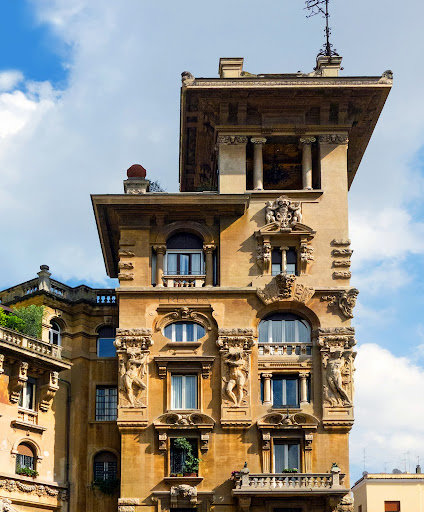
Oh, Quartiere Coppedè is something else - a heady, surreal mix of fairytale, myth, and spellbinding artisan craftsmanship lodged right in the beating heart of Rome. If ever a neighborhood were built from dreams, this is it. Here’s a rave, lyrical praise for its gorgeous, fantastical and esoterically-charged soul:
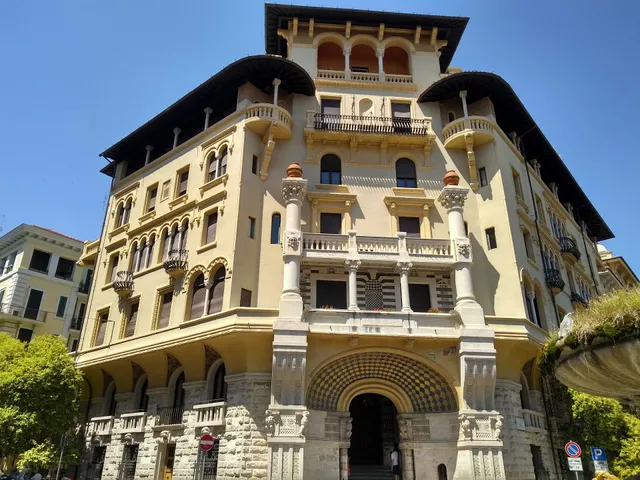
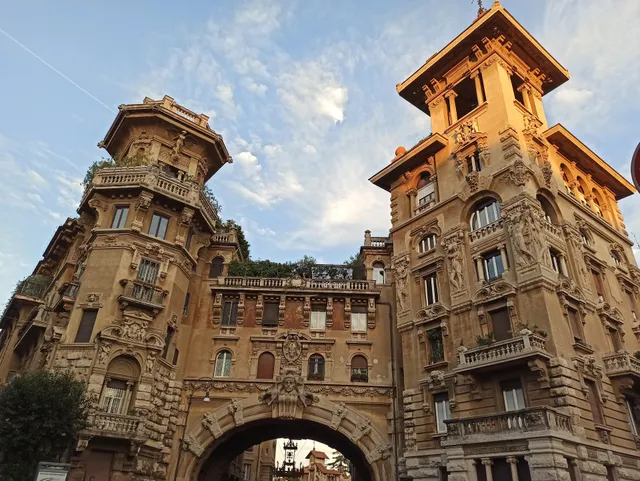
From the moment you step under its grand arco at the junction of Via Tagliamento and Via Dora, you sense you are leaving the ordinary behind. The Arco degli Ambasciatori (Arch of the Ambassadors) itself doesn’t just mark an entrance - it’s a threshold into a fantasia. A huge wrought-iron chandelier swings overhead; grotesques and cherubs peer from pillars; stone and metal curl and cling like ivy, drawing you in.
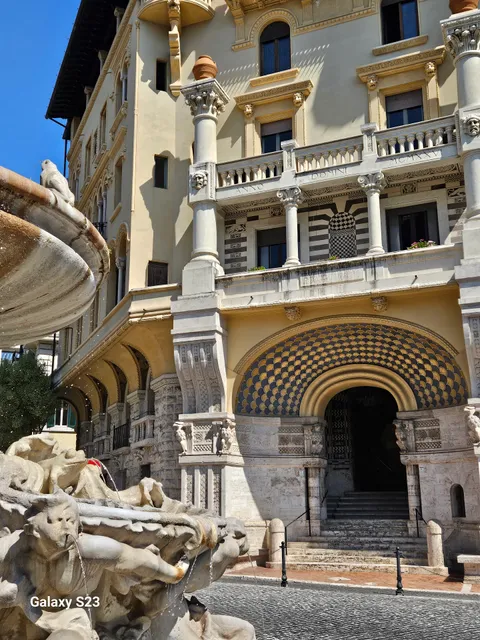
Then you come to Piazza Mincio, which lies nestled as the enchanted core. In its center, the Fontana delle Rane (Fountain of the Frogs) splashes and shimmers - bronze water-spouts shaped into frogs and shells lending music to the air. It’s both fanciful and intimate, a little world unto itself.
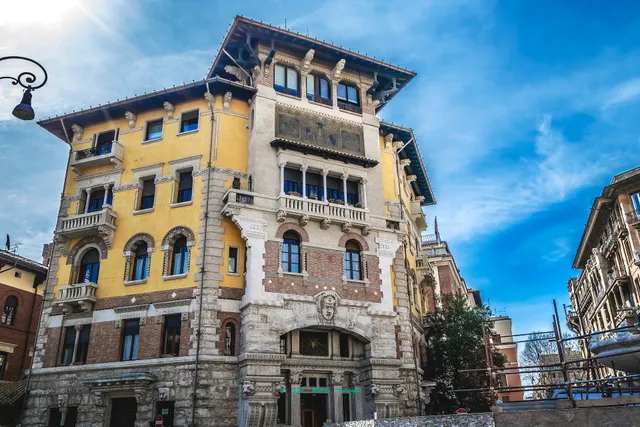
The buildings - oh, the buildings! Every façade is alive. There are 40 or so structures: palaces, palazzine, villini. Each one is unique. None repeats. Coppedè works in Art Nouveau (or Liberty, as it’s known here), but he doesn’t stop there. Medieval towers, Venetian loggias, Baroque swirls, Byzantine mosaics, ancient Roman references—they all collide in beauty. Walls ripple with carvings, marble busts stare from lintels, mosaics glow behind windows, grotesque animals (spiders, owls, winged lions) crouch and crawl.
One of the most enchanting dwellings is the Villino delle Fate - “House of the Fairies.” It looks like something out of a child’s most vivid dreams: turrets, frescoes, terracotta, cherubs, mythic beasts. And yet it doesn’t feel childish. It feels like myth realized, like a poem in stone.
There is, too, the Palazzo del Ragno (Spider Palace), named for the enormous spider motif above its door, and the myriad of small, uncanny details sprinkled everywhere - symbols, allegories, even music-notation wrought into iron grilles.
But beyond the decorations and the dizzying visual feast, there’s a mood: esoteric, almost mystical. The neighborhood feels private, sacred even - no hordes of tourists, no loud cafés in every corner, no invasive signs. Instead: quiet courtyards, dappled sunlight on carved stone, echoing water of fountains, mysterious reliefs that invite speculation. You can wander and wonder.
And then: the stories. Roman whispers that The Beatles once leapt into the Fountain of the Frogs after a Piper Club gig. Films that shot scenes here - horror, noir, the uncanny. Legends of Coppedè himself, of city planners demanding that his fantasy also reference Imperial Rome, of private villas named after fairies. These layers of myth, history, art, and architecture make the quartiere not just beautiful, but emotionally resonant.
In short: Quartiere Coppedè is a jewel - a badge of imagination in concrete, stucco, marble, glass, iron. One visits to be transported, to feel the magic in built form. To those who love architecture, fantasy, design, mystery - or simply beauty - it is utterly unmissable.
The area is rich, upscale, super clean and...
Read moreIl Quartiere Coppedè non è un vero quartiere, bensì un minuscolo complesso architettonico immerso nel quartiere Trieste, tra le eleganti vie Salaria e Nomentana. Composto da circa 26 palazzine e 17 villini, racchiude in sé un’atmosfera da fiaba, un mix visionario di stili Liberty, Art Déco, medievale, barocco, greco e gotico . Passeggiando sotto l’arco monumentale o accanto alla Fontana delle Rane, si ha la sensazione di camminare in un set cinematografico . L'arco d'ingresso (Palazzi degli Ambasciatori): un grande arco decorato con edicola della Madonna con Bambino, mascheroni centrali e un imponente lampadario in ferro battuto sospeso al soffitto . Piazza Mincio e la Fontana delle Rane: situata al centro del cortile, questa fontana del 1924 è ricca di dettagli, con rane che sputano l’acqua da conchiglie sostenute da figure umane — un omaggio alla Fontana delle Tartarughe di Bernini . Celebre il bagno dei Beatles vestiti dopo un concerto al Piper Club nel 1965 . Palazzo del Ragno: sul civico 4 di Piazza Mincio, spicca un grande ragno sulla porta d’ingresso come simbolo di operosità; il complesso si sviluppa su quattro piani con torretta, affreschi e decorazioni in latino con la scritta Labor I Villini delle Fate: tre edifici contigui che omaggiano Firenze, Roma e Venezia, con decorazioni raffinate, mosaici, bassorilievi di Dante, Petrarca, la lupa di Roma e il leone di San Marco — un vero spettacolo di materiali come marmo, terracotta, travertino e legno . Esperienza di visita Durata consigliata: bastano 30–45 minuti per un rapido tour, ma per apprezzarne appieno le decorazioni e i dettagli, è consigliata almeno un’ora la mattina o nelle ore più tranquille . Accessibilità: non ci sono stazioni metro nelle immediate vicinanze; si arriva facilmente con i tram 3 o 19 (fermata Piazza Buenos Aires) o con bus 63, 83, 92 fino a Via Tagliamento/Via Clitunno . Interni: gli edifici sono abitazioni private, quindi non visitabili, ma gli esterni, con i loro materiali di pregio — maioliche, mosaici pompeiani, parquet — restano altamente suggestivi . Punti di forza Architettura fiabesca e surreale, perfetta per fotografie e suggestioni. Zona molto tranquilla e verdeggiante, inaspettatamente silenziosa nonostante la vicinanza alla City . Richiami cinematografici: set di film horror e thriller (Dario Argento, Richard Donner…) trasformano il luogo in un’esperienza visiva unica . Possibili criticità
Assenza di bar, ristoranti o servizi di visita guidata direttamente nell’area: meglio combinare il giro con una tappa nei dintorni. Non visitabile dagli interni, ma si compensa con la varietà delle facciate esterne e la fantasia architettonica.
Da evitare: il quartiere nelle ore centrali della giornata per le ombre sui dettagli architettonici.
Da non perdere: l’arco d’ingresso in ferro battuto e decorazioni, la Fontana delle Rane (specie in controluce) e le facciate dei villini. Punto di forza: un vero salto in un mondo fiabesco nel cuore della città. Ambiente: tranquillo, incantevole, pieno di simboli nascosti. Valore artistico: altissimo — l’architettura è un inno all’eclettismo. Da migliorare: pochi servizi turistici diretti e vietato accedere agli interni. Una passeggiata al Quartiere Coppedè è come scoprire un film architettonico fatto di torri, mascheroni, draghi e fate… a pochi passi dalla frenesia romana. Un’esperienza imperdibile per chi cerca qualcosa di...
Read moreVisiting Quartiere Coppedè was one of our absolute favorite experiences in Rome. Walking down a regular busy street, we turned a corner and—WOW!—suddenly, we were in a completely different world.
This fairy-tale-like neighborhood is unlike anything else in Rome. Designed by architect Gino Coppedè, it blends Art Nouveau, Baroque, Gothic, and even medieval influences into one stunningly unique district. The best way to start exploring is by entering at Via Dora and Via Tagliamento, where you’ll immediately be greeted by the beautiful Fountain of the Frogs and the stunning Palazzo degli Ambasciatori.
Though the area is small, every building is a masterpiece, making this one of Rome’s best-kept secrets. It’s completely off the beaten path, with hardly any tourists—just a peaceful, enchanting atmosphere that feels like stepping into a different era.
If you’re looking for something unique and unexpected in Rome, Quartiere Coppedè is absolutely...
Read more