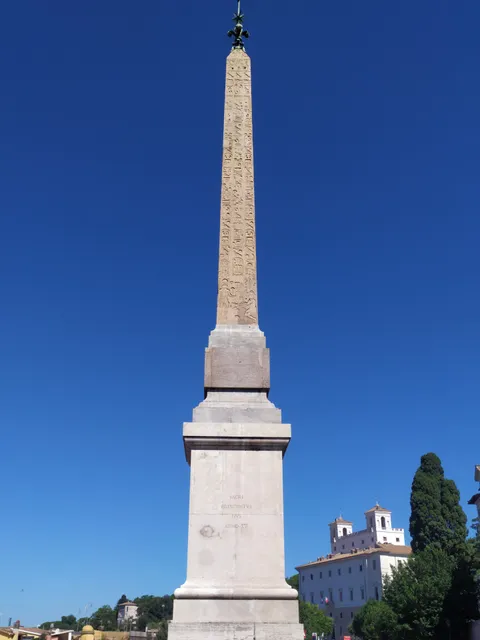
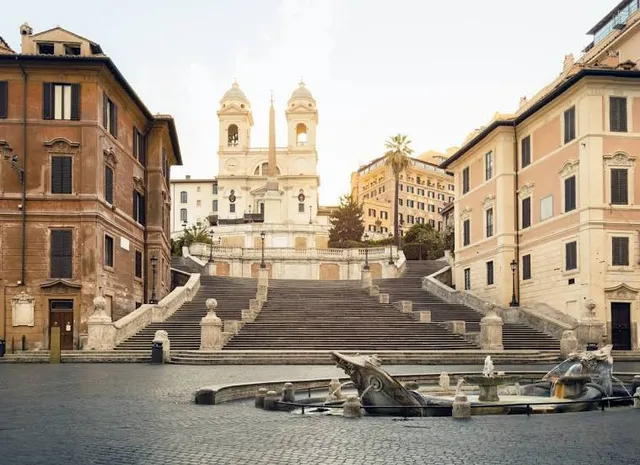
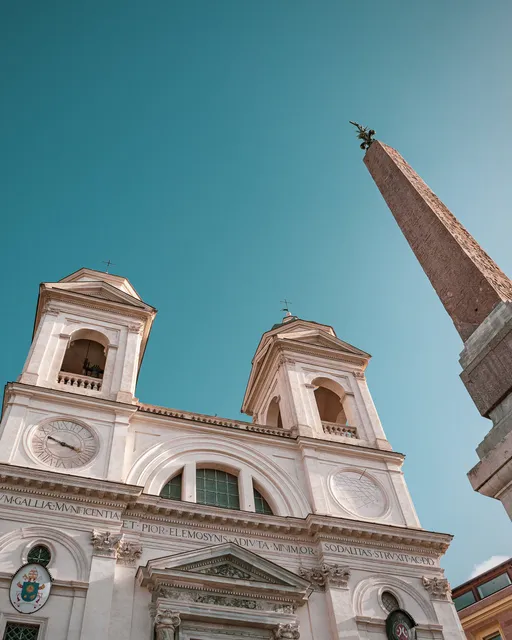
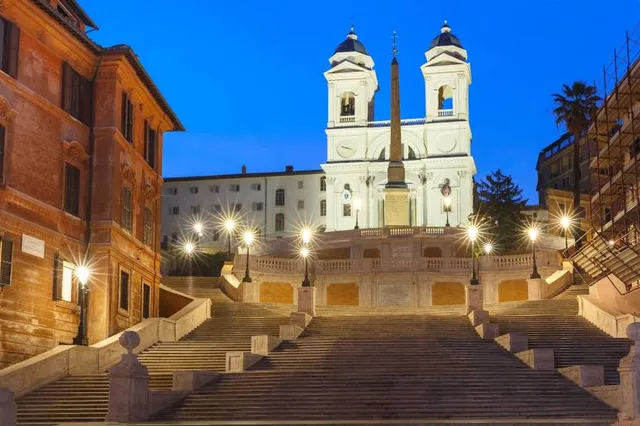
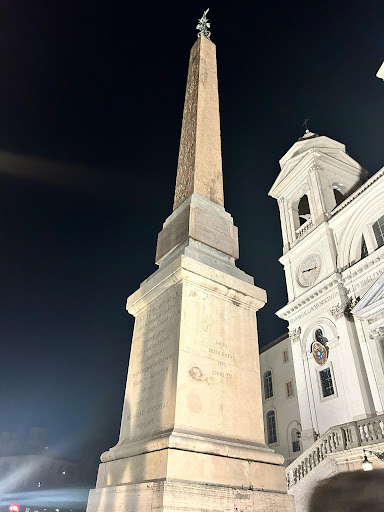
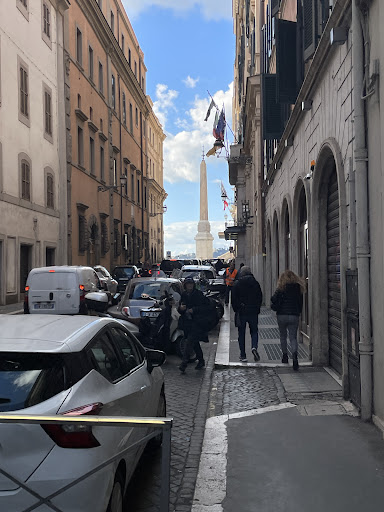
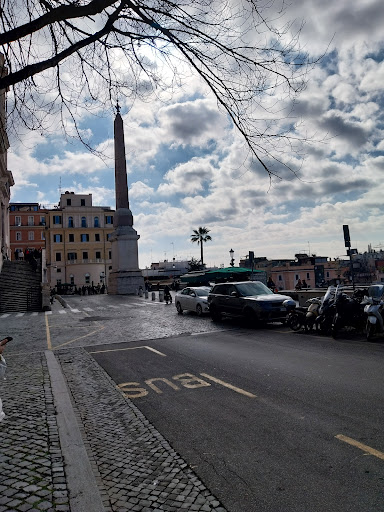
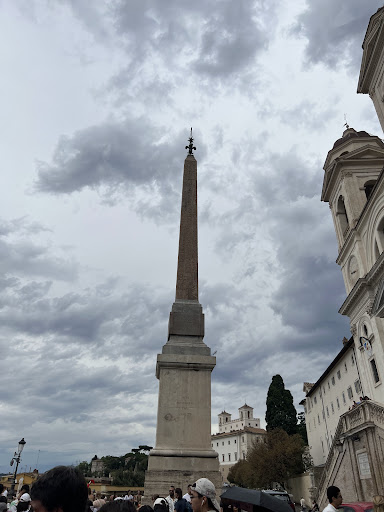
Located in front of the church of the Santissima Trinità dei Monti, right at the top of the famous staircase of Piazza di Spagna, the Obelisk Sallustiano, unlike others brought to Rome without inscriptions and remained such, was decorated with hieroglyphics after transport, like those of Piazza Navona and Piazza del Pincio.Dating back to the 2nd or 3rd century A.D. and carved into red granite, the obelisk is 13.91 meters high. With the basement, it reaches 15.21 meters.The decoration that covers it comes from a copy of the ancient inscription on the obelisk of Piazza del Popolo. But the execution was pretty inaccurate; some signs would be carved backward. The practice of copying was not unusual, even in Egypt.The date of transport to Rome is not known. Initially, it was erected in the Horti Sallustiani - hence the name - between the Quirinale and the Pincio hills. Upon the death of the owners, the obelisk and the Horti were acquired by Emperor Tiberius.It remained fortunately unscathed and standing during the devastations of 410 by the hands of Alaric and the Goths. Finally, it fell. Even if it was abandoned on the ground in 3 pieces for centuries, it was never forgotten.Pope Sixtus V wanted to erect it in front of Santa Maria degli Angeli e dei Martiri; he entrusted the restoration to Maderno, but the project did not follow.About a century later, Athanasius Kircker, who had discovered the secret of the inscriptions, asked Pope Alexander VII to erect it again.It was not until 1734 that Pope Clement XII managed to have it transported to Piazza San Giovanni in Laterano, nearby the Holy Staircase, but also this time, it was not raised. For 50 years, the three pieces stayed on the ground. In the same years, negotiations to transport it to Paris were carried out. The Fench wanted to erect it in front of the Cathedral of Notre Dame.Eventually, Pope Pius VI decided the erection at the top of the staircase of Trinità dei Monti despite a chorus of adverse opinions, and with some concern on the part of the Minim Fathers of the Trinity worrying for the facade of their church. The architect Giovanni Antinori accepted the task.The top of the Sallustian Obelisk was crowned with heraldic symbols of the Pope and a cross containing a fragment of the Holy Cross, the relics of Saint Joseph, Saint Francis of Paola, Pius V, and the apostles Peter and Paul. The works ended in 1787, and the inauguration took place on 20 April of...
Read moreThis is a 14-metre tall obelisk just in front of Trinita dei Monti at the top of the Spanish Steps. Unlike some of the obelisks around the city that originate in Ancient Egypt, this is obelisk made around 2nd or 3rd century AD by the Romans, making use of quarried red granite from Aswan. Egyptian hieroglyphs and various inscriptions were added after the obelisk after arrival in Rome, imitating those of the Piazza di Poppolo Obelisk.
Unfortunately, with the Fall of Rome, the obelisk seems to have also fallen into ruins like so many others around the city for many centuries. Resting in three pieces for many centuries It was excavated in the early 18th-century and eventually reconstructed and and placed in its present location by architect Giovanni Antinori in 1787 where you see it today.
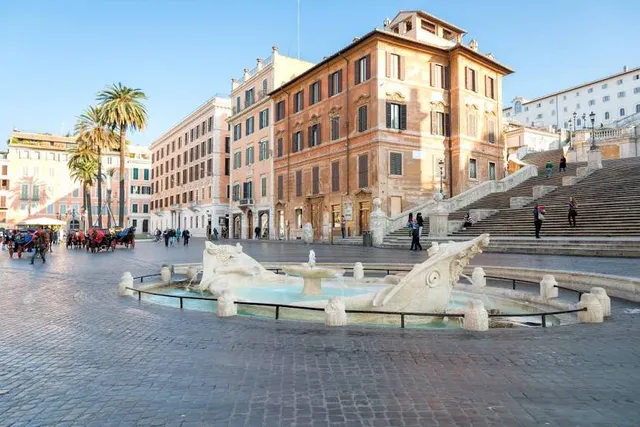
The obelisk is neatly situated just in front of the church, making for nice pictures from the bottom of the Spanish Steps. Its nice to see up close from atop the...
Read moreErgendosi come un ago di granito rosso puntato verso il cielo di Roma, l'Obelisco Sallustiano è il perno visivo che completa la grandiosa scenografia di Trinità dei Monti. Sebbene la sua forma evochi l'antico Egitto, la sua storia è interamente romana, un racconto di imitazione imperiale, oblio e riscoperta tardo-barocca.
La sua origine risale all'epoca della Roma Imperiale, probabilmente tra il II e il III secolo d.C. Non è un manufatto egizio originale, bensì un'imitazione creata a Roma per volere di un ricco e potente committente. Fu realizzato per adornare gli Horti Sallustiani, i monumentali giardini che un tempo appartenevano allo storico Gaio Sallustio Crispo e che in seguito divennero proprietà imperiale. Questo obelisco, di dimensioni leggermente inferiori rispetto ai suoi "fratelli" più antichi portati dall'Egitto, fu inciso con geroglifici che sono una copia, per quanto goffa e a tratti scorretta, di quelli presenti sull'obelisco Flaminio di Ramesse II, che oggi svetta in Piazza del Popolo. Questa scelta non era casuale, ma un deliberato tentativo da parte dell'aristocrazia romana di emulare la grandezza dei faraoni e degli imperatori che per primi avevano portato questi monumenti in città.
Con la caduta dell'Impero Romano, l'obelisco, come tanti altri monumenti, cadde e andò in rovina. Rimase spezzato e semisepolto per secoli proprio nell'area degli antichi giardini, una presenza spettrale di un passato glorioso. Fu solo nel 1734 che venne riscoperto e disseppellito, ma il suo destino rimase incerto per decenni. Si pensò di collocarlo di fronte alla Basilica di San Giovanni in Laterano, ma il progetto non andò in porto.
La sua rinascita avvenne per volontà di Papa Pio VI, un pontefice noto per la sua passione per l'antichità e per il suo desiderio di abbellire Roma. Nel 1789, in un'impresa di notevole ingegneria diretta dall'architetto Giovanni Antinori, l'obelisco spezzato fu finalmente restaurato, trasportato e innalzato nella sua posizione attuale, in cima alla Scalinata di Spagna, proprio di fronte alla chiesa della Santissima Trinità dei Monti. La data non è casuale: siamo negli stessi mesi in cui a Parigi scoppiava la Rivoluzione Francese, e mentre lì si abbattevano i simboli del potere, a Roma il Papa ne innalzava uno nuovo, quasi a voler riaffermare l'autorità e la continuità della Chiesa.
Oggi, guardando l'Obelisco Sallustiano, si ammira un monumento che è un palinsesto di storia romana. È un simbolo della magnificenza imperiale, una testimonianza dei secoli bui dell'abbandono e, infine, un trofeo della Roma papale, collocato con sapienza architettonica per creare una linea verticale che unisce la folla della piazza, l'eleganza della scalinata e la sacralità della chiesa, completando una delle vedute più...
Read more