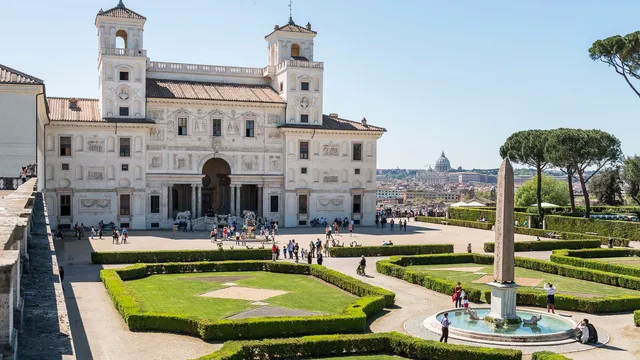
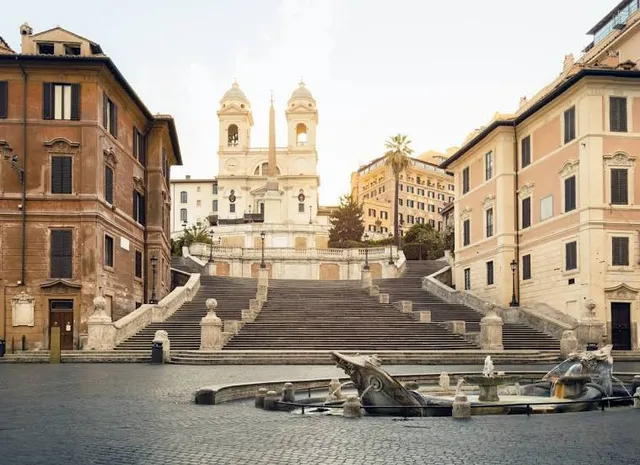
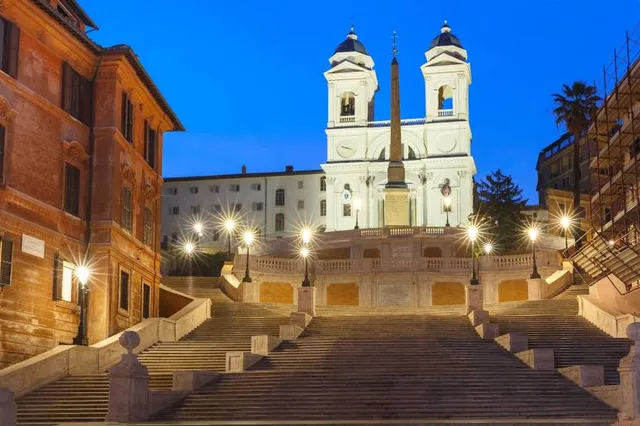
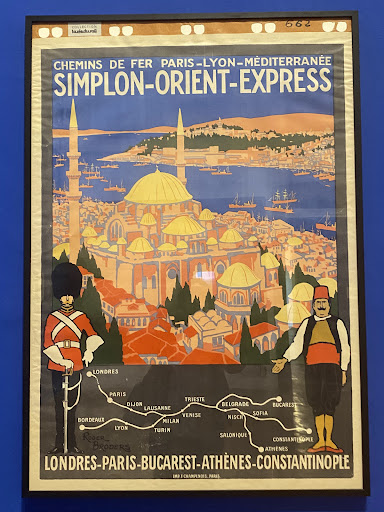
Orient Express exhibition at the Villa Médicis Académie de France is an exhibition that I was counting the days for. I went there on the opening day, March 17, 2023. Villa Médicis is situated at the top of the Spanish steps. When one walks up the steps at Piazza di Spagna, it is down the street, on the left. The exhibition is curated by Eva Gravayat and Arthur Mettetal, and co-produced by the Fonds de notation Orient Express and the Recontres d’Arles festival. The train Orient Express was a railway company: the Compagnie internationale des wagons-lits (CIWL). The CIWL railway company linked the East to the West and the destination was Constantinople (modern day Istanbul), which was the capital of the Ottoman Empire. The orient Express train was a global “cultural icon.” This exhibition shows the importance of the Orient Express, that it was the first luxury train. The exhibition also has important details about the production of the train. There are blueprints, photos, the information on the warehouse where the train was built. There are maps, the train’s routes, marketing posters, advertisement photos, and photo of the tourism agency that booked the train tickets. There is a section on Agatha Christie’s book, Murder on the Orient Express, and the movie adaptation of the book, “Murder on the Orient Express,” had posters of the film. There are also additional photos of the actors on the Orient Express train. What an incredible journey it must have been for the railway company! They started with an idea of a luxurious train; they created its plans and made an idea reality, not knowing its journeys from West to East and East to West would inspire stories for literature and movies. All parts of the exhibition was very interesting. As example, there is a photo of the “Agence de voyages Wagon- Lits, 3 place de l’Opera a Paris,” from 1886. It is a photo of the curve of a building, at the street corner, with a long and narrow white poster. It writes, “THE INTERNATIONAL SLEEPING CAR” and “EUROPEAN EXPRESS TRAIN COMPANY.” The street lamp in the photo reminds one of Haussmann, remodeling Paris in the 19th century, and adding street lights. There is a crowd in front of this building probably waiting for the agency to open it’s door for ticket sales. There is a horse carriage strolling by the agency, between two street lights on the street. Another favorite was the1930 poster of Simplon- Orient Express (chemins de for Paris - Lyon- Mediterranée), by Roger Borders. The poster has a large orange mosque. There is a body of blue water of Bosphorus, and many small and big ships. There is a large patch of green behind the waterside palaces and homes. The writing on the blue sky of the poster says “CHEMINS DE FER PARIS-LYON - MEDITERRANÉE.” Underneath that, it says “SIMPLION -ORIENT-EXPRESS.” The orange color dominates the overall tone of the poster, which makes it appear as if there is sunset. At the bottom of the poster one can see the the routes of the Orient Express. There is one route from London and another from Paris. They meet or connect at Milan. From here they continue in one line to Belgrade and divide to three different routes: Bucharest, Athens, and Constantinople (Istanbul), which is the final destination. There are two figures on the route map. The man on the left is in his official red British guard uniform, and a black furry hat. His left index finger points at London, the start of the route. The man on the right is in his all casual Ottoman garments: white long sleeved shirt, a black sleeveless vest, and another yellow orange shirt under his white shirt; he has a red wide belt on his belly, with a red fez on his head. He points at the route with his right hand, palm outwards, appears as a welcome gesture.
I took the tour of the Villa. The garden was phenominal. The Villa was also amazing. I must say the view of Rome at sunset...
Read moreStunning Views, but Not the Medici Experience I expected!
We spontaneously decided to visit Villa Medici on a Sunday afternoon while exploring the area near the Spanish Steps. We hadn’t booked in advance, but were able to get same-day tickets for an English guided tour just a few hours later, which was very convenient. I was also traveling with someone with a disability, and entrance was free for both of us — accessibility was smooth and staff were helpful and respectful throughout, which I truly appreciated.
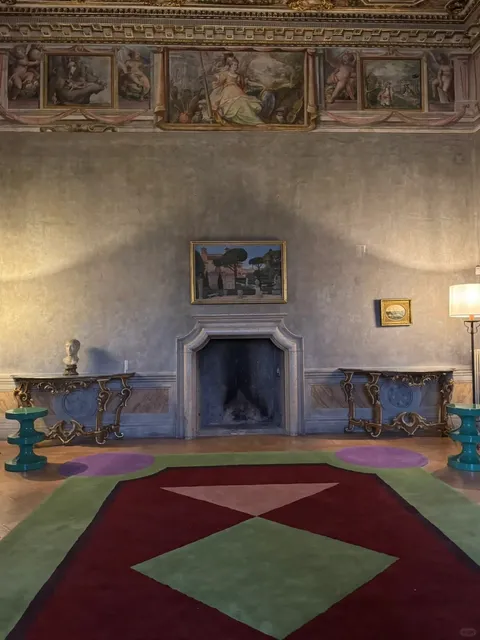
The guided tour itself was well-led and informative, but focused mainly on contemporary art and the gardens. The villa itself has been converted into a residence/hotel for artists in residence, so you only get access to a handful of rooms, many of which are curated with modern installations and furniture. If you’re expecting deep Medici history, like I was, you might be a little let down — there was surprisingly little historical context about the Medici family or their influence on the property.
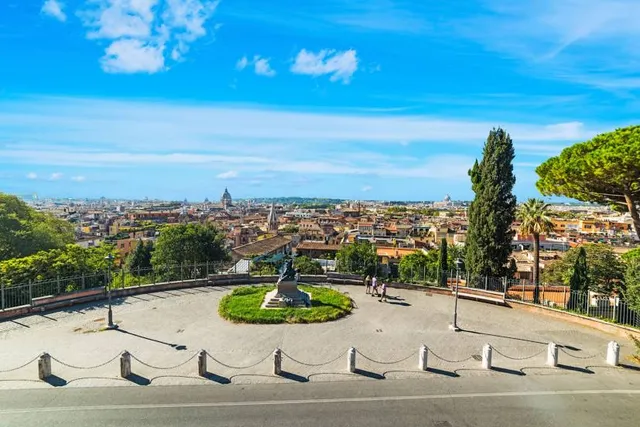
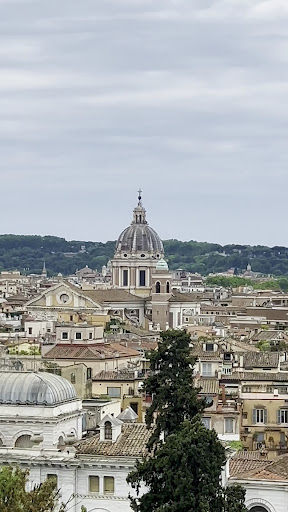
That said, the gardens are lovely, and the panoramic view of Rome from the terrace is absolutely worth seeing — one of the most peaceful spots we found in the city.
Overall, it was a pleasant visit, but not quite what I was hoping for given the name and reputation of the Medici legacy. I’d recommend it for art lovers or those wanting a quieter, off-the-beaten-path stop, but if you’re hoping for rich Renaissance history, you may want to...
Read moreVilla Medici, Accademia di Francia a Roma, si trova nel centro storico nel Rione IV (Campo Marzio), sul Colle del Pincio, il quale essendo fuori dal recinto sacro della città antica, non fa parte degli iconici sette colli.
ORIGINI E CURIOSITÀ STORICHE:
In questa zona nell’epoca repubblicana vi era la fastosa residenza del ricco aristocratico romano Lucullo, conosciuta come Horti Luculliani, divenuti molto famosi all’epoca per le grandiose feste che vi si tenevano, tant’è che ancora ai nostri giorni vi è il modo di dire per un pranso sontuoso è un “pranzo luculliano”.
VILLA MEDICI: UN GIOIELLO RINASCIMENTALE:
Villa Medici, esempio di Villa Rinascimentale, è stata nel XVI secolo la residenza estiva del Cardinale Ferdinando de’ Medici e come possiamo ammirare nella visita grazie ad una attenta conservazione è arrivata ai nostri giorni perfettamente conservata. Oggi è sede dell’Accademia di Francia e continua a essere un luogo di cultura e creatività, ospitando artisti, mostre e incontri internazionali.
LA VISITA:
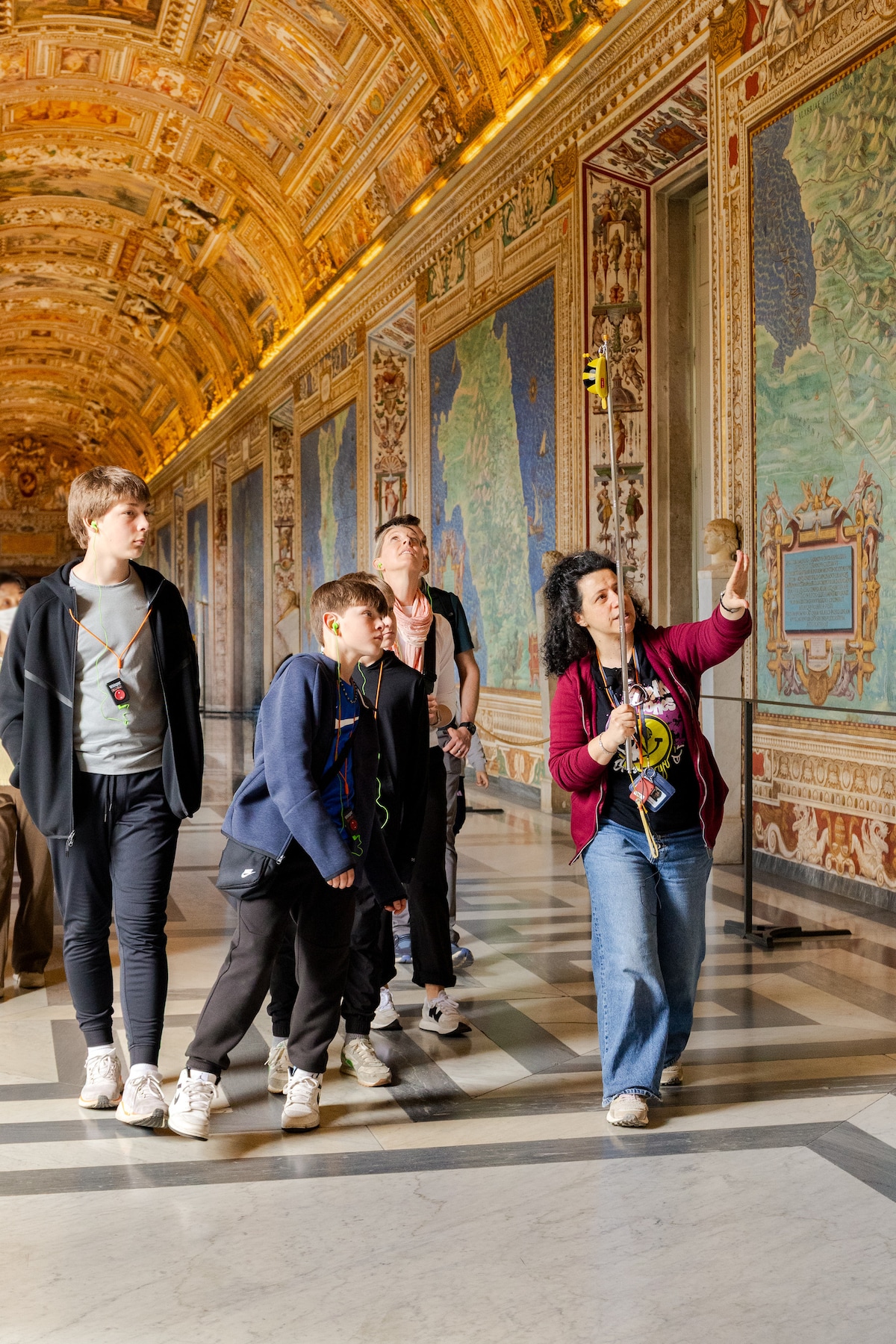
La visita guidata è un’esperienza straordinaria, arricchita dai racconti di esperti che collegano le opere esposte ai grandi capolavori della storia dell’arte. Tra gli ambienti più suggestivi, spiccano:
• La Facciata interna, interessanti i due bassorilievi ai lati che rappresentano delle Ghirlande e sono degli originali appartenuti all’Ara Pacis, e i bassorilievi sulla facciata di epoca romana dal I al IV secolo, altre opere sono copie gli originali vennero portati a Firenze dai Medici • Lo Scalone d’ingresso, maestoso e solenne. • La Scala a chiocciola che conduce ai giardini storici • La Loggia statua e Leone sono copie, sulla porta è presente iscrizione su Napoleone • Giardini Storici, restaurati nel XX secolo secondo il modello del Giardino Italiano, caratterizzati da siepi basse e curate, senza ornamenti floreali. • Il belvedere, che offre una vista spettacolare su Roma, dall’EUR alla Chiesa di Sant’Ivo alla Sapienza, fino al Vittoriano. • La loggia di Cleopatra che si affaccia sul Muro Torto, non si trova più la statua di Cleopatra, ma di Venere e anche acefala • Il Gruppo dei Niobidi, sono copie gli originali a Firenze il cavallo non è presente nell’originale, non si tratta di una fontana • Le Camere Storiche con i cassettoni molto belli, i letti e varie stigliature non sono quelli originali ma oggetti di antiquariato acquistati dal direttore degli anni settanta del secolo scorso. • La Gipsoteca, gessi si tratta di opere significative, quali ad esempio teste dioscuri del Campidoglio, scene della Colonna Traianea, utilizzati anche dagli eserti per eventuali ricostruzioni. Torso del Belvedere, Vi è un’opera (Statua in piedi) non in gesso che all’inizio doveva rappresentare Napoleone. • Le Stanze degli uccelli, con un ingresso dal Muro Torto e affreschi recentemente riscoperti. Il soffitto della prima stanza è opera di Zucchi, la cui firma era una farfalla. La seconda stanza, visibile solo dalla soglia, conserva grottesche ispirate alla Domus Aurea e dipinti raffiguranti l'evoluzione della villa. • Statua della Dea Roma si tratta di una ricomposizione • Le mostre temporanee, che arricchiscono l’esperienza con esposizioni uniche. Durante la visita, si possono incontrare gruppi di studenti francesi in esplorazione, testimoniando l’importanza della villa per la formazione culturale.
UN ANGOLO DI CULTURA VIVA:
Villa Medici non è solo un luogo di visita, ma anche un punto d’incontro per gli appassionati d’arte e storia. Prima di concludere l’esperienza, vale la pena curiosare nel bookshop, dove si possono trovare testi e souvenir legati alla villa e alla sua storia affascinante.
SCOPRIRE ROMA ATTRAVERSO I SUOI DETTAGLI:
Se avete gradito questa lettura, vi invito a scoprire le altre mie recensioni, immergendovi nei dettagli che rendono Roma un luogo sempre...
Read more