Murals, Memories, and Magic: Living the Layers of George Town
Wandering through George Town, Penang, is like turning the pages of a living, breathing storybook. Each lane whispers centuries-old tales, each wall reveals echoes of art, and every turn surprises with a vivid interplay of history and modernity. As a traveller and an artist by heart, this UNESCO World Heritage Site was more than just a destination — it was a soulful immersion.
Located in the heart of George Town, my stay at the Armenian Heritage Hotel placed me right at the crossroads of time and culture. From here, it was effortless to explore the meandering lanes where history hadn’t just been preserved — it had been embraced, painted, performed, and immortalized.
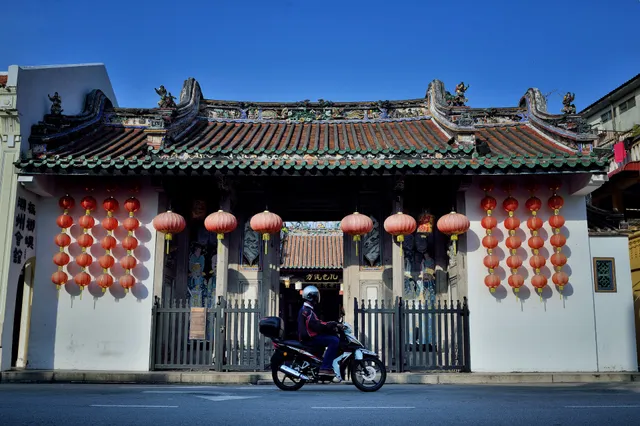
George Town’s history is layered and rich, shaped by centuries of trade, colonisation, and migration. Established in 1786 by Captain Francis Light of the British East India Company, the city became a melting pot where Malays, Chinese, Indians, Eurasians, and later the British left indelible marks on its architecture, cuisine, language, and spirit. Walking through it, one doesn’t just see colonial buildings or Chinese clan houses — one feels the pulse of coexistence, a city built not just of bricks but of stories.
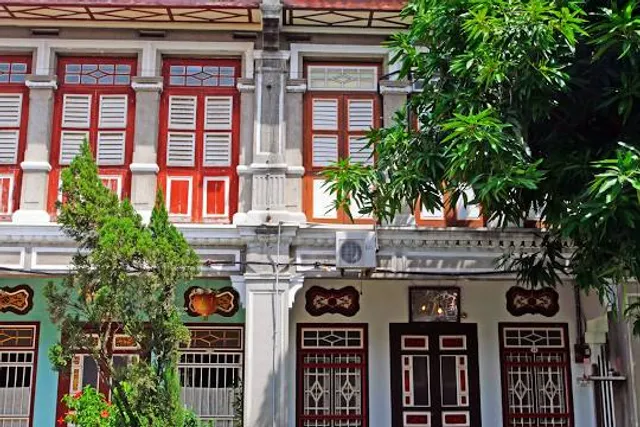
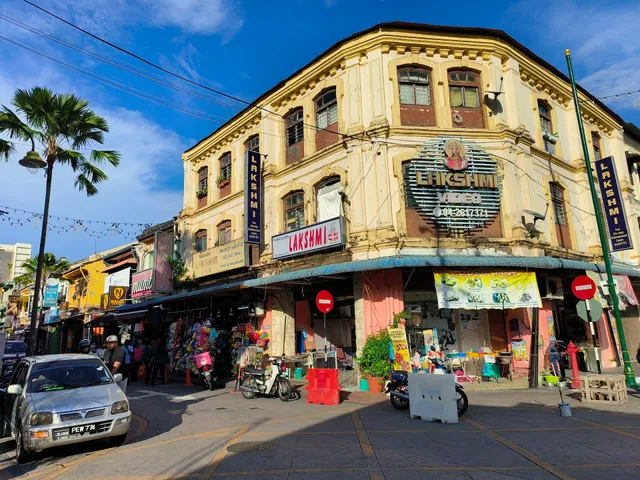
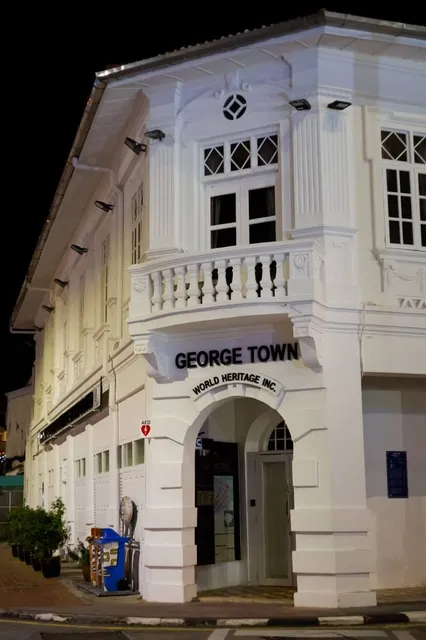
One of the most fascinating aspects is its ability to wear its past so proudly. The shophouses, for instance, are not just relics of another time; many have been revived as cafes, galleries, or homes, continuing to live and breathe. In every colourful tile, intricate wooden shutter, or rusted wrought iron grill, there is an aesthetic harmony between preservation and progress.
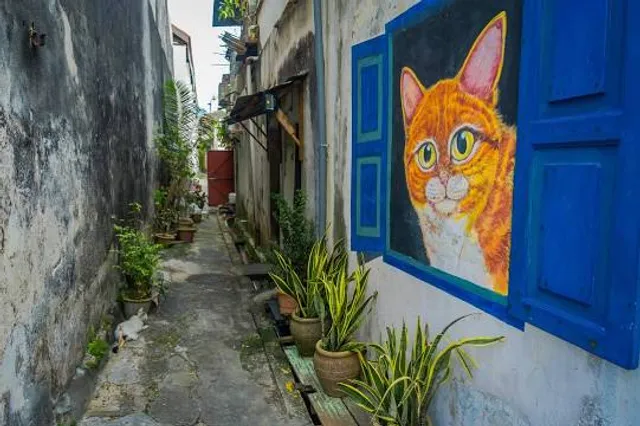
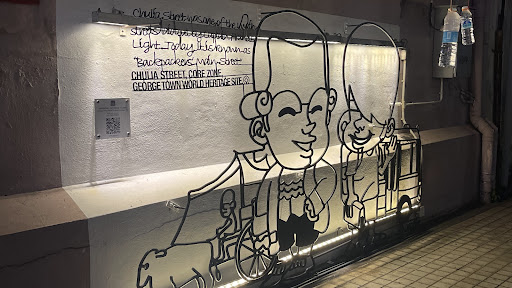
There’s trivia tucked in every corner. Did you know that George Town has over 1,700 heritage buildings within its core zone alone? Or that it was named after King George III? And then there’s the story of how its street art, once a quirky side-attraction, is now one of its biggest cultural icons — thanks in part to Lithuanian artist Ernest Zacharevic, whose murals brought whimsical characters and childlike wonder onto forgotten walls.
I found myself tracing walls like canvases, each mural a moment caught in time. Children riding bicycles, a boy peeking out of a window, cats lounging in corners — art here isn’t locked away in galleries; it’s scattered across the streets like treasure waiting to be discovered. This city doesn’t ask you to look at art — it wants you to walk through it, interact with it, pose beside it, and feel part of it.
Beyond the walls, the living arts flourish. In hidden courtyards, I stumbled upon old men crafting traditional lanterns, and women weaving intricate beadwork. Music spilled from cafés, sometimes classical Chinese strings, other times old Tamil film songs or the lively rhythms of Peranakan folk. The sounds, like the people, were never in competition — they blended into a cultural symphony that felt both intimate and infinite.
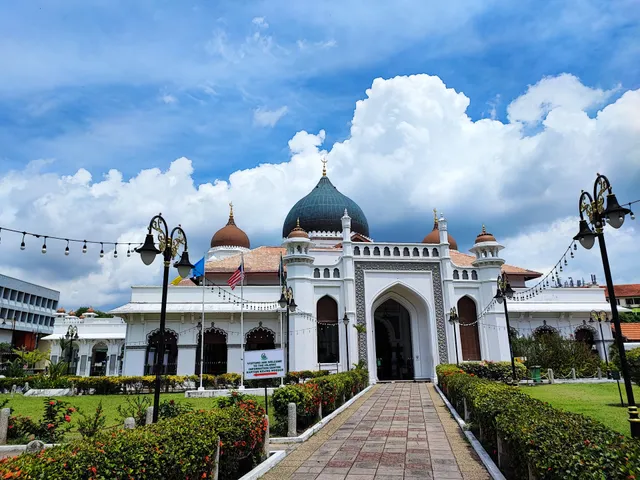
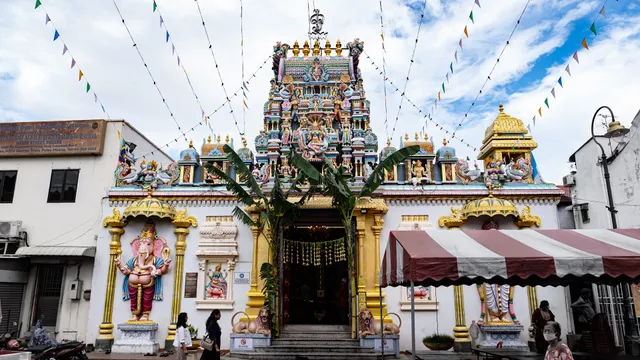
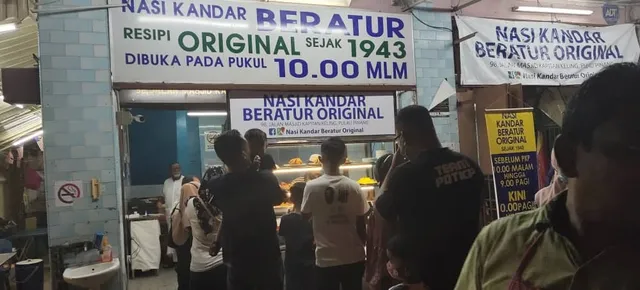
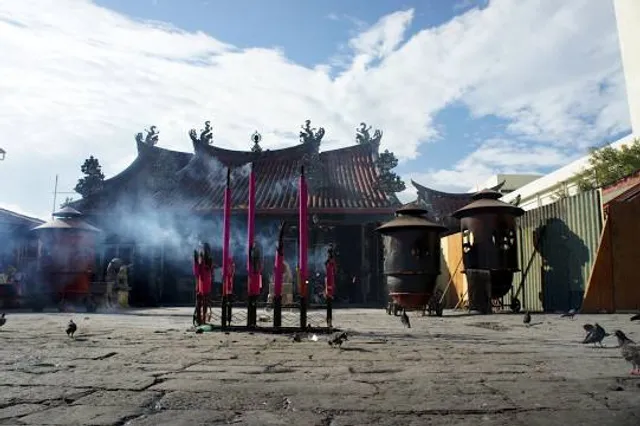
And oh, the colours. George Town is a city that never forgot how to be vibrant. Be it the riot of hues on its colonial facades, the pungent vibrancy of its spice markets, or the kaleidoscope of faiths expressed in mosques, temples, and churches standing side by side — it is a feast for the senses. The scents of incense mingled with the aroma of street food — char kway teow sizzling beside Indian roti canai, Hainanese chicken rice stalls standing shoulder to shoulder with nasi kandar spreads.
As an artist, I found myself sketching corners, photographing cracked walls, and scribbling verses in cafés where time seemed to slow down. The city doesn’t scream for your attention — it invites you gently, asking only that you look a little longer and listen a little closer.
To walk its streets is to journey through culture, time, and soul — and to leave with a little piece of it etched in your own.
For more on F&B, visit www.foodfunda.net And follow on...
Read morePEARL OF THE ORIENT (Penang Holidays) An exotic name befitting its multi culturalism, uniqueness and beauty. Penang island, once a duty free port, is separated from the mainland by the 11 kilo meter wide Penang Straits before the 14 km bridge was built over it. Prior to 1986, the iconic ferry was the only means of transport for the masses to go to work, business and pleasure. Now the ferries which are still in operations are used as tourist attractions and by others more of a novelty, leisure and unhurried crossing option.
With construction of the Penang bridge, travelling to Penang is made easier and I drove my family of 4 for a short holiday there. Indeed it was an eventful one - my car battery went flat at the Butterfly Park, my son fell sick and lost our way in the “Bermuda Triangle’ of Komtar.
We stayed at a less than fashionable seaside hotel with a small swimming pool in Tanjung Tokong. The first thing we found on the beach was a lifeless catfish which my younger son proudly lifted up with both hands for me to take a quick photo shot. Coincidentally, we were surprised to meet a couple from our church who were also there, on holiday, at the pool.
Being unfamiliar, we drove aimlessly to find a hawker food haven but ended up at Macalister Road which was patronized more by tourists than locals for our dinner. A Penangite ex-colleague lamented to me that the good ones were hidden from public eyes and only a local could take us to these food gems and havens. The roads were already choked with traffic and holiday makers like us had made the situation worse. But the more painful part was losing our way due to the confusion that many of its formerly 2 way roads had been converted to one way. A moment of indecision, either a wrong turn or missing it, had caused us a delay of at least 10-20 minutes. Some locals even begged holiday makers in the social media to bypass Penang as their choice destination to spare them the agony of enduring thronged roads, eateries, places of attraction etc.
We found it so amusing that at the heat of the moment, we jokingly vowed not to drive here again and if we did it was better to stay put and spend our quality time at one of their famed Batu Ferringhi beach hotels instead. With modern technology, one could even use our handphone to access google maps or waze apps with voice aid to take us to the places we have not been before.
On an earlier trip, I had a more relaxing time in Penang when I accepted the invitation of a friend whose girlfriend was willing to accommodate the 5 of us in her parents’ home. It was so organized and memorable as our the brother of our hospitable host took us on a round trip to the Botanical Gardens for its sights and sounds, hiked up a hill to view the panoramic scenery below and the iconic Batu Ferringhi beach to...
Read moreA fusion of Malay, Chinese, Indian, and British Colonial architectural styles resulting in an unconventional yet charming urban formation. George Town's rich cultural diversity saw it listed as a UNESCO World Heritage Site in 2008. The city's multiculturalism is perhaps best displayed in its places of worship. Almost side-by-side are historic churches, crimson Buddhist temples, grand mosques, and rainbow-colored Hindu temples. Visitors can spend hours exploring George Town's pedestrian-centric streets. Stumble across remnants of the 18th century British colonial settlement like Fort Cornwallis and the Queen Victoria Memorial Clock Tower. Uncover evidence of both the wealth and poverty of early Chinese settlers at the Pinang Peranakan Mansion and the Weld Quay Clan Jetties, or meander through a vibrant Hindu community in Little India. More recently, a dynamic street art scene has burst into George Town. Some wall murals, like Ernest Zacharevic's "Boy on Chair", provide interactive settings for visitors to become part of the picture and pose beside painted characters. Discovering George Town's many murals is quite the treasure hunt, with dozens of quirky cafes and chic bars providing pit stops along the journey. Due to centuries of international influence, George Town offers a distinctive cuisine. Just venture onto Chulia Street at night to dine at Penang's world-renowned hawker stalls with meal options ranging from spicy laksa and local spring rolls called popiah, to everything that can possibly...
Read more