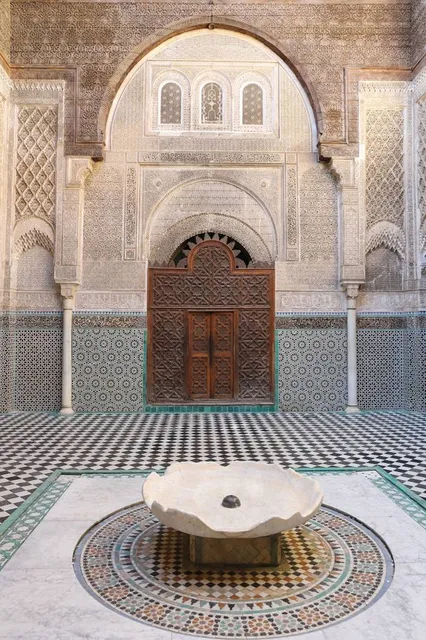
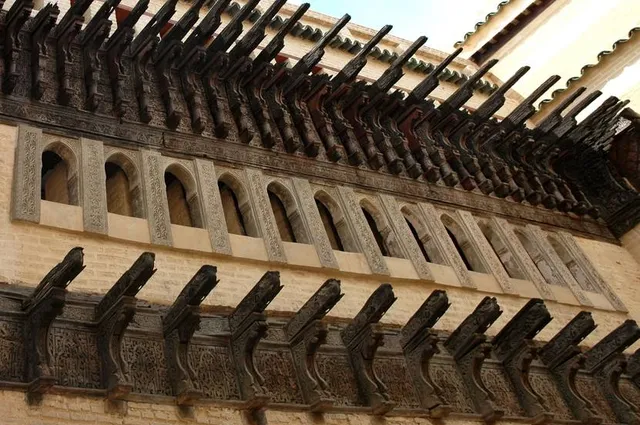
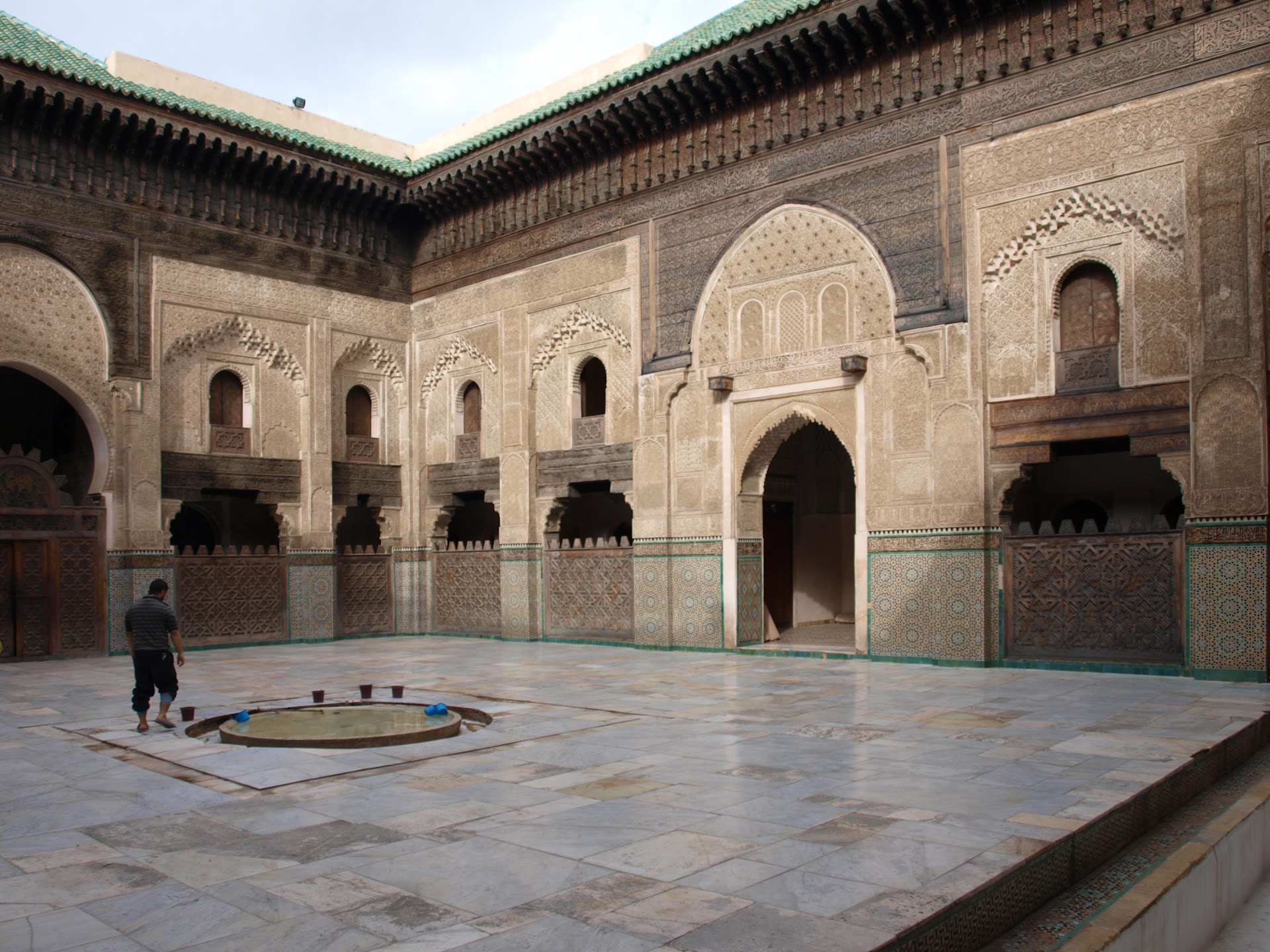
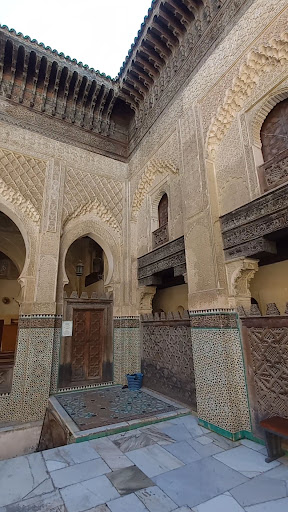
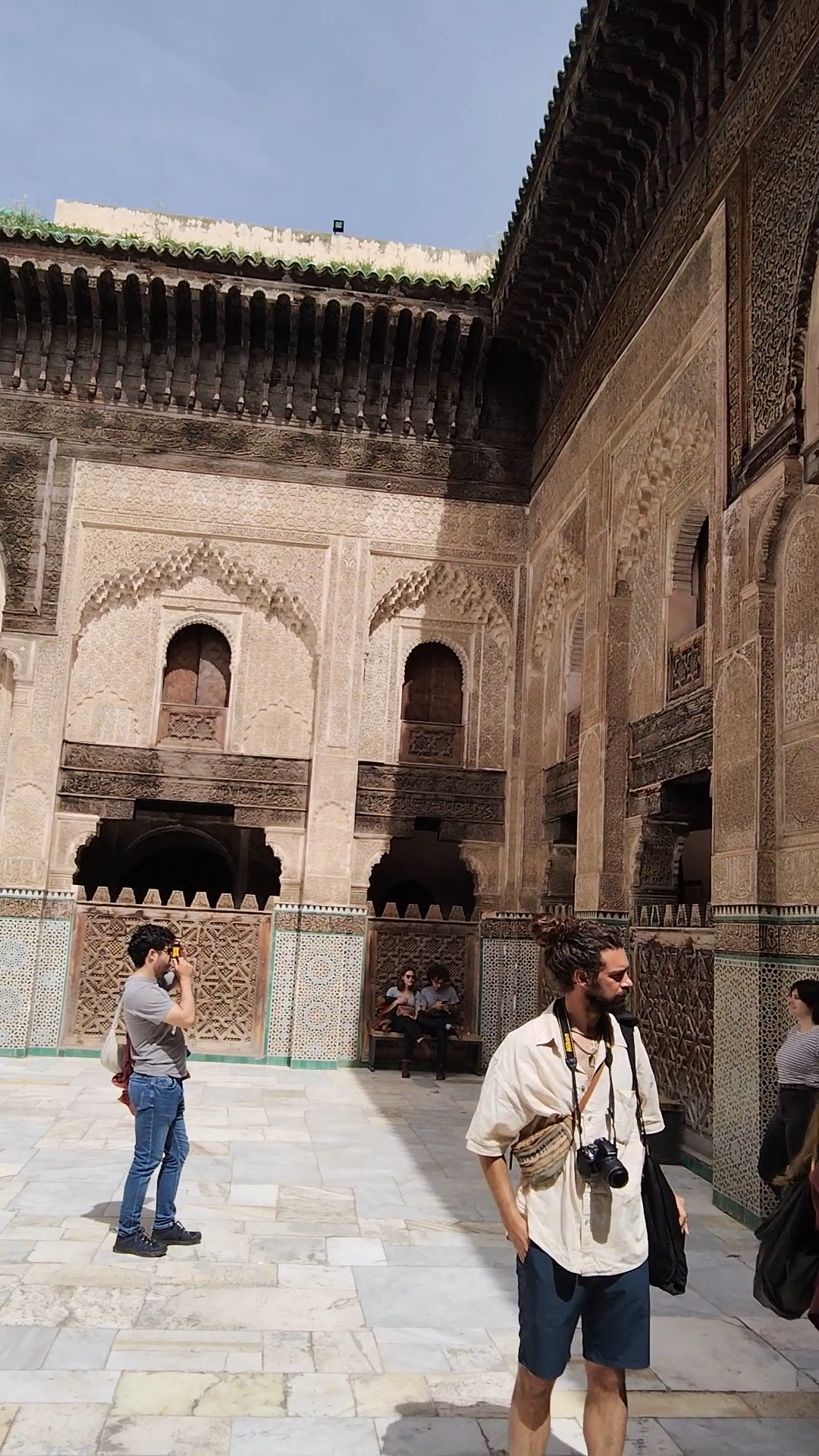
The Bou Inania . Here's a detailed overview: المدرسة البوعنانية (Bou Inania Madrasa) The Bou Inania Madrasa (Arabic: المدرسة البوعنانية) is a historic madrasa (an Islamic learning institution or college) located in Fez, Morocco. It is one of the most significant and renowned examples of Marinid architecture in the country. Historical Context and Construction The madrasa was built between 1350 and 1355 CE by the Marinid Sultan Abu Inan Faris, from whom it derives its name. The Marinid dynasty was known for its extensive patronage of religious and educational institutions, and the Bou Inania Madrasa stands as a testament to their architectural and intellectual flourishing. It was designed not only as a theological college but also as a congregational mosque, making it unique among many other madrasas in Fez. Architectural Significance and Design The Bou Inania Madrasa is celebrated for its exquisite and intricate decoration, showcasing the pinnacle of Marinid artistry. Key architectural features include: Zellige Tilework: Stunning geometric patterns created from meticulously cut and arranged ceramic tiles adorn the walls and floors. Carved Stucco: Delicate and elaborate calligraphic inscriptions and arabesque motifs are carved into plaster. Cedar Woodwork: Richly carved cedar wood is used for ceilings, doors, and muqarnas (stalactite-like structures). Marble and Onyx: These luxurious materials are incorporated, particularly in the courtyard and fountains. Large Courtyard: The central courtyard is a grand space, often featuring a large marble basin for ablutions (wudu). Prayer Hall: A spacious prayer hall is integrated into the madrasa, indicating its dual function as both a school and a mosque. Minaret: Unlike most madrasas which don't have one, the Bou Inania Madrasa has a prominent minaret, further highlighting its mosque function. Function and Legacy The Bou Inania Madrasa served as a primary institution for religious education, teaching subjects such as Islamic law, theology, Arabic language, and Quranic studies. Students would live in dormitories surrounding the courtyard. It was one of the few madrasas of its time to also house a public mosque, indicated by its minbar (pulpit) and minaret. Today, the Bou Inania Madrasa is a major tourist attraction and a functioning religious site. It has undergone extensive restoration efforts to preserve its magnificent artistry. Visitors can admire its architectural grandeur and appreciate its historical significance as a center of learning and worship in Islamic civilization. It is often considered one of the most beautiful buildings in Fez and a must-visit landmark for those exploring the city's rich heritage. I hope this comprehensive definition helps you understand the significance of the Bou Inania Madrasa! Let me know if you have any more...
Read moreThe most important medersa in Fez, it was built in 1350 to 1355 J-C by the Merinid sultan Abou Inan is the most famous of all the Merinid madrasas of Fez and Morocco. In addition to its role as a college of education and accommodation for students, it was to fulfill the function of a Friday mosque. It also has a beautifully proportioned minaret and a hydraulic clock (magana) whose operating system is still unknown to us. This Islamic university is a treasure of Merinid art. Its architecture is superb and the details very elegant. The walls covered with mosaics and carved plaster are to be seen. Bou_Inania_Madrasa The medersa was located in the city, in a district making the junction between the old city and the new Merinid constructions. The general plan is irregular, due to the location, but a certain symmetry is respected. The main entrance leads to a large central courtyard, onto which open two smaller halls, used for courtyards, and surmounted by wooden domes. This plan recalls the plans with two iwans, born in Iran and used in a contemporary way in Mamluk Egypt. Bou_Inania_Madrasa2 At the bottom of the courtyard, there is a prayer room made up of two naves parallel to the qibla. It has a single mirhab, which projects into the wall, and four onyx columns. This room is covered with two...
Read moreالمدرسة البوعنانية بفاس.. مفخرة المدارس المرينية
المدرسة البوعنانية، واحدة من أهم المدارس العلمية التي أنشئت خلال فترة الحكم المريني، فإضافة إليها أسسوا بمدينة فاس: مدرسة الحلفاويين، ومدرسة دار المخزن، ومدرسة الصهريج، ومدرسة السبعيين، ومدرسة الوادي، ومدرسة العطارين، والمدرسة المصباحية. وسميت المدرسة بالبوعنانية أو العنانية نسبة إلى مؤسسها السلطان المريني أبو عنان فارس (1351م-1356م) المعروف بشغفه وحبه للعلم والعلماء. وتعرف أيضا هذه المدرسة بالمدرسة المتوكلية نسبة إلى لقب نفس السلطان الذي كان يلقب ب”المتوكل على الله”. وتعتبر المدرسة البوعنانية أو المتوكلية أول مدرسة تم تأسيها من قبل أبو عنان المريني، واختار لها موقعا وسطا بين فاس الجديد مقر السلطان والمدينة القديمة حيث يتواجد جامع القرويين. وبالنظر إلى أهمية المدرسة بالنسبة إلى مؤسسها فإنه وفر كل الإمكانيات المادية الضرورية لبنائها رغم ارتفاع تكاليف ذلك، كما أوقف عليها عددا مهما من الحمامات والأرحبة والأفران والحوانيت وغيرها، وذلك لتوظيف ريعها للإعتناء بالمدرسة وتوفير مرتبات المدرسين وتوفير سبل العيش الكريم للطلبة المقيمين بها.
تأسيس المدرسة البوعنانية بفاس تتحدث المصادر التاريخية عن الدوافع التي كانت وراء إقدام أبو عنان المريني على بناء هذه المدرسة، فذكرت أن أبو عنان كان يريد أن يكفر عن فاحشة ارتكبها تجاه أبيه أبي الحسن فاهتدى إلى بناء مدرسة فخمة للتكفير عن ذنبه كما ذكر الجزنائي صاحب “جني الآس”. وأرجع البعض الآخر الأمر إلى رغبة السلطان في تكريم السلطان لأحد قضاته المشهورين، محمد المقري التلمساني كاتب عقد بيعته بتلمسان.
وقد شرع في بناء المدرسة المتوكلية يوم 28 رمضان 751هـ/ 29 نونبر 1350م تحت إشراف ناظر الأحباس أبو الحسن ابن أحمد بن الأشقرن واختير لها مكان قريب من قصر الحكم المريني؛ في سوق القصر الذي يحمل اليوم اسم الطالعة الكبرى. وقد دامت عمليات البناء خمس سنوات حيث تم الإنتهاء منها في آخر شعبان من عام 756هـ/ 08 شتنبر 1355م.
مكونات المدرسة البوعناني بفاس
تتوزع بنايات المدرسة البوعنانية حول صحن كبير مربع الشكل طول كل ضلع منه 18 مترا، وتكسو أرضيته قطع من المرمر الأبيض تتوسطه بركة ماء مربعة الشكل (5مX5م) ومغطاة بالمرمر الأبيض. وتنتصب على جانبي الصحن قاعتان كبيرتان متاقبلتان ومربعتا الشكل (25مX25م) تنفتح كل واحدة منهما على الصحن بباب مزخرف في قسمه الأعلى بنقوش جصية وفي قسمه الأسفل بقطع الزليج المختلفة الألوان. أما بيت الصلاة فتقع شمال الصحن، تفصل بينه وبين هذا الأخير قناة مكشوفة تتغدى من مياه “واد فاس”. وتتخذ بيت الصلاة شكلا مستطيلا، وتتكون من بلاطين أفقيين موازيين لجدار القبلة، وتتوسط هذا الأخير محراب زينت جدرانه بنقوش جصية تجمع بين عناصر نباتية الشكل، وأخرى هندسية، وكتبات قرآنية.
تتميز إذن المدرسة البوعنانية عن باقي المدارس الأخرى بمدينة فاس بكونها تتوفر على مسجد كبير وجامع، أي أن المدرسة تجمع بين وظيفتي التدريس ووظيفة الجامع. وقد كان جامعها يتوفر على أحد أجمل منابر الخطبة لما تميز به من الإتقان والإبداع في الصنعة، كما أن الجامع زود بصومعة (مئذنة) عالية تمكن المؤذن من رؤية كل من صومعة جامع القرويين وصومعة جامع الأندلس، الأمر الذي أهل المدرسة وجامعها لتصبح ثالث الجوامع الرئيسية بمدينة فاس، تحمل نداء الصلاة وإشارات الصيام والإفطار في رمضان إلى سكان ألحياء العليا من المدينة.
كما تتضمن المدرسة البوعنانية عددا هاما من المكونات المعمارية؛ فنجد قاعتين للتدريس وقاعة كبرى للصلاة، وكذا غرف لإيواء الطلبة، ومقصورة الإمام. أما جامع الجنائز فيوجد وراء جدار القبلة، ينزل إليه من بيت الصلاة بدرج من عدة درجات. ويقع بيت الوضوء الداخلي في الزاوية الشمالية للمدرسة. كما تضم المدرسة كتاب صغير لتعليم القرآن الكريم للأطفال في الجهة الجنوبية الغربية. كما بنيت تحفة معمارية بارزة مقابل البناية الرئيسية للمدرسة، وهي بيت الوضوء الخارجي ويفصل بينها وبين البناية الرئيسية للمدرسة زقاق الطالعة الكبرى، وهو الزقاق الذي ينفتح عليه بابان متلاصقان للمدرسة في الجهة الشمالية للمدرسة، في حين ينفتح باب ثالث على زقاق الطالعة الصغيرة في الجهة الجنوبية. ويحادي بيت الوضوء المذكور الساعة الجدارية العظيمة المعروفة بالمكانة، وهي ساعة مائية عجيبة.
وتحتوي المدرسة أيضا على مجموعة كبيرة من الغرف لسكنى الطلبة شيدت على مستويين؛ مستوى أرضي، وآخر بالطابق العلوي. كما بنيت مجموعة أخرى من البنايات كأحباس على المدرسة وهي عبارة عن مجموعة من الحمامات والدور والحوانيت والأراحي… وكلها موقوفات توجد بالقرب من المدرسة مباشرة مما يميزها عن غيرها من...
Read more