Kasthamandap (In sanskrit, Kastha= wooden, Mandap= Pavillion) is locally known as Maru Satal is a huge wooden pavilion having 64-feet tall superstructure dedicated to Guru Gorakhnath- (Sanskrit for Gau+Raksha+Nath: Cow+Protect+Lord, ie, The Lord who protects cows) - a form of the god Shiva. The Kastha Mandap was built from the wood of this single tree; and the name Kathmandu was derived from this Kastha Mandap. Three-storey Kastha Mandap has an open ground floor, underlining its original purpose as a public building. Legend has it that Saint Gorakhnath attended the chariot procession of Machindranath in human disguise. Unfortunately, he was recognized by a tantric who cast a spell on him, imprisoning him for eternity in the Kathmandu valley. Desperate to free himself from imprisonment, Gorakhnath made a deal with the tantric who needed sufficient materials for building a wooden temple. A giant Sal tree grew in his land which he (tantric) used to construct the temple of Kasthamandap to dedicate to Gorakhnath. An historic account of 1107 AD mentions the existence of the temple of Kasthamandap in its current location. However many Lichchhavi inscriptions name religious buildings as mandaps during their reign which could very well make Kasthamandap, a product of the Lichchhavis dated back to 7th century.. It was extended under the reign of King Laxmi Narsingha Malla (1620 - 1641, r 21 years) and an interesting legend is attached to its wooden construction. The saying goes in Kathmandu that the temples were for the gods, palaces were for kings, and the satal (rest house) was for ordinary people. And although the valley has many satal, Kasthamandap was the biggest of its kind and it was then on the historic trans-Himalayan trade route between India and Tibet, and Kasthamandap was the bustling rest house where buyers and sellers from the north and south mingled. The exchanges were not just of goods and commodities, but were also cultural and religious. It is also colloquially called Maru Satha (empty rest house). Everything happened around Kasthamandap, in the bustling Maru bazaar that exists to this day. At the four corners is an image of four statues of Ganesh representing four Ganesh of the Valley, Surya Vinayak, Chandra Vinayak, Jal Vinayak and Karya Vinayak (or Ashok Vinayak). To this day, the temple has stood steadily without the use of any metal...
Read moreKasthamandap is a three-storey pagoda-style temple situated in the Human Dhoka Durbar Square in heart of Kathmandu city and is believed to be built out of a single tree. The Kathmandu city is believed to be named after the temple itself. Kasthamandap means ‘wood-pavilion’. Although its historical background regarding its origin is not certain, Kasthamandap temple is believed to be built in the 12the century by Laxmi Narsingha Malla with the woods of a single tree. The present building was renovated during the seventeenth century. The building has an idol of Gorakhnath at the center the second floor has four idols of Lord Ganesh on its four sides. Also religious texts of Ramayana and Mahabharata are inscribed on the four walls. It is opened during the mid-day until the mid-night and everyone is allowed to go inside. However, taking the photographs inside the temple is strictly prohibited. The temple is an excellent example of the art and architecture of Nepal because of the wooden carvings and the design of the temple. To this day, the temple has stood steadily without the use of any metal nails or rivets. Kasthamandap is one of the significant cultural heritage of Nepal that stands as an example of the rich Nepali art and architectural legacy of the 12th century. Legend has it that Saint Gorakhnath attended the chariot procession of Machhindranath in human disguise. Unfortunately, he was recognized by a tantric who cast a spell on him imprisoning him for eternity in the Kathmandu valley. Desperate to free himself from imprisonment, Gorakhnath made a deal with the tantric who needed sufficient materials for building a wooden temple. A giant Sal tree grew in his land which he (tantric) used to construct the temple of Kasthamandap. The temple is also said to have been dedicated to Gorakhnath. The idol of Gorakhnath inside the temple is somewhat confusing as he has always been represented by footprints. Another legend is found regarding to the missing pinnacle of the temple. The builders of the temple are said to have promised the gods to erect a pinnacle as soon as the price of the oil and that of salt became an equal amount. However, that never happened and the pinnacle was never erected...
Read moreKasthamandap, a historic and iconic structure located in the heart of Kathmandu, Nepal, holds a special place in the city's cultural and architectural heritage. Believed to have been constructed in the 12th century, its name, "Kasthamandap," translates to "Wooden Pavilion," signifying its unique construction entirely from the wood of a single tree. This three-story pagoda-style building, situated in the bustling Kathmandu Durbar Square, is not only an architectural marvel but also a symbol of the city's ancient craftsmanship and religious significance.
Kasthamandap is traditionally linked to the legend of Gorakhnath, a revered saint in Nepalese culture. According to local lore, the structure was built as a shrine to honor him, and it served as a community shelter and a place for various social and religious activities. Its architectural design is characterized by intricate wood carvings, massive timber beams, and ornate struts, reflecting the exquisite Newar artistry and engineering skills of the period.
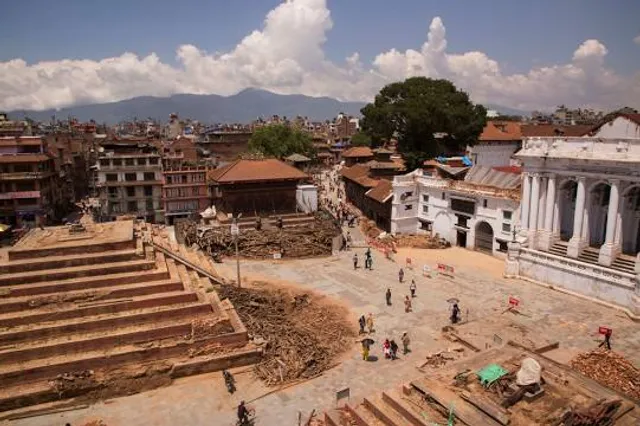
Visitors to Kasthamandap are often awestruck by the grandeur and elegance of its wooden framework. The open space within the pavilion was historically used for public gatherings, festivals, and religious ceremonies, making it a central hub for community life. Despite the damage it sustained during the 2015 earthquake, efforts to restore Kasthamandap have been vigorous, underscoring its importance to Nepalese cultural identity.
The restoration of Kasthamandap is not just about preserving a building but also about maintaining a living piece of history that continues to inspire and serve the community. The local and international efforts to rebuild it highlight the resilience and dedication to safeguarding Nepal's rich heritage.
In conclusion, Kasthamandap is more than just a historic structure; it is a testament to the ingenuity and spiritual depth of Kathmandu's ancestors. Its architectural brilliance, coupled with its cultural and religious significance, makes it a must-visit landmark for anyone exploring the heritage of the Kathmandu Valley. The ongoing restoration efforts promise to return this venerable pavilion to its former glory, ensuring its legacy endures for future...
Read more