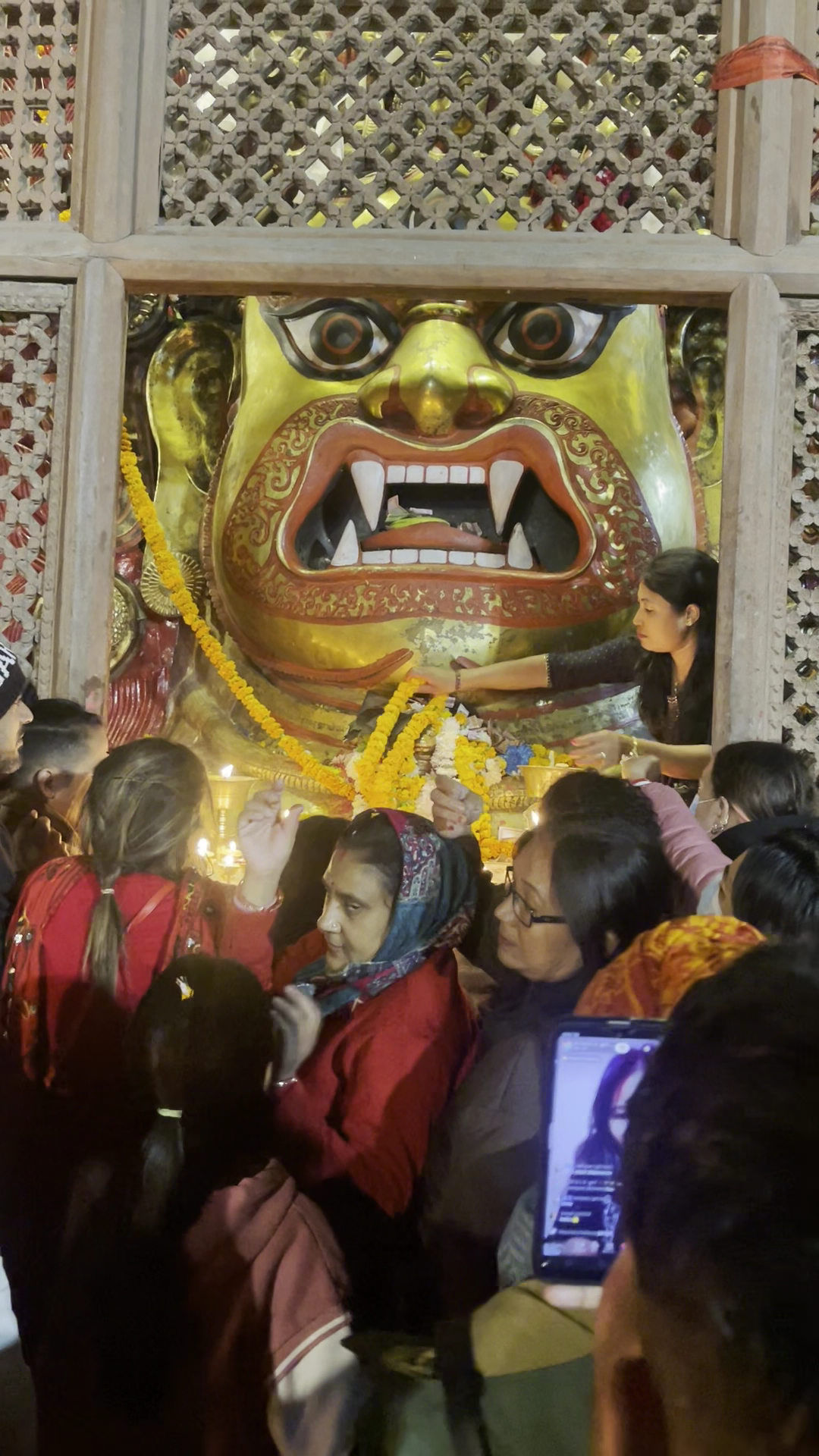
When someone is angry, it is common for Nepalis to refer to the“Bhairab” aspect of the person. When Shiva, the destroyer, is angry he is depicted as Bhairab. The soldiers in the battle field or their battalions and garrisons are referred to as Bhairab and named accordingly as Bhairab Gana. At the doorway to temples and sacred spaces the guards are the various Bhairabs. During masked dances in the Kathmandu valley, the angry character will be the blue masked Bhairab. The Bhairab is not only depicted as ferocious and angry, he is also honest, dedicated and faithful. It must be with this in mind that the dog is regarded as the vehicle of Bhairab.
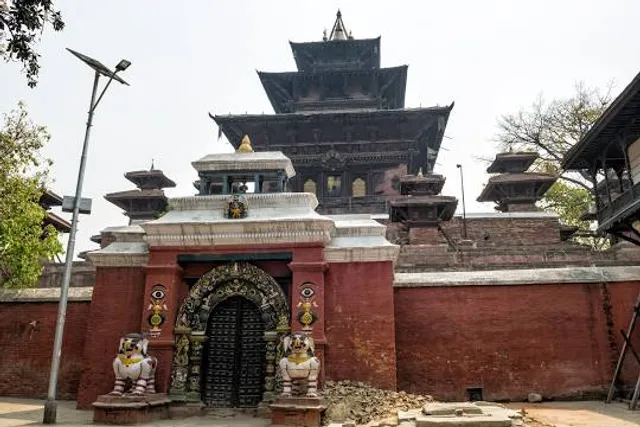
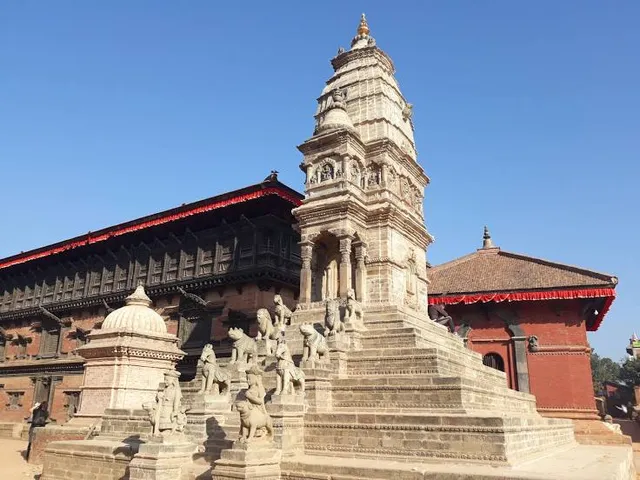
In the Kathmandu valley, there are numerous big and small temples, monuments, statues and spaces dedicated to the Bhairab. The really big temples include the Bagh Bhairab of Kirtipur, the Tika Bhairab in southern Lalitpur, the Mahankal Bhairab on the edge of Tundikhel near Bir Hospital, the Akash Bhairab at Indra Chowk in the heart of Kathmandu, the Haya griva Bhairab temple at Bungamati and the huge Bhairab temple of Taumadi in Bhaktapur are just a few we see all the time.
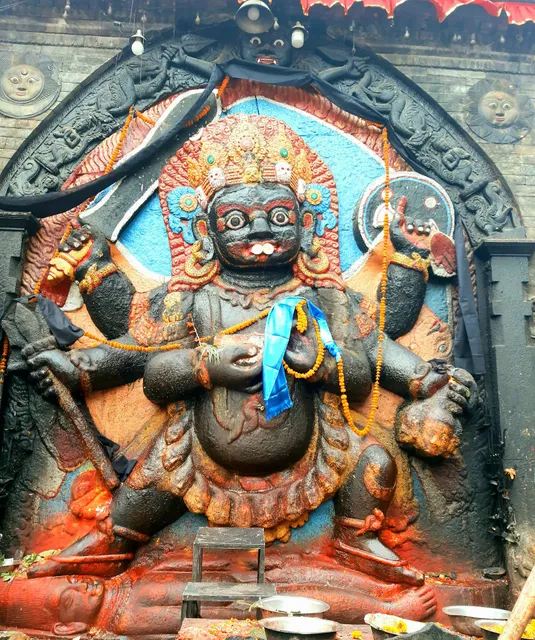
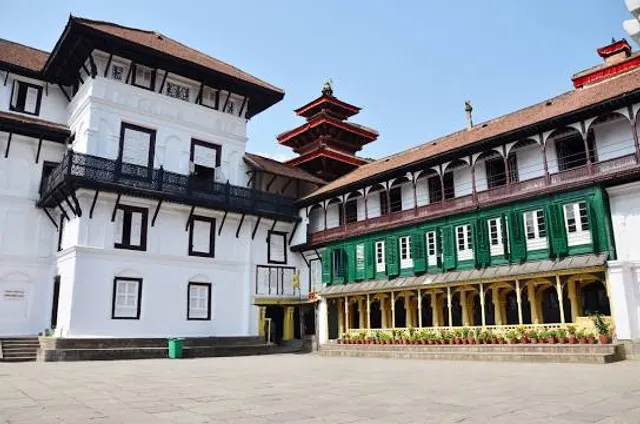
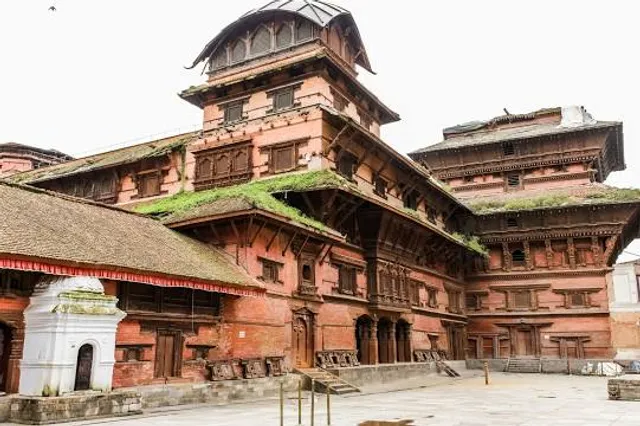
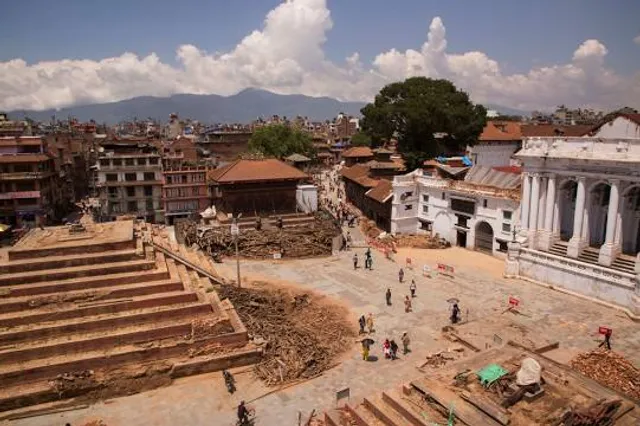
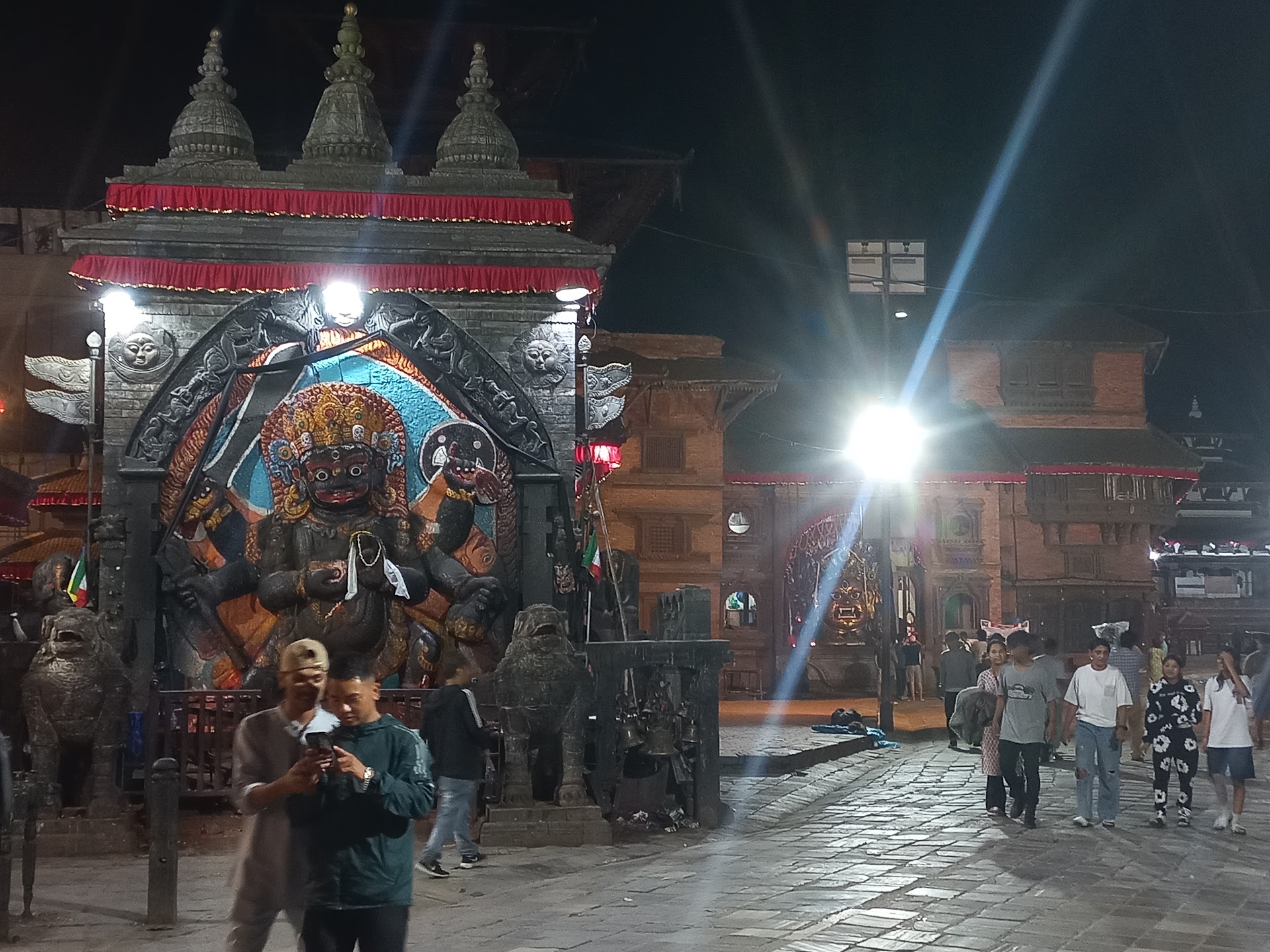
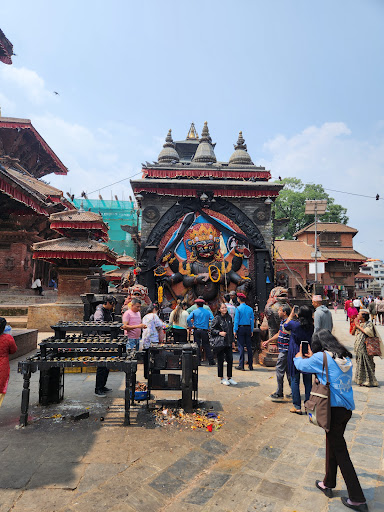
At the old palace of Hanumandhoka we have the giant statue of Kal Bhairab (Kal means death). History tells us that when King Pratap Malla was building a conduit to bring water from Budhanilkantha to Hanumandhoka, the workers dug up this huge and beautifully crafted Licchavi period statue. The statue and the rituals of the Bhairab are of great significance to Nepalis because it is Kal Bhairab that prevented corruption for many centuries. Each year civil servant jobs, positions and authorities had to be renewed by the rulers in a ceremony called Pajani. The oath taking that followed the appointment took place in front of Kal Bhairab and each swore to the deity that if they lied, cheated, or stole, they were prepared to die a violent death at the hands of Bhairab. This is why the Kal Bhairab is also referred to as the Adalat (court) Bhairab. At the Pashupati temple, the priests were required to take the oath in front of the Unmatta Bhairab whose statue is located in the same complex.
Bhairab is also depicted in the valley during various festivals in the form of a mask with a huge alcohol vat attached behind it. A pipe delivers the alcohol to the “devotees” through the mouth of the Bhairab. In the valley these are referred to as Hatha dyo and the largest of these is the Sweta Bhairab at Hanumandhoka palace square. Normally the huge mask is locked up behind wooden latticed windows and is open to the public during the Indra Jatra festival. All across the routes along which the chariot of the living goddess is pulled, these masks and vats are placed on raised platforms and the various neighborhoods organize rice beer and alcohol for the public participating in...
Read moreThis magnificent and exquisite sculpture of Kala bhairav is considered one of the most dangerous form of Lord Shiva and one of his eight avatar. As the name it self suggest kala which means "death or time" hence he is considered god of death or time. He is depicted in an aggressive form with angry eyes shaped like lotus blossoms, blazing hair, tiger's teeth, snake coiled around his neck with garland of human skulls. This fiercest manifesting of Lord Shiva carries a trident, drum and decapitated fifth head of Lord brahma. According to legend lord brahma commands lord vishnu to wokship him, as he is the creator of this universe. This angers lord shiva, thus he incarnated as kala bhairav to punish him by beheading one of brahma 's five heads. However chopping off his head amounted to killing of a brahma, as result bhairav had to carry the gory head with him for 12 years till he was liberated of his sin. This blue throated diety swallowed poison to save this world. Hence, he is considered to be the vanquisher of death. His third eye represent eternal supreme wisdom. On the auspicious day of bhairav ashtami which falls on krishna ashtami of mangshir( according to hindu calendar) lord shiva appeared on earth in form of kala bhairava is celebrated with special prayers and rituals. This statue is situated in Hanuman dhoka durbar square which about 12 foot height. This masterpiece is said to be sculptured in the 5th or 6th century and was later rediscovered by the malla king Pratab Malla in the 17th century. It represent the excellent quality of masterpiece and show how rich our nation was in art and culture. Legend has it that the temple served as a supreme Court in Nepal for long time as the people believed that the person who lied in front of the sculpture would be dead by the power of the Lord. Daily prayer offering to him helps in achieving success, defeating enemies and attaining materialistic comforts. He helps devotees fruitfully utilise their time in securing their goals. He purifies souls with his sheer power and make odds favorable for believers. The word bhairava itself had considerable prominence in invocation. Chanting the 3 syllables "bhai', 'ra' and 'va' is said to create a bounty of benefits. The sacred sound is said to be a reminder that each second is precious and that one should not disrespect time. Despite being one of the most feared deities, he is essentially one of the most rewarding and protective gods. I almost forgot to mention that kala bhairav is also famous for his dog vahana or vehicle. Thus looking after and feeding dogs is considered to be another way of displaying devotion. At last but not the least this fearfully manifestation of Lord Shiva is believed to be one of the most protective power blessing...
Read moreThe Kaal Bhairav statue, located within Kathmandu Durbar Square (Hanuman Dhoka), is one of the most revered and iconic representations of the fierce manifestation of Lord Shiva. This enormous stone idol of Kaal Bhairav stands as a symbol of justice and power in Nepalese culture.
Here are some key details about Kaal Bhairav in Kathmandu:
Depiction: Kaal Bhairav is depicted as a fearsome form of Lord Shiva, with a wrathful expression, holding a severed head in one hand and weapons in others. He is often surrounded by snakes, skulls, and other symbolic elements representing death and destruction. This fierce form is believed to protect the righteous and punish wrongdoers.
Historical and Religious Significance: The Kaal Bhairav idol is said to date back to the 12th century, although some believe it may have been created even earlier. It holds deep religious importance in both Hinduism and local traditions, where Kaal Bhairav is worshipped as the protector of the Kathmandu Valley.
Role in Justice: In the past, the statue played a role in the legal system. People who were accused of crimes would be brought before the Kaal Bhairav idol to swear oaths of innocence. It was believed that those who lied would face immediate divine punishment.
Location: The statue is situated in an open courtyard of Hanuman Dhoka Durbar Square, which is itself a historically significant palace complex. The Kaal Bhairav statue is easily recognizable due to its massive size (approximately 12 feet tall) and striking appearance.
Cultural Importance: Locals and visitors alike pay their respects to Kaal Bhairav, offering flowers, vermillion powder, and other traditional offerings. The site remains an important place of worship, particularly during festivals.
The Kaal Bhairav statue continues to draw both devotees and tourists, serving as a reminder of the deep spiritual and historical heritage embedded within Kathmandu...
Read more