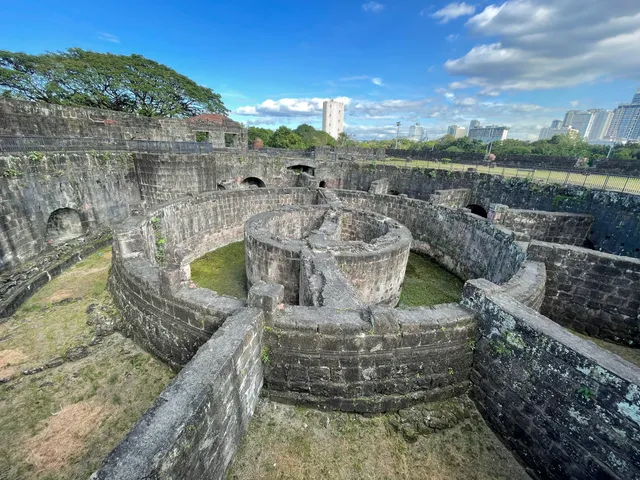
You can enter by paying P75 for adults at the entrance. The old castle walls and pretty gardens blend peacefully with the passage of time. If you look at the circular structure between the outer and inner walls, the floor of the innermost circle was made with brick tiles to act as a filter to filter out underground impurities. Also, the inner bricks of the circle and the outer walls are made of pink terracotta. Terracotta is a technique made by baking clay. It is also used for waterproofing, and is relatively lighter and more weather-resistant than regular bricks. The Philippines was under Spanish colonial rule from 1571. It was previously a tribal state. It was ruled by Spain for 327 years until it declared independence on June 12, 1898. After that, it was a US colony from 1898 to 1946, and it declared independence from the US on July 4, 1946. However, it was also occupied by the Japanese invasion between 1942 and 1945, when it was under American rule. It became the current Republic of the Philippines after 1946. The existence of the Philippines, which had been a quiet island nation, became known to the outside world after the appearance of Ferdinand Magellan in the 16th century. In 1521, the Portuguese navigator Ferdinand Magellan landed in the Philippines while traveling around the world with the support of the Spanish royal family, and this event made the existence of the Philippines known to the international community. This became the opportunity to largely divide the history of the Philippines into the period of tribal states before Spanish rule and the period after the Spanish conquest. It is said that before the appearance of Magellan, Malay indigenous peoples moved into various parts of the island and settled there, and that a unified nation was not formed, and that they lived in the form of a tribal state ruled by a chieftain. The Philippines is said to have lived under a chieftaincy system called Barangay, which arose naturally during the settlement process due to its terrain consisting of mountains and islands. The population at that time is estimated to be about 500,000, less than 0.5% of the current population. Barangays are usually composed of 30 to 100 households centered around a ruler called datu, but in areas such as Manila and Cebu, there were also large-scale barangays with hundreds of households. As a side note, due to the influence of this time, the smallest administrative unit in the Philippines is still called Barangay. At that time, Spain set out to travel around the world for the 3Gs: Glory of the King, Gospel of God, and Gold. From Spain's perspective, the Philippines was the best place to use as a trading base. Spain was inaugurating the Golden Age of Spain, the “empire on which the sun never sets,” and when a Spanish expedition arrived in the Philippines in 1543, they named the islands of Samar and Leyte Las Islas Filipinas after King Philip II of Spain, and later, during the Spanish occupation, the entire islands were called the Philippines. It was also during this period that the vast majority of the population became Catholic. The Baluarte Fortress was designed and built by Jesuit priest Antonio Cedeno from 1586 to 1587, and is one of the oldest stone forts in the walled city of Intramuros, built to protect the Spanish ruling class. It was renovated in 1593 to connect the city walls, but the fort fell into disrepair, and construction of a new Baluarte began in 1614 and was completed between 1653 and 1663. It was built in a similar shape to the Ace of Spades. The walls of Baluarte are slightly protruding like a curtain wall, making it easier to secure a view from a defensive position. In recent years, archways and gardens have been built to make the structure more attractive to visitors and more suitable for special events. In fact, it is one of the most popular places for Filipinos to take...
Read moreBaluarte de San Diego, nestled within the historic walls of Intramuros in Manila, is a captivating fortress that transports visitors back to the Spanish colonial era. This well-preserved bastion stands as a testament to the rich history and architectural grandeur of the Philippines. Exploring Baluarte de San Diego offers a fascinating glimpse into the country's past and provides a serene and picturesque escape from the bustling city.
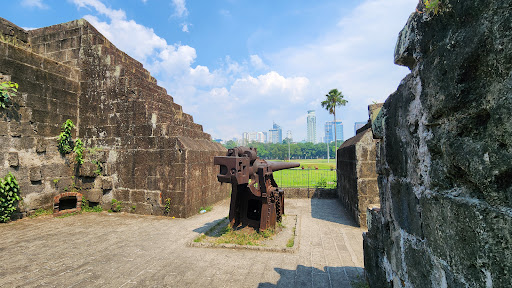
The first thing that strikes you upon entering Baluarte de San Diego is the imposing structure and formidable walls that surround the fortress. These massive stone fortifications, originally built in the late 16th century, showcase the defensive architecture of the time and evoke a sense of awe and admiration.
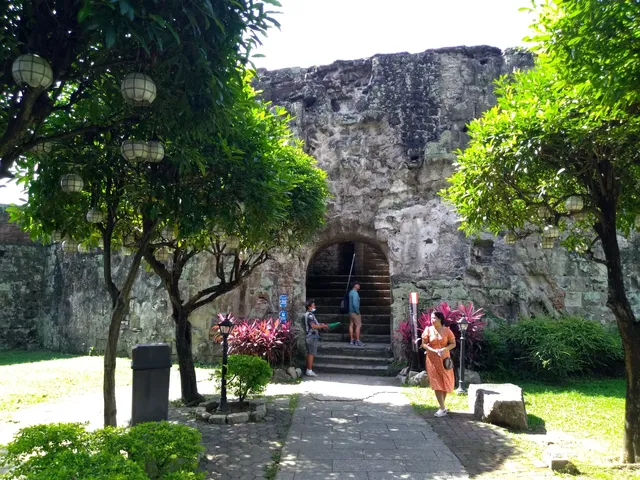
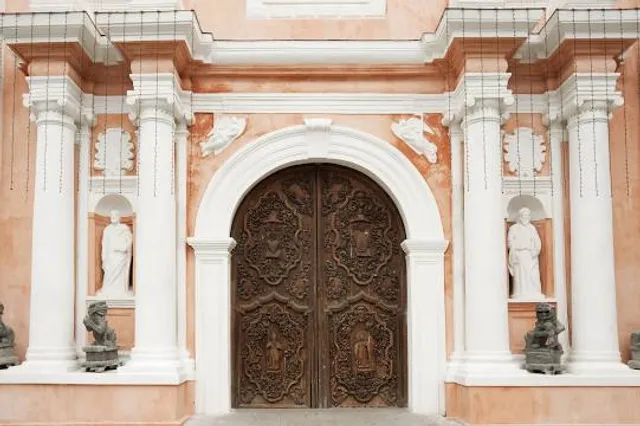
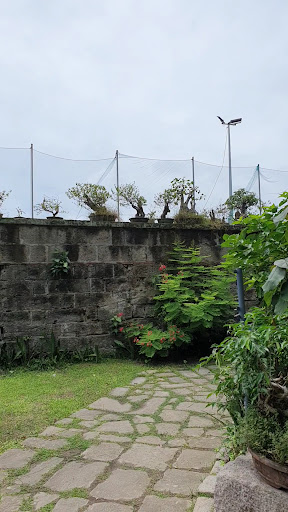
Walking through the arched entrance, visitors are greeted by a tranquil garden filled with lush greenery and vibrant flowers. The well-maintained grounds provide a peaceful respite where one can wander, relax, and admire the beauty of the surroundings.
Inside the fortress, visitors can explore the various chambers and rooms that once served as barracks and storerooms. The thick stone walls, spiral staircases, and arched windows exude a sense of history and evoke the atmosphere of a bygone era. Informative displays and exhibits provide insights into the fort's history and significance, enriching the visitor's experience.
One of the highlights of Baluarte de San Diego is the elevated rampart walkway that offers panoramic views of Intramuros and its surroundings. From this vantage point, visitors can appreciate the architectural grandeur of the fortress and gain a better understanding of its strategic location within the city.
The fortress is also a popular venue for cultural events, performances, and art exhibitions, further adding to its appeal as a cultural hub within Intramuros.
Baluarte de San Diego is a hidden gem within Manila, offering a glimpse into the city's storied past. Its well-preserved architecture, serene garden, and historical significance make it a must-visit destination for history enthusiasts and those seeking to immerse themselves in the rich cultural heritage of the Philippines. A visit to Baluarte de San Diego is an opportunity to step back in time and appreciate the enduring beauty and historical significance of this...
Read moreThe Baluarte de San Diego is a fascinating historical landmark in Manila, Philippines, part of the historic walled city of Intramuros. Originally constructed in the late 16th century as a fortification against invasions, it stands as a testament to the strategic military architecture of the Spanish colonial period. The site is notable for its unique circular design, which differentiates it from many other fortresses of its time.
Visitors to the Baluarte de San Diego can explore its well-preserved ruins and gain a deep appreciation for the rich history encapsulated within its walls. The structure itself is an impressive example of masonry, showcasing the robust construction techniques used by the Spanish. The surrounding gardens and pathways add a serene and reflective atmosphere, making it a peaceful spot to stroll and ponder the historical significance of the area.
One of the highlights of a visit to the Baluarte de San Diego is the panoramic view of the Intramuros district and the Manila skyline it offers. The juxtaposition of the ancient stone walls against the backdrop of modern skyscrapers provides a striking visual contrast that underscores the blend of old and new in Manila.
The site is also well-maintained, with informative plaques and guided tours available for those interested in a more in-depth understanding of its history. Events and cultural activities occasionally held at the Baluarte de San Diego further enrich the visitor experience, making it not just a historical site but also a vibrant part of the community.
Overall, the Baluarte de San Diego is a must-visit for history enthusiasts and tourists alike. Its combination of historical significance, architectural beauty, and serene environment makes it a standout attraction...
Read more