HTML SitemapExplore
logo
Find Things to DoFind The Best Restaurants

The Triumphal Arch — Attraction in Bucharest

Name
The Triumphal Arch
Description
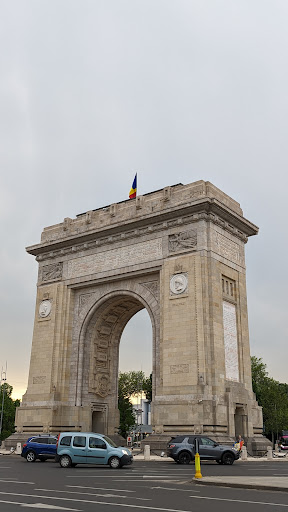
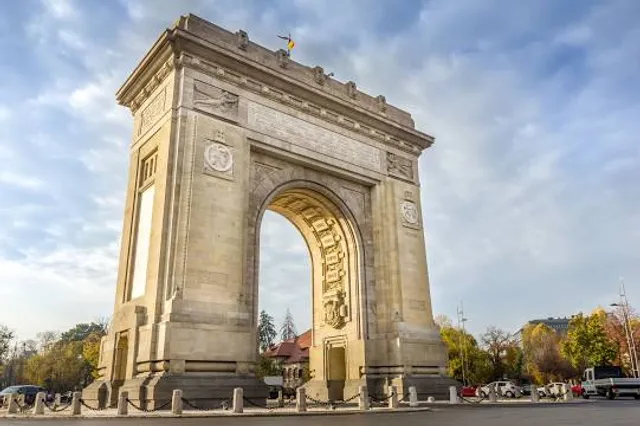
A triumphal arch is a free-standing monumental structure in the shape of an archway with one or more arched passageways, often designed to span a road, and usually standing alone, unconnected to other buildings.
Nearby attractions
The Japanese Garden of Herăstrău Park
Şoseaua Pavel D. Kiseleff, București, Romania
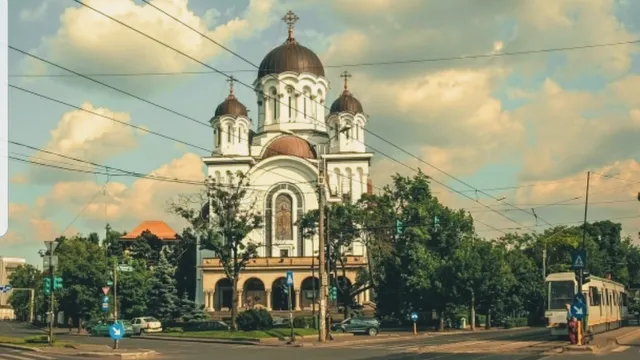
Cașin Church
Bd, Strada Alexandru Constantinescu, București 012073, Romania
"King Michael I" Park
Bucharest, Romania
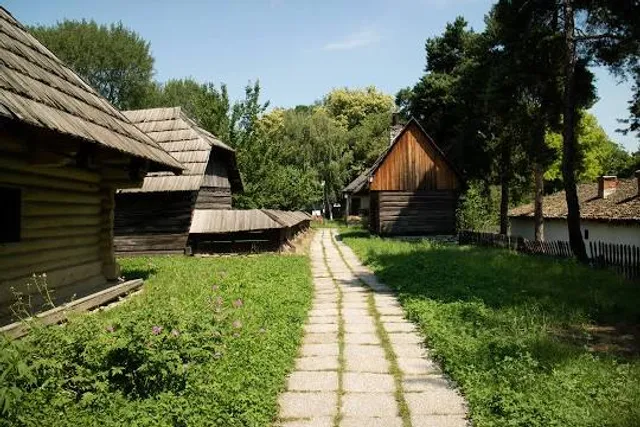
"Dimitrie Gusti" National Village Museum
Şoseaua Pavel D. Kiseleff 30, București 011347, Romania
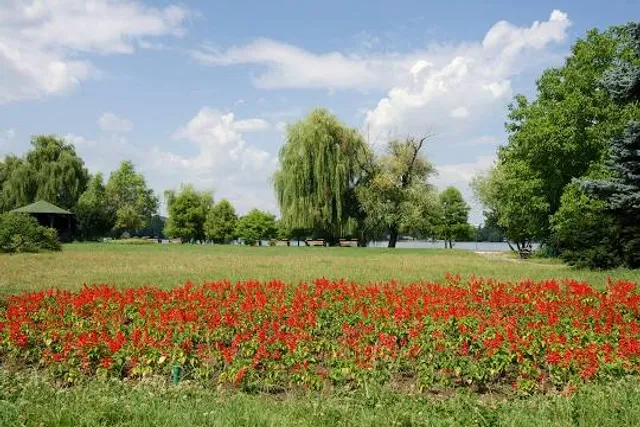
Bucharest Herăstrău Park
Şoseaua Pavel D. Kiseleff 32, București 014192, Romania
Museum of Recent Art
Bulevardul Primăverii 15, București 011971, Romania
Vaporașul Cernica
Aleea Pescăruș, București 011851, Romania
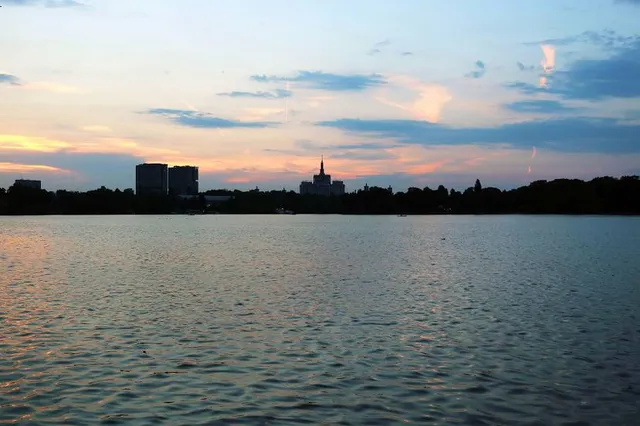
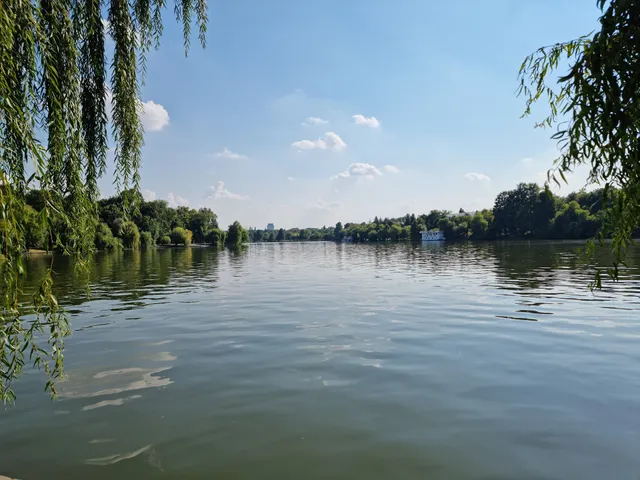
Herăstrău Lake
Bucharest, Romania
Monumentul "Crucea Secolului"
Bucharest, Romania
Nearby restaurants
Seoul Restaurant
Strada Aviator Mircea Zorileanu 89, București 012054, Romania
Le Bab Charles de Gaulle
Piața Charles de Gaulle 3, București 011858, Romania
AREZZO ITALIAN
Strada Popa Savu 73, București 011434, Romania
Restaurant Pescăruș
Aleea Pescăruș 1, București 011851, Romania
Buongiorno Italian Primăverii
Strada Herăstrău 2, București 014192, Romania
Poesia
Bulevardul Aviatorilor 76, București 011866, Romania
Sabatini Pizza & Restaurant Domenii
Strada Alexandru Constantinescu 9, București 011472, Romania
Hard Rock Cafe Bucharest
Şoseaua Pavel D. Kiseleff 32, București 011343, Romania
5 Elemente
Strada Emanoil Porumbaru 39, București 011422, Romania
KIMU
Strada Clucerului, București 011362, Romania
Nearby hotels
Hotel Triumf
Şoseaua Pavel D. Kiseleff 12, București 011346, Romania
Pensiunea Helvetia
Strada Popa Savu 75, București 011432, Romania
Arc de Triomphe by CityBookings
Strada Clucerului 19, București 011362, Romania
Casa Victor
Strada Emanoil Porumbaru 44, București 013704, Romania
M-Point Motel
Strada Clucerului 21, București 011365, Romania
CityLife Suites
Strada Aviator Petre Crețu, București, Romania
Yasu Luxury Rooms
Piața Charles de Gaulle 4-6, București 011857, Romania
Casa Locato
Bulevardul Ion Mihalache 125, București, Romania
Piccolo Mondo Hotel Bucharest By CityBookings
Strada Serdarului 6, București 011377, Romania
Related posts
Keywords
The Triumphal Arch tourism.The Triumphal Arch hotels.The Triumphal Arch bed and breakfast. flights to The Triumphal Arch.The Triumphal Arch attractions.The Triumphal Arch restaurants.The Triumphal Arch travel.The Triumphal Arch travel guide.The Triumphal Arch travel blog.The Triumphal Arch pictures.The Triumphal Arch photos.The Triumphal Arch travel tips.The Triumphal Arch maps.The Triumphal Arch things to do.
The Triumphal Arch things to do, attractions, restaurants, events info and trip planning
The Triumphal Arch
RomaniaBucharestThe Triumphal Arch

Basic Info

The Triumphal Arch

Piața Arcul de Triumf, București 011453, Romania
4.6(7.4K)
Open 24 hours
Save
spot

Ratings & Description

Info

A triumphal arch is a free-standing monumental structure in the shape of an archway with one or more arched passageways, often designed to span a road, and usually standing alone, unconnected to other buildings.

Cultural
Outdoor
Accessibility
attractions: The Japanese Garden of Herăstrău Park, Cașin Church, "King Michael I" Park, "Dimitrie Gusti" National Village Museum, Bucharest Herăstrău Park, Museum of Recent Art, Vaporașul Cernica, Herăstrău Lake, Monumentul "Crucea Secolului", restaurants: Seoul Restaurant, Le Bab Charles de Gaulle, AREZZO ITALIAN, Restaurant Pescăruș, Buongiorno Italian Primăverii, Poesia, Sabatini Pizza & Restaurant Domenii, Hard Rock Cafe Bucharest, 5 Elemente, KIMU
logoLearn more insights from Wanderboat AI.
Website
palatebrancovenesti.ro

Plan your stay

hotel
Pet-friendly Hotels in Bucharest
Find a cozy hotel nearby and make it a full experience.
hotel
Affordable Hotels in Bucharest
Find a cozy hotel nearby and make it a full experience.
hotel
The Coolest Hotels You Haven't Heard Of (Yet)
Find a cozy hotel nearby and make it a full experience.
hotel
Trending Stays Worth the Hype in Bucharest
Find a cozy hotel nearby and make it a full experience.

Reviews

Nearby attractions of The Triumphal Arch

The Japanese Garden of Herăstrău Park

Cașin Church

"King Michael I" Park

"Dimitrie Gusti" National Village Museum

Bucharest Herăstrău Park

Museum of Recent Art

Vaporașul Cernica

Herăstrău Lake

Monumentul "Crucea Secolului"

The Japanese Garden of Herăstrău Park

The Japanese Garden of Herăstrău Park

4.4

(1.9K)

Open until 10:00 PM
Click for details
Cașin Church

Cașin Church

4.7

(847)

Open 24 hours
Click for details
"King Michael I" Park

"King Michael I" Park

4.6

(23.1K)

Open 24 hours
Click for details
"Dimitrie Gusti" National Village Museum

"Dimitrie Gusti" National Village Museum

4.6

(5.3K)

Open 24 hours
Click for details

Things to do nearby

Bucharest Highlights Walking Tour
Sat, Dec 6 • 9:00 AM
Bucharest, Bucharest, 030167, Romania
View details
Explore Bucharests history through photos
Sat, Dec 6 • 9:00 AM
Bucharest, Bucharest, 010062, Romania
View details

Nearby restaurants of The Triumphal Arch

Seoul Restaurant

Le Bab Charles de Gaulle

AREZZO ITALIAN

Restaurant Pescăruș

Buongiorno Italian Primăverii

Poesia

Sabatini Pizza & Restaurant Domenii

Hard Rock Cafe Bucharest

5 Elemente

KIMU

Seoul Restaurant

Seoul Restaurant

4.7

(1.5K)

Click for details
Le Bab Charles de Gaulle

Le Bab Charles de Gaulle

4.7

(787)

Click for details
AREZZO ITALIAN

AREZZO ITALIAN

4.9

(103)

Click for details
Restaurant Pescăruș

Restaurant Pescăruș

4.5

(4.5K)

$$

Click for details
Get the Appoverlay
Get the AppOne tap to find yournext favorite spots!
Wanderboat LogoWanderboat

Your everyday Al companion for getaway ideas

CompanyAbout Us
InformationAI Trip PlannerSitemap
SocialXInstagramTiktokLinkedin
LegalTerms of ServicePrivacy Policy

Get the app

© 2025 Wanderboat. All rights reserved.
logo

Reviews of The Triumphal Arch

4.6
(7,446)
avatar
5.0
2y

Arc de Triomphe in Bucharest is a true gem that deserves every bit of its 5-star rating. As I stood before this magnificent arch, I couldn't help but feel awe-inspired by its grandeur and the historical significance it carries. This iconic landmark is a must-visit for anyone exploring the beautiful city of Bucharest.

The architecture of Arc de Triomphe is simply breathtaking. Its imposing structure, adorned with intricate details and decorative sculptures, reflects the skilled craftsmanship of its time. The arch stands tall and proud, symbolizing Romania's triumphs and honoring the bravery and sacrifices of its heroes. It is a true testament to the country's rich heritage.

Visiting Arc de Triomphe allows you to immerse yourself in history. The nearby exhibition hall provides a wealth of information about the arch's origins, its various reconstructions, and the events it has witnessed over the years. It's fascinating to learn about its role in commemorating important moments in Romanian history.

One of the highlights of my visit was climbing to the top of the arch. The panoramic view from up there is simply breathtaking! I could see the bustling city of Bucharest, with its mix of old and new buildings, parks, and tree-lined boulevards. It was a picture-perfect moment that I will cherish forever.

The surrounding park is another delightful aspect of Arc de Triomphe. It offers a peaceful retreat from the city's hustle and bustle, providing ample space for leisurely strolls and picnics. I highly recommend taking a moment to relax and soak in the serene atmosphere while admiring this architectural masterpiece.

The accessibility to Arc de Triomphe is excellent, with public transportation options available nearby. The area is well-maintained, and the staff are friendly and informative. They are more than willing to answer any questions and provide assistance if needed.

In conclusion, Arc de Triomphe is an absolute must-visit when exploring Bucharest. Its historical significance, stunning architecture, and breathtaking views make it a top attraction for locals and tourists alike. I wholeheartedly give it a well-deserved 5-star rating and encourage everyone to experience the grandeur of this landmark firsthand.

Note: This review is based on my personal experience and opinions at the...

   Read more
avatar
5.0
2y

The Triumphal Arch was built as a memorial for the country’s unification and independence. Temporary structures were raised in 1848, 1859, 1878, 1906 and 1918, the latter to mark the winning Romanian Army’s return at the end of WW1. However, as it was built of wood and stucco, a new, long lasting monument was envisaged. King Ferdinand and Queen Maria’s coming to throne was an appropriate occasion and a reinforced concrete arch was built in 1921-1922. The short time available had only the structure built of lasting materials, while the bas-reliefs and statues it was adorned with were made of plaster and the whole monument depreciated by 1930. Architect Petre Antonescu was hired to draw the plans of a new arch, which was built between 1935 and 1936. The Southern facade holds two bronze medallions showing the portraits of Queen Maria and King Ferdinand. They replace the carved stone originals that were destroyed in the 1980s, as they represented a blaming piece of history for the Communist regime. The queen’s and king’s portraits have a Victory relief above them each. The Northern facade has medallions dedicated to Manhood, with a bearded warrior holding a sword, respectively Faith, with a young man holding a cross. They both have a Victory figure on top. The side facades show King Ferdinand’s speeches to the nation upon Romania’s joining WW1, respectively upon his coronation in Alba Iulia. Under the vault, the arch has stones carved with the name of battle sites during the war. At different occasions (but not regularly), the Arch is open to visitors, and a stairway leads to its terrace commanding great views around and allowing one to see how the avenues starting at the arch radiate around it. It lies in Piața...

   Read more
avatar
4.0
7y

Yes, yes, you heard right, the Arc de Triomphe. Not only will the name ring for you familiar but also the mirror. The Arc de Triomphe of Bucharest is very reminiscent of the Arc de Triomphe of Paris. It is not by chance that Bucharest is called "Paris of the East" or "Little Paris". Bucharest's Arc de Triomphe is situated on a traffic circle near Rastreau Park. This is one of the many entrance gates to the city. Like the Parisian Arc de Triomphe, it is also pleasant to arrive, to be photographed, to look and be impressed. Anyone who wants to can climb the stairs and get a panoramic view of the city. The effort is worth only in fair weather. The Arc de Triomphe of Bucharest was founded in 1878 after Romania gained independence. The original gate was poor, not durable and built entirely of wood. This gate was damaged in World War I and was rebuilt in 1922 in the shape of the present gate as a memorial and a symbol of victory for the heroism of the Romanian heroes during the First World War. The gate was built in the place of a previous gate that was destroyed during the war and since then has been an important symbol of the city. The structure of the gate rises to a height of 27 meters and is decorated with paintings of the symbols of the 40 provinces of Romania. The building has an internal staircase, allowing you to climb up and enjoy a spectacular panoramic view...

   Read more
Page 1 of 7
Previous
Next

Posts

Alin BirãuAlin Birãu
Arc de Triomphe in Bucharest is a true gem that deserves every bit of its 5-star rating. As I stood before this magnificent arch, I couldn't help but feel awe-inspired by its grandeur and the historical significance it carries. This iconic landmark is a must-visit for anyone exploring the beautiful city of Bucharest. The architecture of Arc de Triomphe is simply breathtaking. Its imposing structure, adorned with intricate details and decorative sculptures, reflects the skilled craftsmanship of its time. The arch stands tall and proud, symbolizing Romania's triumphs and honoring the bravery and sacrifices of its heroes. It is a true testament to the country's rich heritage. Visiting Arc de Triomphe allows you to immerse yourself in history. The nearby exhibition hall provides a wealth of information about the arch's origins, its various reconstructions, and the events it has witnessed over the years. It's fascinating to learn about its role in commemorating important moments in Romanian history. One of the highlights of my visit was climbing to the top of the arch. The panoramic view from up there is simply breathtaking! I could see the bustling city of Bucharest, with its mix of old and new buildings, parks, and tree-lined boulevards. It was a picture-perfect moment that I will cherish forever. The surrounding park is another delightful aspect of Arc de Triomphe. It offers a peaceful retreat from the city's hustle and bustle, providing ample space for leisurely strolls and picnics. I highly recommend taking a moment to relax and soak in the serene atmosphere while admiring this architectural masterpiece. The accessibility to Arc de Triomphe is excellent, with public transportation options available nearby. The area is well-maintained, and the staff are friendly and informative. They are more than willing to answer any questions and provide assistance if needed. In conclusion, Arc de Triomphe is an absolute must-visit when exploring Bucharest. Its historical significance, stunning architecture, and breathtaking views make it a top attraction for locals and tourists alike. I wholeheartedly give it a well-deserved 5-star rating and encourage everyone to experience the grandeur of this landmark firsthand. Note: This review is based on my personal experience and opinions at the time of my visit
Luisa CiobotaruLuisa Ciobotaru
  noutăți proiecte monumente culte peisagistică evenimente turism EN  Monumente Arcul de Triumf Autor: Petre Antonescu Anul realizării: 1922, 1936 Localizare: Piața Arcul de Triumf Coordonate GPS: 44°28′1.79″N 26°4′41.35″E  / 44.4671639°N 26.0781528°E Simbolistică Arcul de Triumf este un tip special de monument, a cărui semnificație reprezintă cea mai înaltă formă de comemorare a unor evenimente și personalități istorice. Specificul său în formă de poartă permite posibilitatea trecerii triumfale pe sub arcada monumentului a personalităților astfel onorate. Ca și alte construcții înrudite (mausolee etc.), scopul Arcului de Triumf din București este evident:  comemorarea victoriei românești în Primul Război Mondial (pentru noi, românii, Războiul de Reîntregire a Neamului) și a jertfelor de sângecare au făcut posibilă această victorie. De asemenea, Arcul reprezintă un simbol al regalității, fiind corelat cu întoarcerea Familiei Regale din exilul de la Iași și cu încoronarea Regelui Ferdinand și a Reginei Maria ca suverani ai României. Pe fațada nordică a monumentului sunt reprezentate trei alegorii: Bărbăția, Credința și Victoria. Apărut în Antichitatea romană în perioada imperială târzie (284-486 d.Chr.), construirea arcelor de triumf la Roma s-a realizat pentru cinstirea imperatorilor romani, în scopul reflectării măreției și puterii absolute pe care o dețineau și pentru promovarea valorilor imperiului (Arcul lui Titus, Arcul lui Constantin, Arcul lui Septimius Severus). De asemenea, edificarea arcelor de triumf în provinciile cucerite au avut ca scop  manifestarea puterii imperiale și celebrarea triumfului Imperiului Roman (Arcul de Triumf din Orange, Franța). În perioada modernă, acest tip de monument este reprezentat de Arcul de Triumf de la Paris (1806-1836), care a fost luat ca model de o serie de astfel de monumente ridicate de-a lungul timpului, inclusiv de cel din capitala României. În București, apariția acestui tip de monument este în strânsă legătură cu influențele francofone, manifestate după Revoluția de la 1848 care au condus la schimbarea structurii societății, de tip bizantin-orientală și au stabilit cursul întregii vieți românești pe coordonate de factură occidentală. Astfel, de-a lungul timpului, au fost edificate în București o serie de arce de triumf în vederea celebrării diverselor evenimente istorice, considerate de mare valoare pentru epoca respectivă. Multe dintre acestea au fost realizate pentru folosință temporară, doar pentru durata desfășurării evenimentului respectiv, fiind dezafectate după consumarea evenimentului: 1848 – în cinstea adoptării noii Constituții revoluționare; 1859 – pentru celebrarea alegerii lui Alexandru Ioan Cuza ca domn comun pentru Valahia și Moldova; 1866 – în cinstea proclamării primei Constituții a Principatelor Unite; 1878 – pentru cinstirea eroilor triumfători din Războiul de Independență; 1896 – cu ocazia vizitei împăratului Franz Josef în Regatul României; 1906 – pentru sărbătorirea a 40 de ani de domnie glorioasă a regelui Carol I. În 1918, după realizarea Marii Uniri, în urma luptelor grele duse în ”Marele Război” (cum a fost denumit până în 1941 Primul Război Mondial), a fost realizat, pe actualul amplasament de pe Șoseaua Kiseleff, un arc de triumf tot din lemn, în vederea desfășurării paradei ostașilor biruitori. Acesta, din cauza perisabilității materialelor constitutive nu a rezistat în timp, degradându-se din cauza condițiilor meteo. Peste patru ani, în 1922 s-a luat hotărârea înlocuirii arcului de triumf din 1918 cu unul realizat tot din lemn, până la găsirea fondurilor necesare edificării unui monument permanent care să comemoreze eroismul ostașilor români și totodată să amintească de semnificația deosebit de importantă pentru istoria națională al acestui act politic. După încoronarea Regelui Ferdinand I și a Reginei Maria ca primii suverani ai României reîntregite, comisia desemnată pentru realizarea serbărilor dedicate încoronării l-a însărcinat pe arhitectul Petre Antonescu pentru realizărea unui arc de triumf
ZM (Zara Marin)ZM (Zara Marin)
The Romanian “Arc of Triumph” was built originally in 1918 as a symbol of victory, unity and roman veneration. After WWI Petre Antonescu used as a model the Parisian Arc of Triumph, designing it at first as a temporary arc of wood, which was then built of granite and its construction officially finished in 1922. Romanian history roots from Roman invasions and colonizations which integrated Dacians to the Roman rule and civilization. The Arc of Triumph serves as a connection to Ancient Rome as it commemorates the inventors of the “victorious” arc. “After centuries of sufferings faithfully endured and hard struggles for the preservation of national being, … the justice was fulfilled for Romanian people by the sword of King Ferdinand with the help of the whole nation and the thought of Queen Mary.” This proclamation of King Carol is carved onto one of the facades of the Arc. Nowadays you can grant yourself with a panoramic view of the city on top of the Arc, which i was unfortunately unable to do as it was a national holiday on the day of my visit.The structure itself is magnificent- monumental and beautifully adorned. It’s a must-see if you’re visiting Bucharest, definitely “food for the eye”
See more posts
See more posts
hotel
Find your stay

Pet-friendly Hotels in Bucharest

Find a cozy hotel nearby and make it a full experience.

Arc de Triomphe in Bucharest is a true gem that deserves every bit of its 5-star rating. As I stood before this magnificent arch, I couldn't help but feel awe-inspired by its grandeur and the historical significance it carries. This iconic landmark is a must-visit for anyone exploring the beautiful city of Bucharest. The architecture of Arc de Triomphe is simply breathtaking. Its imposing structure, adorned with intricate details and decorative sculptures, reflects the skilled craftsmanship of its time. The arch stands tall and proud, symbolizing Romania's triumphs and honoring the bravery and sacrifices of its heroes. It is a true testament to the country's rich heritage. Visiting Arc de Triomphe allows you to immerse yourself in history. The nearby exhibition hall provides a wealth of information about the arch's origins, its various reconstructions, and the events it has witnessed over the years. It's fascinating to learn about its role in commemorating important moments in Romanian history. One of the highlights of my visit was climbing to the top of the arch. The panoramic view from up there is simply breathtaking! I could see the bustling city of Bucharest, with its mix of old and new buildings, parks, and tree-lined boulevards. It was a picture-perfect moment that I will cherish forever. The surrounding park is another delightful aspect of Arc de Triomphe. It offers a peaceful retreat from the city's hustle and bustle, providing ample space for leisurely strolls and picnics. I highly recommend taking a moment to relax and soak in the serene atmosphere while admiring this architectural masterpiece. The accessibility to Arc de Triomphe is excellent, with public transportation options available nearby. The area is well-maintained, and the staff are friendly and informative. They are more than willing to answer any questions and provide assistance if needed. In conclusion, Arc de Triomphe is an absolute must-visit when exploring Bucharest. Its historical significance, stunning architecture, and breathtaking views make it a top attraction for locals and tourists alike. I wholeheartedly give it a well-deserved 5-star rating and encourage everyone to experience the grandeur of this landmark firsthand. Note: This review is based on my personal experience and opinions at the time of my visit
Alin Birãu

Alin Birãu

hotel
Find your stay

Affordable Hotels in Bucharest

Find a cozy hotel nearby and make it a full experience.

Get the Appoverlay
Get the AppOne tap to find yournext favorite spots!
  noutăți proiecte monumente culte peisagistică evenimente turism EN  Monumente Arcul de Triumf Autor: Petre Antonescu Anul realizării: 1922, 1936 Localizare: Piața Arcul de Triumf Coordonate GPS: 44°28′1.79″N 26°4′41.35″E  / 44.4671639°N 26.0781528°E Simbolistică Arcul de Triumf este un tip special de monument, a cărui semnificație reprezintă cea mai înaltă formă de comemorare a unor evenimente și personalități istorice. Specificul său în formă de poartă permite posibilitatea trecerii triumfale pe sub arcada monumentului a personalităților astfel onorate. Ca și alte construcții înrudite (mausolee etc.), scopul Arcului de Triumf din București este evident:  comemorarea victoriei românești în Primul Război Mondial (pentru noi, românii, Războiul de Reîntregire a Neamului) și a jertfelor de sângecare au făcut posibilă această victorie. De asemenea, Arcul reprezintă un simbol al regalității, fiind corelat cu întoarcerea Familiei Regale din exilul de la Iași și cu încoronarea Regelui Ferdinand și a Reginei Maria ca suverani ai României. Pe fațada nordică a monumentului sunt reprezentate trei alegorii: Bărbăția, Credința și Victoria. Apărut în Antichitatea romană în perioada imperială târzie (284-486 d.Chr.), construirea arcelor de triumf la Roma s-a realizat pentru cinstirea imperatorilor romani, în scopul reflectării măreției și puterii absolute pe care o dețineau și pentru promovarea valorilor imperiului (Arcul lui Titus, Arcul lui Constantin, Arcul lui Septimius Severus). De asemenea, edificarea arcelor de triumf în provinciile cucerite au avut ca scop  manifestarea puterii imperiale și celebrarea triumfului Imperiului Roman (Arcul de Triumf din Orange, Franța). În perioada modernă, acest tip de monument este reprezentat de Arcul de Triumf de la Paris (1806-1836), care a fost luat ca model de o serie de astfel de monumente ridicate de-a lungul timpului, inclusiv de cel din capitala României. În București, apariția acestui tip de monument este în strânsă legătură cu influențele francofone, manifestate după Revoluția de la 1848 care au condus la schimbarea structurii societății, de tip bizantin-orientală și au stabilit cursul întregii vieți românești pe coordonate de factură occidentală. Astfel, de-a lungul timpului, au fost edificate în București o serie de arce de triumf în vederea celebrării diverselor evenimente istorice, considerate de mare valoare pentru epoca respectivă. Multe dintre acestea au fost realizate pentru folosință temporară, doar pentru durata desfășurării evenimentului respectiv, fiind dezafectate după consumarea evenimentului: 1848 – în cinstea adoptării noii Constituții revoluționare; 1859 – pentru celebrarea alegerii lui Alexandru Ioan Cuza ca domn comun pentru Valahia și Moldova; 1866 – în cinstea proclamării primei Constituții a Principatelor Unite; 1878 – pentru cinstirea eroilor triumfători din Războiul de Independență; 1896 – cu ocazia vizitei împăratului Franz Josef în Regatul României; 1906 – pentru sărbătorirea a 40 de ani de domnie glorioasă a regelui Carol I. În 1918, după realizarea Marii Uniri, în urma luptelor grele duse în ”Marele Război” (cum a fost denumit până în 1941 Primul Război Mondial), a fost realizat, pe actualul amplasament de pe Șoseaua Kiseleff, un arc de triumf tot din lemn, în vederea desfășurării paradei ostașilor biruitori. Acesta, din cauza perisabilității materialelor constitutive nu a rezistat în timp, degradându-se din cauza condițiilor meteo. Peste patru ani, în 1922 s-a luat hotărârea înlocuirii arcului de triumf din 1918 cu unul realizat tot din lemn, până la găsirea fondurilor necesare edificării unui monument permanent care să comemoreze eroismul ostașilor români și totodată să amintească de semnificația deosebit de importantă pentru istoria națională al acestui act politic. După încoronarea Regelui Ferdinand I și a Reginei Maria ca primii suverani ai României reîntregite, comisia desemnată pentru realizarea serbărilor dedicate încoronării l-a însărcinat pe arhitectul Petre Antonescu pentru realizărea unui arc de triumf
Luisa Ciobotaru

Luisa Ciobotaru

hotel
Find your stay

The Coolest Hotels You Haven't Heard Of (Yet)

Find a cozy hotel nearby and make it a full experience.

hotel
Find your stay

Trending Stays Worth the Hype in Bucharest

Find a cozy hotel nearby and make it a full experience.

The Romanian “Arc of Triumph” was built originally in 1918 as a symbol of victory, unity and roman veneration. After WWI Petre Antonescu used as a model the Parisian Arc of Triumph, designing it at first as a temporary arc of wood, which was then built of granite and its construction officially finished in 1922. Romanian history roots from Roman invasions and colonizations which integrated Dacians to the Roman rule and civilization. The Arc of Triumph serves as a connection to Ancient Rome as it commemorates the inventors of the “victorious” arc. “After centuries of sufferings faithfully endured and hard struggles for the preservation of national being, … the justice was fulfilled for Romanian people by the sword of King Ferdinand with the help of the whole nation and the thought of Queen Mary.” This proclamation of King Carol is carved onto one of the facades of the Arc. Nowadays you can grant yourself with a panoramic view of the city on top of the Arc, which i was unfortunately unable to do as it was a national holiday on the day of my visit.The structure itself is magnificent- monumental and beautifully adorned. It’s a must-see if you’re visiting Bucharest, definitely “food for the eye”
ZM (Zara Marin)

ZM (Zara Marin)

See more posts
See more posts