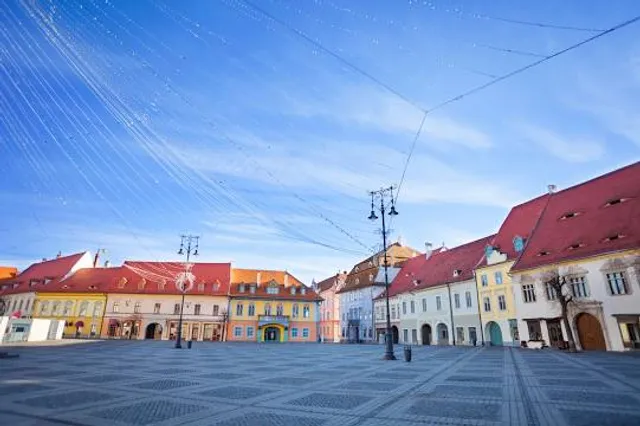
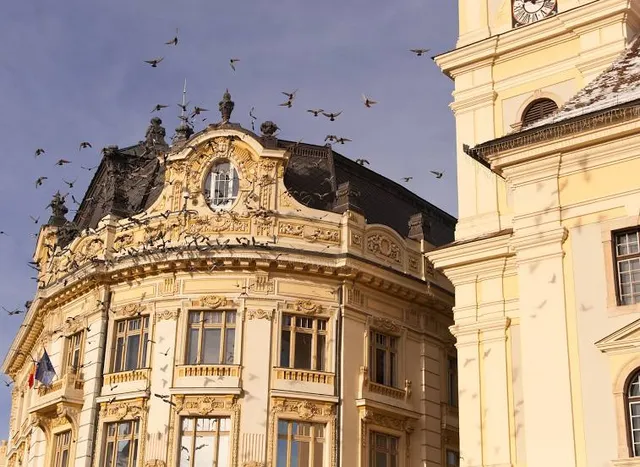
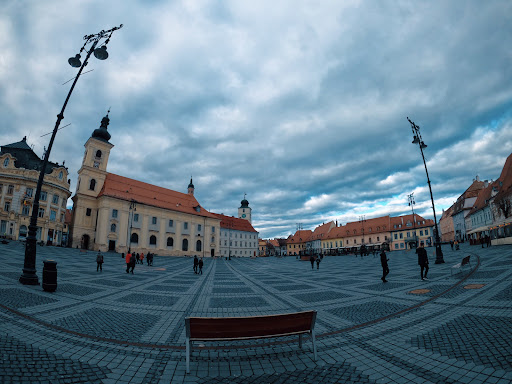
Big Square is Sibiu’s historical centre, where there are important historical monuments, many of which are part of the UNESCO patrimony.Always a handsome square famed for its imposing tower and wonderful old houses, every building in the square is a protected, historic monument.
The square is not, however, where Sibiu began. The first market square in the city was in fact around the corner in Piata Huet. Yet by the end of the 15th century, Piata Mare (or Grosse Ring, as its Saxon inhabitants called it) was very much the centre of Sibiu, hosting markets, public meetings and - often - executions.
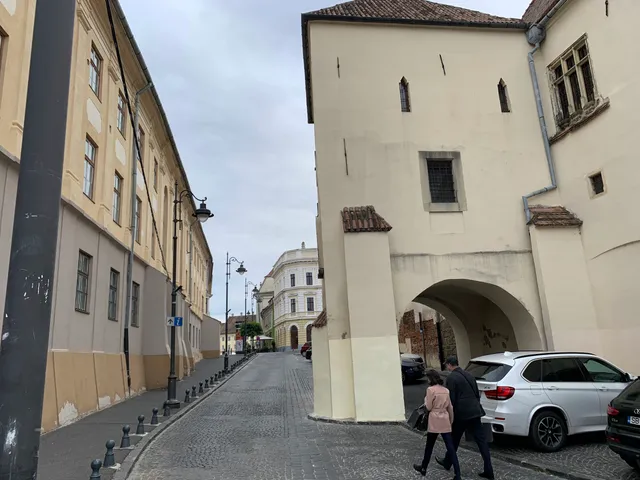
A walk around the square should probably begin at its - and old Sibiu’s - dominating feature: the Turnul Sfatului, or Council Tower. The symbol of the city, the tower was built during the late 13th century (no two historians agree on one set of exact dates) to protect an entrance to the building next door, which until the late 1490s was Sibiu’s Town Hall. The tower is open to visitors (10:00-20:00), and you can climb its steep steps to admire both the view of the city from the top, as well as the inner workings of the tower's clock on the way back down.
The bright yellow house next door, which possesses the enviable address of Piata Mare 1, dates from around 1650 and today hosts the La Turn restaurant, something of a Sibiu legend. In front of the building is a statue of Gheorghe Lazar, the son of peasants from nearby Avrig who was adopted by Samuel Brukenthal and who would go on in later life to found the first Romanian-language school in Bucharest. The fine green building behind Lazar is one of the square’s later constructions, a teaching and boarding house for would-be Roman-Catholic priests. It was built in the 1720s on the site of what had been the town’s tanners’ workshop.
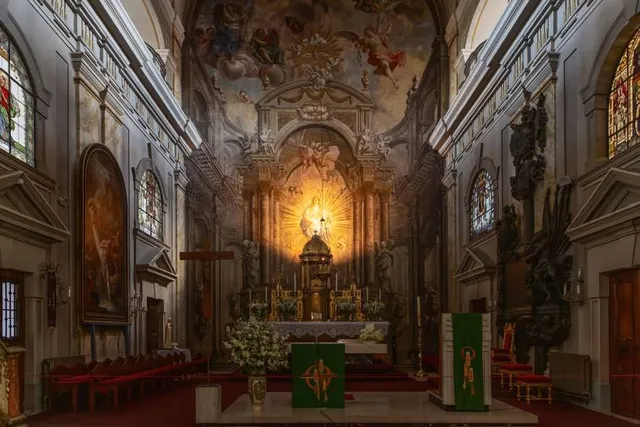
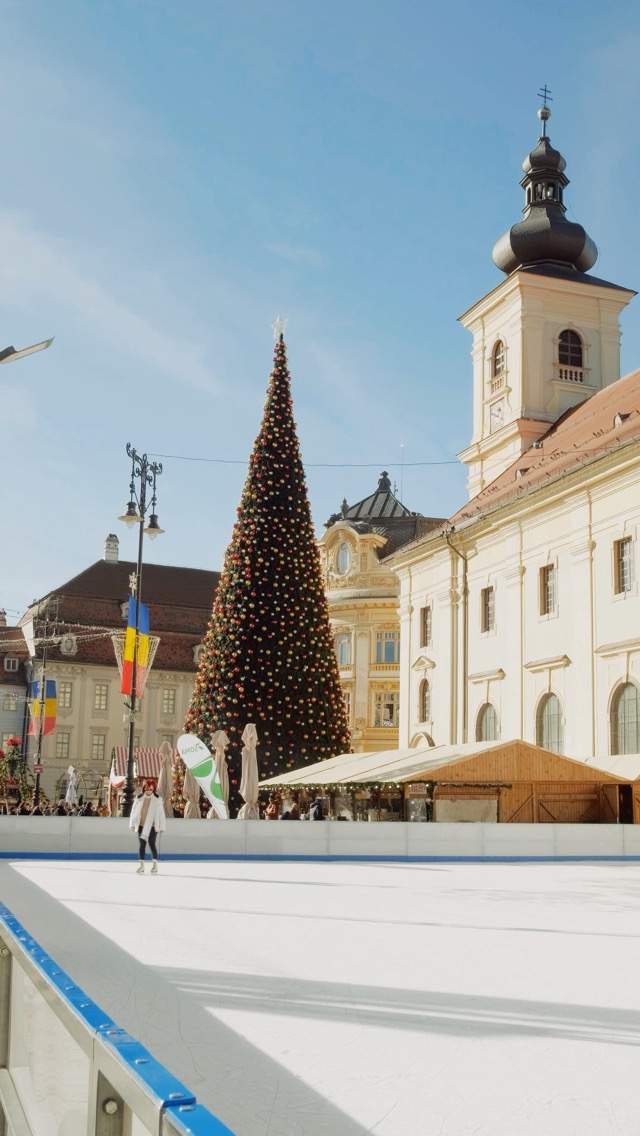
Piata Mare’s elegant baroque Catholic church was opened in 1733, although the tower was not completed until a decade later. It’s worth taking a look inside to admire the magnificent Viennese organ, installed in the 1860s.
The newest building in Piata Mare is the former bank that today plays host to the Town Hall. It was built in an eclectic, highly decorative style in 1900 and the city’s main Tourist Information Centre can be found on the ground floor.
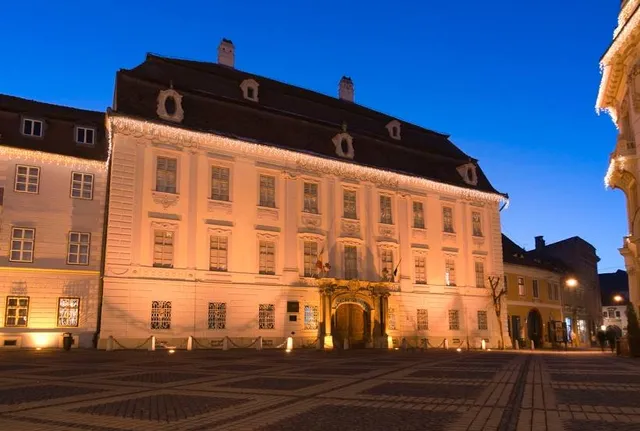
The Brukenthal Palace, today the Brukenthal Museum, was built in the late 1700s, a century after the blue house next door (a house which is known, unsurprisingly as the Casa Albastra: Blue House). It too hosts part of the Brukenthal collection and forms part of the museum. A run of smaller houses from the 19th century (one of which contains the best ice cream parlour in Sibiu) completes the western side of the square.
Having been the home for more than a century (until 1904) to the High Command of Hapsburg forces in Romania, it’s no surprise that the splendid house on the next corner of Piata Mare is known as the Casa Generalilor (The Generals’ House). The house was built in the 15th century, the passageway in the middle (which leads through to Strada Arhivelor - which is itself worth a quick look) being added later. For many people, the charming Casa Hecht next door (first built in the 1450s but given a neo-renaissance makeover many centuries later) is their favourite on the square. We will let you make your own mind up. The Casa Haller two houses along (with the lovely Haller Cafe on the ground floor) is named for its one-time owner, Petrus Haller, a Hungarian businessman who made his money from mining and construction the these parts. Note how its Romanesque portal is somewhat oversized, as if it really wants to be part of the big neo-classical house at the end of the terrace: a church property from 1802 known as the Casa Filek.
Opposite, the Casa Lutsch is the only other house on Piata Mare to boast a balcony, while - after walking past a couple of cafes, you will come to the last great house on the square, the Casa Weidner, built in the 1570s and today one of the most elegant...
Read moreThe Main Square in Sibiu has a good energy. You can pass through, visiting the Roman-Catholic church, the Brukenthal Museum, go to the library or buy something nice or you can sit on the terrace of one of the restaurants, drink a fresh, a coffee or eat an yogurt at Refresh, eat at one of the restaurants and connect to the heart of Sibiu. At daytime you will be accompanied by pigeons and in the evening by seagulls. There is even a shop with children's clothing for the ones playing near the fountain and getting wet in summer.
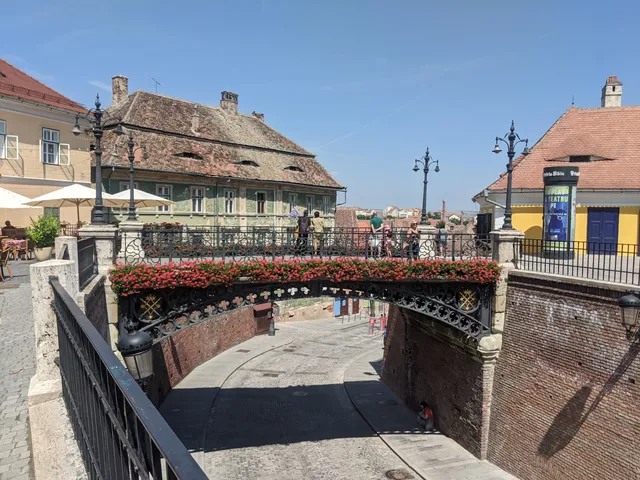
The Main Square also connects with the old town part passing through the towers, where you can find lots of restaurants and visit Europe's first iron bridge, the Bridge of Lies or going further through a passage you find the Evanghelic Church, where you can attend one of the concerts, organ or choral, performed by the amazing Bach Choir. The Main Square connects also with Bălcescu street, the promenade for shops. After visiting the Schiller library and finding a german travel, children's or literature book, you may want to check the little pastry store on the left. They bake and sell delicious food and sweets. Then, straight ahead there are many shops, a grocery store, restaurants and pastry shops. Before entering Bălcescu street, on the right side there stands the Brukenthal Museum, former residence of the Baron of Brukenthal which you might wanna visit, or nearby there is also an interesting reptile exhibition in a yard next to the museum, a real delight for children. Following the path, straight ahead you can reach the stair passage, connecting the upper town with the old town and the market place. On the left, Mitropoliei street, with the Orthodox Cathedral, the Lutheran Church, the German Cultural Centre and the post office to visit. For the ones enjoying a more quiet retreat, from the Main Square passing the library and going through the 'Arhivelor' passage, you can find some small places to sit and further, passing the Schiller square and another passage, you arrive on the most beautiful street in Sibiu, Cetății, where you can see the Towers of Handcrafts built in medieval times, enjoy a delicious lunch at Pardon, go to a concert or ballet at Thalia Hall or just rest in the park. Enjoy your...
Read moreSibiu’s Main Square, or Piața Mare, is an absolute gem and one of the most enchanting public spaces in all of Romania. Stepping into the square feels like walking into a perfectly preserved storybook, where centuries of history blend seamlessly with modern vibrancy. Surrounded by beautifully restored pastel-colored buildings with baroque and Gothic influences, the square radiates charm and elegance at every angle. The architectural details—arched passageways, ornate facades, and the iconic Council Tower watching over the scene—create a unique sense of grandeur.
What makes Sibiu’s Main Square so special is not only its beauty but also its atmosphere. It is a living, breathing hub of culture. Whether you visit in the quiet of the morning, when the cobblestones glisten in the sun, or during the evening, when lively cafés spill into the open space and lights illuminate the buildings, the energy is captivating. Throughout the year, the square hosts concerts, festivals, and seasonal markets, turning it into the cultural heart of the city.
Visitors can enjoy a relaxed coffee at one of the many terraces, admire the fascinating “eye” windows of Sibiu’s rooftops, or simply take in the harmony of this historic place. The Main Square is timeless, unforgettable, and truly the...
Read more