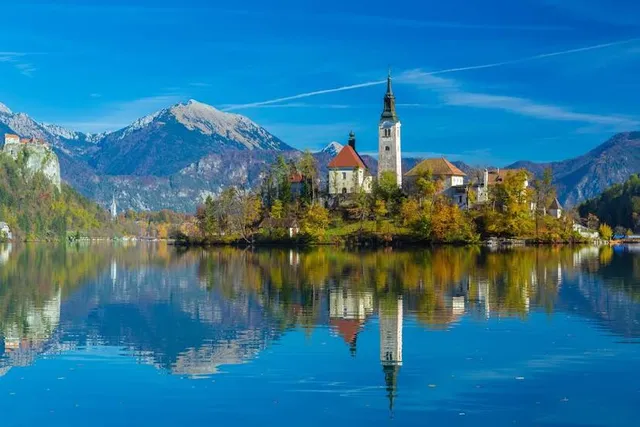
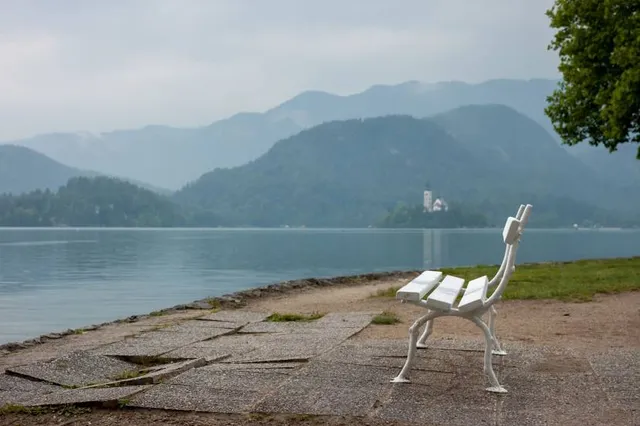
People know it as the paradise of Slovenia, and there is no doubt about that, it is the most beautiful lake in Europe without a doubt, it is "Lake Bled" located in the Alps in northwestern Slovenia, and adjacent to the city of Bled, which is 50 kilometers from the capital Ljubljana, and is famous for its crystal clear waters and mild climate that made it one of the most visited tourist places in Slovenia. My visit to Lake Bled was not limited to enjoying its natural beauty, but extended to practicing many outdoor activities, as the lake is surrounded by a 6-kilometer wooden walkway, through which we were able to explore Bled from the lake side on foot in a tour that took about an hour and a half.
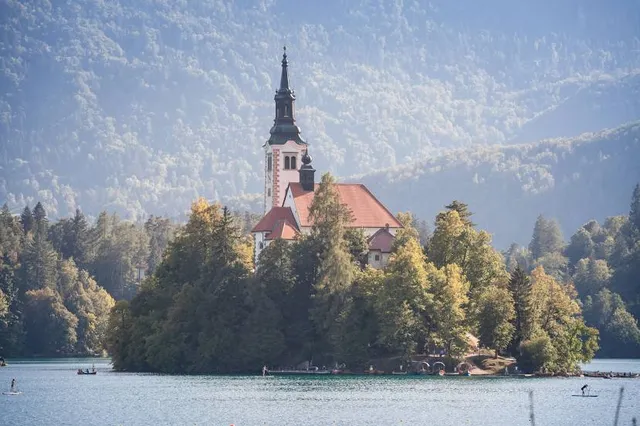
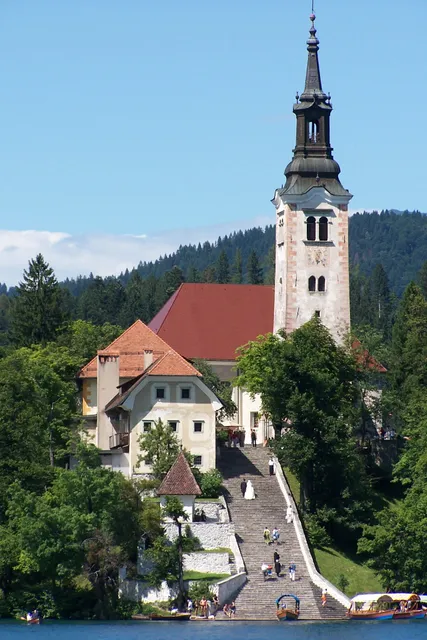
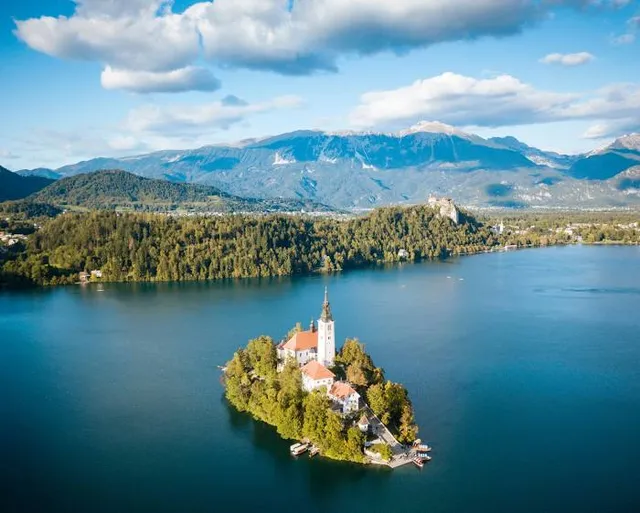
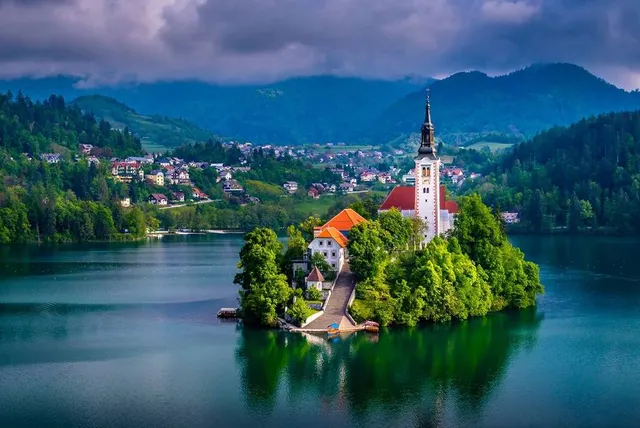
If you are lucky and visit Lake Bled between June and September, you can enjoy swimming or rowing boats spread out on the lake, as the weather is relatively warm during this period. The most wonderful adventure I had during my wonderful visit was the experience of paragliding over the lake. All you need to have such an adventure is a strong heart and an adrenaline rush. When the paraglider takes off and starts flying over the blue lake surrounded by picturesque green spaces, you will feel like you are in another world. One of the wonders of Lake Bled is that it contains the only natural island in Slovenia. You can visit the island by riding the "Pletna" boats designated to reach it. Despite the small size of the island, it contains a group of old buildings, the most famous of which is the church, which requires climbing 99 steps to reach its top and enjoy a wonderful view from above. You can enter the church by paying a ticket worth 6 euros. The church is considered a suitable place for holding wedding parties, and you may encounter one of these parties when you visit it. Lake Bled is known as the “Lake of Legends”, as it is associated with a number of ancient legends, such as the legend of wishes, which is famous for the church on the island, which says that the church bell grants a wish to whoever rings it. Do not be surprised when you hear the sound of the bell ringing repeatedly, as everyone rushes to ring it in the hope of fulfilling their wishes. The story of the legend began 500 years ago, when a widow made a bell to commemorate the memory of her late husband. While transporting the bell across the lake, a storm hit the lake, sinking the boat, the bell, and all its passengers. The Pope then installed a bell for the church to commemorate their memory. The highest view of Lake Bled is at a height of 130 meters, where "Bled Castle" is located, which is considered the oldest castle in the history of Slovenia and is more than 1000 years old. You can enter it with a ticket of 10 euros. Reaching its upper balcony requires climbing many stairs, but the charming view overlooking the lake from above is worth the effort and waiting. If you are looking for a romantic dinner experience, I advise you to try one of the restaurants and cafes located in the castle. I also advise you to eat the "Original Bled Cake" known as "Kremsnita", which is a wonderful cake characterized by the taste of lemon peel. To ensure that you enjoy your visit to Lake Bled, be sure to rent one of the apartments or stay in one of the hotels overlooking the lake to enjoy its beautiful and calm views throughout the trip, and be sure that you will not...
Read moreLake Bled is situated in the Julian Alps in northwestern Slovenia, near the town of Bled. It's renowned for its crystal-clear turquoise waters, surrounded by forested hills and overlooked by the medieval Bled Castle. The lake covers an area of approximately 1.45 square kilometers (0.56 square miles) and reaches a maximum depth of around 30 meters (98 feet).
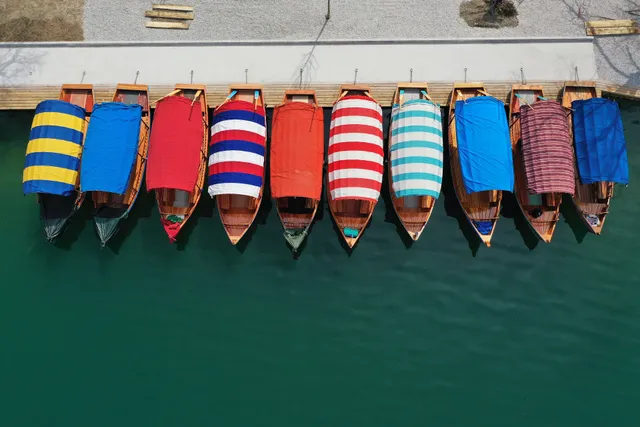
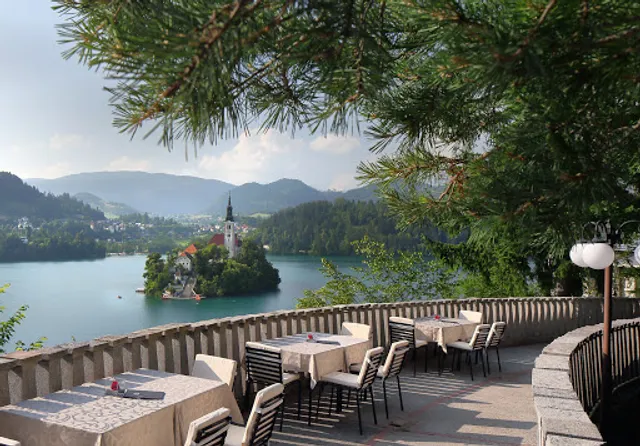
One of the most iconic features of Lake Bled is Bled Island, located near the western shore. On the island stands the Church of the Assumption, a small picturesque church with a tall tower. Visitors can reach the island by traditional wooden boats known as pletnas, which are operated by local rowers.
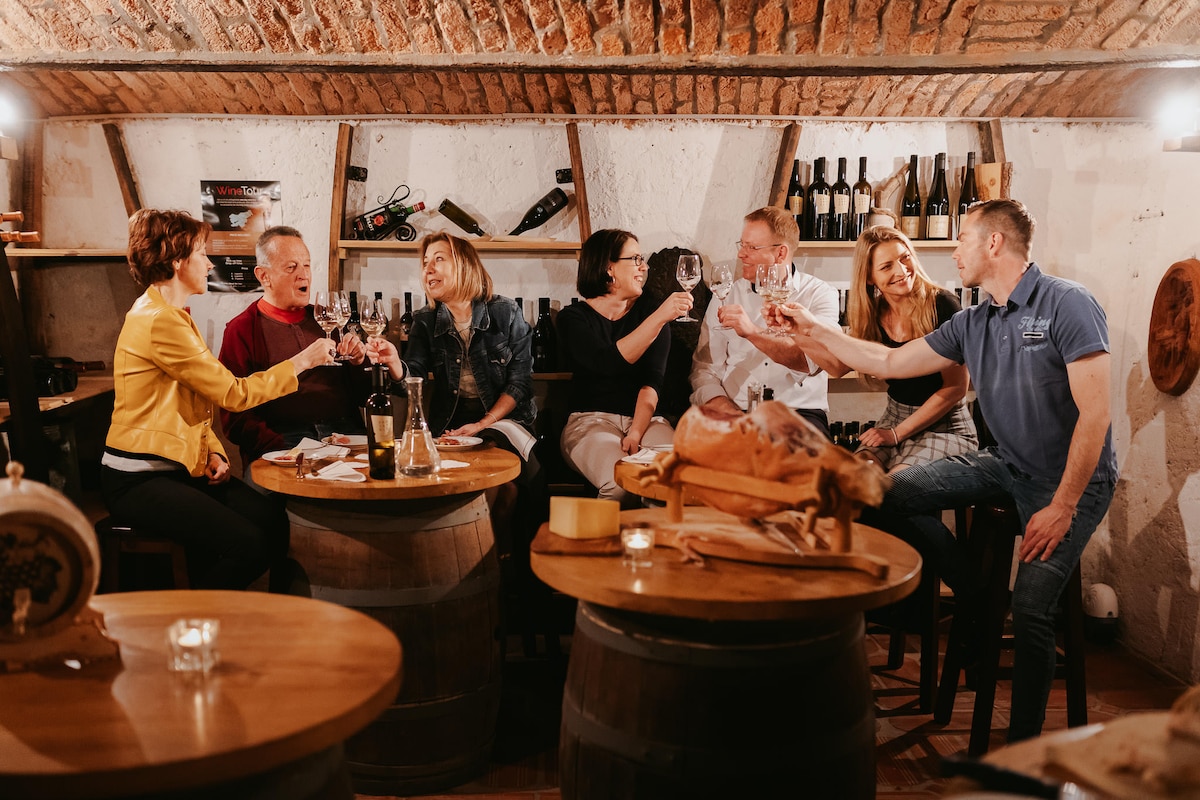
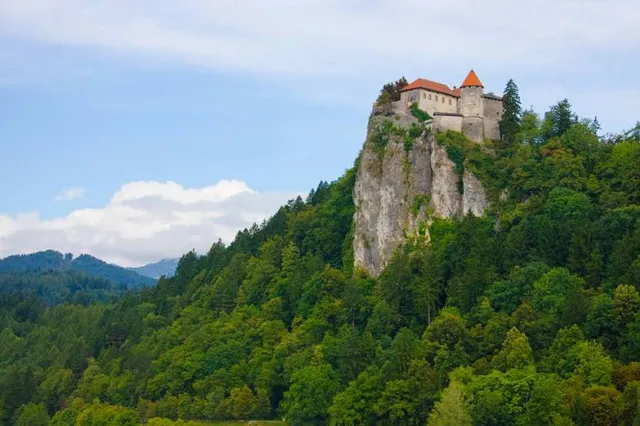
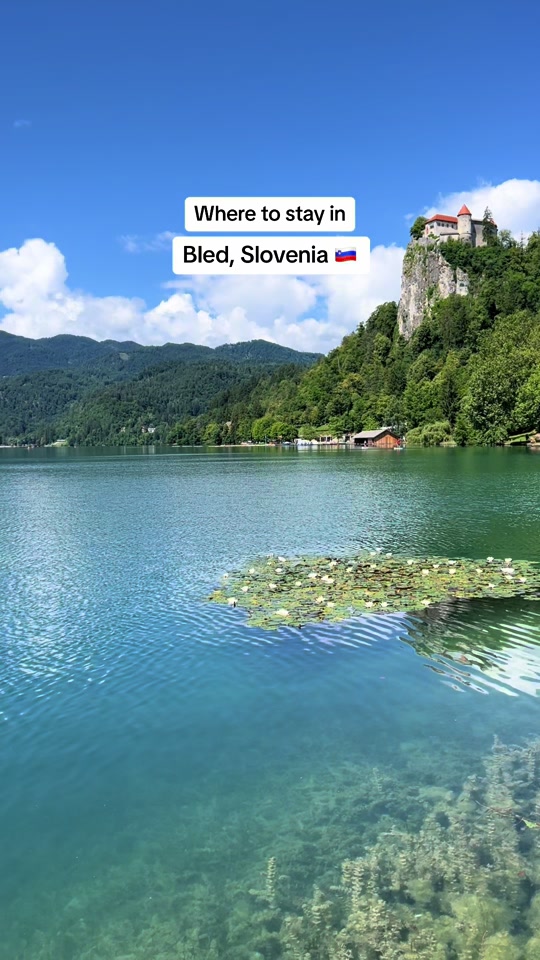
Bled Castle, perched on a steep cliff above the lake, offers panoramic views of the surrounding area. The castle houses a museum, a printing press, a wine cellar, and a restaurant.
Tourists often engage in activities such as walking or cycling around the lake, hiking in the surrounding hills, swimming in the summer months, and enjoying traditional Slovenian cuisine at the lakeside restaurants.
The area around Lake Bled also offers opportunities for exploring nearby attractions such as Vintgar Gorge, Triglav National Park, and the historic town of Radovljica.
The area around the lake has been inhabited since prehistoric times, with evidence of early settlements dating back to the Neolithic period.
One of the earliest recorded mentions of Bled dates to the 11th century when Bled Castle was built on a rocky cliff overlooking the lake. Over the centuries, the castle served various purposes, including as a defensive stronghold and a residence for nobility.
In the Middle Ages, Bled Castle became an important administrative center for the region, and the surrounding area developed as a pilgrimage site due to the presence of the Church of the Assumption on Bled Island.
During the Renaissance and Baroque periods, Bled gained further prominence as a cultural and religious center. Pilgrims flocked to the island to visit the church, and the area became known for its healing properties.
In the 19th century, Bled began to attract tourists drawn to its natural beauty and therapeutic waters. The construction of hotels and spas around the lake facilitated the growth of tourism, and Bled became a popular destination among European aristocrats and intellectuals.
Following World War II, Bled became part of Yugoslavia and continued to develop as a tourist destination under socialist rule. The Yugoslav leader Josip Broz Tito frequently visited Bled, hosting international conferences and meetings at Bled Castle.
Since Slovenia gained independence in 1991, Lake Bled has remained a popular tourist destination, attracting visitors from around the world with its stunning scenery, outdoor activities, and cultural heritage. The lake and its surrounding area are now protected as a natural and cultural monument, ensuring that its rich history and beauty are preserved for future...
Read moreLake Bled is a image of paradise for me. This Alpine lake with the only island in Slovenia has been a world-renowned paradise for centuries, impressing visitors with its natural beauty, wealth of legend, and special powers to restore well-being. I looked out at the lake from a castle on a cliff when I visited here and then I go to the island on a traditional “pletna” boat. These traditional wooden boats – pletnas – have been taking visitors to the island in the middle of the lake for centuries. These boats are operated by standing rowers known as pletnars. After landing, I was climbed to the 99 stone steps to reach the Assumption of Mary Church. On this island, which is the subject of legendary tales, I listened to the church bell and ring it myself. Legend has it that this will make our wishes come true. When I returned to the lake shore, I viewed the island on the lake from the castle plus from the walking and horse-carriage trails that lead me around the lake. I enjoyed a ride with Bled coachmen, known as fijakers. The church bell, made in the early 16thcentury, is said to have come from the pope himself. The story goes that he gave it to the church after the original bell, sent to the island by an inconsolable widow in remembrance of her late husband, ended up sinking to the bottom of the lake in a storm. So, Bled really has a pair of legendary bells: the one in the church and the one on the bottom of the lake. The legend about the sunken bell is brought to life every year by a special Christmas event. The most beautiful view of the lake, its island, and the surrounding peaks is from the castle towering over the lake on a cliff. Due to its beauty, it is considered to be one of the loveliest wedding venues in Europe, and it has also been the location of important diplomatic and state protocol meetings. In addition to the picturesque architecture, this 12th century castle is also home to a museum collection; a castle printing works, where we can learn about traditional manual printing; the castle cellar, where we can bottle wine and seal the bottle with wax ; a castle smithy, and a restaurant. In the summer months, we can meet a castle lord or experience an archery tournament. This is really a...
Read more