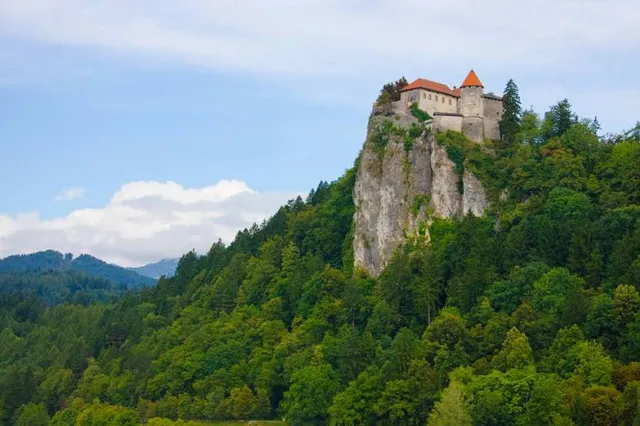
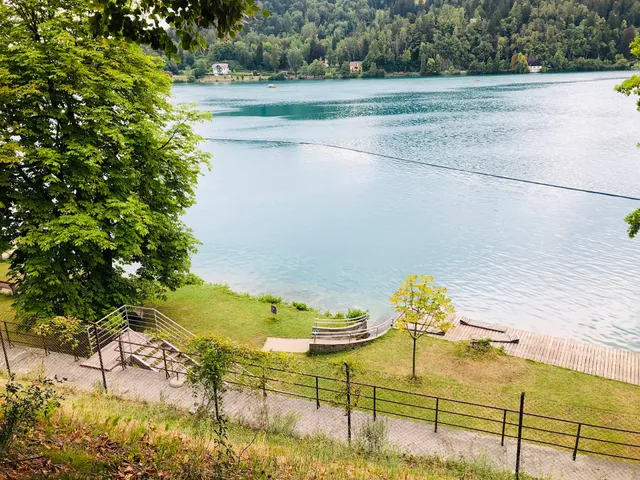
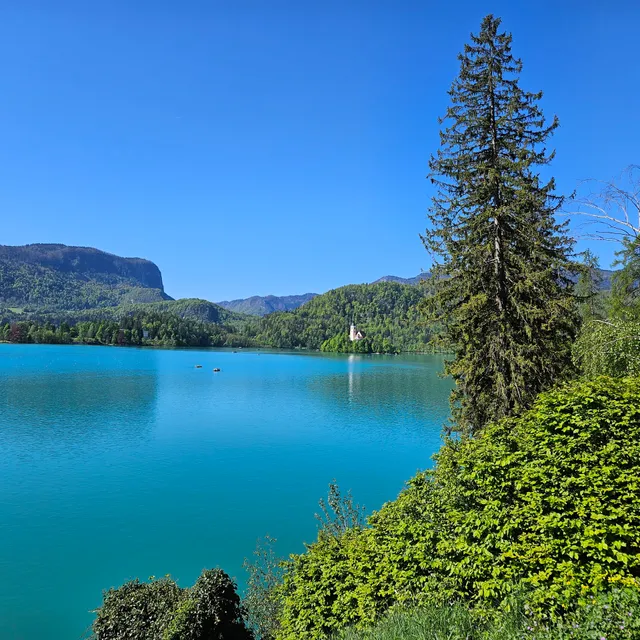
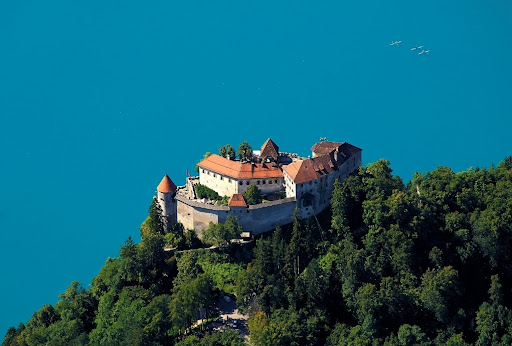
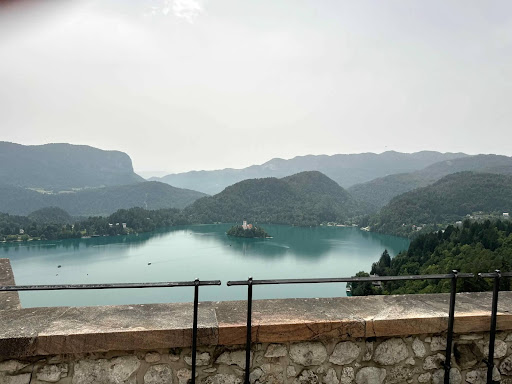
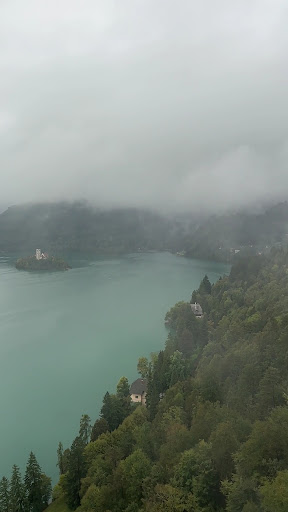
Bled Castle stands majestically atop a sheer cliff, rising dramatically above Lake Bled’s clear blue waters in northern Slovenia. Its striking location provides a panoramic vantage point over the Julian Alps and the island-dotted expanse of the lake.
Regarded as the oldest Slovenian castle, its origins trace back to early medieval times, with its first written mention in the records of 1011, when Emperor Henry II donated the estate to the Bishops of Brixen.
Over the ensuing centuries, the castle transformed from a formidable defensive stronghold into a residence for these powerful ecclesiastical rulers, remaining under their stewardship for almost eight hundred years before passing to the House of Habsburg, which introduced further structural enhancements and stylistic changes reflecting shifts in military technology and domestic needs.
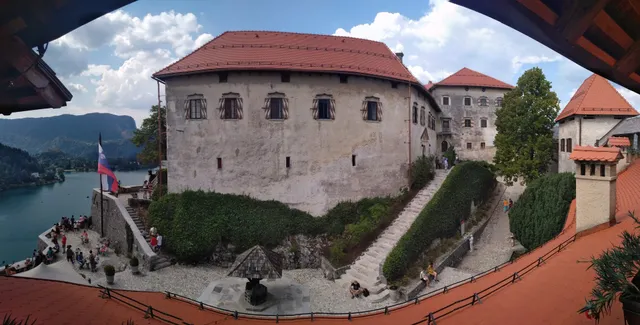
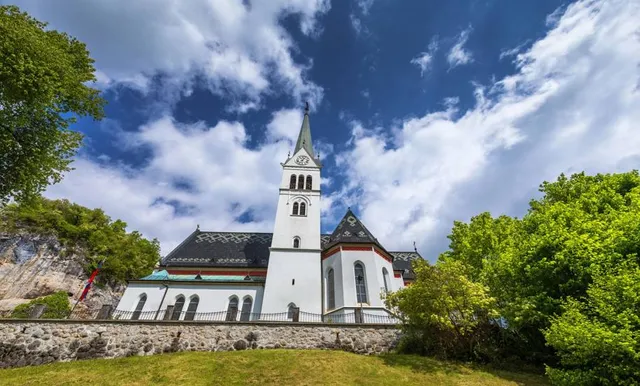
The earliest surviving features of Bled Castle exemplify Romanesque architecture: solid, thick-walled watchtowers and sturdy ramparts meant to withstand siege warfare. Later expansions brought in Gothic flourishes to window contours and decorative details, while the Renaissance era saw the addition of residential wings, arranged harmoniously around two central courtyards linked by a broad stone staircase. Within the upper courtyard rests a charming chapel, built in the sixteenth century and refreshed around 1700 with painted illusionistic frescoes, offering visitors a glimpse of pastoral piety from a bygone era.
The castle’s entrance is guarded by a restored drawbridge spanning a moat, underscoring its medieval defensive character.
Inside, a compact museum presents the millennia-spanning history of the region, with exhibits chronicling Lake Bled’s shifting fortunes from prehistoric times through the Middle Ages to the present day.
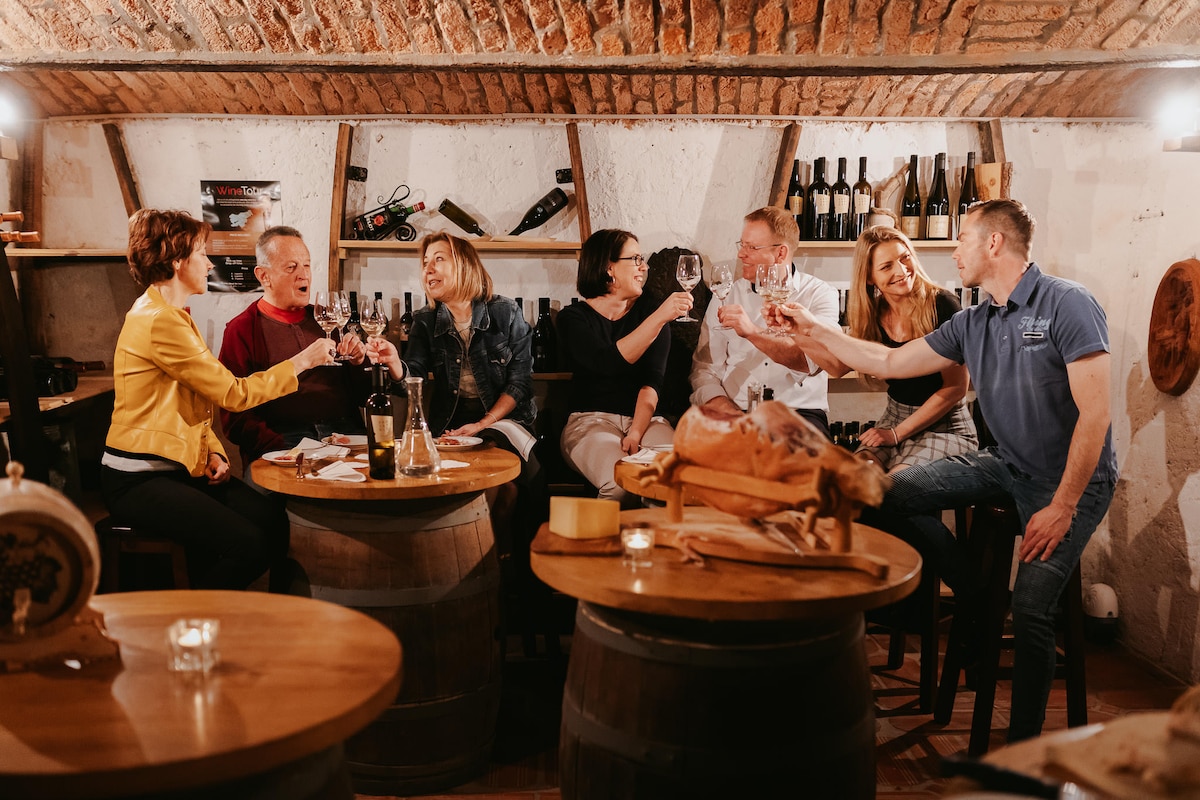
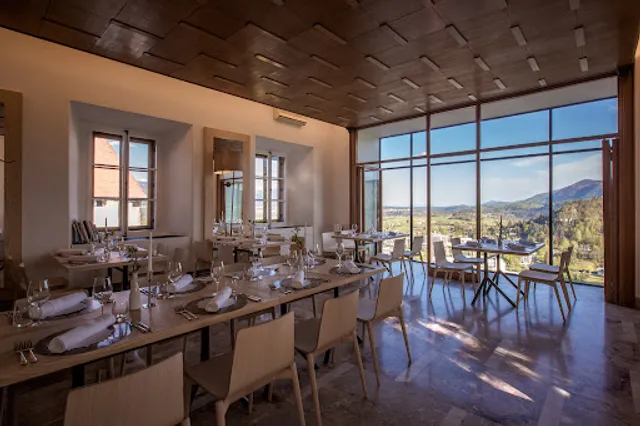
The castle’s historic chambers and cellars now house a restaurant, a honey shop, wine cellar, and even a traditional printing works, inviting guests to savor local flavors while gazing over the lake’s unforgettable vistas.
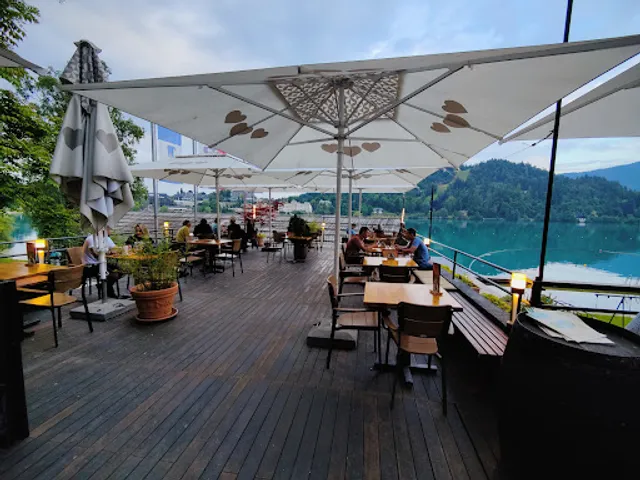
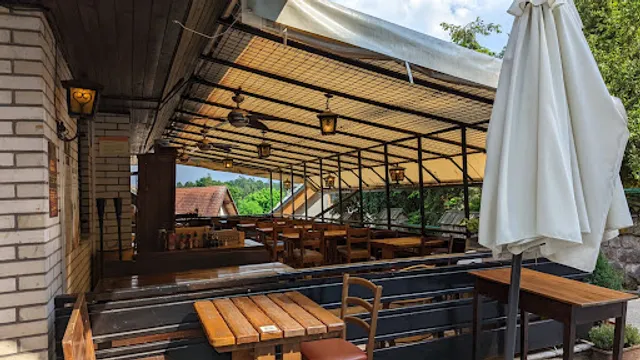
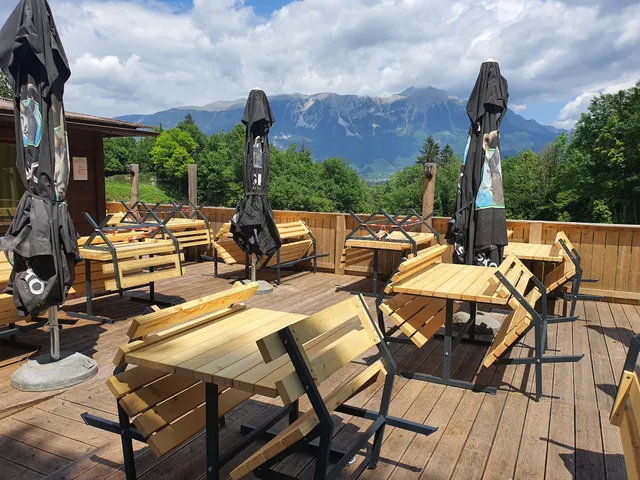
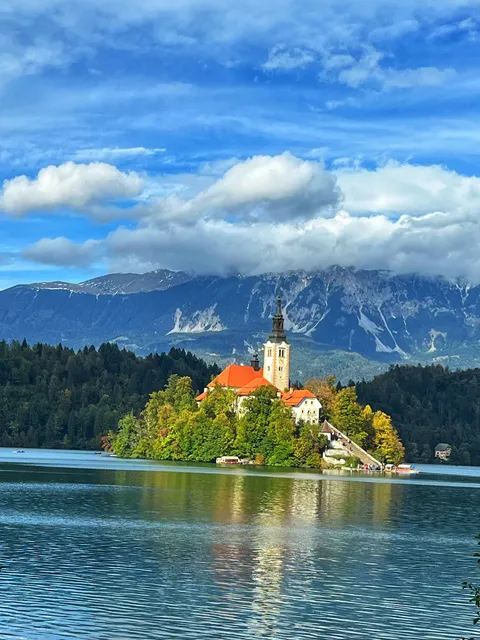
Outdoor terraces spill from the ramparts, where one can soak in the sight of tranquil waters, wooded slopes, and the picturesque Church of the Assumption perched on Lake Bled’s island.
Reaching the castle is a pleasant undertaking, beginning with a well-signposted drive through the town followed by a scenic walk up the hillside. The ascent is rewarded by the crisp mountain air and a succession of striking perspectives, each revealing more of the alpine landscape and shimmering lake below.
The castle’s position atop its cliff makes it a beacon visible from nearly everywhere in Bled, drawing countless visitors each year for its romantic beauty, historical depth, and cultural resonance as a symbol of the region’s endurance and charm.
Within the castle precincts, events regularly enliven the ancient halls, from medieval-themed festivities and concerts to elegant wedding ceremonies and exclusive gatherings, infusing contemporary life into its venerable stones.
The ambiance is both welcoming and steeped in history, with every chamber and pathway seeming to echo the centuries of guardianship, legend, and lived experience that have shaped Bled Castle into a living monument at the heart of...
Read moreWe hadn’t planned to go to the castle on our cruise excursion to Lake Bled, but seeing the fortress overlooking the lake, my family unanimously voted to skip Ljubljana and go there instead. I was surprised because my teens tend to burn out on castles, but they love a good view and this was one of the best.
I can’t say enough about the beautiful view. We went on a Sunday toward the end of June, but it wasn’t crowded and we were able to take as many pictures as we wanted without jostling for space.
This was the pricier option for the day at 17 euro for adults and 11 for students, but we try to think of the cost for this sort of thing as going directly to the upkeep of the land and historical buildings and we feel better.
Before you even get to the view, though, is perhaps the most fun part of the estate, the Print Works. It was definitely my daughter’s favorite stop. They have a working Guttenberg press, busily printing out customized souvenirs. Guests pick the paper, the artwork, the writing. The printer sets the type and then the guest get to push the enormous crank and press in their chosen wax seal. Everyone should stop and watch, but if you have kids (even big ones) I recommend taking the time to let them make their own creation.
The inside of the castle isn’t furnished like most of the castles and palaces you might visit, but apparently Slovenian castles have been ransacked so none of the historical furniture survived. Instead the castle is a museum, both to the history of the castle, Bled in general, and the natural science of the area. There are even some delightfully awful wax statues dressed as the people from their past.
After our tour, we stopped at the coffeehouse for a must when traveling to Bled, Bled Cake, a delicious custard and puff pastry confection. We also had their lemonade, though fellow Americans should be prepared to add sugar.
Overall we are glad we...
Read morePerched atop a steep cliff above emerald-green Lake Bled, Bled Castle (Blejski grad) is a medieval castle above the city of Bled in Slovenia, overlooking Lake Bled. According to written sources, it is the oldest Slovenian castle and is currently one of the most visited tourist attractions in Slovenia, captivates visitors with its magnificence, stunning location, and breath-taking views. Nowadays, the castle is employed as a historical museum with a collection that represents the lake's history.
Bled Castle, a symbol of Bled and Slovenia, ranks among the country’s best-preserved and maintained citadels. The first written mention of the castle dates back to 22 May 1011, in a deed of donation issued by Emperor Henry II in favour of the Bishops of Brixen. Ever since, the castle has been an integral part of the broader Central European area and a vibrant cultural centre. Bled Castle is where the past meets the present and the future.
The oldest part of the castle is the Romanesque tower. In the Middle Ages more towers were built and the fortifications were improved. Other buildings were constructed in the Renaissance style. The buildings are arranged around two courtyards, which are connected with a staircase. There is a chapel in the upper courtyard, which was built in the 16th century and renovated around 1700, when it was also painted with illusionist frescoes. The castle also has a drawbridge over a moat...
Opening Hours (the castle is open every day, including Sundays and public holidays) JAN, FEB, MAR, APR, OCT, NOV, DEC: 8am–6pm MAY, JUN, JUL, AUG, SEP: 8am–8pm
Entrance fee Adults: EUR 13.00 (Group of 10: EUR 10.50) Students: EUR 8.50 (Group of 10: EUR 7.50) Children aged 14 or younger: EUR 5.00 (Group of 10: EUR 4.50)
Some photos courtesy of...
Read more