HTML SitemapExplore

National Museum of Modern and Contemporary Art, Seoul — Attraction in Seoul

Name
National Museum of Modern and Contemporary Art, Seoul
Description
Nearby attractions
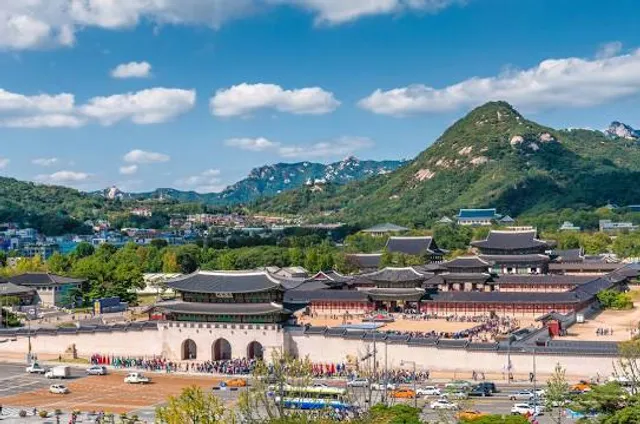
Gyeongbokgung Palace
161 Sajik-ro, Jongno District, Seoul, South Korea
Art Sonje Center
87 Yulgok-ro 3-gil, Jongno District, Seoul, South Korea
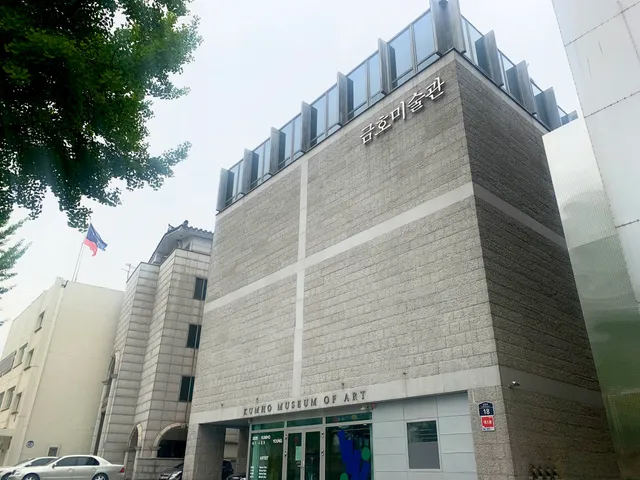
Kumho Museum of Art
18 Samcheong-ro, Jongno District, Seoul, South Korea
Kukje Gallery
54 Samcheong-ro, Jongno District, Seoul, South Korea
The National Folk Museum of Korea
37 Samcheong-ro, Jongno District, Seoul, South Korea
Gallery Hyundai
14 Samcheong-ro, Jongno District, Seoul, South Korea
Hakgojae
50 Samcheong-ro, Sogyeok-dong, Jongno District, Seoul, South Korea
Studio KJD
33 Bukchon-ro 5ga-gil, Jongno District, Seoul, South Korea
Bukchon Hanok Village
Gyedong-gil, Jongno District, Seoul, South Korea
Seoul Education Museum
48 Bukchon-ro 5-gil, Jongno District, Seoul, South Korea
Nearby restaurants
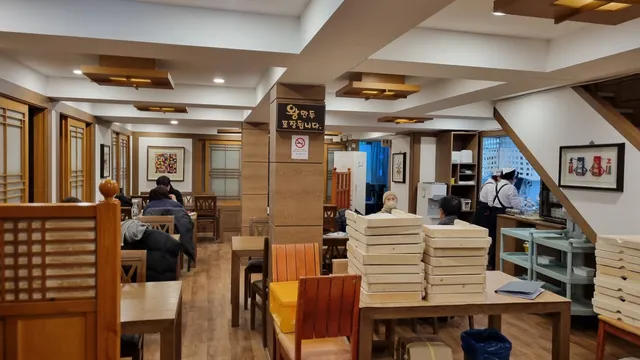
Hwangsaengga Kalguksu
78 Bukchon-ro 5-gil, Jongno District, Seoul, South Korea
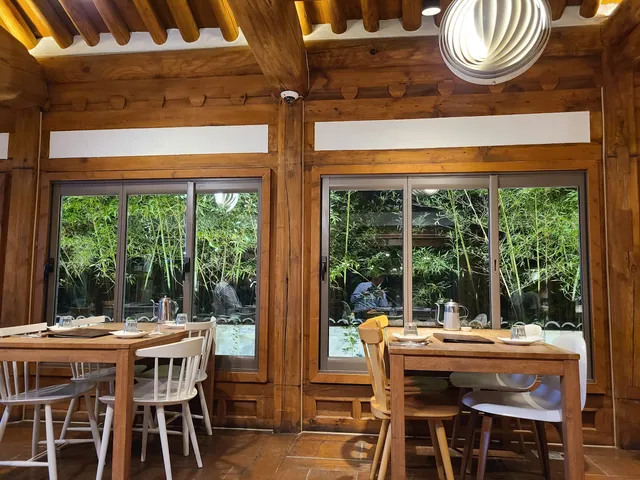
Smith Hanok
22-7 Samcheong-ro, Jongno District, Seoul, South Korea
HOME KOREAN CUISINE
South Korea, Seoul, Jongno District, Samcheong-ro, 22-9 1층
Gyeongchunja Ramen
138-21 Hwa-dong, Jongno District, Seoul, South Korea
Dot Blanket Samcheong Hanok Branch
38 Samcheong-ro 2-gil, Jongno District, Seoul, South Korea
Kizuna (키즈나)
78 Yulgok-ro 1-gil, Samcheong-dong, Jongno District, Seoul, South Korea
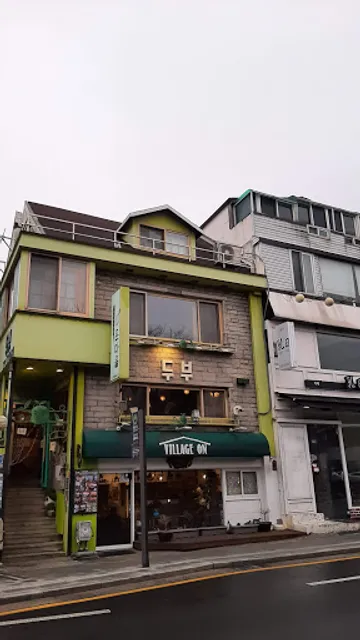
Dugahun
14 Samcheong-ro, Jongno District, Seoul, South Korea
Sky Gimbap
66-5 Yulgok-ro 3-gil, Jongno District, Seoul, South Korea
Cheonggukjang Bap
29-5 Samcheong-ro 2-gil, Jongno District, Seoul, South Korea
Dora Bowl
54 Bukchon-ro 5-gil, Jongno District, Seoul, South Korea
Nearby hotels
Gongsimga Hanok Guesthouse
46 Yulgok-ro 1-gil, Jongno District, Seoul, South Korea
Woo Guest House
South Korea, Seoul, Jongno District, 사간동 66
Somerset Palace Seoul
7 Yulgok-ro 2-gil, Jongno District, Seoul, South Korea
Nine Tree by Parnas Seoul Insadong
49 Insadong-gil, Jongno District, Seoul, South Korea
88Guesthouse
88 Palpan-dong, Jongno District, Seoul, South Korea
삼청동 코리아게스트하우스
12-1 Samcheong-ro 4-gil, Hwa-dong, Jongno District, Seoul, South Korea
Shilla Stay Gwanghwamun
8층, G타워, 71 Sambong-ro, Jongno District, Seoul, South Korea
Rakkojae Seoul Main Hanok
218 Gahoe-dong, Jongno District, Seoul, South Korea
STAY256 Hanok Guesthouse
104-10 Palpan-dong, Jongno District, Seoul, South Korea
Bonum 1957 Hanok Stay and Hotel
53 Bukchon-ro, Jongno District, Seoul, South Korea
Related posts
Keywords
National Museum of Modern and Contemporary Art, Seoul tourism.National Museum of Modern and Contemporary Art, Seoul hotels.National Museum of Modern and Contemporary Art, Seoul bed and breakfast. flights to National Museum of Modern and Contemporary Art, Seoul.National Museum of Modern and Contemporary Art, Seoul attractions.National Museum of Modern and Contemporary Art, Seoul restaurants.National Museum of Modern and Contemporary Art, Seoul travel.National Museum of Modern and Contemporary Art, Seoul travel guide.National Museum of Modern and Contemporary Art, Seoul travel blog.National Museum of Modern and Contemporary Art, Seoul pictures.National Museum of Modern and Contemporary Art, Seoul photos.National Museum of Modern and Contemporary Art, Seoul travel tips.National Museum of Modern and Contemporary Art, Seoul maps.National Museum of Modern and Contemporary Art, Seoul things to do.
National Museum of Modern and Contemporary Art, Seoul things to do, attractions, restaurants, events info and trip planning
National Museum of Modern and Contemporary Art, Seoul
South KoreaSeoulNational Museum of Modern and Contemporary Art, Seoul

Basic Info

National Museum of Modern and Contemporary Art, Seoul

30 Samcheong-ro, Jongno District, Seoul, South Korea
4.6(1.7K)
Open 24 hours
Save
spot

Ratings & Description

Info

Cultural
Entertainment
Family friendly
Accessibility
attractions: Gyeongbokgung Palace, Art Sonje Center, Kumho Museum of Art, Kukje Gallery, The National Folk Museum of Korea, Gallery Hyundai, Hakgojae, Studio KJD, Bukchon Hanok Village, Seoul Education Museum, restaurants: Hwangsaengga Kalguksu, Smith Hanok, HOME KOREAN CUISINE, Gyeongchunja Ramen, Dot Blanket Samcheong Hanok Branch, Kizuna (키즈나), Dugahun, Sky Gimbap, Cheonggukjang Bap, Dora Bowl
logoLearn more insights from Wanderboat AI.
Phone
+82 2-3701-9500
Website
mmca.go.kr

Plan your stay

hotel
Pet-friendly Hotels in Seoul
Find a cozy hotel nearby and make it a full experience.

hotel
Affordable Hotels in Seoul
Find a cozy hotel nearby and make it a full experience.

hotel
The Coolest Hotels You Haven't Heard Of (Yet)
Find a cozy hotel nearby and make it a full experience.

hotel
Trending Stays Worth the Hype in Seoul
Find a cozy hotel nearby and make it a full experience.

Reviews

Nearby attractions of National Museum of Modern and Contemporary Art, Seoul

Gyeongbokgung Palace

Art Sonje Center

Kumho Museum of Art

Kukje Gallery

The National Folk Museum of Korea

Gallery Hyundai

Hakgojae

Studio KJD

Bukchon Hanok Village

Seoul Education Museum

Gyeongbokgung Palace

Gyeongbokgung Palace

4.6

(16.8K)

Open 24 hours
Click for details
Art Sonje Center

Art Sonje Center

4.3

(131)

Open 24 hours
Click for details
Kumho Museum of Art

Kumho Museum of Art

4.3

(154)

Open 24 hours
Click for details
Kukje Gallery

Kukje Gallery

4.4

(251)

Open 24 hours
Click for details

Things to do nearby

Seoul Pub Crawl
Seoul Pub Crawl
Thu, Jan 8 • 8:00 PM
Seoul, Mapo-gu, 04049, South Korea
View details
Explore KNight life - kpop and food K-drinks/game
Mon, Jan 12 • 7:00 PM
Seoul, seoul, 04039, South Korea
View details
Craft Your Own Natural Niche Perfume in Hongdae
Fri, Jan 9 • 2:00 PM
Seoul, Seoul, 04073, South Korea
View details
Nearby restaurants of National Museum of Modern and Contemporary Art, Seoul

Hwangsaengga Kalguksu

Smith Hanok

HOME KOREAN CUISINE

Gyeongchunja Ramen

Dot Blanket Samcheong Hanok Branch

Kizuna (키즈나)

Dugahun

Sky Gimbap

Cheonggukjang Bap

Dora Bowl

Hwangsaengga Kalguksu

Hwangsaengga Kalguksu

4.2

(1.4K)

$

Click for details
Smith Hanok

Smith Hanok

4.2

(432)

$$$

Click for details
HOME KOREAN CUISINE

HOME KOREAN CUISINE

4.7

(120)

Click for details
Gyeongchunja Ramen

Gyeongchunja Ramen

4.1

(281)

Click for details
Get the Appoverlay
Get the AppOne tap to find yournext favorite spots!
Wanderboat LogoWanderboat

Your everyday Al companion for getaway ideas

CompanyAbout Us
InformationAI Trip PlannerSitemap
SocialXInstagramTiktokLinkedin
LegalTerms of ServicePrivacy Policy

Get the app

© 2025 Wanderboat. All rights reserved.

Reviews of National Museum of Modern and Contemporary Art, Seoul

4.6
(1,692)
avatar
5.0
14w

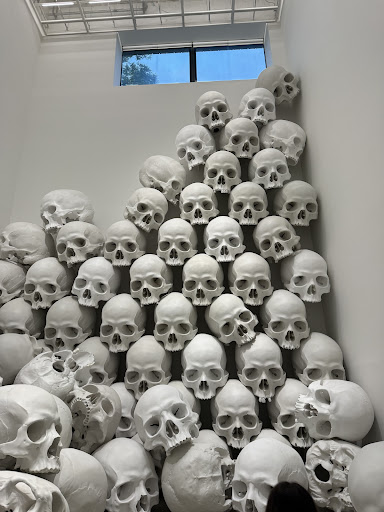
Seeing Ron Mueck’s work for the second time—first at Melbourne’s NGV, later at Seoul’s MMCA—was like revisiting a text in a new translation. The works were the same in essence: hyperreal sculptures on a monumental or intimate scale, unnervingly detailed, confronting mortality and vulnerability. Yet the shift in setting and cultural atmosphere transformed the encounter, revealing new dimensions of his art.

At NGV Melbourne, my first impression was one of shock and awe. Mueck’s sculptural distortions—giants crouching, shrunken figures lying prone—felt like dramatic case studies in scale. I experienced them with the analytical curiosity of an amateur art enthusiast, mapping them against economic ideas of proportion, marginal perception, and the distortion of scale in markets.

In Seoul, the encounter was more reflective. The MMCA’s austere spaces invited contemplation rather than spectacle. Here, Mueck’s figures felt less like anomalies and more like quiet meditations—embodied reminders of fragility, isolation, and the fleetingness of life. Where Melbourne emphasized the theatricality of scale, Seoul emphasized the intimacy of detail.

The second viewing taught me something important: repetition is not redundancy. Just as economists study the same data series across contexts and uncover new insights depending on framing, seeing Mueck in different cultural environments revealed the elasticity of interpretation. His works were no longer simply “larger-than-life” or “smaller-than-life” experiments—they became studies in how perception itself is shaped by setting.

The Seoul show sharpened my appreciation of the disequilibrium his sculptures create. We are accustomed to human bodies conforming to expectations of proportion. Mueck strips that equilibrium away. The unease is the art. As an economist, this felt like watching a market shock unfold in physical form: unsettling, irrational, but deeply revealing of underlying truths.

The MMCA framed Mueck’s work within a broader East Asian aesthetic—minimalist, contemplative, attuned to silence. Unlike the NGV, where the crowd’s energy often matched the scale of the sculptures, the Seoul audience engaged quietly, circling each piece with a reverence closer to ritual than spectacle. It was a reminder that institutions, like markets, mediate meaning: the same asset—here, a sculpture—can be priced, valued, and interpreted differently depending on its cultural exchange.

If Melbourne was initiation, Seoul was consolidation. The NGV taught me to see Mueck; the MMCA taught me to listen to him. Together, they transformed my understanding of how art, like economics, is not static but contextual—its value emerges in the interplay between object, setting, and observer. I left Seoul reminded that meaning compounds not in single encounters but across repeated, reframed...

   Read more
avatar
5.0
1y

📍Seoul, Korea 🇰🇷 National Museum of Modern and Contemporary Art المتحف الوطني للفن الحديث والمعاصر

Location and Establishment: Situated in the heart of Seoul, South Korea. Established in 1969, with the Seoul branch opening in 2013.

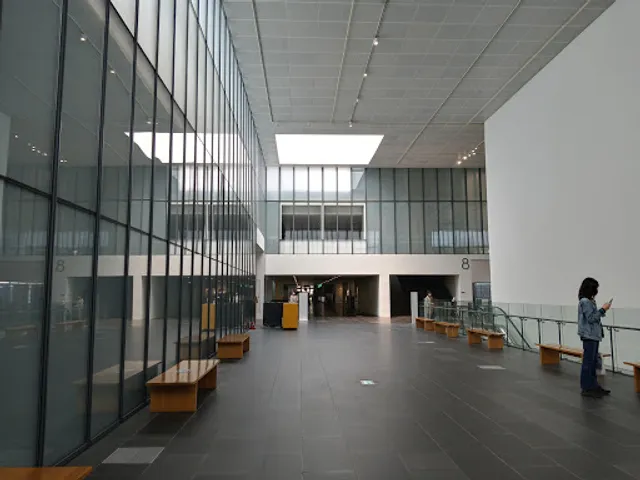
Architectural Design: Modern and minimalist architecture designed by the South Korean architect, Mihn Hyun-jun. Integrates natural light and open spaces to enhance the viewing experience.

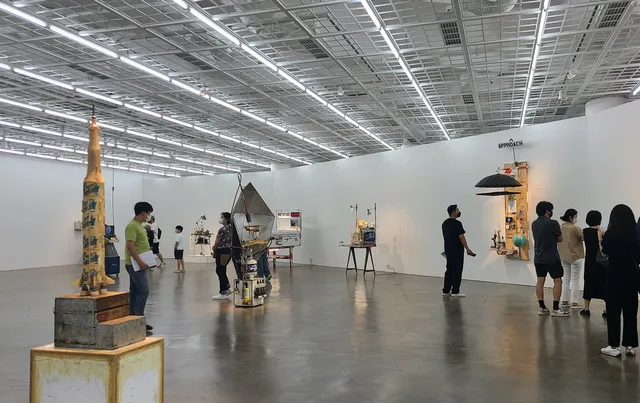
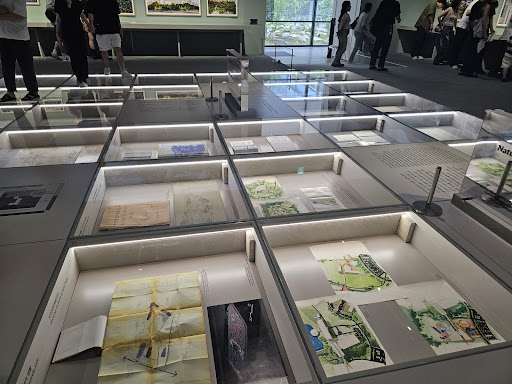
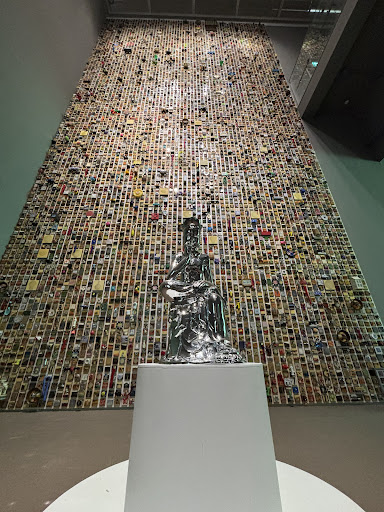
Collections and Exhibitions: Houses a diverse collection of contemporary Korean and international art. Features rotating exhibitions showcasing modern and contemporary works across various mediums, including painting, sculpture, video, installation, and digital art.

Educational Programs: Offers a range of educational programs, workshops, and lectures for all ages. Focuses on art education and cultural enrichment for the community.

Facilities and Amenities: Equipped with state-of-the-art facilities, including multiple galleries, a theater, a digital media library, and a research center. Includes cafes, a museum shop, and·1s for visitors.

Significance Plays a crucial role in promoting contemporary art and cultural exchange in Korea and internationally. Acts as a cultural hub fostering dialogue between artists, curators, and the public.

Public and Accessibility: Accessible to a broad audience, with efforts to make art accessible to everyone. Hosts various public events, including guided tours, pe 1rformances, and community activities.

·Collaborations and Partnerships:· Engages in collaborations with other international museums, galleries, and cultural institutions.Participates in global art networks to exchange exhibitions and...

   Read more
avatar
5.0
37w

국립현대미술관 서울관 (National Museum of Modern and Contemporary Art, Seoul), Güney Kore’nin başkenti Seul’de, Gyeongbokgung Sarayı’nın hemen yanında, Samcheong-dong semtinde yer alan ve 2013 yılında açılan önemli bir çağdaş sanat müzesidir. Bu müze, Kore’nin modern ve çağdaş sanatını tanıtmayı ve uluslararası sanatla etkileşim kurmayı amaçlamaktadır. 

🖼️ Mimari ve Konsept

Müze binası, eski Askeri Savunma Güvenlik Komutanlığı binasının bulunduğu alanda inşa edilmiştir. Tasarımında geleneksel Kore mimarisinin “madang” (avlu) konsepti benimsenmiş olup, iç ve dış mekânlar arasında doğal bir geçiş sağlanmıştır. Bu yaklaşım, müzenin çevresiyle uyum içinde olmasını ve ziyaretçilere açık hava etkinlikleri için alan sunmasını sağlamaktadır. 

🕒 Ziyaret Bilgileri • Adres: 30, Samcheong-ro, Jongno-gu, Seul • Çalışma Saatleri: • Pazartesi, Salı, Perşembe, Cuma, Pazar: 10:00 – 18:00 • Çarşamba ve Cumartesi: 10:00 – 21:00 (gece geç saatlere kadar açık) • Giriş Ücreti: Çoğu sergi ücretsizdir; bazı özel sergiler için ücret alınabilir.  

🖼️ Güncel Sergiler

Müze, yıl boyunca çeşitli sergilere ev sahipliği yapmaktadır. Güncel sergiler hakkında bilgi almak için müzenin resmi web sitesini ziyaret edebilirsiniz: 

🛍️ Ziyaretçi Hizmetleri • MMCA Shop: Müze lobisinde bulunan mağazada, sergilere ve müzeye özel ürünler satılmaktadır. • Sanat Kitapçısı: Çeşitli sanat kitapları ve sergi kataloglarının bulunduğu kitapçı, sanatseverler için zengin bir kaynak sunmaktadır.

🎨 Diğer MMCA Şubeleri

MMCA, Seul dışında üç farklı şehirde daha şubelere sahiptir: • Gwacheon: Ana koleksiyonların sergilendiği ve çocuk müzesinin bulunduğu merkez. • Deoksugung: Tarihi Deoksugung Sarayı içinde yer alan ve Kore modern sanatının sergilendiği şube. • Cheongju: Sanat eserlerinin korunması ve restorasyonu üzerine odaklanan merkez.  

Seul’deki MMCA, hem Kore’nin zengin sanat mirasını hem de çağdaş sanatın dinamiklerini keşfetmek isteyen ziyaretçiler için vazgeçilmez bir duraktır.

국립현대미술관 서울관 (National Museum of Modern and Contemporary Art, Seoul) is a major contemporary art museum located in the Samcheong-dong district, right next to Gyeongbokgung Palace in Seoul, the capital of South Korea, and opened in 2013. The museum aims to promote Korean modern and contemporary art and interact with international art. 

🖼️ Architecture and Concept

The museum building was built on the site of the former Military Defense Security Command building. Its design adopts the “madang” (courtyard) concept of traditional Korean architecture, creating a natural transition between the interior and exterior spaces. This approach allows the museum to blend in with its surroundings and provide visitors with space for outdoor activities. 

🕒 Visiting Information • Address: 30, Samcheong-ro, Jongno-gu, Seoul • Opening Hours: • Monday, Tuesday, Thursday, Friday, Sunday: 10:00 – 18:00 • Wednesday and Saturday: 10:00 – 21:00 (open until late) • Entrance Fee: Most exhibitions are free; some special exhibitions may charge a fee.  

🖼️ Current Exhibitions

The museum hosts various exhibitions throughout the year. For information about current exhibitions, please visit the museum's official website: 

🛍️ Visitor Services • MMCA Shop: Located in the museum lobby, the shop sells exhibition and museum-specific items. • Art Bookstore: The bookstore, which stocks a variety of art books and exhibition catalogs, offers a rich resource for art lovers.

🎨 Other MMCA Branches

MMCA has branches in three other cities outside of Seoul:

• Gwacheon: The center where the main collections are exhibited and the children's museum is located. • Deoksugung: The branch that displays Korean modern art, located in the historic Deoksugung Palace. • Cheongju: The center that focuses on the preservation and restoration of works of art.  

MMCA in Seoul is an essential stop for visitors who want to explore both Korea's rich artistic heritage and the dynamics of...

   Read more
Page 1 of 7
Previous
Next

Posts

Paul LeongPaul Leong
Seeing Ron Mueck’s work for the second time—first at Melbourne’s NGV, later at Seoul’s MMCA—was like revisiting a text in a new translation. The works were the same in essence: hyperreal sculptures on a monumental or intimate scale, unnervingly detailed, confronting mortality and vulnerability. Yet the shift in setting and cultural atmosphere transformed the encounter, revealing new dimensions of his art. At NGV Melbourne, my first impression was one of shock and awe. Mueck’s sculptural distortions—giants crouching, shrunken figures lying prone—felt like dramatic case studies in scale. I experienced them with the analytical curiosity of an amateur art enthusiast, mapping them against economic ideas of proportion, marginal perception, and the distortion of scale in markets. In Seoul, the encounter was more reflective. The MMCA’s austere spaces invited contemplation rather than spectacle. Here, Mueck’s figures felt less like anomalies and more like quiet meditations—embodied reminders of fragility, isolation, and the fleetingness of life. Where Melbourne emphasized the theatricality of scale, Seoul emphasized the intimacy of detail. The second viewing taught me something important: repetition is not redundancy. Just as economists study the same data series across contexts and uncover new insights depending on framing, seeing Mueck in different cultural environments revealed the elasticity of interpretation. His works were no longer simply “larger-than-life” or “smaller-than-life” experiments—they became studies in how perception itself is shaped by setting. The Seoul show sharpened my appreciation of the disequilibrium his sculptures create. We are accustomed to human bodies conforming to expectations of proportion. Mueck strips that equilibrium away. The unease is the art. As an economist, this felt like watching a market shock unfold in physical form: unsettling, irrational, but deeply revealing of underlying truths. The MMCA framed Mueck’s work within a broader East Asian aesthetic—minimalist, contemplative, attuned to silence. Unlike the NGV, where the crowd’s energy often matched the scale of the sculptures, the Seoul audience engaged quietly, circling each piece with a reverence closer to ritual than spectacle. It was a reminder that institutions, like markets, mediate meaning: the same asset—here, a sculpture—can be priced, valued, and interpreted differently depending on its cultural exchange. If Melbourne was initiation, Seoul was consolidation. The NGV taught me to see Mueck; the MMCA taught me to listen to him. Together, they transformed my understanding of how art, like economics, is not static but contextual—its value emerges in the interplay between object, setting, and observer. I left Seoul reminded that meaning compounds not in single encounters but across repeated, reframed experiences.
Mugahed A. Al-antariMugahed A. Al-antari
📍Seoul, Korea 🇰🇷 National Museum of Modern and Contemporary Art المتحف الوطني للفن الحديث والمعاصر 1. Location and Establishment: Situated in the heart of Seoul, South Korea. Established in 1969, with the Seoul branch opening in 2013. 2. Architectural Design: Modern and minimalist architecture designed by the South Korean architect, Mihn Hyun-jun. Integrates natural light and open spaces to enhance the viewing experience. 3. Collections and Exhibitions: Houses a diverse collection of contemporary Korean and international art. Features rotating exhibitions showcasing modern and contemporary works across various mediums, including painting, sculpture, video, installation, and digital art. 4. Educational Programs: Offers a range of educational programs, workshops, and lectures for all ages. Focuses on art education and cultural enrichment for the community. 5. Facilities and Amenities: Equipped with state-of-the-art facilities, including multiple galleries, a theater, a digital media library, and a research center. Includes cafes, a museum shop, and·1s for visitors. 6. Significance Plays a crucial role in promoting contemporary art and cultural exchange in Korea and internationally. Acts as a cultural hub fostering dialogue between artists, curators, and the public. 7. Public and Accessibility: Accessible to a broad audience, with efforts to make art accessible to everyone. Hosts various public events, including guided tours, pe 1rformances, and community activities. 8. ·Collaborations and Partnerships:· Engages in collaborations with other international museums, galleries, and cultural institutions.Participates in global art networks to exchange exhibitions and cultural knowledge.
Jae PJae P
The MMCA in Seoul is true gem, a space where art feels alive and a must see for any art lover. I absolutely loved my visit. The exhibitions strike a beautiful balance between the contemporary and the deeply experimental, with installations that invite you not just to look, but to experience. One thing to note, there’s an extra charge for the film section, which is more like an intimate cinema devoted to artist films and experimental moving image works. It’s worth it if you’re curious about video art in all its forms. My favourite part, though, was the quiet contemplative zone, where there were hundreds of blank books stacked into a long shelf, waiting for visitors to pick at random then write, doodle, and leave their mark. It was a rare and beautiful thing to sit down, leaf through the thoughts and sketches of strangers from all over the world, and then add my own small piece to this ever growing archive of human creativity. The atmosphere of the whole place is light, spacious, and welcoming, with plenty of spots to pause and take things in. I left feeling both inspired and grounded, and I’d recommend the MMCA to anyone visiting Seoul — not just for the art, but for the sense of connection it fosters.
See more posts
See more posts
hotel
Find your stay

Pet-friendly Hotels in Seoul

Find a cozy hotel nearby and make it a full experience.

Seeing Ron Mueck’s work for the second time—first at Melbourne’s NGV, later at Seoul’s MMCA—was like revisiting a text in a new translation. The works were the same in essence: hyperreal sculptures on a monumental or intimate scale, unnervingly detailed, confronting mortality and vulnerability. Yet the shift in setting and cultural atmosphere transformed the encounter, revealing new dimensions of his art. At NGV Melbourne, my first impression was one of shock and awe. Mueck’s sculptural distortions—giants crouching, shrunken figures lying prone—felt like dramatic case studies in scale. I experienced them with the analytical curiosity of an amateur art enthusiast, mapping them against economic ideas of proportion, marginal perception, and the distortion of scale in markets. In Seoul, the encounter was more reflective. The MMCA’s austere spaces invited contemplation rather than spectacle. Here, Mueck’s figures felt less like anomalies and more like quiet meditations—embodied reminders of fragility, isolation, and the fleetingness of life. Where Melbourne emphasized the theatricality of scale, Seoul emphasized the intimacy of detail. The second viewing taught me something important: repetition is not redundancy. Just as economists study the same data series across contexts and uncover new insights depending on framing, seeing Mueck in different cultural environments revealed the elasticity of interpretation. His works were no longer simply “larger-than-life” or “smaller-than-life” experiments—they became studies in how perception itself is shaped by setting. The Seoul show sharpened my appreciation of the disequilibrium his sculptures create. We are accustomed to human bodies conforming to expectations of proportion. Mueck strips that equilibrium away. The unease is the art. As an economist, this felt like watching a market shock unfold in physical form: unsettling, irrational, but deeply revealing of underlying truths. The MMCA framed Mueck’s work within a broader East Asian aesthetic—minimalist, contemplative, attuned to silence. Unlike the NGV, where the crowd’s energy often matched the scale of the sculptures, the Seoul audience engaged quietly, circling each piece with a reverence closer to ritual than spectacle. It was a reminder that institutions, like markets, mediate meaning: the same asset—here, a sculpture—can be priced, valued, and interpreted differently depending on its cultural exchange. If Melbourne was initiation, Seoul was consolidation. The NGV taught me to see Mueck; the MMCA taught me to listen to him. Together, they transformed my understanding of how art, like economics, is not static but contextual—its value emerges in the interplay between object, setting, and observer. I left Seoul reminded that meaning compounds not in single encounters but across repeated, reframed experiences.
Paul Leong

Paul Leong

hotel
Find your stay

Affordable Hotels in Seoul

Find a cozy hotel nearby and make it a full experience.

Get the Appoverlay
Get the AppOne tap to find yournext favorite spots!
📍Seoul, Korea 🇰🇷 National Museum of Modern and Contemporary Art المتحف الوطني للفن الحديث والمعاصر 1. Location and Establishment: Situated in the heart of Seoul, South Korea. Established in 1969, with the Seoul branch opening in 2013. 2. Architectural Design: Modern and minimalist architecture designed by the South Korean architect, Mihn Hyun-jun. Integrates natural light and open spaces to enhance the viewing experience. 3. Collections and Exhibitions: Houses a diverse collection of contemporary Korean and international art. Features rotating exhibitions showcasing modern and contemporary works across various mediums, including painting, sculpture, video, installation, and digital art. 4. Educational Programs: Offers a range of educational programs, workshops, and lectures for all ages. Focuses on art education and cultural enrichment for the community. 5. Facilities and Amenities: Equipped with state-of-the-art facilities, including multiple galleries, a theater, a digital media library, and a research center. Includes cafes, a museum shop, and·1s for visitors. 6. Significance Plays a crucial role in promoting contemporary art and cultural exchange in Korea and internationally. Acts as a cultural hub fostering dialogue between artists, curators, and the public. 7. Public and Accessibility: Accessible to a broad audience, with efforts to make art accessible to everyone. Hosts various public events, including guided tours, pe 1rformances, and community activities. 8. ·Collaborations and Partnerships:· Engages in collaborations with other international museums, galleries, and cultural institutions.Participates in global art networks to exchange exhibitions and cultural knowledge.
Mugahed A. Al-antari

Mugahed A. Al-antari

hotel
Find your stay

The Coolest Hotels You Haven't Heard Of (Yet)

Find a cozy hotel nearby and make it a full experience.

hotel
Find your stay

Trending Stays Worth the Hype in Seoul

Find a cozy hotel nearby and make it a full experience.

The MMCA in Seoul is true gem, a space where art feels alive and a must see for any art lover. I absolutely loved my visit. The exhibitions strike a beautiful balance between the contemporary and the deeply experimental, with installations that invite you not just to look, but to experience. One thing to note, there’s an extra charge for the film section, which is more like an intimate cinema devoted to artist films and experimental moving image works. It’s worth it if you’re curious about video art in all its forms. My favourite part, though, was the quiet contemplative zone, where there were hundreds of blank books stacked into a long shelf, waiting for visitors to pick at random then write, doodle, and leave their mark. It was a rare and beautiful thing to sit down, leaf through the thoughts and sketches of strangers from all over the world, and then add my own small piece to this ever growing archive of human creativity. The atmosphere of the whole place is light, spacious, and welcoming, with plenty of spots to pause and take things in. I left feeling both inspired and grounded, and I’d recommend the MMCA to anyone visiting Seoul — not just for the art, but for the sense of connection it fosters.
Jae P

Jae P

See more posts
See more posts