The Seville Cathedral (Catedral de Santa Marรญa de la Sede) stands as one of the most magnificent and historically rich landmarks not only in Seville but in all of Spain. As one of the largest cathedrals in the world and a UNESCO World Heritage site, its sheer scale and architectural beauty are awe-inspiring. However, what makes this cathedral particularly fascinating is its intricate history, which is deeply intertwined with the cultural and religious evolution of the region.
Constructed in the late 15th century, the cathedral was built upon the foundations of a pre-existing mosque, the Great Mosque of Seville (Mezquita Mayor), which itself was a testament to the Islamic influence in Spain during the Moorish period. This historical layering is evident in the cathedralโs design, with elements that echo the architectural styles of the Islamic era. The use of the mosque's original materials, such as columns and arches, is a clear indication of the cathedral's foundation being rooted in the Moorish architectural tradition. This blending of styles creates a unique aesthetic that is both captivating and thought-provoking, as it symbolizes the complex history of religious and cultural transitions in Seville.
The transition from mosque to cathedral was not merely a change of function; it represented a significant shift in the socio-political landscape of Spain. Following the Reconquista in 1492, when the Catholic Monarchs Ferdinand and Isabella reclaimed the city from Muslim rule, there was a concerted effort to assert Catholic dominance. The decision to construct the cathedral on the site of the former mosque was emblematic of this new religious order and the desire to create a monumental symbol of Christian faith.
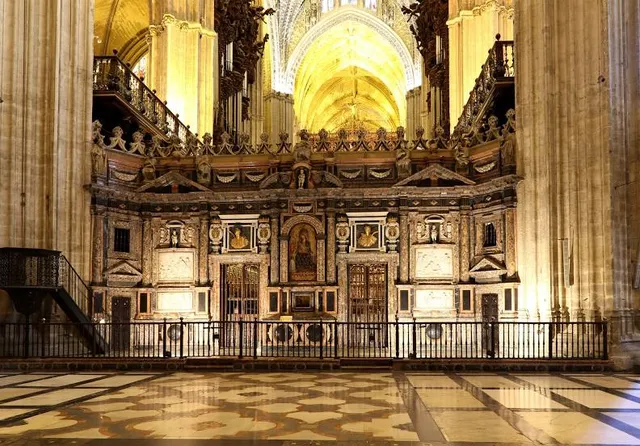
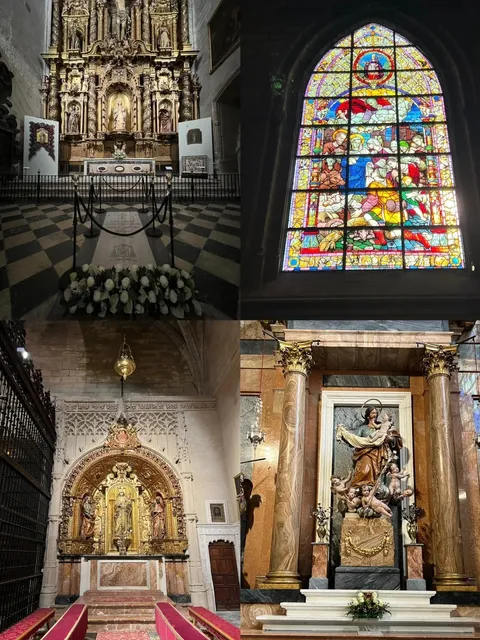
As I approached the cathedral, I was struck by its grand faรงade, which features intricate stonework and towering spires that seem to reach for the heavens. The entrance is adorned with a series of sculptures depicting biblical figures and saints, each telling a story of faith and devotion. Upon entering, visitors are greeted by an expansive interior that is nothing short of breathtaking. The vastness of the nave, with its soaring ceilings and ornate altarpieces, creates an atmosphere of reverence and awe.
One of the most remarkable aspects of the Seville Cathedral is its sheer scale. It is the largest Gothic cathedral in the world, and as I wandered through its vast halls, I felt a profound sense of history enveloping me. The cathedral houses an impressive collection of art and religious artifacts, including the famous altarpiece known as the "Retablo Mayor," which is a stunning example of Gothic craftsmanship. The intricate details and vibrant colors of the artwork are a testament to the skill of the artisans who created them.
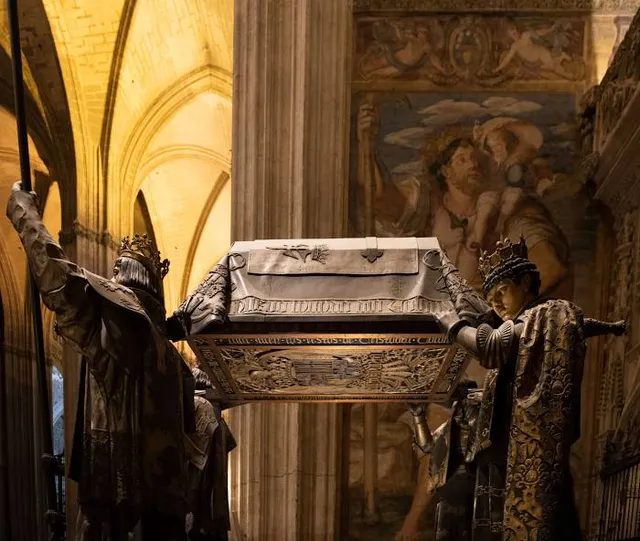
Additionally, the cathedral is home to the tomb of Christopher Columbus, a figure whose legacy is inextricably linked to the Age of Exploration. The tomb is an elaborate structure that reflects the importance of Columbus in the context of Spanish history and the Catholic Churchโs role in the expansion of European influence across the globe. Standing before this tomb, I was reminded of the profound impact that the events surrounding the cathedral had on world history.
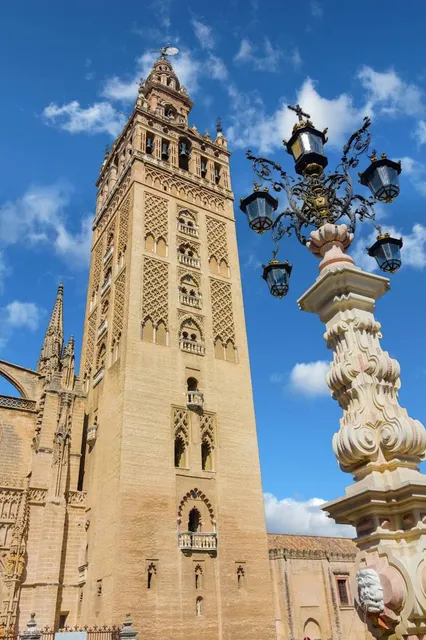
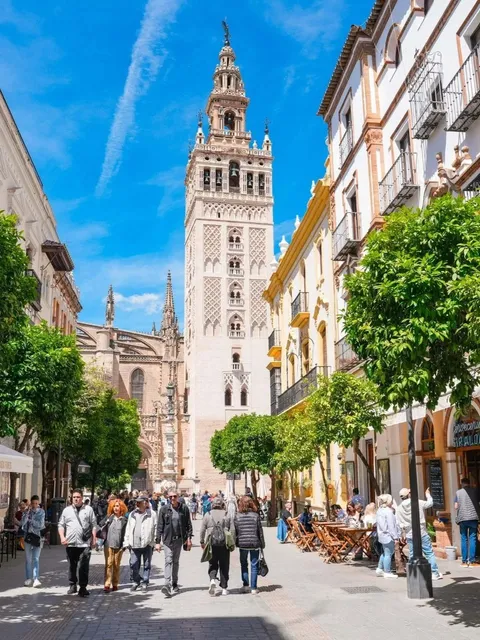
Another highlight of the Seville Cathedral is the Giralda tower, which was originally built as a minaret for the mosque. The towerโs design is a stunning example of Moorish architecture, with its intricate brickwork and beautiful arches. Climbing to the top of the Giralda offers breathtaking views of Seville, allowing visitors to appreciate the cityโs layout and the cathedralโs prominent position within it. The ascent is a journey through history, as each step reveals more about the architectural evolution of the site.
Experiencing the Seville Cathedral is unlike anything I have encountered before. The blend of Christian and Moorish influences creates a unique atmosphere that is both spiritually uplifting and historically enriching. It is a place...
ย ย ย Read moreThe Seville Cathedral is the third-largest cathedral in the world and the largest Gothic cathedral. Construction began in 1401 and took more than a century to complete, finishing in 1506. When it was completed, it was the largest cathedral in the world, and it holds significant importance in Spain. Several Spanish monarchs (Ferdinand III of Castile, Alfonso X of Castile, and Peter of Castile), cardinals (Juan de Cervantes and Pedro Gonzรกlez de Mendoza), and the famous Columbus (Cristopher Columbus) and his son are buried here, which is why it has been included in the UNESCO World Heritage list.
For a long period, Seville was under the rule of the Islamic Moors, and the Seville Cathedral was originally a large mosque next to the Islamic palace. During the Reconquista, after Ferdinand III of Castile conquered Seville, he converted the mosque into a Catholic church, and the interior was gradually divided into several smaller chapels. Later, as Seville's status within Spain rose, in 1401, the local people decided to demolish the original mosque and build what they called a "magnificent and magnificent church that would drive the world mad and be unmatched by future generations." The construction was completed in 1506, creating the largest church in the world at the time, though it continued to undergo repairs and expansions over the following centuries.
The most famous feature of Seville Cathedral is undoubtedly the tomb of Columbus, located on the side of the main hall. Though Columbus was Italian, he is considered a hero of Spain because it was under the sponsorship of the Spanish monarchs that he discovered the New World, and their fates became intertwined. However, after the death of one of the monarchs, Isabella I of Castile, Ferdinand II of Aragon refused to continue sponsoring Columbus, which greatly angered him. As a result, he left a will stating that he would never set foot on Spanish soil again. After his death, his son insisted on burying him in a church in Seville. Thirty-six years later, his remains were moved to Santo Domingo in the Spanish colony in the Americas. After over two hundred years, when the French took control, his remains were moved again to Havana, another Spanish colonial territory in the Americas. Finally, when Cuba gained independence more than a century later, Columbus was revered as a hero in Spain, and there were strong demands to bring his remains back to Spain. His remains, after over three hundred years of wandering, ended up back in Seville. Interestingly, to respect Columbus's will, his tomb is carried by four kings representing the four great kingdoms of Spain, never touching Spanish soil. The two kings at the rear, with their heads bowed, symbolize their guilt and apology toward Columbus.
Visiting Seville Cathedral, itโs impossible not to be struck by the grandeur and magnificence of the architecture. One can't help but admire how the ancestors, centuries ago, managed to create such an awe-inspiring architectural wonder. The dim light inside adds to its mysterious and solemn atmosphere, and it makes the holy relics in each chapel shine brilliantly. When I saw the tomb of Columbus, I felt a mix of emotions. Columbus's legacy is often debated, but for Spain, he is undeniably a great heritage. However, during his lifetime, he was not as respected as he became after his death. He could not even choose his final resting place and, after being moved multiple times, his body was not even fully preserved. Itโs truly a...
ย ย ย Read moreSeville cathedral is a place par excellence, above anything else than being one place that has attracted people from similar and quite diverse religious and worshipping practices, over centuries. The origins travel themselves back to a Visigothic Roman church that was the epicentre of religious activity in the bustling town of Hispalis. When Abder Rehman l took over Al Andalus as the Caliph, Seville fell under his command and he laid the foundations of the then Great Mosque of Cordoboa at the site. Various Islamic rulers added their individual flavour to the citadel, but most of the important works in and around were achieved under Al Mohads. The Great Mosque found its Great Minaret, the modern day Giralda, under them. City walls were fortified and architecture was immensely extended. Seville fell to the successful reconquista by Ferdinand lll of Castile in 1248. Legend has it that Ferdinand took the keys of the citadel, the then capital of Al Mohad empire, together with Marrakesh; he entered the Great Mosque, and chose the original Minbar as a dedication to Santa Maria, the Patron Saint of much of Andalucia. The keys to Seville are kept in Sacristy hall at the cathedral. The original entrance to the Mosque stands today much to its original character, but as the formal exit gate of the Cathedral complex. Here you can appreciate the original Arabic scripted tall wooden gates in black, against beautifully striking ochre painted Moorish arch, and leading to the ablution garden , which today is the orangery. Here you can appreciate original Roman water features, used once for ablution purposes. Today they serve as mere fountains and continue to add to the beauty of the place. The outer court retains much of its original Al Andalus character. Much of the rest of yesterdecades' Mosque has disappeared , as under Catholic control the Mosque was taken down and a beautiful Gothic Cathedral was laid down, with various monarchs adding layers to it. Giralda tower, the original Minaret of the Great Mosque, still stands tall and proud, with its beautiful old brick path that leads up to the top, where stunning bell's hang today. It forms the bell tower of the Cathedral. Inside the Cathedral, there is stunning tall columns, beautiful art works, paintings, decorative objects, spectacularly stained glass windows. There are nooks and corners holding relics from over the years. Christopher Colimbus rests here in his sarcophagus, being carried on the shoulders of four soldiers, representing the four kingdoms, Castille, Aragon, Navarre and Leon. You can roam about the Sacristy and behold the beautiful gold and silver that is often used for formal ceremonies and regular prayer. the Western Gate usually remains closed and opens on special days such as Easter. The organs, the Nave, the monuments, I could write more, but if you take a keen interest in history and culture, find yourself a ticket and turn up, find a quiet spot here and just sit and think about the power of prayer of so many souls , that would have used it, and continue to worship here today. May it's diverse , rich and deep history teach us all to thrive peacefully and 'love thy neighbour' , much to the truth of the religions that it holds so dear in its...
ย ย ย Read more