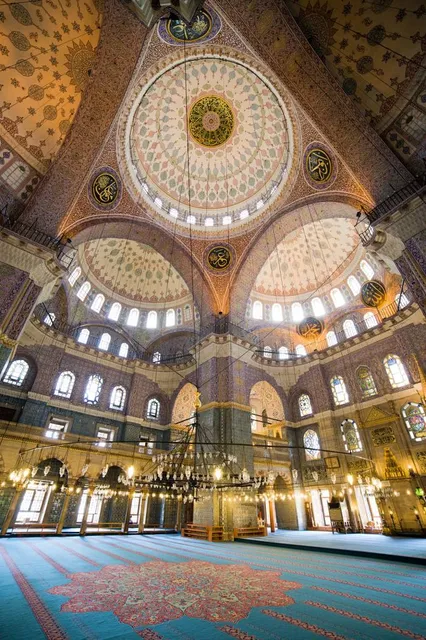
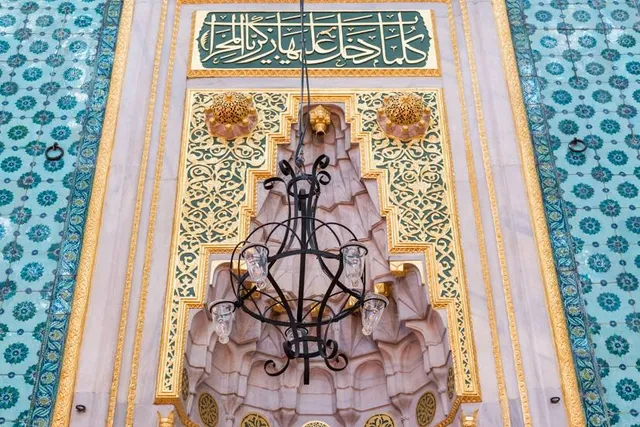
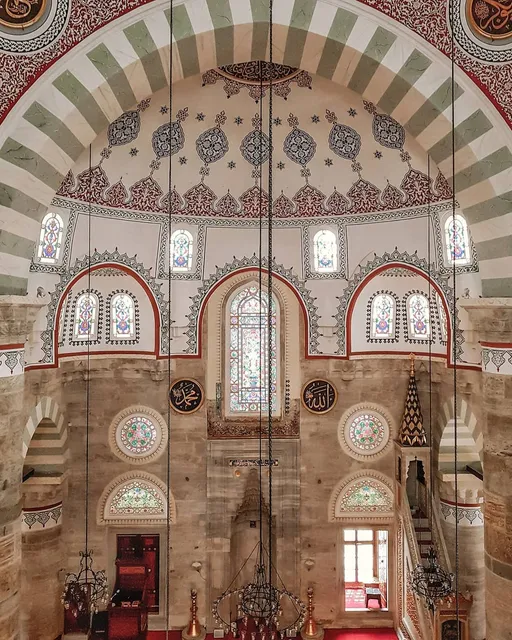
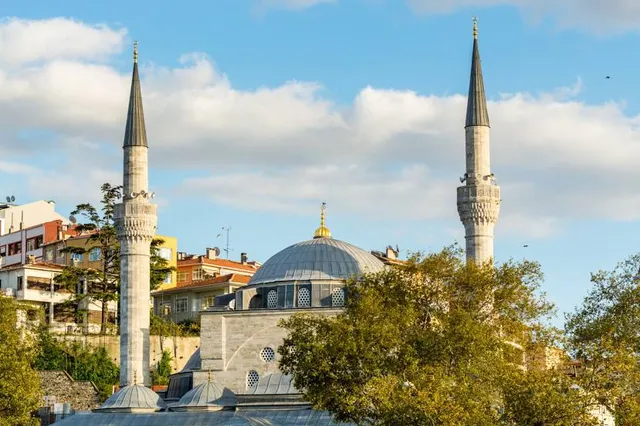
VALİDE CEDİD (YENİ VALİDE) complex consists of a mosque, the royal loge, mausoleums, dispensers, hour forecasts house, fountain, fountain, primary school, arasta (shops), hospices, constitutional homes and mahyacı chamber. According to the history inscription on the main door of the mosque, it was built between the years 1708- 1710 on behalf of the Valide Sultan Emetullah Gulnus, Ahmed Ill's mother. Although it differs from the structures of the class- ical period in details, it was shaped under the influence of Sinan's architectural style. In particular, the mosque is like lite- rally a repeat of the Rustem Pasha Mosque with small differences after an absence of nearly 150 years. Settlement pattern the Complex made during the superinten- dent Bekir Mosque is: A wooden royal apartment was added to the east of mosque located in the middle of a large outer court- yard and integrated with an inner courtyard. A primary school is located above the entrance on the north side of the outer court- yard and mahya room above it, 7 shops outside of the east of this entry and cistern and toilets in the west of the courtyard. Soup kitchen previously used as fodla (bread- bakery) oven is located outside and on the north of the complex. Yeni Valide Mosque, as an example of octagonal central location mosque plan in the 18th century, is a cross planned layout. The central dome is on eight feet. The main door and the loges lo- cated on the hall on two sides reflect the style of the period with marble balustrades. The narthex of the mosque is vaulted at the en- trance and at the edges with domes both sides of the entrance. There is an octagonal fountain in the middle of the courtyard. Sul- tan's pavilion outside and adjacent to the mosque building is raised on three wood and two stone columns. The open tomb where Gulnus Emetullah Valide Sultan was buried is on the wall of the outer courtyard of the complex. The northeast corner of the outer court- yard, a water dispenser is made adjacent to the tomb. An hour fore- cast house is located in the west of and adjacent to the tomb. The building is square in plan and its road frontage was structured as a three-sided. There is a fountain in the north of the dispenser built at...
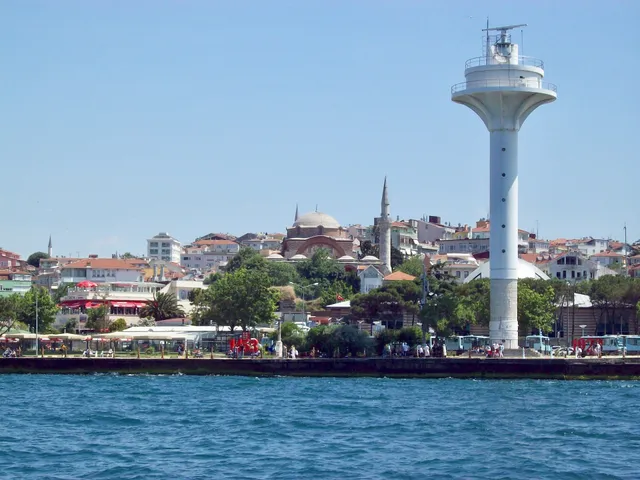
Read moreThe Valide-i Cedid Mosque, also known as Yeni Valide Mosque, is a historic Ottoman mosque located in Üsküdar, Istanbul.
The mosque was commissioned by Gülnuş Emetullah Sultan, who was the mother (Valide Sultan) of Sultan Ahmed III. Construction began in 1708 and was completed in 1710. The name "Valide-i Cedid" means "New Queen Mother's" mosque.
The mosque was designed by the imperial architect Kayserili Mehmed Ağa in the classical Ottoman style. It's part of a larger complex (külliye) that originally included a school (mektep), a public fountain (sebil), a timekeeper's room (muvakkithane), and a library.
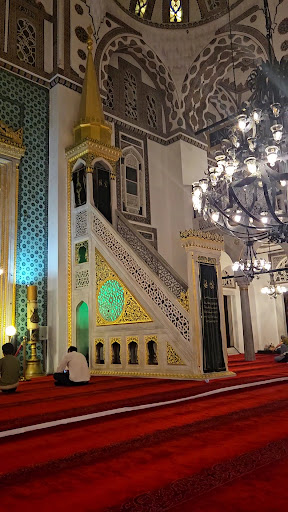
Architecturally, the mosque features a central dome supported by four semi-domes, creating a spacious prayer hall. It has two minarets with single balconies (şerefe). The interior is decorated with Iznik tiles and calligraphy. The mosque's mihrab (prayer niche) and minber (pulpit) showcase fine marble workmanship.
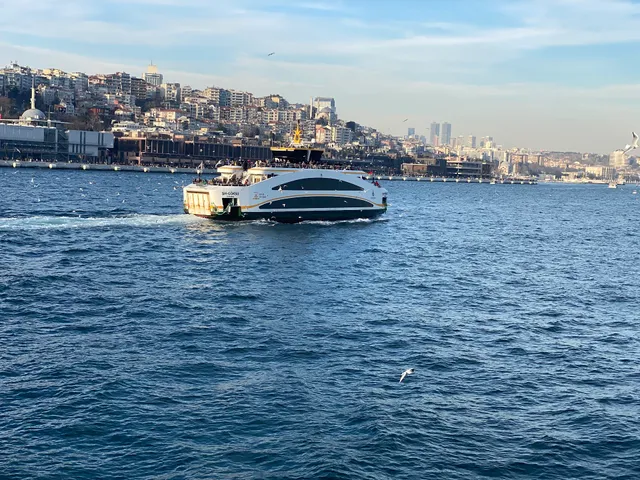
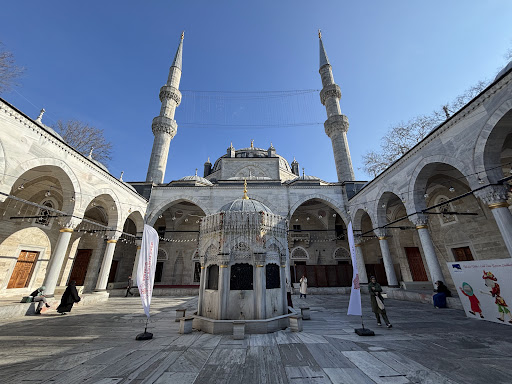
The mosque stands on a terrace overlooking the Bosphorus, providing a magnificent view. Its courtyard is surrounded by a colonnade with twenty domes.
The Valide-i Cedid Mosque holds significant historical importance as it represents the continuing tradition of royal women funding major architectural projects during the Ottoman period. It shows how the mothers of sultans wielded considerable influence and contributed to the empire's cultural and...
Read moreYeni Valide Camii; İstanbul Üsküdar sahilindeki meydanın güneyinde Hakimiyeti Milliye caddesi ile Balaban iskelesi sokağının kesiştiği noktada 1708- 1710 yıllarında Sultan II. Mustafa ve Sultan III. Ahmet'in annesi Emetullah Rabia Gülnuş Sultan tarafından Lale Devri baş mimarı Kayserili Mehmet Ağa’ya inşa ettirilmiştir.
CAMİNİN BANİSİ:
Haseki Emetullah Rabia Gülnuş Valide Sultan, 1647 yılında doğmuştur. Osmanlı döneminde Valide Sultan olup 2 ayrı padişahın annesidir. Sultan II. Mustafa ve Sultan III. Ahmet ve Sultan IV. Mehmet'ın eşiydi. Emetullah Rabia Gülnuş, 1647 yılında Girit'te doğdu. Babasının adı Retimo Verzizzi ve doğduğu zamanki ismi Eugenia Voria idi. 1695 yılında oğlu II. Mustafa'nın tahta çıkması üzerine Valide Sultan oldu. Devlet işlerine karışmadı ama Sultan II. Mustafa'nın tahtan indirilip yerine diğer oğlu Sultan III. Ahmet'in geçirilmesinde onayı alındı. Toplam 20 yıl Valide Sultan kaldıktan sonra 1715 yılında oğlu Sultan III. Ahmet'in saltanatı sırasında Edirne'de öldü. Ölümünden sonra Lale Devri başlamıştır. Vefatından önce, 1708'de yaptırdığı Üsküdar'daki Yeni Valide Camii'nin yanındaki üstü açık türbesine gömüldü.
MAİMARİ YAPISI:
Caminin mimari planı bir karedir. Kare plan üzerinde merkezi bir kubbe bulunur. Kubbe kasnağı yüksek tutulduğu için kubbe kasnağına pencereler konmuştur. Basık şekilli kubbe sekiz kemerle taşınır. Bu kemerlerin dört tanesi düz kemer diğeri ise dört yarım kubbedir. Ana mekanda yaratılmış sekiz paye üzerine bu kemerler oturur. İkişer şerefeli iki minaresi vardır. Yazıları Hezarfen Mehmet Efendi'nin eseridir. Cami avlusuna bu yollara açılan beş kapıdan girilir. Hakimiyet-i Milliye Caddesi'ne açılan kapı, çarşı tarafında bulunduğundan 'Çarşı Kapısı', eski Bit Pazarı kapısının karşısında bulunan ikinci kapı, 'Bat Pazarı Kapısı' veya 'Sebil yahut Hünkâr Kapısı' isimleriyle anılırdı. Üçüncü kapı, Arasta Çarşısı'na açıldığından 'Arasta veya Bedesten Kapısı', Balaban Caddesi tarafındaki dördüncü kapı, 'Balaban Kapısı, Cümle Kapısı, İmaret Kapısı veya Mektep Kapısı' adlarıyla bilinirdi. Beşinci kapı ise, 'Uncular Kapısı, Değirmen Kapısı, Mescit Kapısı, İmam Kapısı' isimleriyle meşhurdu. Bu yöndeki kapılar isimlerini, burada bulunan ve yakın zamana kadar duran bir değirmenin taşlarından, Geredeli Mescidi'nden ve İmam Nasır'ın yaptırmış olduğu bir çeşmeden almıştı. Külliye, cami, hünkâr mahfili, çeşme, sebil, türbe, muvakkithane, mektep, imaret, şadırvan, havuz, su deposu, çarşı, bedesten ve meşruta evlerinden oluşuyordu. Mabet oldukça büyük bir avlunun ortasındadır. Düz bir sahada ve sel yataklarının ortasında yaptırıldığı için su basmaz merdivenlerle çıkılmaktadır. İç avlu veya şadırvan avlusunun iki yanlarında ve bir de cümle kapısı tarafında olmak üzere üç kapısı vardır.
Şadırvan avlusunun her cephesinde alt üst altışar pencere olmak üzere 36 penceresi vardır. Bunlar klâsik demir parmaklıklı ve içten tahta kapaklıdır. Avlunun zemini mermer kaplıdır. Üç tarafı, 14 mermer sütunun taşıdığı 17 kubbeli bir revak ile çevrilmiştir. Orta yerde zarif bir şadırvan yer almıştır. Devrinin en güzel eserlerinden biri olan bu şadırvan tamamen mermerden sekiz yüzlü olarak yapılmıştır. Her yüzün köşelerinde mermer sütunlar vardır. Bu sütunların arasında pirinç şebekeler yerleştirilmiştir.
Avlu duvarının güneydoğu köşesine demir kafesli sebil, çeşme, türbe, muvakkithane bitişik olarak yerleştirilmiştir. Avlunun kuzey kapısı büyük tutulmuş, üstüne sıbyan mektebi yapılmıştır. Cami, avlunun ortasındadır. Ana mekânı örten büyük kubbe, yanlarda dört yarım kubbeyle desteklenmektedir. Beş bölümlü son cemaat yeri tonoz ve kubbe örtülüdür. Ahşap Hünkar Kasrı doğudadır. Sekiz köşeli mermer şadırvan, Hattat Taib Çelebi’nin yazıtıyla süslüdür. Sebil, türbeye bitişiktir, kubbesi kurşun kaplıdır. Sebilin sağındaki çeşme Lale Devri üslubundadır. İmaret duvarındaki çeşmeyse üç köşelidir; yüzler ince sütunlarla bezelidir. Emetullah Hatun Türbesi sütunlu, sivri kemerli bir yapıdır, sütun araları kafes örgü biçimindedir. İmaret, caminin kuzeyinde büyük bir yapıdır. Mermer oyma...
Read more