We use cookies to ensure you get the best experience on our website. For more information on how we use cookies, please see our cookie policy.
By clicking "Accept", you agree to our use of cookies.
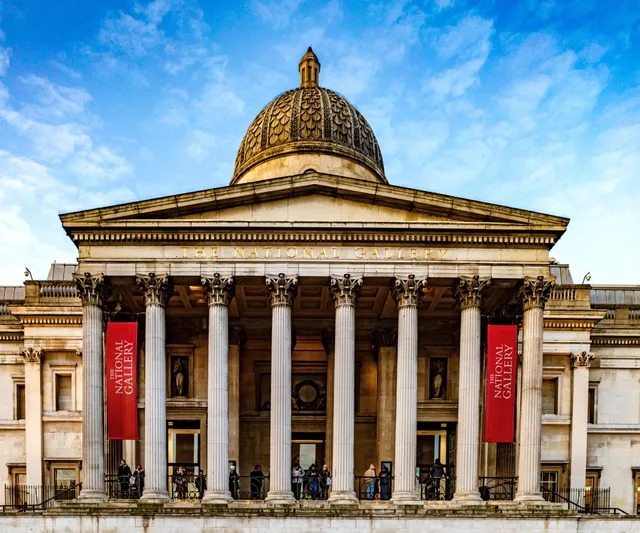
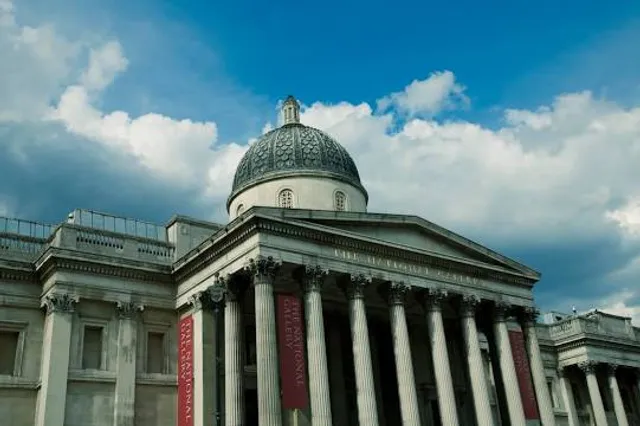
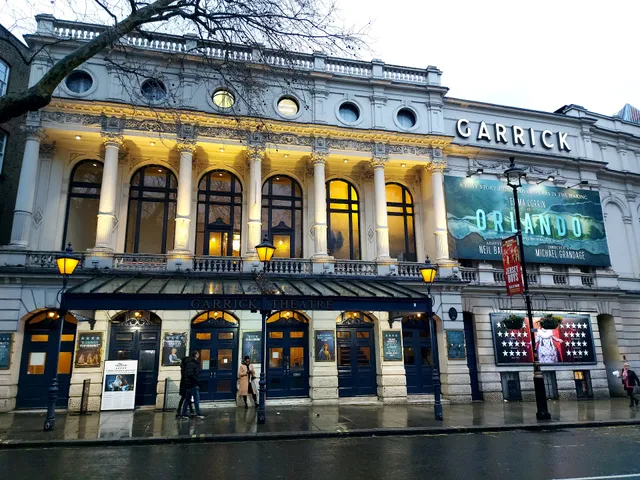
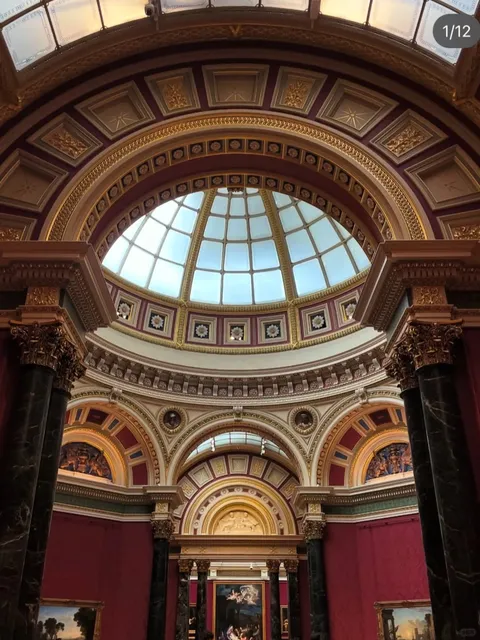
Learn moreThe architecture built with colossal Cornithian columns is designed by the Greek revival architect William Wilkins.
Excerpts on Ptolemy I Soter (Saviour)
Soter (acoxrip): saviour The Greek term soter meaning saviour is an epithet referenced to Ptolemy, one of the four diadochs (successors) to Alexander the Great who conceived ‘a new artificial Macedonia’ that became the Ptolemaic Dynasty in Egypt (Bevan 1927: 9). ‘In 304 Ptolemy aided the inhabitants of Rhodes against Antigonus and was accorded the divine title Soter (Savio[u]r), which he was commonly called from that time’ (Werner 2025: 1st paragraph).
We cannot know for sure who first called Ptolemy [acoxrip] and the consensus is still the Rhodians, who were following Athenian precedent. However, it is more likely that it was his own people who did so, in 306, after the army proclaimed him king…He thus became acoxrip for saving his kingdom from the Antigonids - just as, by way of analogy, Antiochus I was named acoxrip for rescuing his people from the Gauls in 275 (Worthington 2016: 130).
This epigraphical evidence, along with the silence of Diodoros, allows us to question the comment in Pausanias. But Pausanias, as we have already seen, is a dubious source on Ptolemaic matters, so that we have good grounds to conclude that Ptolemy I may not have got an epiklesis attached to his name in 304 (Hazzard 1992: 56).
Lagos (laagos): leader of the people Ptolemaic Egypt was rooted in ‘that same Greek civilization which is the parent of the modern civilization of Europe’ (Bevan 1927: 38). All the subsequent pharaohs bore the name Ptolemy after Ptolemy Lagos to distinguish the different epithets (Bevan 1927; Escolano-Poved 2023).
The Macedonian chieftain, bearing the Greek name of Ptolemaios, who came to Egypt [a]s its new ruler, was the son of a certain Lagus (Lagos or Laagos: the longer form of the name is given in the contemporary papyrus of Elephantine, and it is probably just the Greek La-agos, "Leader-of-the-People") (Bevan 1927: 20).
Collins (1997) also notes that ‘the poem of Theocritus is thus the earliest, official seal of approval of a connection between Ptolemy I and the patronym “Lagos”. It also confirms that, according to his son Ptolemy II, Ptolemy I was not fathered by Philip (457).
The names of his children – Leontiscus, Lagos [a]nd Eirene – also help to confirm that Ptolemy had not, and never claimed a relationship with Alexander the Great. This can be deduced from the practice of the noble Macedonian families to reuse the names of prestigious members of their family or the family into which they wed (see the genealogical trees of the diadochi in today's standard texts). If Ptolemy was a member of the family of Alexander, or if he had chosen to promote this belief, it is thus odd that he did not use any of the family names of Alexander, or indeed, any of the popular names of any Macedonian nobility for any of his three children, who were apparently born after the death of Alexander the Great (Collins 1927: 441).
Sources: Bevan, E. R. 1927. Ptolemy I (Soter). In The House of Ptolemy. https://penelope.uchicago.edu/thayer/e/gazetteer/places/africa/egypt/_texts/bevhop/2*.html
Collins, N. L. 1997. The various fathers of Ptolemy I. Mnemosyne, 50(4), 436–476. http://www.jstor.org/stable/4432755
Escolano-Poveda, M. n.d. Cleopatra VII: scholar, patron, queen. https://arce.org/resource/cleopatra-vii-scholar-patron-queen/
Hazzard, R. A. 1992. Did Ptolemy I get his surname from the Rhodians in 304? Zeitschrift Für Papyrologie Und Epigraphik, 93, 52–56. http://www.jstor.org/stable/20188734
Ptolemy I Soter I. n.d. British Museum. https://www.britishmuseum.org/collection/term/BIOG55387
Werner, R. Ptolemy I Soter. 2025. Encyclopaedia Britannica. https://www.britannica.com/biography/Ptolemy-I-Soter
Worthington, I. 2016. Ptolemy I as Soter: The silence of epigraphy and the case for Egypt. Zeitschrift Für Papyrologie Und Epigraphik, 198, 128–130....
Read more⭐️⭐️⭐️⭐️⭐️ 5/5
The British Museum is an absolute gem in the heart of London and a paradise for history lovers. With its vast collection of artifacts spanning thousands of years and countless cultures, this museum offers an unparalleled journey through human history. Whether you’re a dedicated history buff or a casual visitor, the British Museum provides an enriching and comfortable experience that’s well worth your time.
World-Class Collection of Artefacts
One of the standout aspects of the British Museum is, of course, its extensive collection of over eight million artifacts, many of which are on display in a variety of themed galleries. It’s incredible to witness the breadth of human civilization housed under one roof. Some of the most famous items include the Rosetta Stone, the key to deciphering Egyptian hieroglyphs, and the Elgin Marbles, a stunning collection of sculptures from the Parthenon in Athens. These pieces alone are worth a visit, given their historical significance and beauty.
The Egyptian mummies are another must-see, offering a fascinating glimpse into ancient burial practices. The detail and preservation of the mummies and coffins are astounding. The museum’s Assyrian Lion Hunt reliefs and colossal statues from ancient Mesopotamia are equally awe-inspiring, transporting you back to an era of grand empires and mythologies.
I was particularly impressed by the Lewis Chessmen — beautifully carved medieval chess pieces — and the intricate Oxus Treasure, an exceptional collection of Persian gold and silver artifacts. Additionally, the galleries featuring Japanese samurai armor, Roman mosaics, and the Sutton Hoo treasures from Anglo-Saxon England are captivating and offer insight into diverse historical periods.
Comfort and Accessibility
The British Museum has done an excellent job in ensuring that visitors have a comfortable experience. Admission is free, which is amazing given the caliber of the collection. Though the museum can be busy, the layout of the galleries is spacious, making it relatively easy to explore at your own pace. The central Great Court, with its stunning glass roof designed by Norman Foster, is a beautiful space to relax, take in the architecture, or plan your visit.
There are plenty of places to sit throughout the museum, including benches within the galleries, which is a welcome feature for those who need to take a break while admiring the exhibits. The signage and maps are clear and informative, making it easy to navigate the expansive building.
Facilities and Services
The facilities at the British Museum are excellent. There are clean restrooms on each level, and the cafés offer a good selection of snacks, drinks, and light meals. If you want to make your visit even more informative, audio guides and guided tours are available, providing deeper insights into the exhibits. The museum also has a well-stocked gift shop where you can find books, replicas, and souvenirs related to the collections.
For those with accessibility needs, the museum is very accommodating. There are lifts to all floors, accessible restrooms, and helpful staff ready to assist. This thoughtfulness adds to the overall ease and comfort of the visit.
Final Thoughts
The British Museum offers a truly world-class experience. The diversity and richness of the artifacts provide an unforgettable journey through the history of humanity. Whether you’re marveling at ancient wonders, enjoying the beautifully designed spaces, or simply soaking in the atmosphere, the museum does an outstanding job of making history accessible and enjoyable. A 5/5 star experience — absolutely not to be missed...
Read moreThis museum is great,but it is dangerous to Asian tourists, especially single women or parent with kids.
On August 8th, around 4:30 PM, my friend and I, both of Asian descent, were visiting the National Gallery in London, specifically in Room 18. We were seated on a bench, just like many other visitors, when a staff member approached us twice. He rudely claimed that our seating position was inappropriate and could potentially cause harm to other visitors. His behavior was aggressive and uncalled for, as we were seated in the same manner as everyone else in the gallery.
It was clear that he was targeting us because we were Asian. He blocked our view of the artwork twice, which felt intentionally disrespectful. When I questioned his actions, asking if it was because of our race, he bluntly responded that we didn’t speak English and that we should follow the rules, using extremely offensive language. He even avoided showing his name badge when I asked for it.
After reporting this incident to the museum's front desk , I was told by the staff that there is no seating policy in the museum that would justify his behavior. They also mentioned that they have received similar complaints about this individual before and assured us that they would investigate the matter internally.
Later, after discussing with other Asian tourist groups, we discovered more than six additional cases of similar behavior from the same person in Room 18. Every victim was either a single woman or a family with children. Incidents included him shouting at them in public, insulting them with the F-word, not allowing them to bring bags inside the museum, stopping them from using laptops, and disturbing their view. Many of these victims have written letters and emails to the museum, but none have received any feedback to date.
I sincerely hope the museum takes this issue seriously. A museum that allows or encourages such criminal and racist behavior is not worth visiting and does not deserve to be a part of our...
Read more