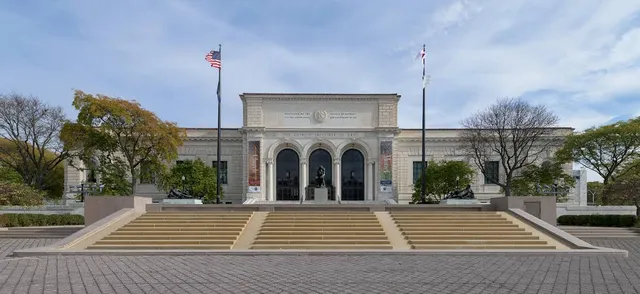
The bronze Thinker broods outside the Detroit Institute of Arts like a philosophical bouncer contemplating this marble temple's contradictions. Inside, Van Gogh self-portraits hang near Rivera's radical murals while governance scandals simmer upstairs.
At $283 million in today's construction costs, this 658,000-square-foot institution houses America's sixth-largest art collection. Yet it operates under peculiar apartheid: locals from three Michigan counties enter free thanks to property tax, while outsiders pay $14-20. Beginning March 4, visitors pay full price for reduced access as second-floor galleries close for "improvements."
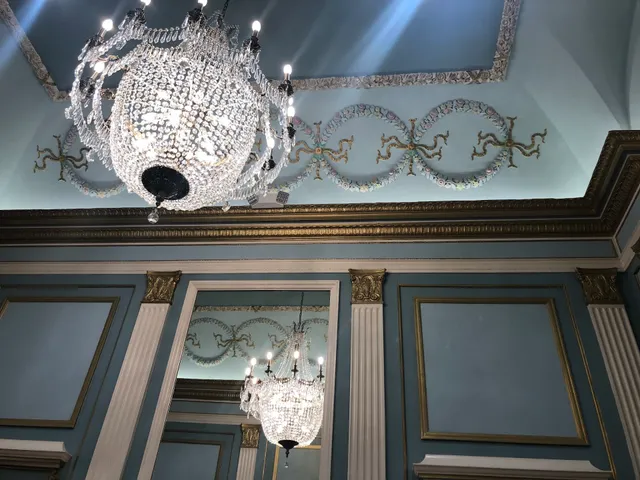
Paul Philippe Cret's 1927 Beaux-Arts masterpiece features three soaring arches proclaiming democratic ideals now undermined by economic segregation. The Great Hall's gold-and-blue coffered ceiling creates a secular cathedral. But it's the Rivera Court where contradictions crystallize: Diego Rivera's 1932 industrial frescoes, once condemned as blasphemous, now draw tourist crowds under modern glass.
The collection justifies any inconvenience. Van Gogh's self-portrait—first to enter an American museum—radiates thick impasto anticipating posthumous fame. Seurat's pointillist seascape demonstrates curatorial depth through scientific precision. From colonial portraits to Baroque bronzes, galleries span civilizations with authority.
Yet institutional dysfunction shadows every masterpiece. Director Salvador Salort-Pons faces persistent controversies: seven board members resigned in 2021 citing "culture of fear" and his "lack of facility with race-related issues." Whistleblower complaints allege nepotism and discrimination. Despite launching diversity initiatives and acquiring contemporary Black artists' works, Salort-Pons remains embattled.
The Ford Foundation connection adds intrigue. After pledging $125 million to Detroit's bankruptcy "grand bargain" saving the collection, the foundation will be led by Yale Law Dean Heather Gerken starting November 2025. Gerken's own controversies—including threatening a Native American student over party invitation language—suggest institutional dysfunction spans organizations.
The 2007 renovation created genuinely democratic spaces: Kresge Court reading nooks transform utility into community. These moments—docent tours gathering around masterpieces, families discovering ancient civilizations—represent museums at their democratic best.
Programming reveals ongoing identity struggles. Exhibitions range from Van Gogh retrospectives to "Art From the Dean Collection of Swizz Beatz and Alicia Keys," suggesting an institution wrestling with contemporary relevance.
USA Today readers voted this America's top art museum in 2023, recognition the collection deserves. But like Detroit itself, greatness coexists with dysfunction. Rivera murals survived McCarthy-era hysteria only because officials posted signs calling the artist's politics "detestable"—institutional cowardice preserving artistic courage.
Hidden treasures include the Paul McPharlin Puppetry Collection and Islamic art displays. The $8.1 billion collection, built through pharmaceutical magnate Frederick Stearns's donations and Wilhelm Valentiner's prescient acquisitions, makes this among America's most valuable municipal holdings.
The museum faces accessibility challenges beyond admission fees: no backpacks, bag inspections, ongoing closures. During COVID19, employees filed safety complaints, suggesting management priorities favor aesthetics over operations.
Walking through marble corridors where Cret's spatial genius unfolds—past Van Gogh's postal worker, under Rivera's industrial prophecy—the disconnect between artistic excellence and institutional competence becomes visceral. This is unquestionably world-class culture housed in magnificent architecture.
The tragedy? An institution achieving its artistic mission brilliantly while failing basic governance. The art transcends its keepers, but visitors deserve better stewardship of humanity's treasures. Go for the masterpieces, endure...
Read moreI apologize for the long review.
I brought this to a managers attention last night and I was very upset about the lack of response from this individual. I saw something very disturbing that needs to be brought to someone’s attention immediately. Last night a member of what I’m assuming is the catering company was working to unload some stuff from the elevator when a very large man was quite obviously in the way. Well, when the young lady asked the gentleman to move (very kindly I might add) the maintenance worker I’m assuming who was a very large human being and very intimidating started to yell at this young girl. Stating “I’ll shut this elevator down how about that???” Extremely confrontational and extremely scary. He continues to intimidate the young girl by staring at her and yelling “SO? SO?” Ugh my heart aches for the girl. I think we were just all in shock in how this man was behaving towards a worker less than half his size. I do not know the process in which you hire employees or the vetting that goes into employing workers but this was honestly jarring. I thought he was going to hit her. When I brought this up to management they told me “oh yeah he’s like that” Is that how you guys run your operation at the DIA? You let your own employees verbally assault other employees or contractors? Physically intimidate young women? This poor girl must’ve been terrified and the audacity of your place of business to look the other way is unacceptable.
I am writing you out of a kindness. I thoroughly enjoyed my time last night at the beautiful museum you so greatly take care of. Unfortunately I can’t get the image of this brute of a man verbally assaulting this young woman and physically intimidating her on top of threatening to “shut down the elevator”. I happen to be a contractor myself and from what I understand shutting down a working elevator due to a disagreement with another outside contractor surely can’t be legal can it? And unless he is an elevator mechanic it would be illegal to do any kind of work on an elevator let alone legal to shut one down.
Maybe I am wrong. Maybe this is the DIA standard. Either way, I hope you do what is right. Whatever that may be. This person that is either employed directly or indirectly by your team is a threat to customer safety and well being.
I can not speak for others at the event last night but I can assure you I will not be returning until this person has been terminated. I love your museum, I always have since I was young. This was entirely unacceptable and extremely disturbing.
I pray that young woman is okay and someone from her company was able to look after her that night.
Obviously your management team had no intention...
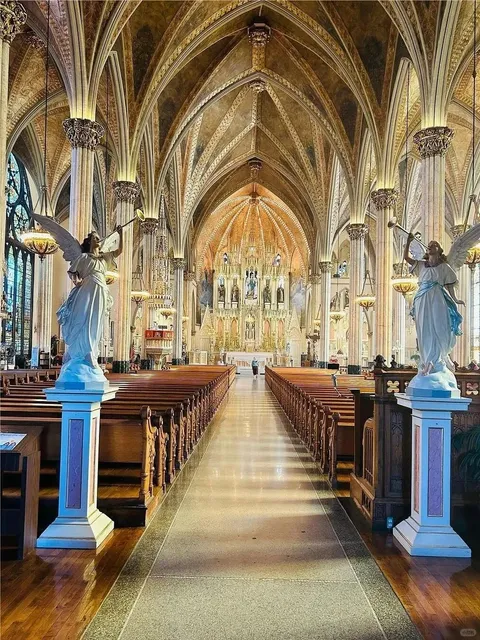
Read moreThere is something singular about walking through the great vaulted halls of the Detroit Institute of Arts, something that presses up against the edge of myth. The building—rooted and resolute in the heart of a city that has known reinvention more intimately than most—feels less like a museum and more like a cathedral to the act of seeing. And in the act of seeing, there is salvation.
Here, Caravaggio’s Martha and Mary Magdalene hums with a kind of feverish intimacy. Rivera’s murals, of course, are the altars: twenty-seven panels pulsing with labor and light, their contours soaked in both beauty and conflict, like the city itself. The collection, impossibly rich, swings from ancient relics to modernist provocations, and in between—Rembrandt, Van Gogh, O’Keeffe, the whole gorgeous, aching sprawl of human vision.
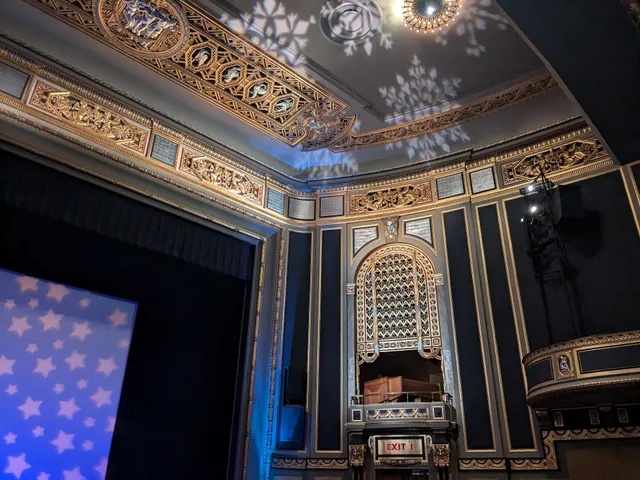
But perhaps the most exquisite act of curatorship at the DIA is not hung on the walls, but projected in a darkened room. The Detroit Film Theater, tucked like a hidden pulse within the museum’s neoclassical body, is the kind of place cinephiles dream about. It does not pander. It dares. It screens the films that whisper, that haunt, that arrive with little fanfare and leave with something of your soul. Documentaries that reshape your sense of truth, restorations of long-lost masterpieces, contemporary experiments that test the elasticity of narrative—there is nothing perfunctory here. Every screening feels like an event, like a secret you’re lucky enough to be let in on.
And then there is this: locals get in free. A quiet revolution in a country that so often monetizes beauty. In Detroit, access to wonder is a right, not a privilege. That matters. It matters more than most institutions are willing to admit.
To walk through the DIA is to be reminded, again and again, that art is not a luxury but a necessity. That a city can fracture and heal and fracture again, and still insist on putting brush to canvas, reel to screen, voice to air. That somewhere inside all that ruin and resurrection, a museum can stand—defiant,...
Read more