In the heart of Long Island City, where urban grit meets nature's embrace, lies Socrates Sculpture Park – an urban oasis that New Yorkers can rightly boast of. From its roots as an abandoned dump, this outdoor marvel has dramatically transformed, thanks to the vision of sculptor Mark di Suvero, into a testament to the city's indomitable spirit and the power of community. It’s not merely a park; it's a living narrative of Astoria's resilience and creativity.
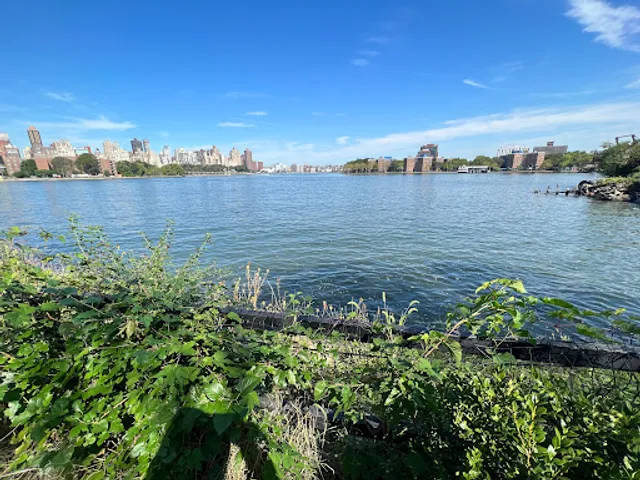
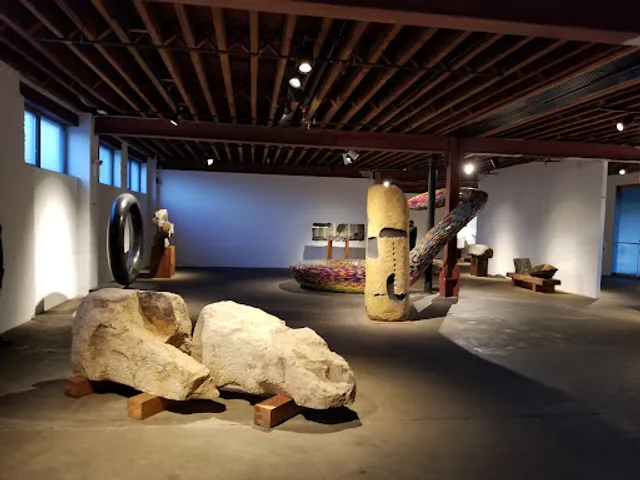
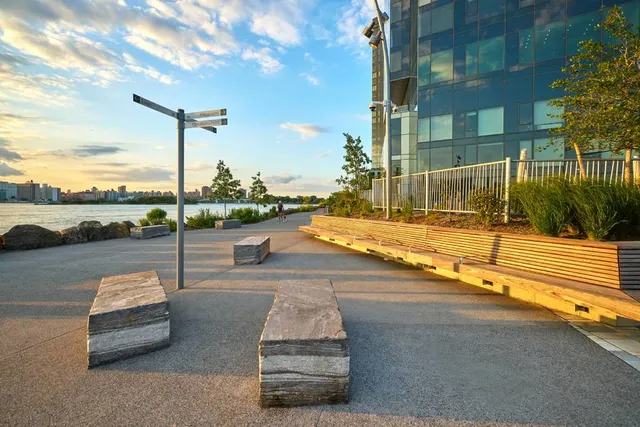
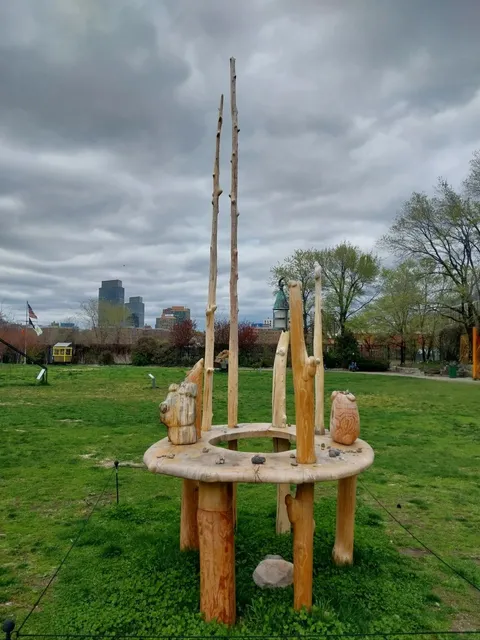
Art aficionados are in for a treat. At every twist and turn, the park presents a dynamic panorama of sculptures and installations, ever-evolving and never static. It’s like the pages of an art magazine brought to life against the majestic backdrop of the Manhattan skyline. The juxtaposition is poetic – the steel and glass of the city's skyline gazing upon the artistic ventures of its residents.
Yet, what truly sets Socrates Sculpture Park apart is its rich history. The transformation from a forsaken wasteland to a vibrant cultural hub underscores the very essence of New York – the ability to reclaim, reinvent, and rejuvenate. The park's story serves as a beacon of hope and a testament to what community-driven initiatives can achieve.
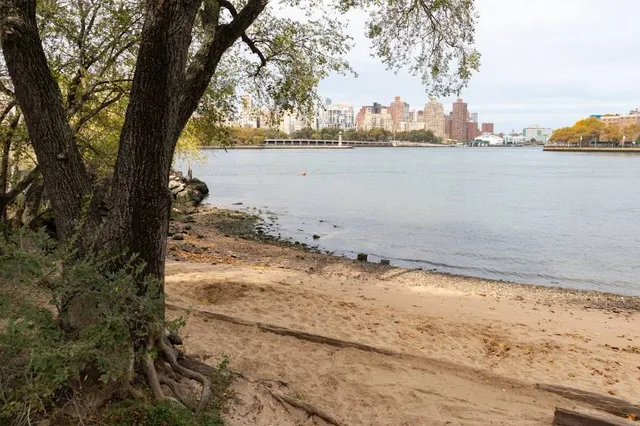
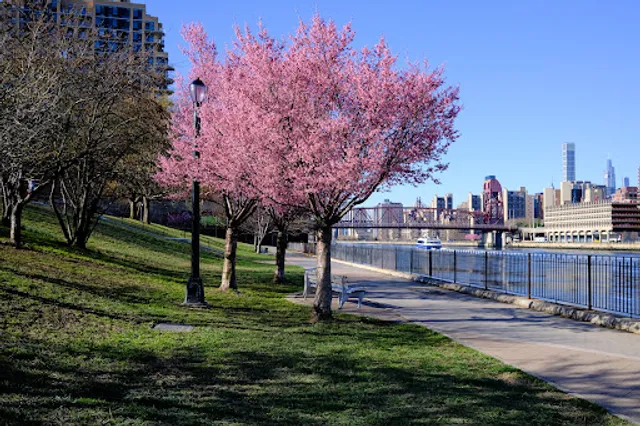
Nestled on the edge of the river, visitors are treated to scenic vistas that seem almost curated. Manhattan's silhouette, with its iconic skyscrapers, serves as a serene canvas to the park's artistic masterpieces. It's this blend of art, history, and nature that offers a respite from the city’s perpetual hustle.
More than an art sanctuary, this park embodies the soul of Astoria. It's a celebration of community spirit, an homage to the idea that urban spaces can be more than just concrete and steel – they can be canvases for expression, engagement, and evolution.
Accessibility is another feather in its cap. Open daily from the first ray of sunlight till dusk, and with no entry fee, it beckons New Yorkers and tourists alike. The welcoming ethos is evident – art and beauty are not elite luxuries but a communal right. And if you're one to rely on TripAdvisor ratings, its well-deserved 3.5 and a spot in the top 10 things to do in Long Island City solidifies its stature.
In essence, Socrates Sculpture Park isn't just another spot to check off on a tourist’s itinerary. It's a manifestation of New York's heartbeat, a space where art, community, and nature converge. As a New Yorker in his prime, I find it a humbling reminder of our city's boundless potential and spirit.
Follow me on Google as a top reviewer for insider NYC tales. Standby, fellow adventurers, the best of this native New Yorker's journeys is...
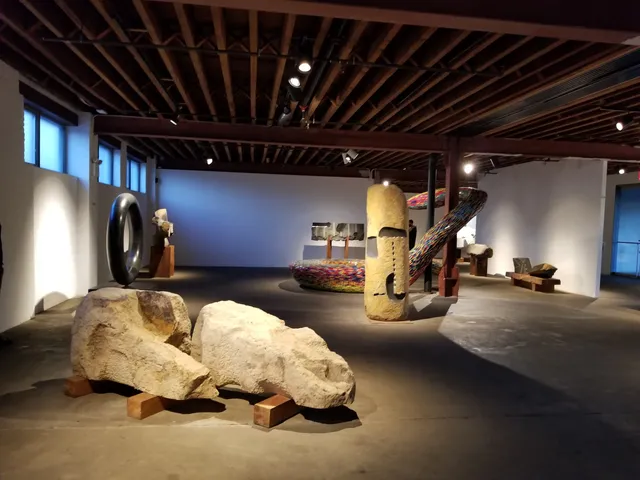
Read moreSocrates Sculpture Park is an outdoor museum and public park where artists can create and exhibit sculptures and multi-media installations. It is located one block from the Noguchi Museum at the intersection of Broadway and Vernon Boulevard in the neighborhood of Astoria, Queens, New York City. In addition to exhibition space, the park offers an arts education program, artist residency program, and job training.
Socrates Sculpture Park is located atop the mouth of the buried Sunswick Creek. In 1986, American sculptor Mark di Suvero created Socrates Sculpture Park on an abandoned landfill and illegal dumpsite in Long Island City. The four-acre (1.6 ha) site is the largest outdoor space in New York City dedicated to exhibiting sculpture. The former landfill was renovated into the current park by a team of contemporary artists and local youths. The park operated for 14 years with only a temporary city park status. In 1998, the park was given official status by then New York City mayor Rudolph Giuliani as a permanent city park after a developer attempted to erect luxury apartments and a marina on the site after the park's lease had expired.
In 2005, the park was among 406 New York City arts and social service institutions to receive part of a $20 million grant from the Carnegie Corporation, which was made possible through a donation by New York City mayor Michael Bloomberg.
At the Socrates Sculpture Park's main entrance hangs a 10-by-28-foot (3.0 by 8.5 m) billboard structure that has been an ongoing installation since 1999. The original billboard was a mirror image of the street created by artist Mathieu Borysevicz built by ongoing volunteer Ross H. Radtke, a mechanical engineer and neighbour.
New billboards are installed once or twice per year. Artists work with printmaking and photography to create an image that greets visitors as they enter the park and sets the tone for the current show. The billboards are in conjunction with each spring exhibition. The park has numerous workshops and public programming. Many artists lead tour programs of current exhibitions, there are summer art projects, and various free public events, such as yoga and capoeira on Saturdays and outdoor movie screenings on Wednesdays that begin in mid-July and end in mid-August. GrowNYC runs an Astoria Farmer's Market in the park every Saturday during the summer months.
In January 2019, the Park announced its plan to construct and install permanent staff offices made out of shipping containers. This would be the park's first permanent...
Read moreNormally, anyplace that used to have Peter Lundberg sculptures but no longer does would rate a 5, even a 5+ although that can't be given in the ratings. However, there is a compelling reason to make SSP an exception.
It was here that Lundberg started on a course of specializing in oversized outdoor sculpture made from discarded concrete and stainless steel. He was a favorite of founder Mark di Suvero, and established himself among the abstract art literati. The general public has had a much more negative reaction to his work, and this can be found in press coverage regarding these massive, plainly ugly industrial waste structures when they have been on exhibit. Numerous people are quoted from a wide range of locations expressing dislike for Lundberg's pieces.
Of course in a museum or sculpture exhibit space, there may be artworks that most people don't like. I am not saying it's bad Lundberg makes these sculptures, only that they are not the type of thing that will appeal broadly to the masses. Yet Lundberg seeks to place them in highly trafficked public spaces, and even worse, on private property which is immediately adjacent to such public spaces. By doing that, if there is backlash against his pieces (and there has been), it is harder to get the piece removed. Of course, anything towering tens of feet high and weighing multiple tons is very difficult to relocate to begin with, but when it's on private property, it's even harder.
It was here at SSP that Lundberg started producing these humungous eyesores, and his success there and since leaving there has emboldened him to impose his work upon an unwilling public, and given him stature enough to make it feasible for him to do so. For that reason, although SSP once had Lundberg sculptures on display but no longer does, it gets a 1 rating...
Read more