In Paris, where the dead reside with more panache than most cities house the living, Montmartre Cemetery offers a quieter alternative to the celebrity-packed pathways of Père Lachaise. Nestled in a former gypsum quarry below street level, this 11-acre necropolis feels like stumbling upon a secret garden of stone and memory—if gardens typically featured 20,000 graves and the occasional startled cat sunning itself on a faded epitaph.
Among the cemetery's residents—Degas, Berlioz, Zola (though he later moved to more prestigious posthumous digs at the Panthéon)—none makes quite the same visual statement as Jean Bauchet, former Moulin Rouge impresario and eternal bronze nudist.
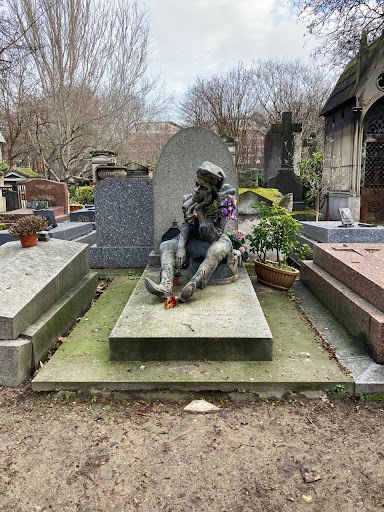
Bauchet's monument in Division 29 delivers perhaps the most audaciously modern statement in a cemetery otherwise preoccupied with 19th-century romanticized death. The massive bronze figure—a muscular male nude perched in contemplation atop black marble—looks like Rodin's "Thinker" after six months of CrossFit and a lifetime of exhibitionism.
There's delicious irony here: a man who built his fortune on barely-dressed dancers at Paris's most famous cabaret being memorialized as eternally undressed himself. Before becoming the Moulin Rouge's owner, Bauchet had been an acrobatic dancer in his youth, a biographical detail the sculptor Bertrand Richard winkingly acknowledged through the figure's impossible physique. One imagines Toulouse-Lautrec, buried elsewhere in the same cemetery, appreciating the artistic cheek.
The statue, commissioned before Bauchet's death in 1975 and erected in 1989, reveals something about the vanities of entertainment moguls—that same driving need for posthumous attention that leads some to bronze themselves for eternity. While some cemetery visitors leave flowers for their deceased, Bauchet's monument practically flexes at them.
Montmartre Cemetery itself seems to encourage such theatrical gestures. Opened in 1825 as one of four great Parisian cemeteries established at the cardinal points of the city, it became the final address for the artistic souls who had made the butte of Montmartre their bohemian playground. The burial ground languishes quite literally in the shadow of modern Paris—sit at a sidewalk café on Rue Caulaincourt, and you're dining on a bridge directly above the dead.
Unlike its eastern counterpart Père Lachaise, with its manicured paths and tour groups hunting for Jim Morrison, Montmartre Cemetery maintains a disheveled charm. Maple and chestnut trees push between plots, tombstones list at dubious angles, and paths occasionally disappear into overgrowth. Charles Baudelaire once wrote that "the form of a city changes faster than the human heart," but here, time seems deliciously suspended.
Bauchet's bronze oddity represents something essential about Paris itself—the city's perpetual tension between reverence for tradition and irrepressible innovation. In death as in life, Parisians refuse to follow anyone else's rules about good taste.
For visitors seeking this peculiar monument, the search becomes part of the pleasure. Wind through narrow alleys of stone, past elaborate family chapels and simple tablets, until suddenly—there he sits in all his bronze glory, an anatomically generous reminder that even cemetery tourism in Paris can offer unexpected entertainment.
An afternoon spent here reveals why Parisians have always treated their cemeteries as parks—places for contemplation, unexpected beauty, and occasional encounters with the absurd. Just as he once welcomed guests to his cabaret spectacles, Jean Bauchet now silently invites cemetery wanderers to appreciate his final performance piece: proof that in Paris, one's last statement can still raise eyebrows from...
Read more💫🏛💫 IT'S ALWAYS FASCINATING TO WALK AROUND THIS PLACE... HERE ARE "INCLUDED" SOME FAMOUS PEOPLE WHO WILL ALWAYS REMAIN IN OUR HEART... The cemetery was built following the restructuring of the Montmartre district between 1818 and 1824, it was opened on 1 January 1825. It is located at n° 20 avenue Rachel, in the 18th arrondissement and precisely below street level, in the area of the ancient quarries of Montmartre, famous for the chalk used on a large scale in the capital. In these abandoned quarries, during the French Revolution, the bodies of the victims were thrown into mass graves (even of the Swiss Guards who intervened to prevent the arrest of the royal family were massacred at the Tuileries on 10 August 1792) and soon also the bodies of many Parisians who could no longer be taken to cemeteries within the capital's walls. Local authorities had prohibited burial in these cemeteries after the closure of the Cemetery of the Innocents (French: cimetière des Innocents) in 1780, for reasons of hygiene and the toxic fumes coming from the mass graves. New cemeteries, and no longer body depots, were therefore created outside the city: Montmartre cemetery in the north, Père-Lachaise cemetery in the east, Passy cemetery in the west and the Montparnasse cemetery in the south. The Montmartre cemetery has more than 20,000 concessions and around 500 people are buried there every year. 💫🏛💫 C'EST TOUJOURS FASCINANT DE SE PROMENER DANS CET ENDROIT... VOICI "INCLUS" QUELQUES PERSONNES CÉLÈBRES QUI RESTERONT TOUJOURS DANS NOTRE COEUR... Le cimetière a été construit suite à la restructuration du quartier de Montmartre entre 1818 et 1824, il a été inauguré le 1er janvier 1825. Il est situé au n° 20 de l'avenue Rachel, dans le 18ème arrondissement et précisément en contrebas du niveau de la rue, dans le quartier de les anciennes carrières de Montmartre, célèbres pour la craie utilisée à grande échelle dans la capitale. Dans ces carrières abandonnées, pendant la Révolution française, les corps des victimes furent jetés dans des fosses communes (même les gardes suisses intervenus pour empêcher l'arrestation de la famille royale furent massacrés aux Tuileries le 10 août 1792) et bientôt aussi les les corps de nombreux Parisiens qui ne pouvaient plus être transportés dans les cimetières intra-muros de la capitale. Les autorités locales avaient interdit l'inhumation dans ces cimetières après la fermeture du cimetière des Innocents en 1780, pour des raisons d'hygiène et des vapeurs toxiques provenant des charniers. De nouveaux cimetières, et non plus des dépôts de corps, sont donc créés en dehors de la ville : cimetière de Montmartre au nord, cimetière du Père-Lachaise à l'est, cimetière de Passy à l'ouest et cimetière du Montparnasse au sud. 💫🏛💫 È SEMPRE AFFASCINANTE PASSEGGIARE INTORNO A QUESTO LUOGO, VICINO AL CUORE DI UN QUARTIERE CHE MANTIENE ANCORA UN SAPORE ANTICO. QUI SONO "RACCHIUSI" ALCUNI PERSONAGGI FAMOSI CHE RIMARRANNO SEMPRE NEL NOSTRO CUORE... In seguito alla ristrutturazione del quartiere di Montmartre tra il 1818 e il 1824, fu aperto il 1º gennaio 1825. Il cimitero di Montmartre è situato al n° 20 di avenue Rachel, nel XVIII arrondissement e precisamente al di sotto del livello della via, nell'area delle antiche cave di Montmartre, famose per il gesso utilizzato in vasta scala nella capitale. In queste cave abbandonate, durante la Rivoluzione francese, vennero gettati i corpi delle vittime (anche delle Guardie svizzere che intervenute per impedire l'arresto della famiglia reale furono massacrate alle Tuileries il 10 agosto 1792) in fosse comuni e ben presto anche i corpi di molti parigini che non potevano più essere portati nei cimiteri all'interno delle mura della capitale. Le autorità locali avevano proibito la sepoltura in questi cimiteri dopo la chiusura, nel 1780, del cimitero degli Innocenti (francese: cimetière des Innocents), per ragioni di igiene e per le esalazioni tossiche provenienti dalle fosse comuni. Furono quindi creati nuovi cimiteri, e non più depositi di cadaveri,...
Read moreMontmartre Cemetery is a hidden gem in the heart of Paris, offering a serene and contemplative experience away from the bustling city streets. The cemetery, with its rich history and beautiful architecture, is the final resting place of many notable figures, including artists, writers, and political figures.
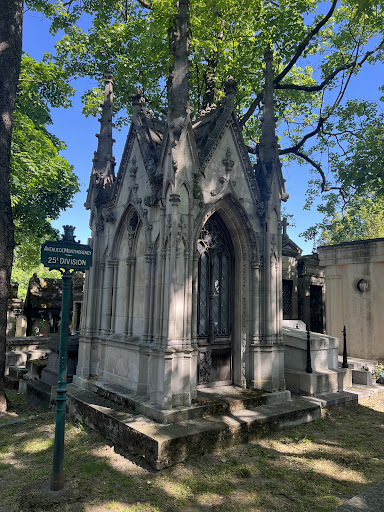
Walking through the cobblestone paths lined with ornate tombs and sculptures is like taking a journey through French history. The well-maintained grounds and the peaceful atmosphere make it a place for both reflection and appreciation of artistry in death.
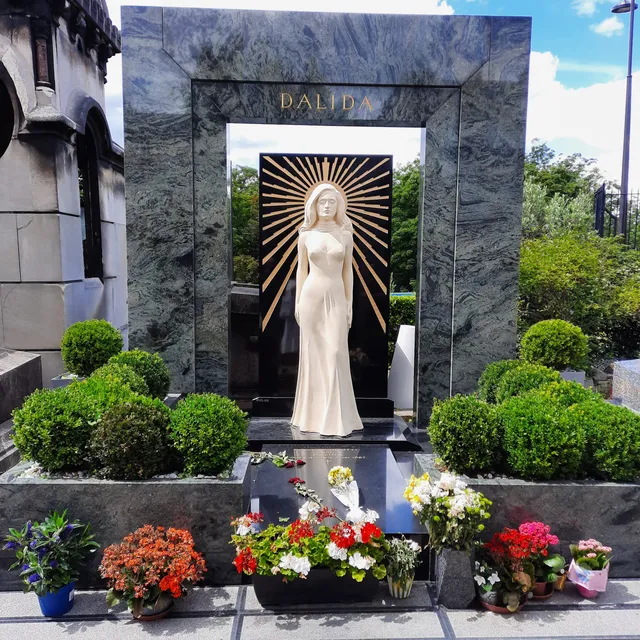
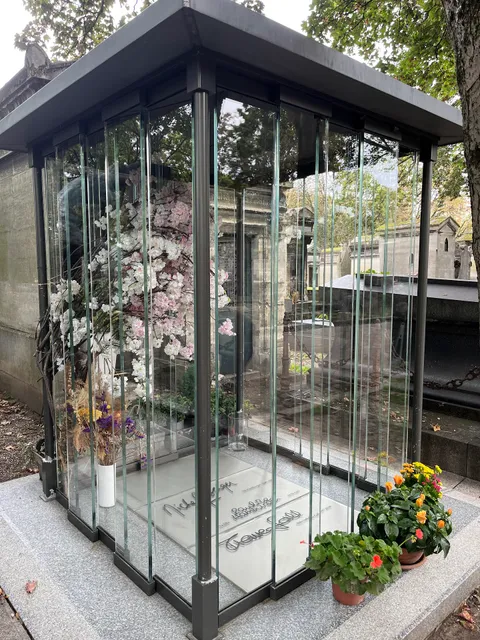
One of the notable features is the grave of Émile Zola and the unique grave of Dalida, a famous singer. While it might not have the same level of fame as Père Lachaise Cemetery, Montmartre Cemetery offers a quieter and more intimate experience for those who appreciate the art and history of cemeteries.
Visitors should take the time to explore and soak in the ambiance, and perhaps even take a guided tour to learn more about the notable individuals buried here. It's a peaceful and cultural escape in the heart of Montmartre, allowing you to connect with the past and appreciate the beauty even in a place of...
Read more