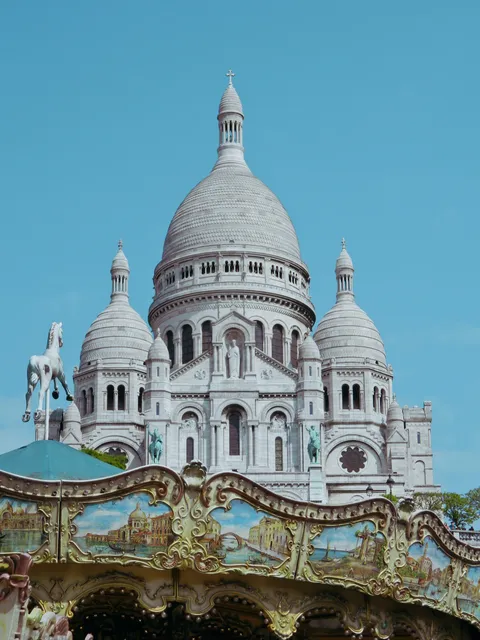
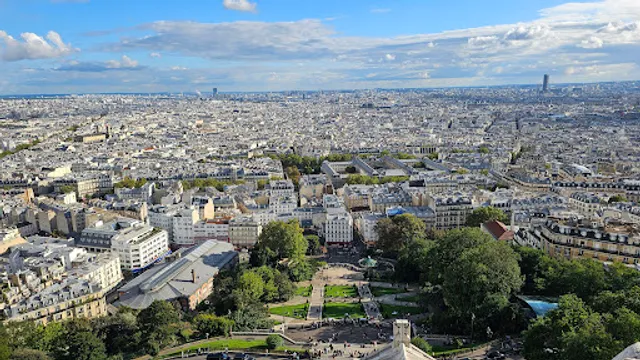
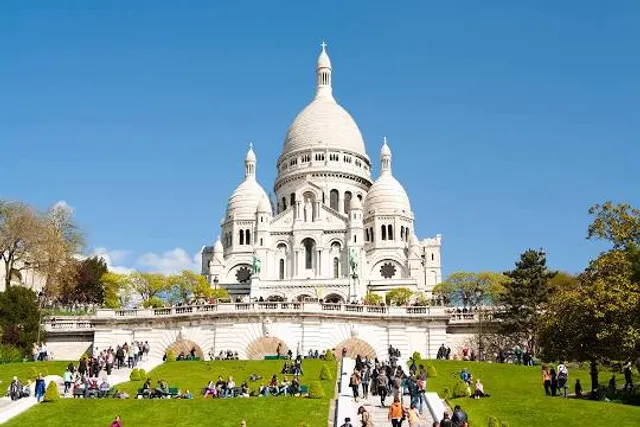
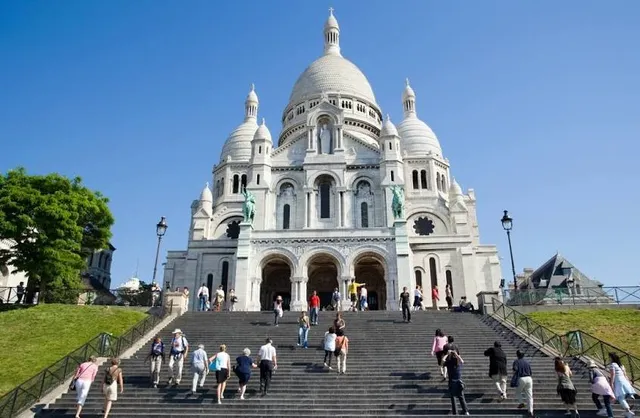
The Basilica of the Sacré-Cœur, perched at the summit of Montmartre, is a landmark that dominates the Paris skyline and a magnet for visitors from around the globe. While it may not have the ancient Gothic grandeur of Notre Dame, it offers a unique and memorable experience that makes it a must-see on any trip to the French capital. The Art and Architecture The most striking feature of the Sacré-Cœur is its brilliant white exterior and distinctive Romano-Byzantine architectural style. This is a deliberate contrast to the classical Gothic churches of Paris, with its rounded arches, domes, and a design reminiscent of St. Mark's Basilica in Venice. The stone used, a type of travertine, naturally whitens and bleaches in the rain, which is why it has maintained its pristine appearance for over a century, despite urban pollution. Inside, the basilica's interior is dominated by one of the largest and most breathtaking mosaics in the world, the "Christ in Majesty." It’s an immersive, golden masterpiece that commands attention and fills the apse with a sense of divine radiance. While the interior is often dimly lit, the mosaics and the grand organ by Aristide Cavaillé-Coll, one of the most renowned organ builders of the 19th century, are truly magnificent. The Experience A visit to the Sacré-Cœur is as much about the journey as the destination. The climb up the hill of Montmartre, whether by the winding streets or the long flight of stairs, builds a sense of anticipation. Your reward is one of the most spectacular panoramic views of Paris. From the steps of the basilica, you can see the city stretch out before you, with landmarks like the Eiffel Tower visible on a clear day. For an even more impressive vista, you can pay a fee and climb the 300 steps to the top of the basilica's dome. This is a challenging climb but offers an unparalleled 360-degree view of the city. The basilica is also a place of spiritual significance, having maintained a perpetual adoration of the Holy Eucharist since 1885. The atmosphere inside is solemn and peaceful, offering a quiet escape from the bustling crowds outside. Visitors are asked to maintain a respectful silence, and photography is generally not allowed within the main building, which helps to preserve its sacred atmosphere. Practical Tips Crowds: The Sacré-Cœur is incredibly popular. To avoid the largest crowds, visit early in the morning, before 10 a.m., or in the late afternoon. The Climb: If you don't want to take the stairs, the Montmartre Funicular is a convenient option, accessible with a standard metro ticket. Dress Code: Remember that it is a place of worship. Shoulders and knees must be covered to enter the basilica. Final Thoughts The Basilica of the Sacré-Cœur is more than just a beautiful building; it's a symbol of hope, a spiritual sanctuary, and a monument that offers one of the best perspectives on Paris. Its unique art, architecture, and prime location make it an essential stop for anyone wanting to experience the heart of Montmartre and see the City of Light in...
Read moreThe creation of the monumental mosaic in the Sacré-Cœur was a long and meticulous process, spanning over two decades from its design to its completion. Here is a breakdown of when and how it was made. When: The Timeline The creation of the mosaic took place in the early 20th century, after the main structure of the basilica was largely complete. Design Commission: 1900. A competition was held for the design of the apse mosaic. Designer Selected: 1903-1904. The design by the French academic painter Luc-Olivier Merson was officially chosen. He then spent years creating the detailed, full-scale drawings (known as "cartoons") that would serve as the blueprint. Fabrication and Installation: 1911-1922. The physical creation and installation of the mosaic tiles was a painstaking process that lasted for more than a decade. The work was interrupted by World War I. Completion: 1922. The mosaic was officially completed and unveiled, three years after the basilica itself was consecrated in 1919. How: The Process and Technique The mosaic was not created directly on the wall. It was made using a sophisticated technique known as the indirect method (or reverse method), which allows for a smoother and more uniform surface, especially on a large, curved dome like this one. The Design (Cartoons): Luc-Olivier Merson first drew the entire scene in immense detail on giant sheets of paper called cartoons. These were the exact size of the final mosaic. The Workshop: The cartoons were taken to the renowned Guilbert-Martin workshops just outside Paris. Here, skilled artisans worked on creating the mosaic in sections. Placing the Tesserae: The artisans placed the individual tiles, called tesserae, face down onto the paper cartoons, securing them with a water-soluble glue. This is the "reverse" part of the process—they were working on the back of the mosaic. The Materials: The tesserae are small pieces of colored glass and enamel. For the brilliant, glowing gold sections that are so prominent, they used gold leaf fused between two layers of clear glass. This technique gives the mosaic its incredible luminosity, reflecting light from within the glass itself. Many of these high-quality materials were sourced from Venice, a historic center for glassmaking. Installation in the Basilica: The large paper sheets, with the mosaic tiles glued to them, were transported to the Sacré-Cœur. Mortar was applied to a section of the apse wall, and the corresponding mosaic sheet was pressed firmly into it, tiles first. The Reveal: After the mortar dried and set, the paper backing was dampened and peeled away, revealing the finished, perfectly smooth mosaic surface. This process was repeated section by section until the entire 475-square-meter (5,113 sq ft) area was covered. This meticulous, section-by-section process, combining artistic design with master craftsmanship, is how this breathtaking work of art was...
Read moreNestled high on the hill of Montmartre, the Basilica of the Sacred Heart (Sacré-Cœur) feels less like a monument and more like a celestial threshold. From the moment you approach its towering white domes, there’s a stillness in the air that quiets the mind and stirs the soul.
Unlike the bustling streets of Paris below, the summit of Montmartre offers a rare pause. As you ascend the steps, each footfall feels symbolic like climbing toward something greater than yourself. And then you see it: glowing with an almost alabaster radiance, standing guard over the city like a holy sentinel. The view is breathtaking, but it pales in comparison to what awaits inside.
Stepping through the basilica’s grand doors is like entering a sacred realm. The atmosphere changes. Voices lower to a hush. Light filters through stained glass with divine precision. Whether you’re religious or simply a seeker of beauty, there’s a weight to the space a holy presence that feels both intimate and immense. You don’t have to be Catholic to understand that this is not just architecture it is consecrated ground.
The interior is filled with awe-inspiring mosaics, including the massive golden depiction of Christ with an outstretched heart, offering grace and peace to all who gaze upon Him. It’s not merely art; it’s an invitation to reflect, to weep, to hope, and perhaps… to heal.
What touched me most was learning about the perpetual adoration of the Blessed Sacrament that has taken place here since 1885. Day and night, someone is always in prayer. In a world constantly moving, Sacré-Cœur remains a timeless sanctuary a quiet heartbeat of faith for over a century.
Between the months of January and December, the basilica offers an open spiritual pilgrimage an Offer of Cleanse for your sins, available to all who come with open hearts. No ticket needed. No ceremony too grand. Simply come. Follow all 7 Steps. Pray. Breathe. The priests and sisters welcome the weary, the grateful, the lost, and the forgiven. Here, absolution is not only possible it’s whispered through candlelight and sacred song.
As I left Sacré-Cœur, I didn’t just feel like I had visited a historical site. I felt as though I had been part of a living and breathing miracle. For those who seek more than a panoramic photo of Paris for those longing to touch the eternal even for a moment Sacré-Cœur is not just a stop. It...
Read more