HTML SitemapExplore
logo
Find Things to DoFind The Best Restaurants

Kerameikos Archaeological Site — Attraction in Athens

Name
Kerameikos Archaeological Site
Description
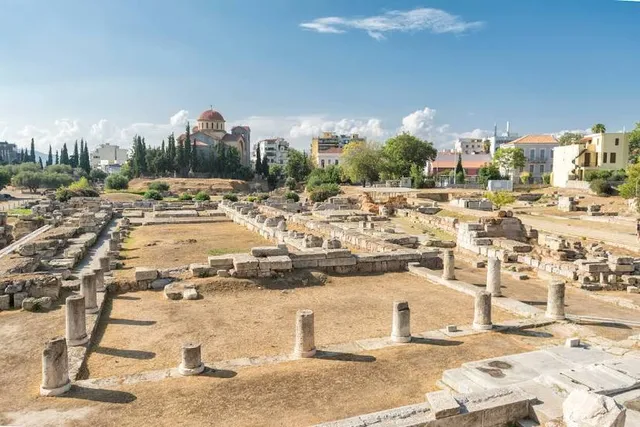
Kerameikos also known by its Latinized form Ceramicus, is an area of Athens, Greece, located to the northwest of the Acropolis, which includes an extensive area both within and outside the ancient city walls, on both sides of the Dipylon Gate and by the banks of the Eridanos River.
Nearby attractions
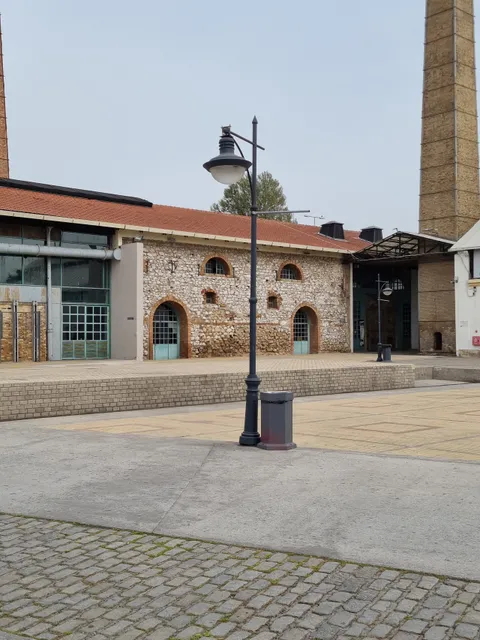
Technopolis City of Athens
Pireos 100, Athina 118 54, Greece
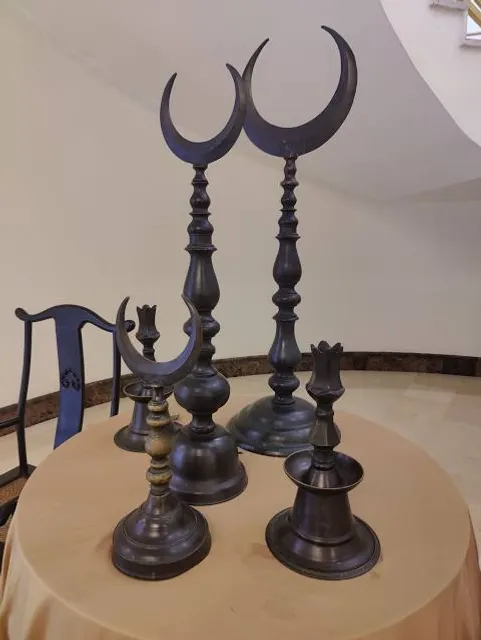
Benaki Museum of Islamic Art
Αγ. Ασωμάτων 22 &, Dipilou 12, Athina 105 53, Greece
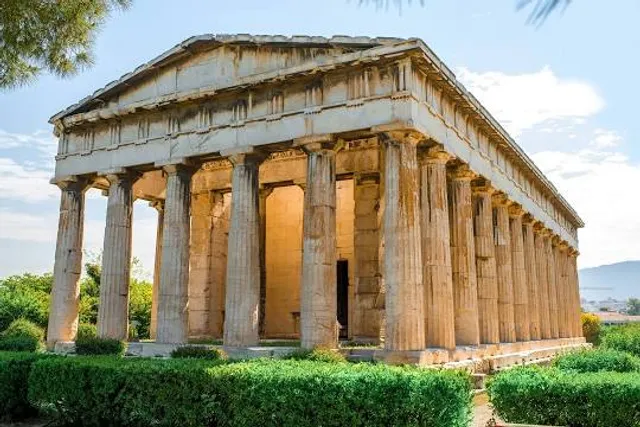
Temple of Hephaestus
Athens 105 55, Greece
Ancient Agora of Athens
Athens 105 55, Greece
Herakleidon Museum
Iraklidon 16, Athina 118 51, Greece
Museum of Illusions Athens
Ermou 119 Entrance from, Astiggos 12, Athina 105 55, Greece
Dipylon
Kerameikos Archaeological Site, Psaromiligkou 33, Athina 105 53, Greece
Modern Ceramics Study Center
Melidoni 4, Athina 105 53, Greece
Makronissos Museum (P.E.K.A.M.)
Ag. Asomaton 31, Athina 105 53, Greece
Statue of Theseus
Athens 105 55, Greece
Nearby restaurants
To steki tou Ilia
Thessalonikis 7, Athina 118 51, Greece
Enteka Athens
Ermou 152, Athina 105 53, Greece
Rakor
Plateon 10, Athina 104 35, Greece
CTC Urban Gastronomy
Plateon 15, Athina 104 35, Greece
Merceri food & drink
Iraklidon 21, Athina 118 51, Greece
Korova
Keramikou 93-95, Athina 104 35, Greece
Στα Καλά Καθούμενα
Ιερά Οδός 25-27-29, Iera Odos 29, Athina 118 54, Greece
Γυριστρούλα-Gyristroula
Square (across from "Thissio" ISAP station, Ag. Asomaton 9, Athina 105 54, Greece
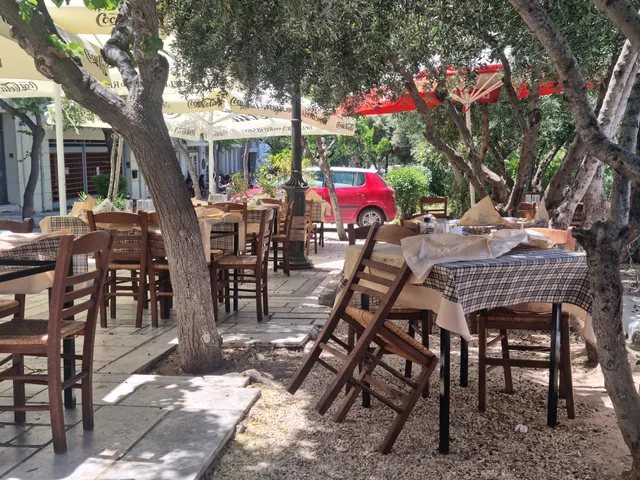
Το λοκάλι
Sarri 44, Athina 105 53, Greece
To kousoulo
Amfiktionos 27, Athina 118 51, Greece
Nearby hotels
Athenaeum Eridanus Luxury Hotel
P. Tsaldari 78-80, Athina 104 35, Greece
Jason Inn
12 Asomaton Street - 10553 12, Ag. Asomaton Street, Athina 105 53, Greece
Asomaton
10, Asomaton Str, Athina 105 53, Greece
Pink Mango
Agisilaou 92, Athina 104 35, Greece
BE MY GUEST ATHENS
Nileos 33, Athina 118 51, Greece
ACROPOLIS VISION
Vasilis 2, Athina 118 51, Greece
Pink Lemon
Agisilaou 90, Athina 104 35, Greece
Phidias Hotel by Oniro
Apostolou Pavlou 39, Athina 118 51, Greece
NLH KERAMEIKOS - Neighborhood Lifestyle Hotels
Samouil Kalogirou 6, Athina 105 53, Greece
Apeiron Acropolis Suites
Melidoni 2, Athina 105 53, Greece
Related posts
Keywords
Kerameikos Archaeological Site tourism.Kerameikos Archaeological Site hotels.Kerameikos Archaeological Site bed and breakfast. flights to Kerameikos Archaeological Site.Kerameikos Archaeological Site attractions.Kerameikos Archaeological Site restaurants.Kerameikos Archaeological Site travel.Kerameikos Archaeological Site travel guide.Kerameikos Archaeological Site travel blog.Kerameikos Archaeological Site pictures.Kerameikos Archaeological Site photos.Kerameikos Archaeological Site travel tips.Kerameikos Archaeological Site maps.Kerameikos Archaeological Site things to do.
Kerameikos Archaeological Site things to do, attractions, restaurants, events info and trip planning
Kerameikos Archaeological Site
GreeceAtticaAthensKerameikos Archaeological Site

Basic Info

Kerameikos Archaeological Site

Ermou 148, Athina 105 53, Greece
4.4(2.7K)
Open 24 hours
Save
spot

Ratings & Description

Info

Kerameikos also known by its Latinized form Ceramicus, is an area of Athens, Greece, located to the northwest of the Acropolis, which includes an extensive area both within and outside the ancient city walls, on both sides of the Dipylon Gate and by the banks of the Eridanos River.

Cultural
Accessibility
attractions: Technopolis City of Athens, Benaki Museum of Islamic Art, Temple of Hephaestus, Ancient Agora of Athens, Herakleidon Museum, Museum of Illusions Athens, Dipylon, Modern Ceramics Study Center, Makronissos Museum (P.E.K.A.M.), Statue of Theseus, restaurants: To steki tou Ilia, Enteka Athens, Rakor, CTC Urban Gastronomy, Merceri food & drink, Korova, Στα Καλά Καθούμενα, Γυριστρούλα-Gyristroula, Το λοκάλι, To kousoulo
logoLearn more insights from Wanderboat AI.
Phone
+30 21 0346 3552
Website
odysseus.culture.gr

Plan your stay

hotel
Pet-friendly Hotels in Athens
Find a cozy hotel nearby and make it a full experience.

hotel
Affordable Hotels in Athens
Find a cozy hotel nearby and make it a full experience.

hotel
The Coolest Hotels You Haven't Heard Of (Yet)
Find a cozy hotel nearby and make it a full experience.

hotel
Trending Stays Worth the Hype in Athens
Find a cozy hotel nearby and make it a full experience.

Reviews

Nearby attractions of Kerameikos Archaeological Site

Technopolis City of Athens

Benaki Museum of Islamic Art

Temple of Hephaestus

Ancient Agora of Athens

Herakleidon Museum

Museum of Illusions Athens

Dipylon

Modern Ceramics Study Center

Makronissos Museum (P.E.K.A.M.)

Statue of Theseus
Technopolis City of Athens

Technopolis City of Athens

4.5

(7.2K)

Open until 10:00 PM
Click for details
Benaki Museum of Islamic Art

Benaki Museum of Islamic Art

4.6

(510)

Open 24 hours
Click for details
Temple of Hephaestus

Temple of Hephaestus

4.8

(4.7K)

Open 24 hours
Click for details
Ancient Agora of Athens

Ancient Agora of Athens

4.7

(13.2K)

Open until 8:00 PM
Click for details
Things to do nearby

Explore Athens on Electric Bikes
Fri, Dec 5 • 12:30 PM
117 42, Athens, Greece
View details
Classic Greek Cooking Class in Athens
Sat, Dec 6 • 8:30 AM
105 51, Athens, Greece
View details
Philosophy and Democracy Tour of Athens
Sun, Dec 7 • 8:30 AM
105 55, Athens, Greece
View details

Nearby restaurants of Kerameikos Archaeological Site

To steki tou Ilia

Enteka Athens

Rakor

CTC Urban Gastronomy

Merceri food & drink

Korova

Στα Καλά Καθούμενα

Γυριστρούλα-Gyristroula
Το λοκάλι

To kousoulo

To steki tou Ilia

To steki tou Ilia

4.5

(752)

$$

Click for details
Enteka Athens

Enteka Athens

4.2

(226)

$$

Click for details
Rakor

Rakor

4.6

(1.1K)

$$

Click for details
CTC Urban Gastronomy

CTC Urban Gastronomy

4.7

(634)

$$$$

Closed
Click for details
Get the Appoverlay
Get the AppOne tap to find yournext favorite spots!
Wanderboat LogoWanderboat

Your everyday Al companion for getaway ideas

CompanyAbout Us
InformationAI Trip PlannerSitemap
SocialXInstagramTiktokLinkedin
LegalTerms of ServicePrivacy Policy

Get the app

© 2025 Wanderboat. All rights reserved.
logo

Reviews of Kerameikos Archaeological Site

4.4
(2,656)
avatar
5.0
20w

Athens has a way of dazzling visitors with its grandeur, the towering Acropolis, the bustling Plaka, and the iconic Temple of Olympian Zeus. But nestled a bit off the beaten track, the Kerameikos Archaeological Site offers a completely different kind of experience: quieter, reflective, and surprisingly alive in its own subtle way.

After spending our morning exploring the Ancient Agora, my wife and I continued our Athenian journey by heading northwest towards Kerameikos. The walk itself was pleasant, framed by the kind of urban fabric that blends past and present in typical Athens fashion. There were stretches of cobbled lanes, flowering trees clinging to the edges of fences, and the occasional cat snoozing under the sun, an image you tend to collect often in Greece. As we reached the entry gate, the surroundings opened up, revealing a wide expanse of ruins, earth-toned stones, and scattered columns basking under the Mediterranean light.

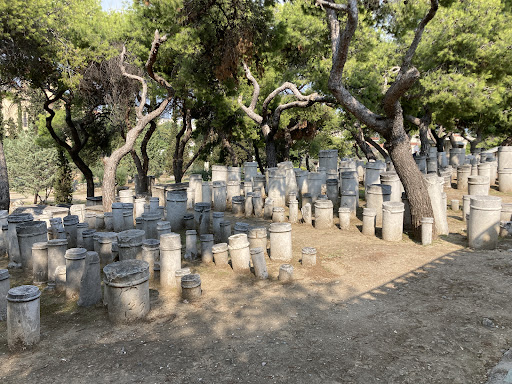
The name Kerameikos stems from the Greek word for pottery, and historically, this district was home to the city’s potters. But it’s more famously known for being the oldest and most significant cemetery in ancient Athens. Unlike the more frequented sites in the city, this one had a notably hushed character, with very few visitors around during our stay. Instead, we shared the place with a handful of slow-moving tortoises that seemed perfectly at home crawling amongst the grave markers and fallen stones, a curious and endearing touch that added to the serenity.

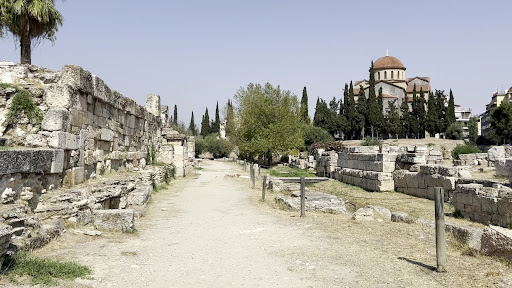
We wandered along the paths tracing the Sacred Way and the Street of Tombs, admiring remnants of funerary monuments that once honoured prominent citizens of classical Athens. Some of the marble stelae were still remarkably well preserved, offering a solemn glimpse into how the Athenians memorialised their dead. One of the best parts is that you’re free to walk around most of the site at your own pace, giving you time to absorb the historical weight without feeling rushed.

The on-site museum, though modest in size, is worth a visit. It houses a small but curated collection of grave stelae, sculptures, and burial offerings uncovered during excavations. Just outside, there’s a shaded area with benches, ideal for taking a short break from the sun before continuing your visit.

For practical matters, admission is quite affordable at €4, but if you’re planning to visit several landmarks in Athens, the €30 multi-site ticket is a solid choice. This bundled pass covers the Acropolis, Roman Agora, Ancient Agora, Olympieion, and more, valid for five days. As for transport, you’ll find Thēseio and Kerameikos metro stations within easy walking distance, which makes getting to and from the site quite straightforward.

In conclusion, Kerameikos may not command the same immediate awe as the Parthenon or the Erechtheion, but it offers something arguably more valuable to the curious traveller, a moment of stillness, a brush with Athenian mortality, and the chance to discover a side of the city not many take the time to see. It is the kind of place that lingers gently in your memory, long after you’ve left its stone...

   Read more
avatar
4.0
2y

The Archaeological Site of Kerameikos, Athens, Greece.

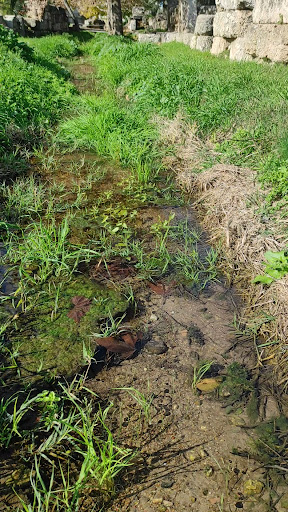
In antiquity, Eridanos was a river with a continuous flow throughout the year, fed by springs on the slopes of Lycabettus Hill. It was one of the rivers that irrigated the Athens basin since prehistoric times, along with Ilissos and Kifissos.

Its torrential flow and its passage through the center of the densely populated city led to its confinement and partial undergrounding during various periods, starting from the Classical era. Although the smallest of Athens' three rivers, Eridanos played a crucial role in urban planning throughout the centuries. Its course often changed, and it frequently flooded during heavy rains, as it collected waters from the Acropolis, Areopagus, Pnyx, and other smaller streams and torrents.

Today, the riverbed, about two meters wide, is visible only in the archaeological site of Kerameikos (next to the Sacred Gate). It crosses the excavation site, the necropolis of Kerameikos, from east to west for approximately 200 meters.

In 478 BCE, with the construction of the Themistoclean Wall, the river's course near the Agora was regulated and enclosed within the city walls for the first time. Until then, Eridanos flowed outside the city walls and occasionally formed marshes in the large cemetery of the Athenians, forcing changes in burial locations over time.

A section of its course along the Sacred Way was straightened and confined with stone walls on both sides. The most significant gates of the wall in Kerameikos were the Dipylon Gate, the largest and most formal gate of Athens (leading to the Academy of Plato), and the Sacred Gate (leading to Eleusis).

The Sacred Way, starting at the Sacred Gate, was the route of the Eleusinian Mysteries procession. From the Dipylon Gate, the Panathenaic procession began, ascending to the Acropolis via the Panathenaic Way. The preparation for the Panathenaic procession took place in the Pompeion, a large building with a central peristyle courtyard located near the Dipylon Gate, dated to the late 5th century BCE.

Kerameikos, once a large Attic deme on the northwestern outskirts of Athens, was not only the most significant cemetery from prehistoric to Byzantine times but also a center for producing the renowned Attic pottery. It was a place that encapsulated both the zenith and decline of Athens' Golden Age.

There, "from the Dipylon to the Academy," Pericles delivered his famous Funeral Oration, summarizing the superiority of Athenian democracy. For generations, Athenians buried prominent citizens, warriors, athletes, and other notable figures, establishing splendid funerary monuments.

In the Demosion Sema, the Athenian state honored its dead with funeral orations and games. Festivals such as the Panathenaia started in Kerameikos, where the 5th-century BCE democracy left its mark through institutions like ostracism.

Archaeological excavations have "resurrected" funerary sculptures, inscriptions, and pottery, revealing the spirit, values, and cultural heritage of ancient Athens, all of which are embodied in the site...

   Read more
avatar
5.0
1y

The Kerameikos Archaeological Site in Athens is an essential destination for anyone keen to delve into the ancient city's social and ceremonial life. Situated just northwest of the Acropolis, this significant archaeological site offers a profound exploration of Athens’ history from the Archaic to the Roman period.

Kerameikos was originally the potters' quarter of ancient Athens, renowned for its production of ceramics. However, it also served as a major cemetery and a ceremonial gateway into the city. The site is renowned for its well-preserved artifacts and monuments, which provide invaluable insights into ancient Athenian society and customs.

One of the highlights of Kerameikos is its extensive cemetery, which includes impressive funerary monuments such as the famous “Grave of the Diver,” a painted tomb that offers a rare glimpse into the funerary practices and artistic styles of the period. The cemetery also features an array of grave markers, from elaborate stele to simpler grave goods, reflecting the diversity of burial practices across different periods.

The site is also home to the ancient city walls and the Dipylon Gate, which was one of the main entrances to Athens. The gate, along with the remains of the surrounding city walls, provides context for the city's defensive and ceremonial architecture. The accompanying artifacts and inscriptions found on-site offer additional insights into the daily lives and rituals of ancient Athenians.

Kerameikos is noted for its archaeological museum, which houses a remarkable collection of artifacts unearthed from the site. This includes pottery, sculptures, and everyday items that illuminate various aspects of Athenian life, from domestic activities to religious practices.

Visitors to Kerameikos should be prepared for a comprehensive and immersive experience. The site’s layout allows for a leisurely exploration of its key features, with informative plaques and well-maintained paths enhancing the educational value of the visit.

In summary, the Kerameikos Archaeological Site is a five-star destination that provides a deep dive into the cultural and historical fabric of ancient Athens. Its well-preserved ruins and rich collection of artifacts offer a fascinating window into the city's past, making it an essential stop for history enthusiasts and anyone interested in classical...

   Read more
Page 1 of 7
Previous
Next

Posts

Carlos RangelCarlos Rangel
Athens has a way of dazzling visitors with its grandeur, the towering Acropolis, the bustling Plaka, and the iconic Temple of Olympian Zeus. But nestled a bit off the beaten track, the Kerameikos Archaeological Site offers a completely different kind of experience: quieter, reflective, and surprisingly alive in its own subtle way. After spending our morning exploring the Ancient Agora, my wife and I continued our Athenian journey by heading northwest towards Kerameikos. The walk itself was pleasant, framed by the kind of urban fabric that blends past and present in typical Athens fashion. There were stretches of cobbled lanes, flowering trees clinging to the edges of fences, and the occasional cat snoozing under the sun, an image you tend to collect often in Greece. As we reached the entry gate, the surroundings opened up, revealing a wide expanse of ruins, earth-toned stones, and scattered columns basking under the Mediterranean light. The name Kerameikos stems from the Greek word for pottery, and historically, this district was home to the city’s potters. But it’s more famously known for being the oldest and most significant cemetery in ancient Athens. Unlike the more frequented sites in the city, this one had a notably hushed character, with very few visitors around during our stay. Instead, we shared the place with a handful of slow-moving tortoises that seemed perfectly at home crawling amongst the grave markers and fallen stones, a curious and endearing touch that added to the serenity. We wandered along the paths tracing the Sacred Way and the Street of Tombs, admiring remnants of funerary monuments that once honoured prominent citizens of classical Athens. Some of the marble stelae were still remarkably well preserved, offering a solemn glimpse into how the Athenians memorialised their dead. One of the best parts is that you’re free to walk around most of the site at your own pace, giving you time to absorb the historical weight without feeling rushed. The on-site museum, though modest in size, is worth a visit. It houses a small but curated collection of grave stelae, sculptures, and burial offerings uncovered during excavations. Just outside, there’s a shaded area with benches, ideal for taking a short break from the sun before continuing your visit. For practical matters, admission is quite affordable at €4, but if you’re planning to visit several landmarks in Athens, the €30 multi-site ticket is a solid choice. This bundled pass covers the Acropolis, Roman Agora, Ancient Agora, Olympieion, and more, valid for five days. As for transport, you’ll find Thēseio and Kerameikos metro stations within easy walking distance, which makes getting to and from the site quite straightforward. In conclusion, Kerameikos may not command the same immediate awe as the Parthenon or the Erechtheion, but it offers something arguably more valuable to the curious traveller, a moment of stillness, a brush with Athenian mortality, and the chance to discover a side of the city not many take the time to see. It is the kind of place that lingers gently in your memory, long after you’ve left its stone paths behind.
Chletsos VassilisChletsos Vassilis
The Archaeological Site of Kerameikos, Athens, Greece. In antiquity, Eridanos was a river with a continuous flow throughout the year, fed by springs on the slopes of Lycabettus Hill. It was one of the rivers that irrigated the Athens basin since prehistoric times, along with Ilissos and Kifissos. Its torrential flow and its passage through the center of the densely populated city led to its confinement and partial undergrounding during various periods, starting from the Classical era. Although the smallest of Athens' three rivers, Eridanos played a crucial role in urban planning throughout the centuries. Its course often changed, and it frequently flooded during heavy rains, as it collected waters from the Acropolis, Areopagus, Pnyx, and other smaller streams and torrents. Today, the riverbed, about two meters wide, is visible only in the archaeological site of Kerameikos (next to the Sacred Gate). It crosses the excavation site, the necropolis of Kerameikos, from east to west for approximately 200 meters. In 478 BCE, with the construction of the Themistoclean Wall, the river's course near the Agora was regulated and enclosed within the city walls for the first time. Until then, Eridanos flowed outside the city walls and occasionally formed marshes in the large cemetery of the Athenians, forcing changes in burial locations over time. A section of its course along the Sacred Way was straightened and confined with stone walls on both sides. The most significant gates of the wall in Kerameikos were the Dipylon Gate, the largest and most formal gate of Athens (leading to the Academy of Plato), and the Sacred Gate (leading to Eleusis). The Sacred Way, starting at the Sacred Gate, was the route of the Eleusinian Mysteries procession. From the Dipylon Gate, the Panathenaic procession began, ascending to the Acropolis via the Panathenaic Way. The preparation for the Panathenaic procession took place in the Pompeion, a large building with a central peristyle courtyard located near the Dipylon Gate, dated to the late 5th century BCE. Kerameikos, once a large Attic deme on the northwestern outskirts of Athens, was not only the most significant cemetery from prehistoric to Byzantine times but also a center for producing the renowned Attic pottery. It was a place that encapsulated both the zenith and decline of Athens' Golden Age. There, "from the Dipylon to the Academy," Pericles delivered his famous Funeral Oration, summarizing the superiority of Athenian democracy. For generations, Athenians buried prominent citizens, warriors, athletes, and other notable figures, establishing splendid funerary monuments. In the Demosion Sema, the Athenian state honored its dead with funeral orations and games. Festivals such as the Panathenaia started in Kerameikos, where the 5th-century BCE democracy left its mark through institutions like ostracism. Archaeological excavations have "resurrected" funerary sculptures, inscriptions, and pottery, revealing the spirit, values, and cultural heritage of ancient Athens, all of which are embodied in the site of Kerameikos.
M JM J
The Kerameikos Archaeological Site in Athens is an essential destination for anyone keen to delve into the ancient city's social and ceremonial life. Situated just northwest of the Acropolis, this significant archaeological site offers a profound exploration of Athens’ history from the Archaic to the Roman period. Kerameikos was originally the potters' quarter of ancient Athens, renowned for its production of ceramics. However, it also served as a major cemetery and a ceremonial gateway into the city. The site is renowned for its well-preserved artifacts and monuments, which provide invaluable insights into ancient Athenian society and customs. One of the highlights of Kerameikos is its extensive cemetery, which includes impressive funerary monuments such as the famous “Grave of the Diver,” a painted tomb that offers a rare glimpse into the funerary practices and artistic styles of the period. The cemetery also features an array of grave markers, from elaborate stele to simpler grave goods, reflecting the diversity of burial practices across different periods. The site is also home to the ancient city walls and the Dipylon Gate, which was one of the main entrances to Athens. The gate, along with the remains of the surrounding city walls, provides context for the city's defensive and ceremonial architecture. The accompanying artifacts and inscriptions found on-site offer additional insights into the daily lives and rituals of ancient Athenians. Kerameikos is noted for its archaeological museum, which houses a remarkable collection of artifacts unearthed from the site. This includes pottery, sculptures, and everyday items that illuminate various aspects of Athenian life, from domestic activities to religious practices. Visitors to Kerameikos should be prepared for a comprehensive and immersive experience. The site’s layout allows for a leisurely exploration of its key features, with informative plaques and well-maintained paths enhancing the educational value of the visit. In summary, the Kerameikos Archaeological Site is a five-star destination that provides a deep dive into the cultural and historical fabric of ancient Athens. Its well-preserved ruins and rich collection of artifacts offer a fascinating window into the city's past, making it an essential stop for history enthusiasts and anyone interested in classical archaeology.
See more posts
See more posts
hotel
Find your stay

Pet-friendly Hotels in Athens

Find a cozy hotel nearby and make it a full experience.

Athens has a way of dazzling visitors with its grandeur, the towering Acropolis, the bustling Plaka, and the iconic Temple of Olympian Zeus. But nestled a bit off the beaten track, the Kerameikos Archaeological Site offers a completely different kind of experience: quieter, reflective, and surprisingly alive in its own subtle way. After spending our morning exploring the Ancient Agora, my wife and I continued our Athenian journey by heading northwest towards Kerameikos. The walk itself was pleasant, framed by the kind of urban fabric that blends past and present in typical Athens fashion. There were stretches of cobbled lanes, flowering trees clinging to the edges of fences, and the occasional cat snoozing under the sun, an image you tend to collect often in Greece. As we reached the entry gate, the surroundings opened up, revealing a wide expanse of ruins, earth-toned stones, and scattered columns basking under the Mediterranean light. The name Kerameikos stems from the Greek word for pottery, and historically, this district was home to the city’s potters. But it’s more famously known for being the oldest and most significant cemetery in ancient Athens. Unlike the more frequented sites in the city, this one had a notably hushed character, with very few visitors around during our stay. Instead, we shared the place with a handful of slow-moving tortoises that seemed perfectly at home crawling amongst the grave markers and fallen stones, a curious and endearing touch that added to the serenity. We wandered along the paths tracing the Sacred Way and the Street of Tombs, admiring remnants of funerary monuments that once honoured prominent citizens of classical Athens. Some of the marble stelae were still remarkably well preserved, offering a solemn glimpse into how the Athenians memorialised their dead. One of the best parts is that you’re free to walk around most of the site at your own pace, giving you time to absorb the historical weight without feeling rushed. The on-site museum, though modest in size, is worth a visit. It houses a small but curated collection of grave stelae, sculptures, and burial offerings uncovered during excavations. Just outside, there’s a shaded area with benches, ideal for taking a short break from the sun before continuing your visit. For practical matters, admission is quite affordable at €4, but if you’re planning to visit several landmarks in Athens, the €30 multi-site ticket is a solid choice. This bundled pass covers the Acropolis, Roman Agora, Ancient Agora, Olympieion, and more, valid for five days. As for transport, you’ll find Thēseio and Kerameikos metro stations within easy walking distance, which makes getting to and from the site quite straightforward. In conclusion, Kerameikos may not command the same immediate awe as the Parthenon or the Erechtheion, but it offers something arguably more valuable to the curious traveller, a moment of stillness, a brush with Athenian mortality, and the chance to discover a side of the city not many take the time to see. It is the kind of place that lingers gently in your memory, long after you’ve left its stone paths behind.
Carlos Rangel

Carlos Rangel

hotel
Find your stay

Affordable Hotels in Athens

Find a cozy hotel nearby and make it a full experience.

Get the Appoverlay
Get the AppOne tap to find yournext favorite spots!
The Archaeological Site of Kerameikos, Athens, Greece. In antiquity, Eridanos was a river with a continuous flow throughout the year, fed by springs on the slopes of Lycabettus Hill. It was one of the rivers that irrigated the Athens basin since prehistoric times, along with Ilissos and Kifissos. Its torrential flow and its passage through the center of the densely populated city led to its confinement and partial undergrounding during various periods, starting from the Classical era. Although the smallest of Athens' three rivers, Eridanos played a crucial role in urban planning throughout the centuries. Its course often changed, and it frequently flooded during heavy rains, as it collected waters from the Acropolis, Areopagus, Pnyx, and other smaller streams and torrents. Today, the riverbed, about two meters wide, is visible only in the archaeological site of Kerameikos (next to the Sacred Gate). It crosses the excavation site, the necropolis of Kerameikos, from east to west for approximately 200 meters. In 478 BCE, with the construction of the Themistoclean Wall, the river's course near the Agora was regulated and enclosed within the city walls for the first time. Until then, Eridanos flowed outside the city walls and occasionally formed marshes in the large cemetery of the Athenians, forcing changes in burial locations over time. A section of its course along the Sacred Way was straightened and confined with stone walls on both sides. The most significant gates of the wall in Kerameikos were the Dipylon Gate, the largest and most formal gate of Athens (leading to the Academy of Plato), and the Sacred Gate (leading to Eleusis). The Sacred Way, starting at the Sacred Gate, was the route of the Eleusinian Mysteries procession. From the Dipylon Gate, the Panathenaic procession began, ascending to the Acropolis via the Panathenaic Way. The preparation for the Panathenaic procession took place in the Pompeion, a large building with a central peristyle courtyard located near the Dipylon Gate, dated to the late 5th century BCE. Kerameikos, once a large Attic deme on the northwestern outskirts of Athens, was not only the most significant cemetery from prehistoric to Byzantine times but also a center for producing the renowned Attic pottery. It was a place that encapsulated both the zenith and decline of Athens' Golden Age. There, "from the Dipylon to the Academy," Pericles delivered his famous Funeral Oration, summarizing the superiority of Athenian democracy. For generations, Athenians buried prominent citizens, warriors, athletes, and other notable figures, establishing splendid funerary monuments. In the Demosion Sema, the Athenian state honored its dead with funeral orations and games. Festivals such as the Panathenaia started in Kerameikos, where the 5th-century BCE democracy left its mark through institutions like ostracism. Archaeological excavations have "resurrected" funerary sculptures, inscriptions, and pottery, revealing the spirit, values, and cultural heritage of ancient Athens, all of which are embodied in the site of Kerameikos.
Chletsos Vassilis

Chletsos Vassilis

hotel
Find your stay

The Coolest Hotels You Haven't Heard Of (Yet)

Find a cozy hotel nearby and make it a full experience.

hotel
Find your stay

Trending Stays Worth the Hype in Athens

Find a cozy hotel nearby and make it a full experience.

The Kerameikos Archaeological Site in Athens is an essential destination for anyone keen to delve into the ancient city's social and ceremonial life. Situated just northwest of the Acropolis, this significant archaeological site offers a profound exploration of Athens’ history from the Archaic to the Roman period. Kerameikos was originally the potters' quarter of ancient Athens, renowned for its production of ceramics. However, it also served as a major cemetery and a ceremonial gateway into the city. The site is renowned for its well-preserved artifacts and monuments, which provide invaluable insights into ancient Athenian society and customs. One of the highlights of Kerameikos is its extensive cemetery, which includes impressive funerary monuments such as the famous “Grave of the Diver,” a painted tomb that offers a rare glimpse into the funerary practices and artistic styles of the period. The cemetery also features an array of grave markers, from elaborate stele to simpler grave goods, reflecting the diversity of burial practices across different periods. The site is also home to the ancient city walls and the Dipylon Gate, which was one of the main entrances to Athens. The gate, along with the remains of the surrounding city walls, provides context for the city's defensive and ceremonial architecture. The accompanying artifacts and inscriptions found on-site offer additional insights into the daily lives and rituals of ancient Athenians. Kerameikos is noted for its archaeological museum, which houses a remarkable collection of artifacts unearthed from the site. This includes pottery, sculptures, and everyday items that illuminate various aspects of Athenian life, from domestic activities to religious practices. Visitors to Kerameikos should be prepared for a comprehensive and immersive experience. The site’s layout allows for a leisurely exploration of its key features, with informative plaques and well-maintained paths enhancing the educational value of the visit. In summary, the Kerameikos Archaeological Site is a five-star destination that provides a deep dive into the cultural and historical fabric of ancient Athens. Its well-preserved ruins and rich collection of artifacts offer a fascinating window into the city's past, making it an essential stop for history enthusiasts and anyone interested in classical archaeology.
M J

M J

See more posts
See more posts