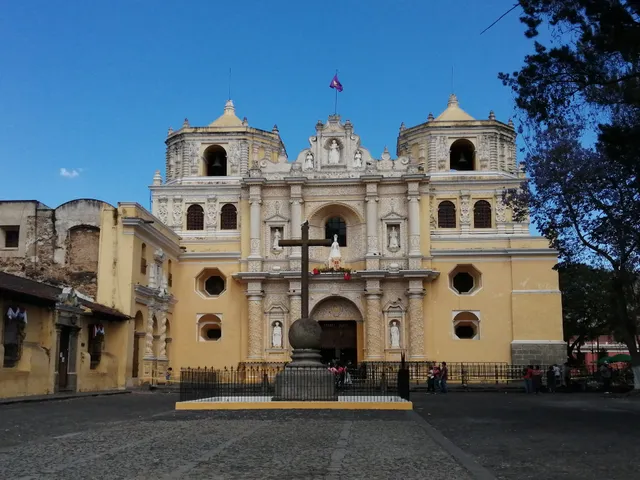
Iglesia de la Merced is one of the most important and iconic landmarks in Antigua, Guatemala. This beautiful colonial-era church, which dates back to the 16th century, is a stunning example of baroque architecture and holds significant cultural and religious importance. The church is not only a place of worship but also a symbol of Antigua’s rich history and architectural heritage.
Key Features of Iglesia de la Merced:
Historical Significance: Iglesia de la Merced was originally founded in 1548 by the Order of the Mercedarians, a Catholic religious order. The church has played a significant role in the religious life of Antigua, especially during the colonial period, and remains a major place of worship for both locals and visitors. The church was damaged during the 1690 earthquake and subsequently rebuilt, incorporating both original elements and newer additions. Over the centuries, it has witnessed significant events in the city’s history, including the destructive earthquake in 1773 that led to the abandonment of Antigua as the capital of Guatemala.
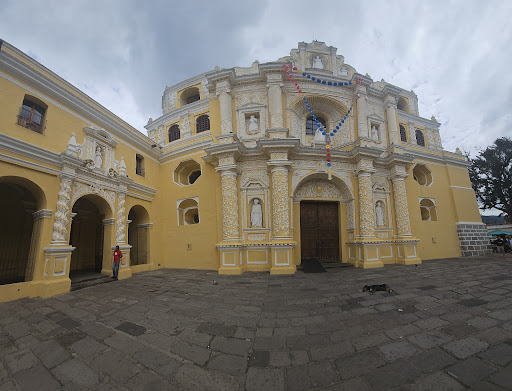
Architecture: The architecture of Iglesia de la Merced is a stunning example of colonial baroque style, characterized by its ornate decorations and intricate details. The façade features elaborate carvings, including the prominent arch and flamboyant baroque design, with a combination of religious motifs, geometric patterns, and floral designs. The bell tower is one of the most distinctive features of the church, standing tall above the surrounding buildings. The tower has been reconstructed over time, but it still retains the church’s original grandeur and historical character. Inside, the church is equally impressive, with a vaulted ceiling, painted frescoes, and a variety of religious artwork. The main altar is beautifully adorned and features a statue of the Virgin of Mercy, which is central to the church’s identity.
Virgin of Mercy: The church is dedicated to Our Lady of Mercy (Nuestra Señora de la Merced), whose statue is placed in the main altar. This religious figure is important to the Mercedarian Order and is venerated for her role in protecting and helping her followers. The church celebrates the feast day of Our Lady of Mercy every September 24th, a day that is marked with special ceremonies and festivities in Antigua.
Renovations and Restoration: Over the years, the church has undergone several restoration projects to preserve its historical and architectural integrity. These restorations have helped maintain the church’s beauty while ensuring it remains a focal point for religious and cultural activities in Antigua. The church has faced challenges, including the ravages of time and earthquakes, but it has continued to stand as a testament to the resilience of both the building and the people of Antigua.
Cultural and Religious Importance: Today, Iglesia de la Merced remains an active church, hosting regular Mass services and special celebrations throughout the year. It is especially popular among locals who come to worship, as well as visitors who want to experience the deep religious and cultural significance of the church. The church is also a central location for important events in Antigua, such as processions during Holy Week (Semana Santa), one of the most significant religious observances in Guatemala.
Overall: Iglesia de la Merced is a must-see destination in Antigua, combining historical significance, beautiful baroque architecture, and a deep connection to local culture and religion. Whether you're interested in religious history, colonial architecture, or simply soaking in the atmosphere of one of Antigua’s most iconic landmarks, Iglesia de la Merced offers an enriching experience. It’s a place where you can appreciate the enduring legacy of Guatemala’s colonial past while connecting with the vibrant present of this...
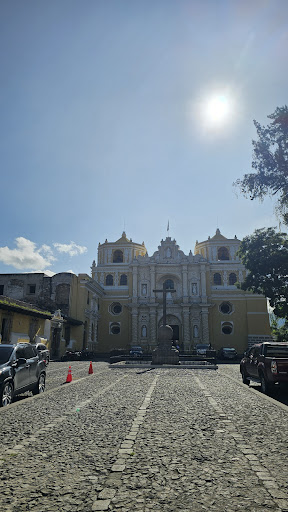
Read moreSocial mobility is a significant issue in Guatemala, especially for women and indigenous peoples. While hard work is not to be discounted, most Guatemalans enjoying a high social status have inherited their wealth. Those that have, continue to have. Those that lack, continue to lack. Upper-class Guatemalans enjoy a level of social and political power unrealized even by members of comparable classes in Europe and the USA. Thus it comes as no surprise that wealthy folks are able to park their Mercedes and large SUVs right in front of la Iglesia de la Merced. Indiginous folks selling basic but authentic and delicious food adjacent to the church seem to hold no animosity. Social Darwinism runs rampant. Just turn off your brain for a moment and enjoy the pretty views.
To the commenter who posted that indiginous folks ("hawkers") sell food and other goods outside, but "it still felt safe:" Of course it feels safe. Indiginous Guatemalans have been beat down for centuries. They know their place. This whole town feels safer than anywhere I've been in the USA.
Why would brown people make you feel unsafe? In which country do most mass shootings and serial killings occur? What race of people is mostly responsible for the deaths of 70-85 million people during WWII? Like I said, turn off your brain for a moment and enjoy the pretty views...
La movilidad social es un problema importante en Guatemala, especialmente para las mujeres y los pueblos indígenas. Si bien no se debe descartar el trabajo duro, la mayoría de los guatemaltecos que disfrutan de un alto estatus social han heredado su riqueza. Los que tienen, siguen teniendo. Los que carecen, continúan careciendo. Los guatemaltecos de clase alta disfrutan de un nivel de poder social y político que ni siquiera son miembros de clases comparables en Europa y Estados Unidos. Por lo tanto, no sorprende que las personas adineradas puedan estacionar sus Mercedes y grandes SUV justo en frente de la Iglesia de la Merced. La gente indígena que vende comida básica pero auténtica y deliciosa junto a la iglesia parece no tener rencor. El darwinismo social corre desenfrenado. Simplemente apaga tu cerebro por un momento y disfruta de las hermosas vistas.
Al comentarista que publicó que la gente indígena ("vendedores ambulantes") vende comida y otros bienes afuera, pero "todavía se sentía seguro:" Por supuesto, se siente seguro. Los guatemaltecos indígenas han sido derrotados durante siglos. Ellos conocen su lugar. Toda esta ciudad se siente más segura que en cualquier otro lugar donde haya estado en los Estados Unidos.
¿Por qué la gente morena te haría sentir inseguro? ¿En qué país ocurren la mayoría de los tiroteos masivos y los asesinatos en serie? ¿Qué raza de personas fueron las principales responsables de la muerte de 70-85 millones de personas durante la Segunda Guerra Mundial? Como dije, apaga tu cerebro por un momento y disfruta de las...
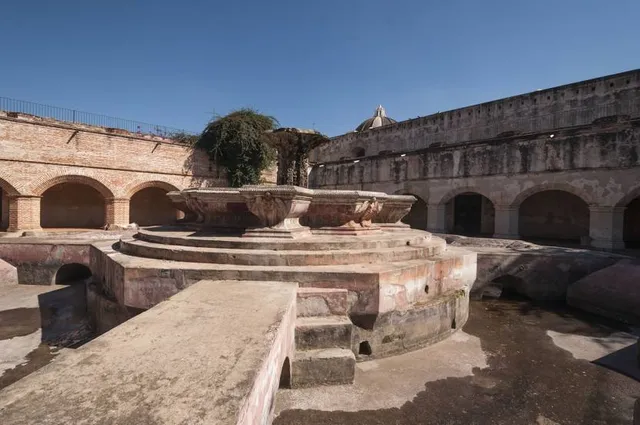
Read moreThe prettiest Baroque church in the city. Part of its appeal is that it’s also one of the few churches that have remained standing relatively unscathed since colonial times.The church is very popular with locals and tourists alike. Its stucco work is admired for its arabesque patterns, known as ataurique – from the Arabic word al-Tariq, meaning “vegetable.” This type of relief detail is a sign of Moorish influence, which was popular at the time.The facade features an image of the Blessed Virgin Mary of Mercy, along with some of the more prominent Mercedarians in history.La Merced is open to the public daily, as are the ruins of the convent next door. However, unlike the church, there is an entrance fee to visit convent’s ruins. Open daily from 9 am to 6 pm, the convent is well worth a visit, as the views of the surrounding volcanoes are excellent on bright days. Highly recommend you take the time to visit La Merced, especially the convent’s...
Read more