🏰 Introduction
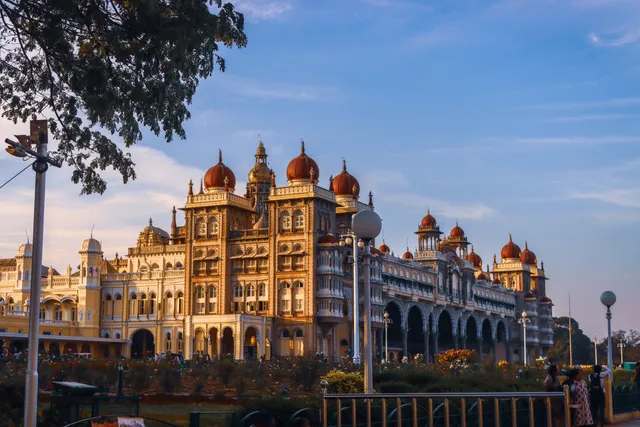
My visit to Mysore Palace, also known as the Amba Vilas Palace, was not just a trip, but a step back into history. Standing in front of this majestic architectural marvel was a dream come true. The palace is a symbol of royalty, heritage, and pride of Karnataka, especially for those who admire India’s regal past. It’s not just a building—it’s a living museum of culture, art, and history that continues to captivate people from across the globe.
This review is based on my personal experience, exploring the palace from morning till evening, soaking in every detail of its architecture, ambiance, cultural richness, and the awe-inspiring stories it holds.
🛣️ Accessibility and Entry Experience
The palace is centrally located in Mysuru city and is extremely accessible. Public transport, autos, and even walking routes are convenient. I traveled by bus from Chamrajanagar and reached the palace in about 2 hours. The entry queue was organized, and ticket prices were quite reasonable—₹100 for adults (Indian citizens), and free entry for children below a certain age. The staff at the entrance were polite and guided us clearly.
There’s a separate line for Indian and foreign tourists, and a free cloakroom facility to store shoes and bags. The moment you cross the entry gate, the grandeur of the palace just hits you. It’s a mix of serenity, splendor, and heritage all packed into one site.
🕌 Architecture and Interiors
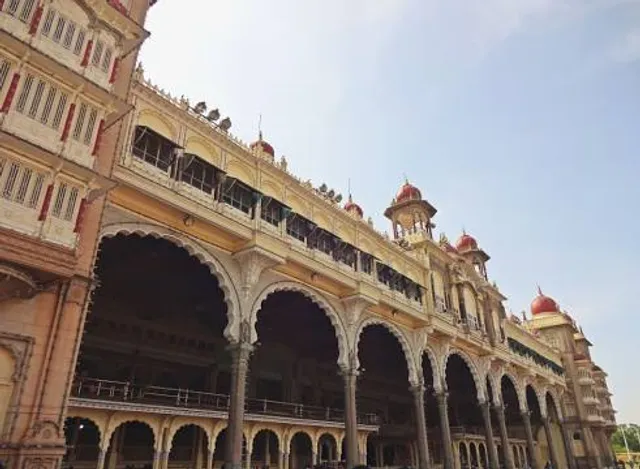
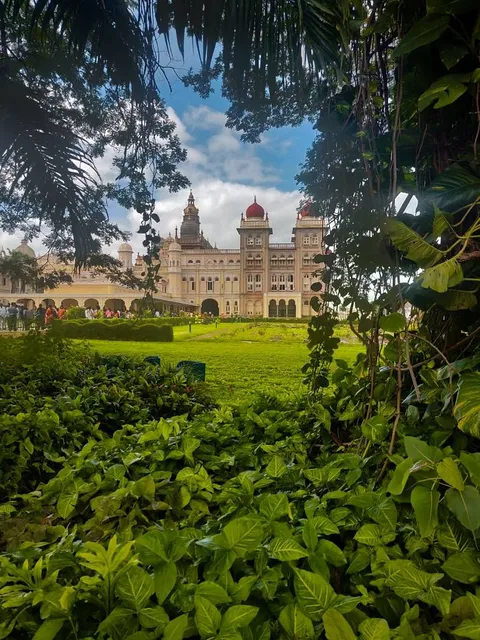
The Mysore Palace is an architectural masterpiece blending Hindu, Mughal, Rajput, and Gothic styles—also called Indo-Saracenic style. It was designed by British architect Henry Irwin and built after the old wooden palace was destroyed in a fire in 1897.
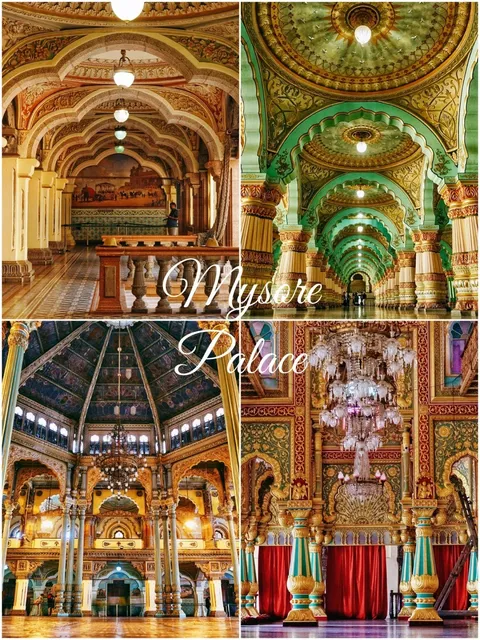
The palace has three floors, with intricately carved wooden doors, colorful glass ceilings, Belgian crystal chandeliers, and ornate tiles. The Durbar Hall and Ambavilasa Hall are the highlights. The ceiling of the Ambavilasa is a wonder on its own with stained glass, and the peacock motifs in the ceiling are spectacular.
Every corner of the palace is covered in rich details—painted pillars, floral motifs, weaponry, photographs, and royal costumes of the Wadiyar dynasty. The palace manages to create a balance between overwhelming detail and calming symmetry.
🖼️ Cultural and Historical Insights
Inside, I felt like I was walking through the pages of history. There are large portraits of the Wadiyar kings, showing their contribution to Karnataka’s governance and arts. The weaponry display was particularly exciting—it included swords, spears, and armor.
The palace also tells stories about Mysore’s contribution to literature, music, and dance. I was fascinated to learn about Dr. S.R. Ranganathan, the father of library science, who hailed from this region. The influence of literature and royal patronage in education and cultural preservation is deeply visible here.
🌳 Outdoor Premises and Gardens
The outer area is as well-maintained as the palace interior. Lush green lawns, flowering plants, and paths for walking added to the calmness. There are clean washroom facilities, security staff, and drinking water stations placed across the campus. Benches are also placed at intervals for elderly visitors to rest.
What made the outdoor experience beautiful was the chance to see the royal elephants and horses, used during the Dasara festival. The atmosphere was alive with school groups, tourists, guides speaking in various languages, and occasional flute sellers giving the vibe of a traditional Indian fair.
💡 Light and Sound Show
One of the best parts of the visit is the Sound and Light Show in the evening. It starts around 7:00 PM and tells the entire history of Mysore through dramatic narration, light effects, and sound. It’s both informative and emotional. I strongly recommend staying till evening to watch this.
And of course, the illumination of the palace with around 100,000 light bulbs is a magical sight to behold. It feels like the entire palace turns into gold. I couldn’t stop clicking pictures during...
Read moreMysore Palace, also known as Amba Vilas Palace, is a historical palace and a royal residence. It is located in Mysore, Karnataka, India. It used to be the official residence of the Wadiyar dynasty and the seat of the Kingdom of Mysore. The palace is in the centre of Mysore, and faces the Chamundi Hills eastward. Mysore is commonly described as the 'City of the Palaces', and there are seven palaces including this one. However, the Mysore Palace refers specifically to the one within the new fort.
The land on which the palace now stands was originally known as mysuru (literally, "citadel"). The first palace inside the Old Fort was built in the 14th century, which was set ablaze and reconstructed multiple times. The Old Fort was built of wood and thus easily caught fire, while the current fort was built of stone, bricks and wood. The current structure was constructed between 1897 and 1912, after the Old Palace burnt down, the current structure is also known as the New Fort. Mysore Palace is one of the most famous tourist attractions in India, after the Taj Mahal, with more than three million annual visitors as on 2014.1] The last palace, now known as the Old Palace or the Wooden Palace, burned to ashes during the wedding of Jayalakshammani, the eldest daughter of Chamaraja Wodeyar in 1896. Maharaja Krishnaraja Wodeyar IV and his mother Maharani Kempananjammanni Devi commissioned the British architect Henry Irwin to build a new palace.[2] E.W. Fritchley worked as a consulting engineer. Meanwhile, the royal family stayed in the nearby Jaganmohan Palace. Construction was overseen by an executive engineer in the Mysore Palace division. He conducted elaborate architectural studies during his visits to Delhi, Madras, and Calcutta, and these were used to plan the new palace. The construction cost was placed at Rs 41,47,913 (around $ 30 million adjusted to inflation) and the palace was completed in 1912.[3 The palace was further expanded in around 1930 (including the addition of the present Public Durbar Hall wing) during the reign of Maharaja Jayachamarajendra Wadiyar.5] The pioneer of modern yoga as exercise, Krishnamacharya, taught yoga in the palace in the early 20th century, at the request of the Raja of Mysore. Among his pupils there were B. K. S. Iyengar and K. Pattabhi Jois, founders of Iyengar Yoga and Ashtanga Yoga respectively. An earlier Raja had 112 yoga postures (asanas) illustrated in a large 19th century book, the Sritattvanidhi, which likely influenced Krishnamacharya.[6
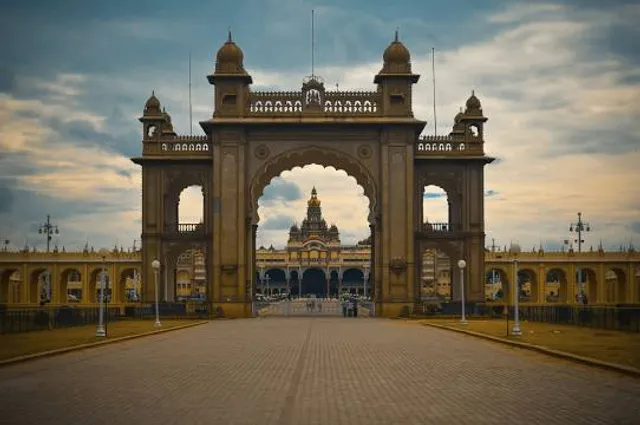
Designed by Henry Irwin, an English architect, the style is that of Indo-Saracenic architecture, with elements from Islamic, Rajput, and Gothic architecture styles.8] It is a three-story, gray granite,[9] structure, about 75 m (245 ft) long and about 48 m (156 ft) wide.[8] There are square towers, five stories tall, at each of the cardinal points, topped with pink domes.[10 The tallest tower, 44 m (145 ft) tall,9 is at the centre of the palace and is topped with a gold plated dome.[8] The façade has arches, canopies, and bay windows.[8] There are seven arches and two smaller arches that connect to the centralized arch of the façade.[8] Above the central arch is a sculpture of Gajalakshmi.[8] The palace is surrounded by gardens.[8] It has four entrances:[10] The 'Jaya Maarthaanda' (main entrance) to the East, 'Jayarama' to the North, 'Balarama' to the South, and 'Varaha' to the West.[10] The entrance fee to get into the palace grounds, is 120 rupees per adult, 50 rupees per child aged 7 to 18 years old, free for children younger than 7 years old and 1000 rupees for foreigners.[10] At the main entrance, there are bronze tigers, sculpted by British sculptor Robert William Colton, on either side of the walkways leading up to the palace.[11] The Gombe Thotti, also known as The Dolls' Pavilion, was a place to display and worship dolls during Dasara festivities.[12] Ane Bagilu, also known as Elephant Gate, is the main entrance to the palace's interior,[13] symbolizing power...
Read moreOur visit to the Mysore Palace on 15th August was nothing short of magical. Known for its grandeur and intricate architecture, this royal residence has long been a symbol of the rich history and cultural heritage of Mysore, and it did not disappoint.
Arrival & Entry Experience
One of the most pleasant surprises was the ease of entry. Despite it being a national holiday, there was no significant wait time, which made the experience even more seamless. The organization at the entrance was smooth, with well-coordinated security and ticketing. From the moment we stepped in, the sight of the palace with its sprawling grounds and the sheer scale of its structure took our breath away.
Exploring the Palace
As we entered the main palace, we were transported back in time. The stunning Indo-Saracenic architecture combined with intricate details and opulence makes this palace a treasure trove of royal history. The grand Durbar Hall with its intricately carved pillars and stained glass ceilings stood out as a centerpiece. Every corner of the palace, from the finely painted murals depicting historical events to the exquisite carvings and decorations, reflected the wealth and grandeur of the Wadiyars, the royal family who once resided here.
The museum inside the palace was equally fascinating, showcasing an array of royal memorabilia, including vintage photographs, costumes, and ceremonial items. It added a layer of depth to the experience, offering a glimpse into the lives of the royals who once called this palace home.
Night Illumination – A Magical Transformation
After exploring the interiors, we decided to wait for the famous night illumination of the palace. And it was well worth the wait. As the sun began to set, anticipation built up among the crowd. When the palace finally lit up, the entire structure was bathed in a soft, golden glow from thousands of bulbs. It felt like something straight out of a fairytale. The way the palace transformed from an architectural marvel in the daylight to a radiant beacon of light at night was truly mesmerizing.
If you visit Mysore, waiting for the palace to light up is a must! The sight of this illuminated masterpiece against the night sky is a memory that will stay with you forever.
Missing the Elephants – A Small Regret
One minor regret during our visit was missing the chance to see the palace’s resident elephants, which are kept at the back of the palace. Unfortunately, the area closed at 6 PM, and by the time we finished touring the palace and were ready to explore further, we realized that we had missed it. If you're planning a visit, I would highly recommend heading to the elephant area before 6 PM to ensure you don't miss out on seeing these majestic creatures up close.
Final Thoughts & Tips
Our visit to Mysore Palace was a truly enriching and awe-inspiring experience. The architectural beauty, the cultural richness, and the grand atmosphere make it a must-visit destination for anyone in Karnataka. Here are a few tips if you're planning to visit:
Plan for Evening Illumination: If you're able to stay until evening, be sure to wait for the palace to light up. It’s a sight you won’t want to miss.
Visit the Elephants Early: If seeing the elephants is on your list, make sure to visit that area before 6 PM, as it closes early.
No Wait Time (At Least on 15th August): While we experienced no wait time during our visit, it’s always good to check the crowd situation if you’re visiting during peak tourist seasons.
Comfortable Footwear & Hydration: The palace grounds are vast, so make sure to wear comfortable footwear, and carry water, especially during hot or humid weather.
In conclusion, Mysore Palace is a majestic gem that offers an unforgettable experience. Whether you're an architecture enthusiast, a history buff, or just someone looking for a serene and beautiful place to visit, this palace has something...
Read more