Some pointers for Hampi travel (with itiniary)
Start early (to avoid the rush and beat the heat later during the day). The main temple attractions (Virupaksha and Vitthala) open at 6 AM and 8.30 AM, respectively
You can purchase tickets using the QR code displayed at the ticket counters in Hampi and Chitradurga Fort
Carry an umbrella and a hat (a must)
Use sunscreen (a must)
Always carry water with you
Wear a good trekking/outdoor shoe (a must) and comfortable cotton clothes
A good camera/SLR/DSLR camera is a must
Most attractions are within minutes walk from each other
Purchase a HAMPI guide book (by Dr. C.S. Vasudevan or other) with map (Rs.199)
There are authorized guides who charge a nominal fee
Carry sufficient cash
Mobile/Internet coverage will be poor or not available at certain areas
Carry at least two portable fully-charged power banks
Be ready to walk a lot
Handwash and hand sanitiser
Itinerary from Bengaluru:
Travelled with family by car to Hampi, a UNESCO World Heritage Site in the state of Karnataka, India. I have added my itinerary (and some pointers) for 3 nights which started from Virupaksha temple. Thanks
Day 1
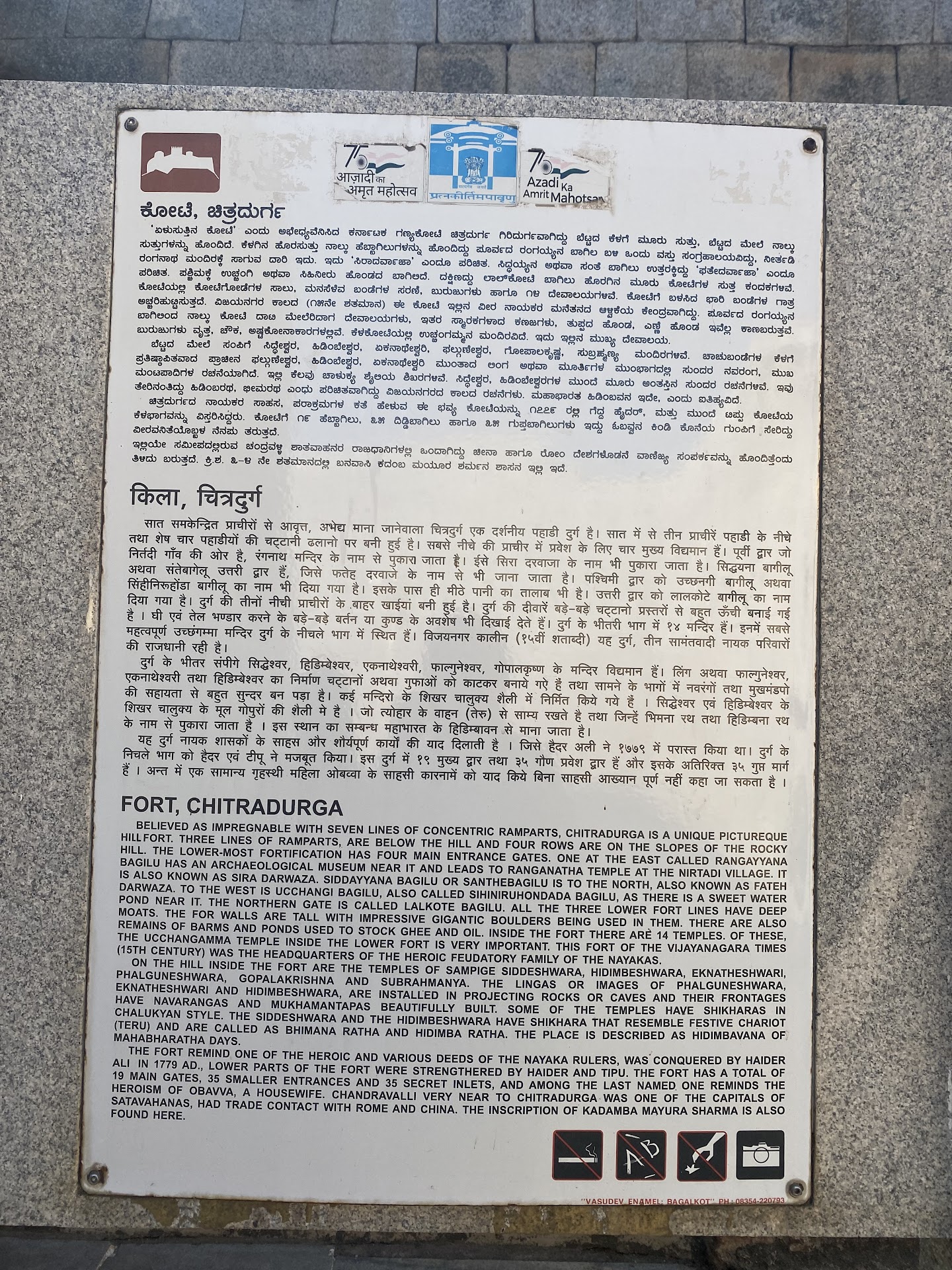
From Bengaluru: Start at 5 AM Breakfast: Paakashala TBegur restaurant (opens 7 am) - NH 48 - Has tolls Stop at Chitradurga Fort – NH 48 - (from Paakashala TBegur) - Has tolls Stop at ‘Tungabhadra Dam Viewpoint’ – Drive from Chitradurga Fort - NH 50 - spend 1/2 day Reach main entrance gate of dam Private vehicles and cars are not allowed to the top view point (for aerial view of dam). Mini zoo, garden and aquarium Spend 2-3 hours
Check-in at Hyatt Place, Toranagallu, Hampi at 2 PM – Drive from Tungabhadra Dam – NH 67
Day 2 (Visit in same order of listing) Virupaksha temple (6 am to 6 pm) • Virupaksha temple parking • Hampi Archaeological Ruins • Hampi Bazaar St (for handicrafts and food) • Meet Lakshmi the elephant at the temple • Monolithic bull (opp Virupaksha temple) • Coracle ride (Tungabhadra River) • Sri Achyutaraaya swami temple and pushkarani (use steps behind the Nandi statue; from top of stairs see Virupaksha temple) • Soole bazaar • Sri Kodandarama Temple
Kadalekalu Ganesha temple (big stone Ganesha)
Saasivekalu Ganesha
Hampi Sri Krishna swami temple • Krishna bazaar • Pushkarani
Shree Badavilinga Gudi
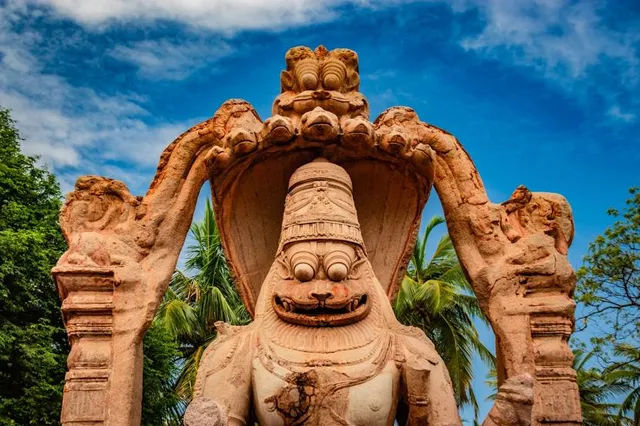
Shri Lakshmi Narasimha shrine
Lunch: Gopi Guest House and Roof Restaurant (Near Virupaksha Temple) Ferry Point Hampi for ride Hemakuta hill temple (must see sunset and can see Virupaksha temple)
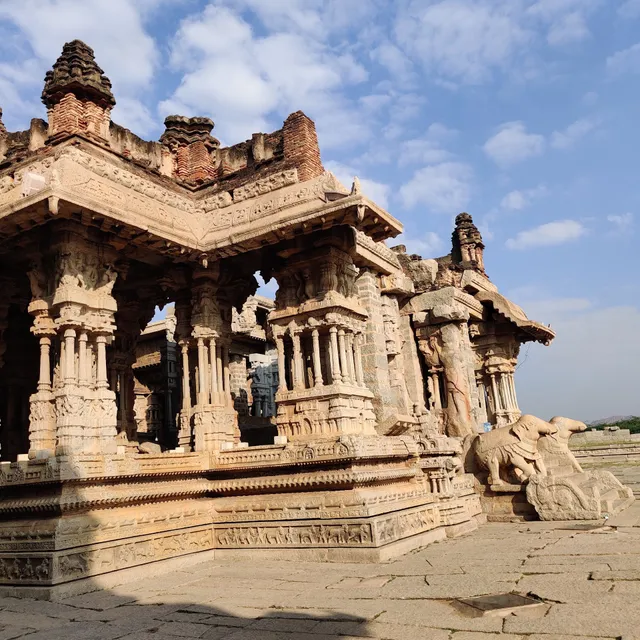
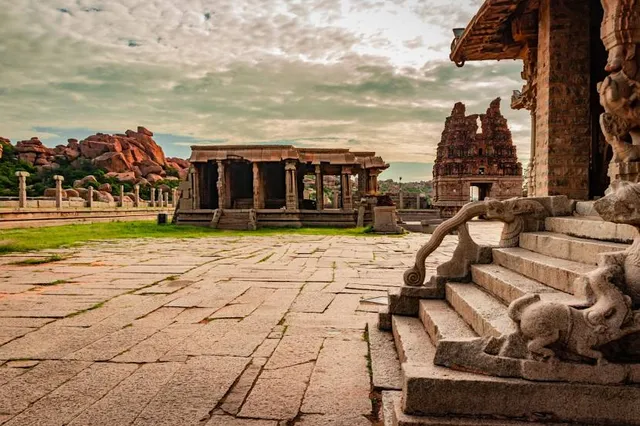
Day 3 (Visit in same order of listing) Shree Vijaya Vitthala Temple (Reach early morning) • Car parking at Vithala temple (Vitthala temple parking) • Use QR code to purchase ticket • Ticket counter for electric vehicle to take you to the temple (or 10 minutes walk). ₹20 for two way return ticket • Kings balance (found outside Vittala temple complex) Toilet nearby • Sugriva’s cave (in front of Seetha’s pond) • Stone chariot (main attraction of Hampi) – Visual of stone chariot appears in the Indian 50 rupee note Musical pillars mantapa - Ranga Mantapa (56 musical pillars)
Elephant stables Guards house Lotus mahal (lotus mahal parking) Watch Tower Museum Queens pond Zanana enclosure ticket counter (toilet nearby) Zanana enclosure Queens palace basement Department Archaeology Museum & Heritage Hazara Rama temple (excellent carvings) Underground shiva temple (Prasanna virupaksha temple) – Also called Pathaleshwara Temple
Royal Enclosure • Kings Audience Hall • Underground secret chamber • Mahanavami Dibba (pyramid platform) • Pushkarani kola (made from black stone) • Queens bathhouse
Chandrasekhara temple (Sri Chandrashekhara Gudi) Octagonal bath
Lunch: The Bridge Restaurant (Clarks Inn) – Fine Dining
Hampi Archeological Museum in Kamalapura (Opp Clarke’s Inn) - Spend 2-3 hours here Kamalapur lake viewpoint
Day 4 (Visit in same order of listing)
Matanga Hill – Reach at 5 AM (to view sunrise) Anjanadri hill kishkindha - Hanuman temple (550+ steps to climb; aggressive monkeys) – To view sunrise
Leave...
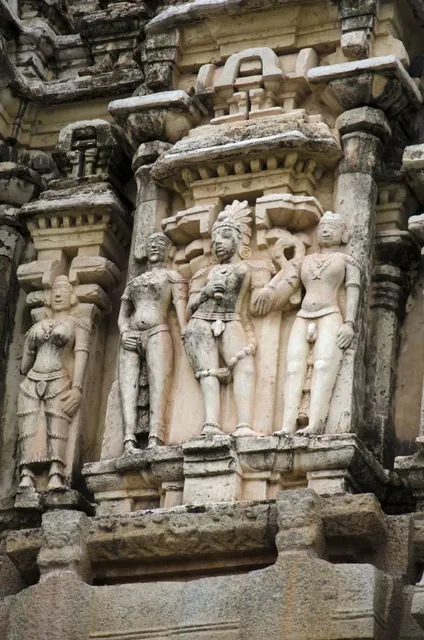
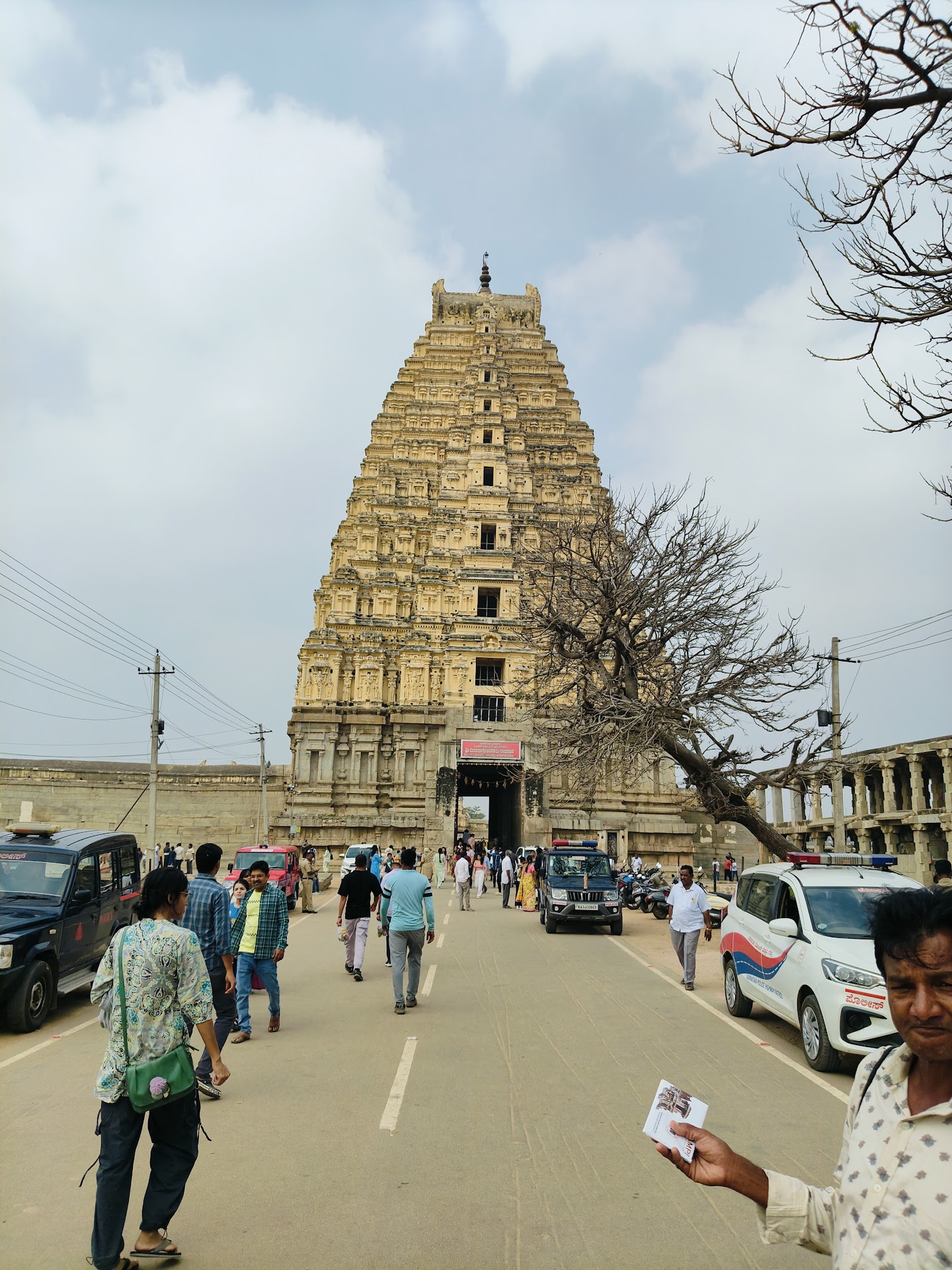
Read moreVirupaksha Temple in Hampi is an ancient Hindu temple dedicated to Lord Shiva, renowned for its continuous religious activity since the 7th century and its stunning Dravidian architecture. It is the main attraction and spiritual heart of Hampi, a UNESCO World Heritage site. The temple's 9-tiered main gopuram stands 50 meters tall and is adorned with intricate carvings of Hindu deities. The temple complex has expanded over centuries, especially under Vijayanagara rule, and features richly sculpted pillars, sanctums of various deities, ceiling paintings, and a 100-pillared hall.
Visitors consistently describe Virupaksha Temple as an architectural marvel and a place of vibrant spiritual energy. Many recommend hiring a guide to appreciate its history, acoustics, and the myths associated with the temple. Rituals such as rudra abhishekam (a form of worship) are regularly performed, and devotees emphasize the unique divine atmosphere. The temple is accessible to all age groups, with no major climbs involved, making it visitor-friendly.
Virupaksha Temple remains the only prominent temple in Hampi still fully preserved and in daily worship, surviving the destruction that befell much of Hampi in the 16th century. It is not only a major pilgrimage site but also a highlight for history buffs, architecture enthusiasts, and tourists interested in the cultural legacy of Southern India. UNESCO Status
Virupaksha Temple is a central monument within the Group of Monuments at Hampi, which was declared a UNESCO World Heritage Site in 1986 for its exceptional historical, architectural, and cultural significance. The UNESCO status covers the core temple as well as over 50 other monuments across the region. The site is protected under various Indian legal frameworks, including the Ancient Monuments and Archaeological Remains and Sites Act, and has dedicated authorities for its management and preservation.
Preservation and Conservation Efforts
Archaeological Survey of India (ASI): The ASI is the primary body responsible for maintaining and restoring Virupaksha Temple. They undertake regular digital documentation, damage assessment, and restoration projects. Notably, after the collapse of a portion of the pavilion (saalu mantapa) in 2024, the ASI initiated emergency restoration, forming committees with senior archaeologists, conservationists, and engineers to assess and repair the damage.
Hampi World Heritage Area Management Authority (HWHAMA): Established to implement a masterplan for the region, HWHAMA oversees core, buffer, and peripheral zones of the World Heritage site. The authority regulates conservation practices, restricts unauthorized construction, and manages the balance between heritage protection and local livelihoods.
Community Involvement and Challenges: While government and expert bodies lead preservation, there is also involvement from local communities and awareness programmes. Challenges include weathering, damage due to heavy tourism, balancing preservation with religious activities, and the needs of local residents. For example, the historic bazaar in front of the temple was cleared to comply with heritage protection, impacting local commerce. Large-scale projects are costly and sometimes face resource constraints, but significant government funding (such as an ₹8 crore grant in 2024) helps sustain ongoing work.
International Oversight: In the late 1990s, Hampi was briefly placed on UNESCO’s List of World Heritage in Danger due to management and development threats. The introduction of a comprehensive, integrated site management plan, and the cessation of harmful construction activities, led to its removal from the danger list in 2006.
Overall, Virupaksha Temple and the Hampi complex remain priorities for national and international heritage preservation efforts, with continued restoration projects, strict legal protection, and evolving management plans to ensure their survival for future generations.
Other Places To Visit The...
Read moreThe Virupaksha Temple, located in Hampi, is an extraordinary blend of historical significance, mythological richness, and spiritual devotion. Dedicated to Lord Shiva, it stands as a testament to the cultural and architectural brilliance of the Vijayanagara Empire. This temple, an integral part of the sacred Pampakshetra, continues to inspire reverence and awe among pilgrims and visitors alike.
Dating back to the 7th century, the Virupaksha Temple underwent significant expansions during the Vijayanagara period, making it a symbol of the empire's spiritual and architectural accomplishments. The temple complex includes numerous subsidiary shrines dedicated to deities such as Mukti Narasimha, Navadurga, Suryanarayana, and Saraswati. Shrines of Parvati and Bhuvaneswari exhibit distinctive Kalyana Chalukyan architectural styles from the 12th century AD.
The temple is renowned for its intricate water management system, with an arrow water channel drawn from the Tungabhadra River. The channel flows through the terrace, descends into the temple kitchen, and finally exits through the outer prakara (enclosure), merging back into the river. This ancient system demonstrates advanced engineering techniques of the time.
The temple also boasts exquisite Vijayanagara-era ceiling paintings in the ranga mandapa. These depict significant episodes, including the ten incarnations of Vishnu, Girija Kalyana (the celestial wedding of Shiva and Parvati), and Shiva as Tripurari, showcasing the artistic prowess of the period.
Virupaksha Temple is steeped in mythology, particularly the legend of Manmatha Honda. According to the tale, Shiva, meditating on Hemakuta Hill, was disturbed by Manmatha (the god of love) at the behest of other gods who wished for him to marry Parvati. Enraged, Shiva opened his third eye, burning Manmatha and melting the stones on the hill. The molten stones pooled at the hill's base, forming the sacred tank now known as Manmatha Honda.
"Namah somaya cha rudraya cha" Yajurveda (Taittiriya Aranyaka 10.16) (Salutations to the gentle and fierce aspects of Lord Shiva.) This aligns with the dual nature of Shiva worshipped at the Virupaksha Temple—benevolent as Virupaksha and fierce as the destroyer of Manmatha.
Additionally, the temple is central to the concept of Lord Shiva’s five faces, representing the five lingas of Pampakshetra: Sri Virupaksha, Jambhunatha, Somesvara, Vanibhadresvara, and Kinnaresvara. This association elevates the temple’s spiritual significance, making it a focal point for Shaivite worship.
The temple's daily pujas are conducted according to the norms established by the sage Sri Vidyaranya, the spiritual guide of the Vijayanagara kings. The rituals include Trikala Baliharana (thrice-daily offerings) and the presentation of naivedyam (consecrated food). A pair of sacred padukas (footwear) of Sri Vidyaranya is placed in front of the deity, signifying his enduring presence in temple rituals.
The Rathotsava (Chariot Festival) and other celebrations like Rajata Nandi Utsava (Silver Bull Festival), Kalyanotsava (divine wedding), and Ekantotsava (private worship) draw thousands of devotees annually, keeping the temple’s vibrant traditions alive.
The Virupaksha Temple is not just a monument of historical grandeur but a thriving center of devotion. Its rituals, legends, and festivals continue to attract worshippers and history enthusiasts alike, serving as a bridge between the past and the present. With its awe-inspiring architecture and profound spiritual resonance, the temple remains a cornerstone of India’s rich...
Read more