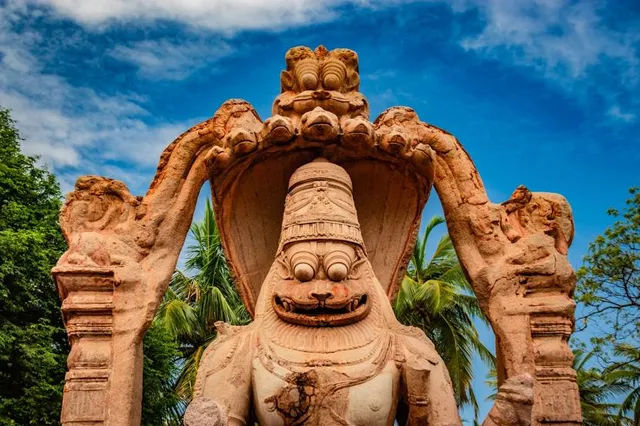
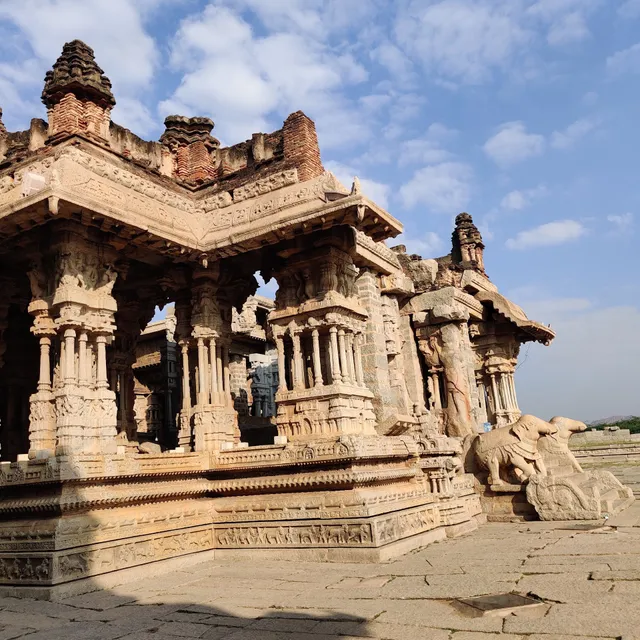
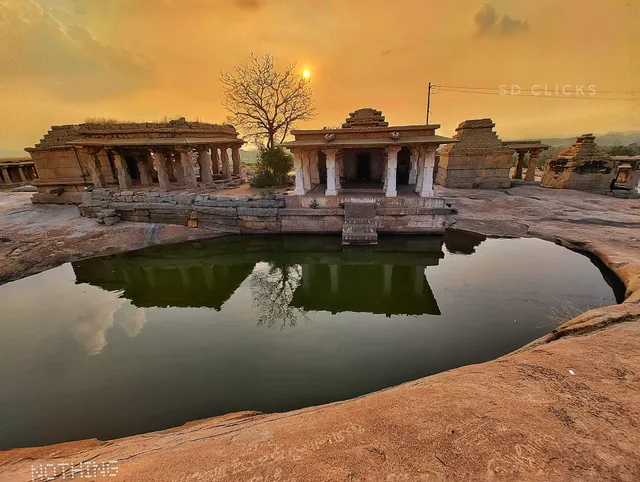
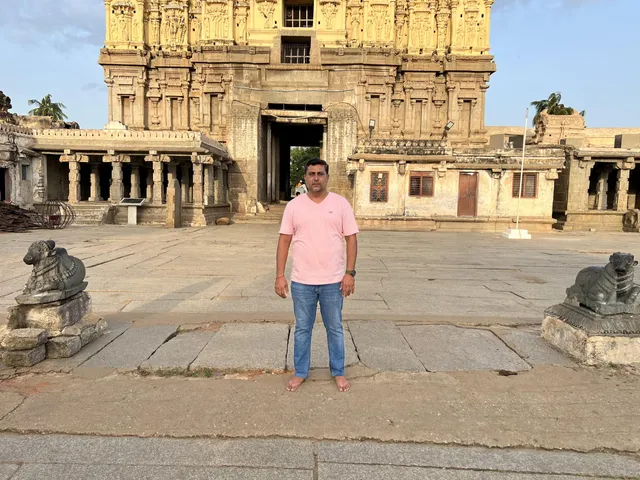
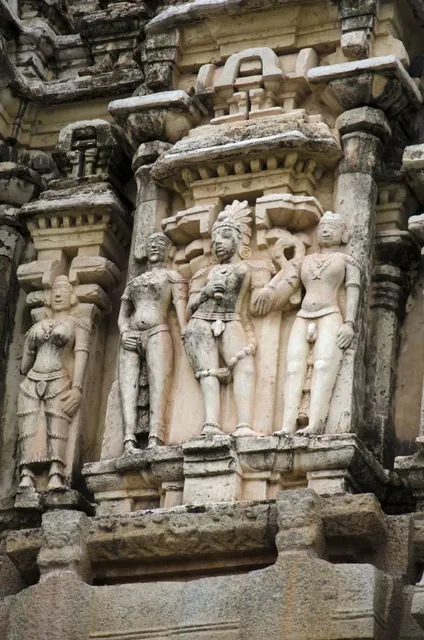
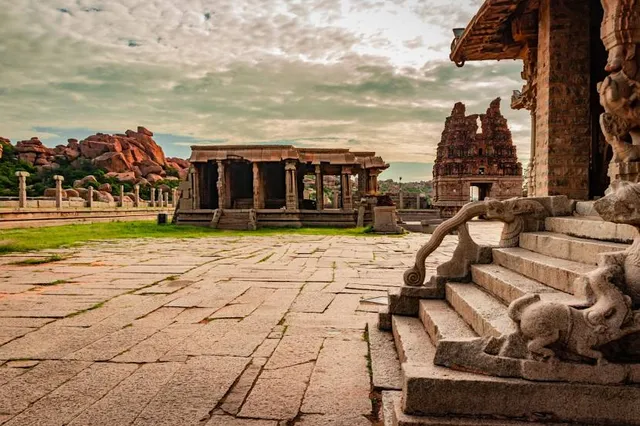
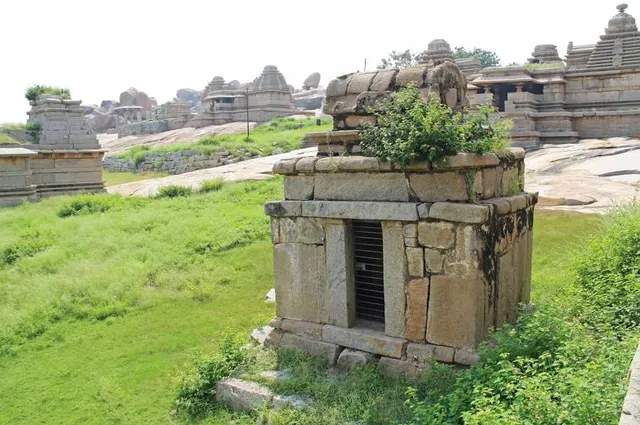
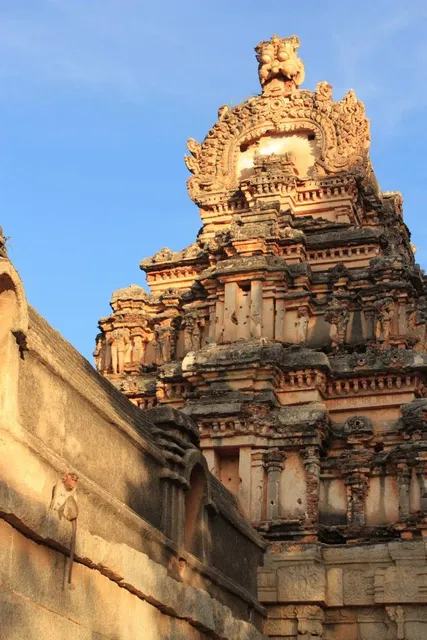
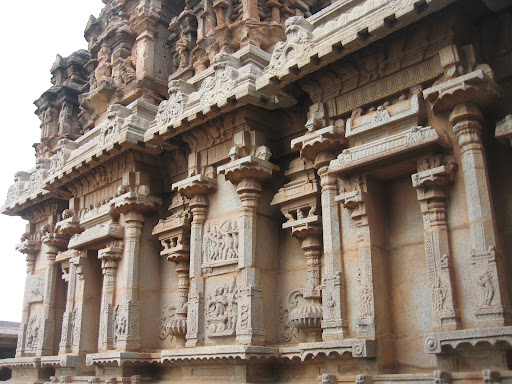
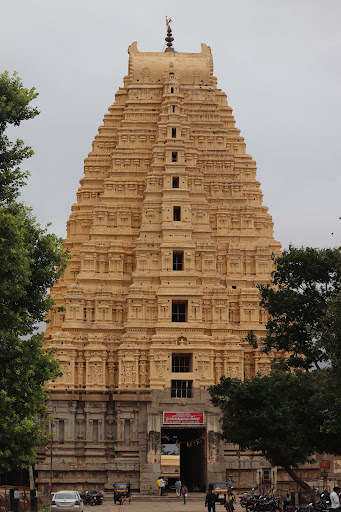
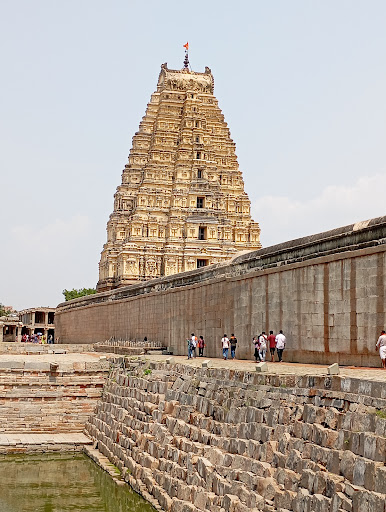
Hampi is a UNESCO World Heritage Site. In the 14th century, it became the centre of the Hindu Vijayanagara Empire. Many chronicles left by Persian and European travellers, especially Portuguese, state that Hampi was a prosperous, wealthy and grand city near the river Tungabhadra, with several temples, farms and markets. By 1500 CE, Hampi-Vijayanagara was known to be the world's second-largest medieval-era city after Beijing, and perhaps India's richest at the time. Hampi attracted many traders from Persia and Portugal. The Vijayanagara Empire was defeated by a coalition of Muslim sultanates. During the seige that followed, its capital was conquered, pillaged and destroyed by the sultanate armies in 1565, after which Hampi remained in ruins. I went to Hampi in December 2012 & explored the magnificent Hampi over 3 full days. The city of Hampi lay there with all its brilliance, bedecked with the jewels of innumerable temples, bazaars, ponds, pillars, monuments, elephant stables, bathing places, the royal enclosure, & many more. Important places NEVER TO BE MISSED at Hampi include - Viroopaaksha temple & market complex, Krishna temple & market complex, Vitthala temple & market complex, the stone chariot, Hazaara Rama temple, Hemakoota hills, Veerabhadra temple, the royal enclosure, Mahaanavami dibba, infrastructural facilities within the royal enclosure, water supply systems, Lotus Mahal, the elephant stables, Badavi Linga, Yoga Nrisimha, saasive kaalu Ganesha, kadale kaalu Ganesha, the King's balance, raaja beedi (path of the royal family), purandara mantapa, & many more. Hampi is a gut wrenching experience. The magnificent city is completely in ruins. Almost every temple, except the Viroopaaksha temple is in ruins. Every deity has been mutilated. Every temple has been burned, so much so that, to this day we can see the blackening of temple roofs because of the burning. Every stone, every brick, every single piece of art & architecture has a story to tell; a story that is heartbreaking. Every temple cries for the deity it housed. The musical pillars of the Vitthala temple has become mute without its Lord Vitthala. The Pattaabhiraama temple is like a giant elephant without its master, lifeless. Every pillar, every stone wails in agony. The magnitude of the ruins is such that, a true history buff will be left spellbound at the sheer scale of destruction that has been caused. Hampi is also regarded as the place where the legendary Hanumaan, that greatest of Shri Raama's devotees lived in the Kingdom of Kishkindha. It is widely believed that Shri Raama came to Kishkindha, seeking the friendship of Sugreeva, in his pursuit of finding Mother Seeta. During this time, Sugreeva entrusted Hanumaan the task of assisting Raama in finding Seeta. These & many more stories from the Raamaayana is beautifully carved on the walls of Hazaara Raama temple. Then there's the Badavi Linga, which is believed to be built by a poor lady (badavi in Kannada) who was a devotee of Shiva. Just across is the famous Yoga Nrisimha, which also is mutilated. It is believed that it was Lakshmi Nrisimha originally, but, during the siege of Hampi, it got mutilated. During our visit, we had stayed at Hospet, & travelled to Hampi every day. It is advisable to spend sufficient time exploring, learning, & digesting the amazing Hampi. Do not hurry. Let Hampi overwhelm you with its sheer magnificence, brilliance, & beauty. Allow every rock, every pillar, every monument, every temple, speak to you. Let Hampi sink into your hearts. As I write this review, I hear Hampi calling me to come again 😊😊🙏🙏 Close to Hampi is the Daroji Bear Sanctuary. You can sight many...
Read moreHampi is a UNESCO World Heritage Site. In the 14th century, it became the centre of the Hindu Vijayanagara Empire. Many chronicles left by Persian and European travellers, especially Portuguese, state that Hampi was a prosperous, wealthy and grand city near the river Tungabhadra, with several temples, farms and markets. By 1500 CE, Hampi-Vijayanagara was known to be the world's second-largest medieval-era city after Beijing, and perhaps India's richest at the time. Hampi attracted many traders from Persia and Portugal. The Vijayanagara Empire was defeated by a coalition of Muslim sultanates. During the seige that followed, its capital was conquered, pillaged and destroyed by the sultanate armies in 1565, after which Hampi remained in ruins. I went to Hampi in December 2012 & explored the magnificent Hampi over 3 full days. The city of Hampi lay there with all its brilliance, bedecked with the jewels of innumerable temples, bazaars, ponds, pillars, monuments, elephant stables, bathing places, the royal enclosure, & many more. Important places NEVER TO BE MISSED at Hampi include - Viroopaaksha temple & market complex, Krishna temple & market complex, Vitthala temple & market complex, the stone chariot, Hazaara Rama temple, Hemakoota hills, Veerabhadra temple, the royal enclosure, Mahaanavami dibba, infrastructural facilities within the royal enclosure, water supply systems, Lotus Mahal, the elephant stables, Badavi Linga, Yoga Nrisimha, saasive kaalu Ganesha, kadale kaalu Ganesha, the King's balance, raaja beedi (path of the royal family), purandara mantapa, & many more. Hampi is a gut wrenching experience. The magnificent city is completely in ruins. Almost every temple, except the Viroopaaksha temple is in ruins. Every deity has been mutilated. Every temple has been burned, so much so that, to this day we can see the blackening of temple roofs because of the burning. Every stone, every brick, every single piece of art & architecture has a story to tell; a story that is heartbreaking. Every temple cries for the deity it housed. The musical pillars of the Vitthala temple has become mute without its Lord Vitthala. The Pattaabhiraama temple is like a giant elephant without its master, lifeless. Every pillar, every stone wails in agony. The magnitude of the ruins is such that, a true history buff will be left spellbound at the sheer scale of destruction that has been caused. Hampi is also regarded as the place where the legendary Hanumaan, that greatest of Shri Raama's devotees lived in the Kingdom of Kishkindha. It is widely believed that Shri Raama came to Kishkindha, seeking the friendship of Sugreeva, in his pursuit of finding Mother Seeta. During this time, Sugreeva entrusted Hanumaan the task of assisting Raama in finding Seeta. These & many more stories from the Raamaayana is beautifully carved on the walls of Hazaara Raama temple. Then there's the Badavi Linga, which is believed to be built by a poor lady (badavi in Kannada) who was a devotee of Shiva. Just across is the famous Yoga Nrisimha, which also is mutilated. It is believed that it was Lakshmi Nrisimha originally, but, during the siege of Hampi, it got mutilated. During our visit, we had stayed at Hospet, & travelled to Hampi every day. It is advisable to spend sufficient time exploring, learning, & digesting the amazing Hampi. Do not hurry. Let Hampi overwhelm you with its sheer magnificence, brilliance, & beauty. Allow every rock, every pillar, every monument, every temple, speak to you. Let Hampi sink into your hearts. As I write this review, I hear Hampi calling me to come again 😊😊🙏🙏 Close to Hampi is the Daroji Bear Sanctuary. You can sight many...
Read moreHAMPI
-The word itself describes the golden era of Vijayanagara empire.
-Which is located on the banks of river thungabhadra covering an area of about over 4,100 hectares (i.,e approx around 16 sq mi) and about 11 km away from the Hosapete city of Ballari dist in Karnataka.
-Though hampi was founded by the two rulers Hakka and Bukka but it has got it's prominent status during Krishnadevaraya rule, who was a most dominant ruler of Vijayanagara empire.
-The traditional culture of hampi will drag your mind to be a witness of this culture and architecture. Hampi was served as capital city of Vijayanagara empire more over 200 years (around 1336 AD to 1565 AD). Vijayanagara rulers decorated and designated this city with lots of lovely temples, palaces,market streets and monuments which made this location oneof the famous ancient metropolises in India. This super ancient landscape is listed under UNESCO World Heritage site.
-Although hampi was an ancient auper metropolis but today it is ruins and turned into a rural location. Many villages are located around the historical site where agriculture is the main source.
-If you planned to trip hampi then the season during October to February would be the best season (winter) to you when lots os hindu religious festivals are organised (including Hampi utsav or also known as Vijaya utsav). Temperature levels (12° to 20° degree) also stay pleasent in this time. Usually, the climate of hampi remains hot and humid during summer (march to june) when temperature can reach upto 40°c.
-Attractions and must visit places in Hampi
Vijaya vittala temple campus (known for world famous Stone chariot)
Virupaksha temple
Royal enclosure
River trek path
Hemakuta hills(one of the sunset point in hampi)
Kadalekalu ganesha
Krishna temple
Lakshmi OR Ugra Narasimha & Badavi linga
Queen's bath
Lotus mahal / Elephant stable
Hazara rama temple
Matanga hill.
-One cannot roam hampi in just one day Instead it takes 2 or upto 3 days to complete the most adventurous journey of world's then richest kingdom and largest open air museum after...
Read more