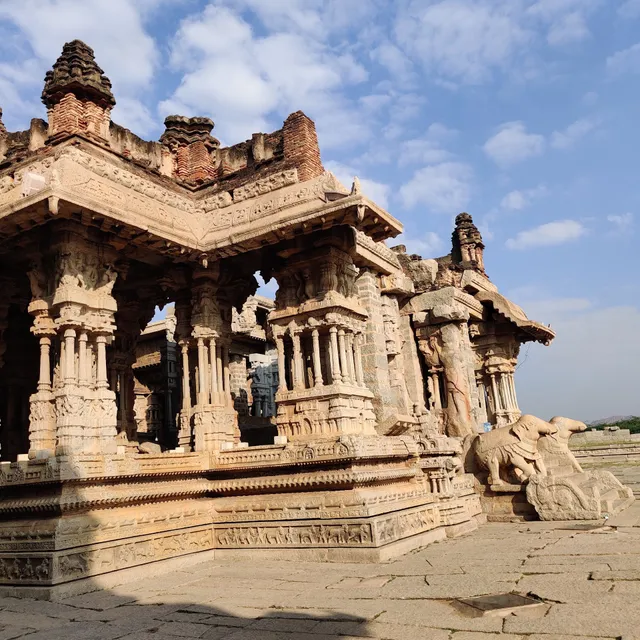
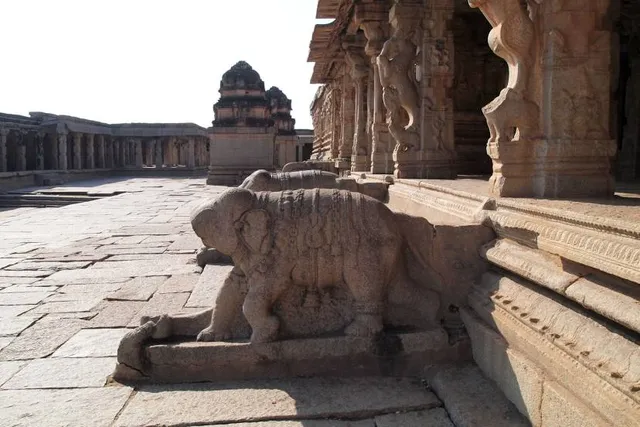
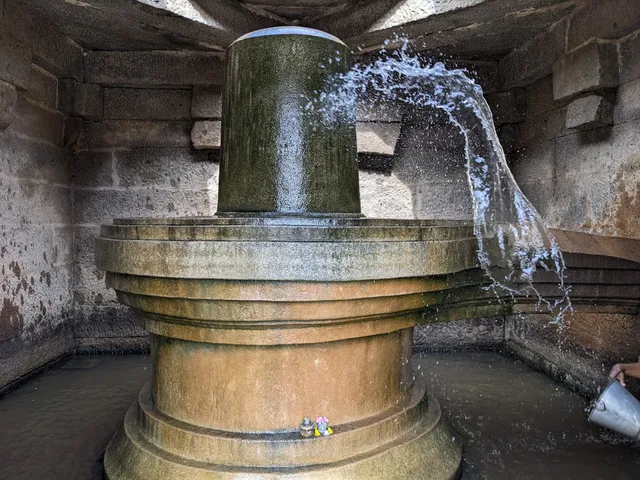
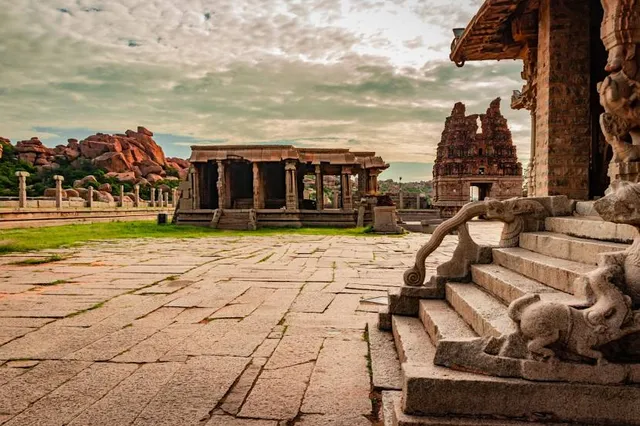
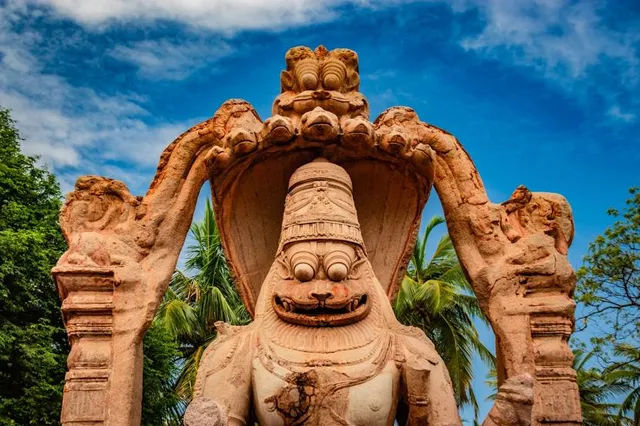
Hampi, also referred to as the Group of Monuments at Hampi, is a UNESCO World Heritage Site located in east-central Karnataka, India.1] It became the centre of the Hindu Vijayanagara Empire capital in the 14th century.[2] Chronicles left by Persian and European travellers, particularly the Portuguese, state Hampi was a prosperous, wealthy and grand city near the Tungabhadra River, with numerous temples, farms and trading markets. By 1500 CE, Hampi-Vijayanagara was the world's second-largest medieval-era city after Beijing, and probably India's richest at that time, attracting traders from Persia and Portugal.[3 The Vijayanagara Empire was defeated by a coalition of Muslim sultanates; its capital was conquered, pillaged and destroyed by sultanate armies in 1565, after which Hampi remained in ruins.
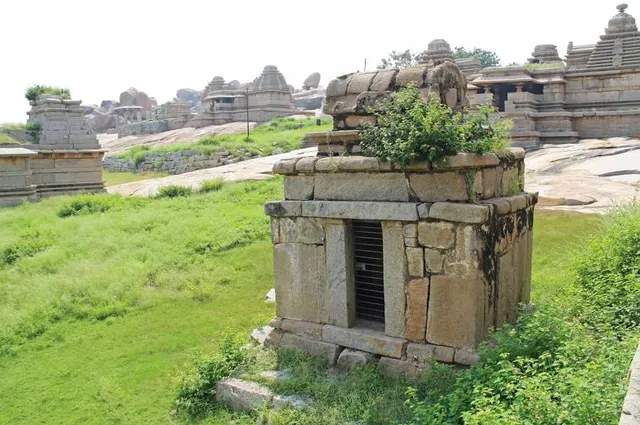
Located in Karnataka near the modern-era city of Hosapete, Hampi's ruins are spread over 4,100 hectares (16 sq mi) and it has been described by UNESCO as an "austere, grandiose site" of more than 1,600 surviving remains of the last great Hindu kingdom in South India that includes "forts, riverside features, royal and sacred complexes, temples, shrines, pillared halls, mandapas, memorial structures, water structures and others".7] Hampi predates the Vijayanagara Empire; there is evidence of Ashokanepigraphy, and it is mentioned in the Ramayana and the Puranas of Hinduism as Pampaa Devi Tirtha Kshetra.[2 Hampi continues to be an important religious centre, housing the Virupaksha Temple, an active Adi Shankara-linked monastery and various monuments belonging to the old city.5
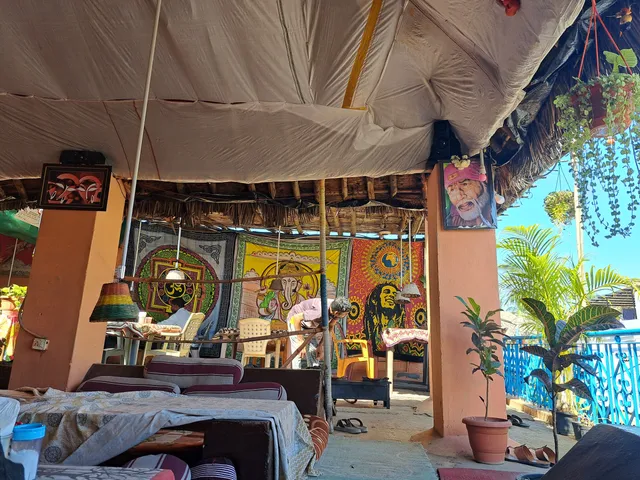
^ The destruction and burning down of the city is evidenced by the quantities of charcoal, the heat-cracked basements and burnt architectural pieces found by archaeologists in Vijayanagara region.35^ According to Anila Verghese and Dieter Eigner, literary and epigraphical data evidence the existence of Advaita-Smarta mathas(monasteries), as well as Shaiva and Vaishnava monasteries – both Sri Vaishnavism and Dvaita Vaishnavism mathas. All these were supported by the Vijayanagara rulers. However, of all these only Advaita and Shaiva survived after the collapse of Vijayanagara.[45]^ The Deccan region near Hampi, particularly in Pattadakal – another world heritage site, Badami, Aihole to its north and stretching further south towards Belur and Halebidu had a rich tradition of building sophisticated Hindu temples with a fusion of North Indian and South Indian styles. This was abruptly terminated, state Meister and Dhaky, after the first quarter of the 14th-century after the devastating invasions from the Delhi Sultanate. The South Indian artists and architects effected a recovery in Vijayanagara adopting mostly the Dravidian style.[48]^ The Hampi builders also included Islamic style arches in fortified gateways at some places.^ Hampi's history, ruins and temples made it an early site for offbeat tourism in the 1960s and after. Tourists would gather on its hills and midst its ruins, to hold parties and spiritual retreats, and these have been called "Hampi Hippies" and Hampi as the "lost city" in some...
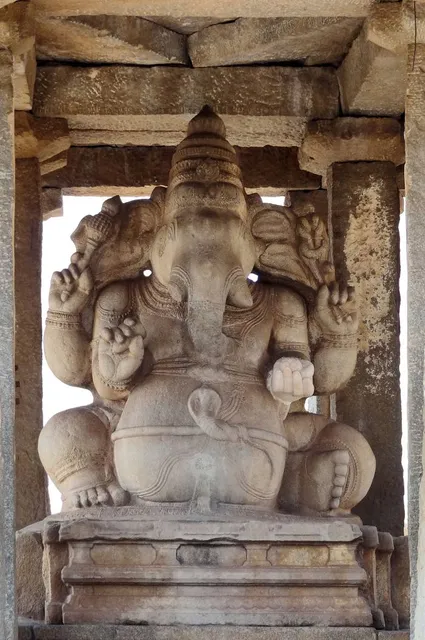
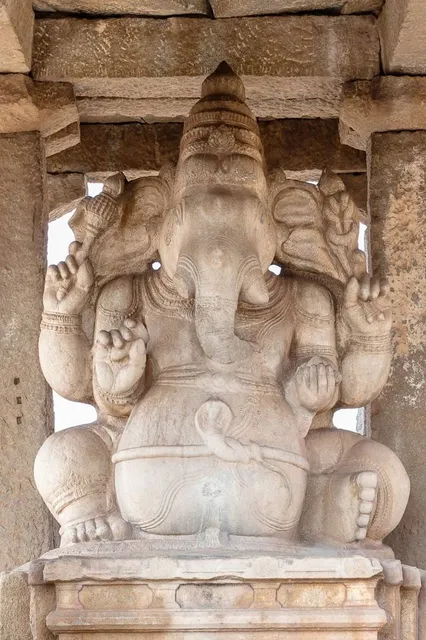
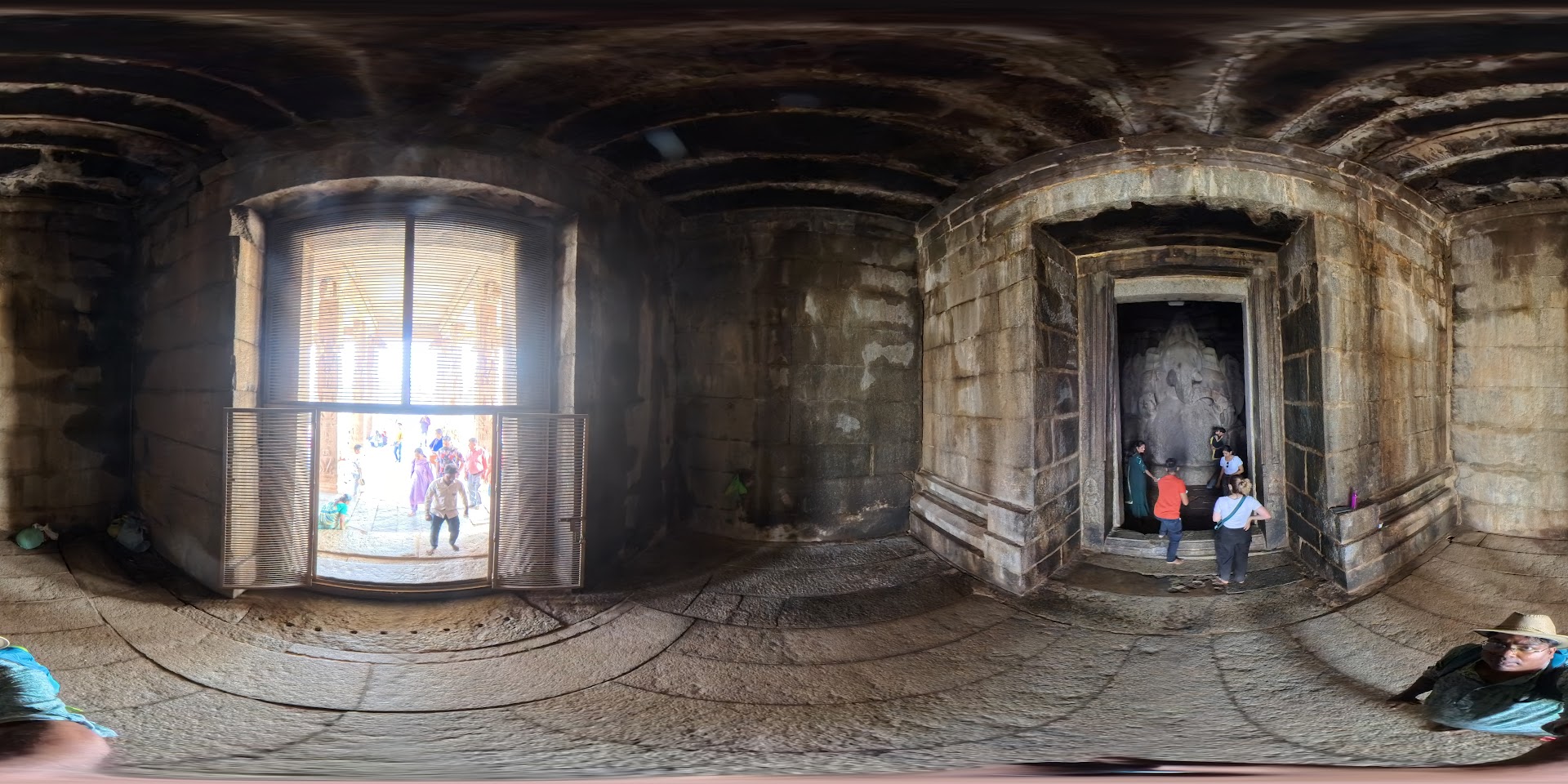
Read moreKadalekalu Ganesha is one of the largest statues of Lord Ganesha that exists in the southern part of India. The shrine housing the statue of Kadalekalu Ganesha is situated on the slope of the Hemakuta Hill in Hampi. It is a remarkable monolithic statue and one of the most popular tourist sites in Hampi.
Quick Facts Timing: Open on all days of the week from 6:00 AM to 6:00 PM Entrance Fee: No entry fee needed Photography: Allowed Visit Duration: 1 hour Best time to visit: From October to February
The unique name of Kadalekalu Ganesha, Hampi The towering statue of Kadalekalu Ganesha has a height of 4.6 metres (15 feet). The giant statue was carved out of a single huge boulder. The belly of Ganesha has been chiselled in such a manner that it resembles a Bengal gram (known as Kadalekalu in the local language). Hence, the statue has been given the name of Kadalekalu Ganesha. It is one of the largest statues that exist in Hampi.
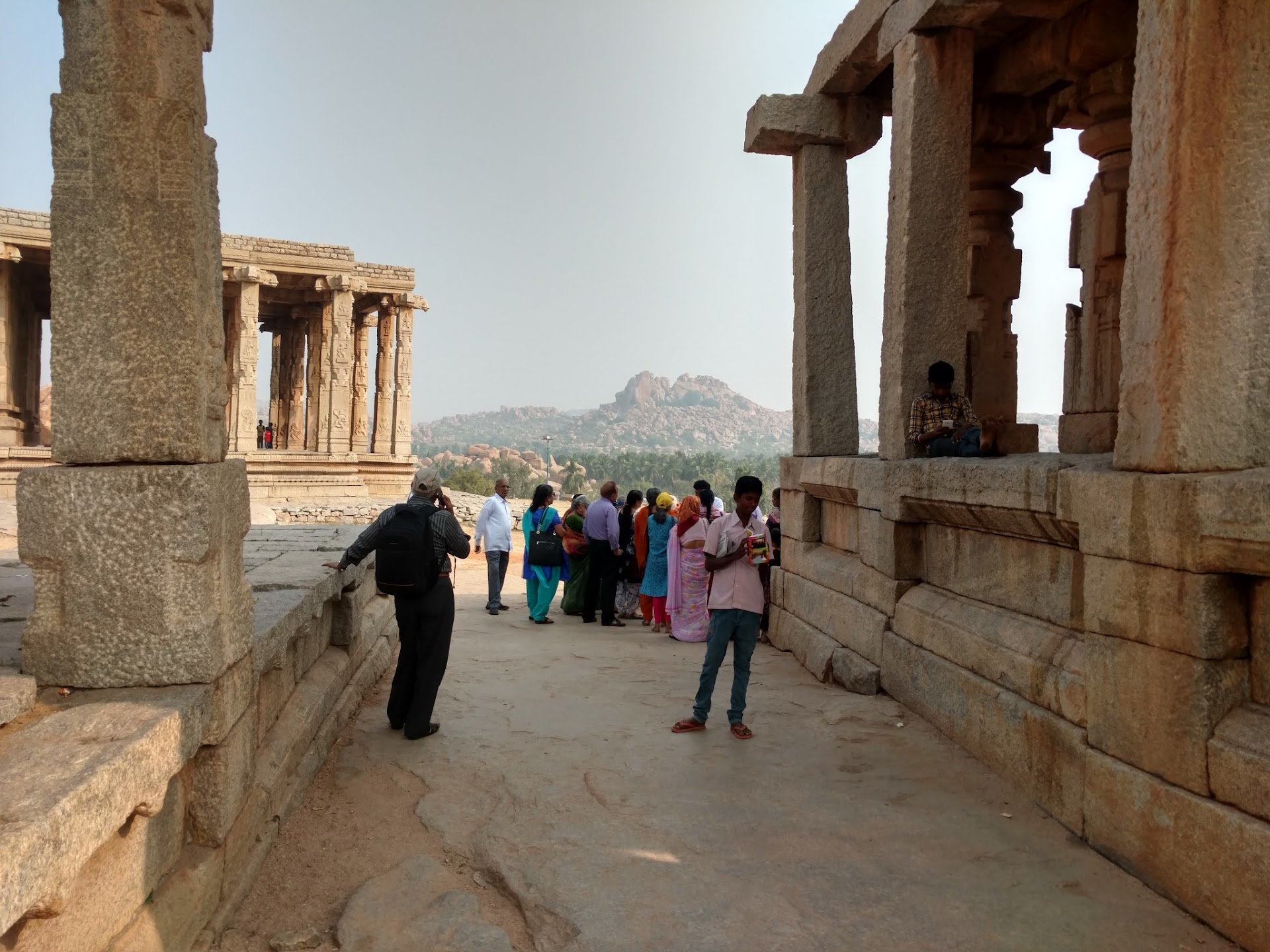
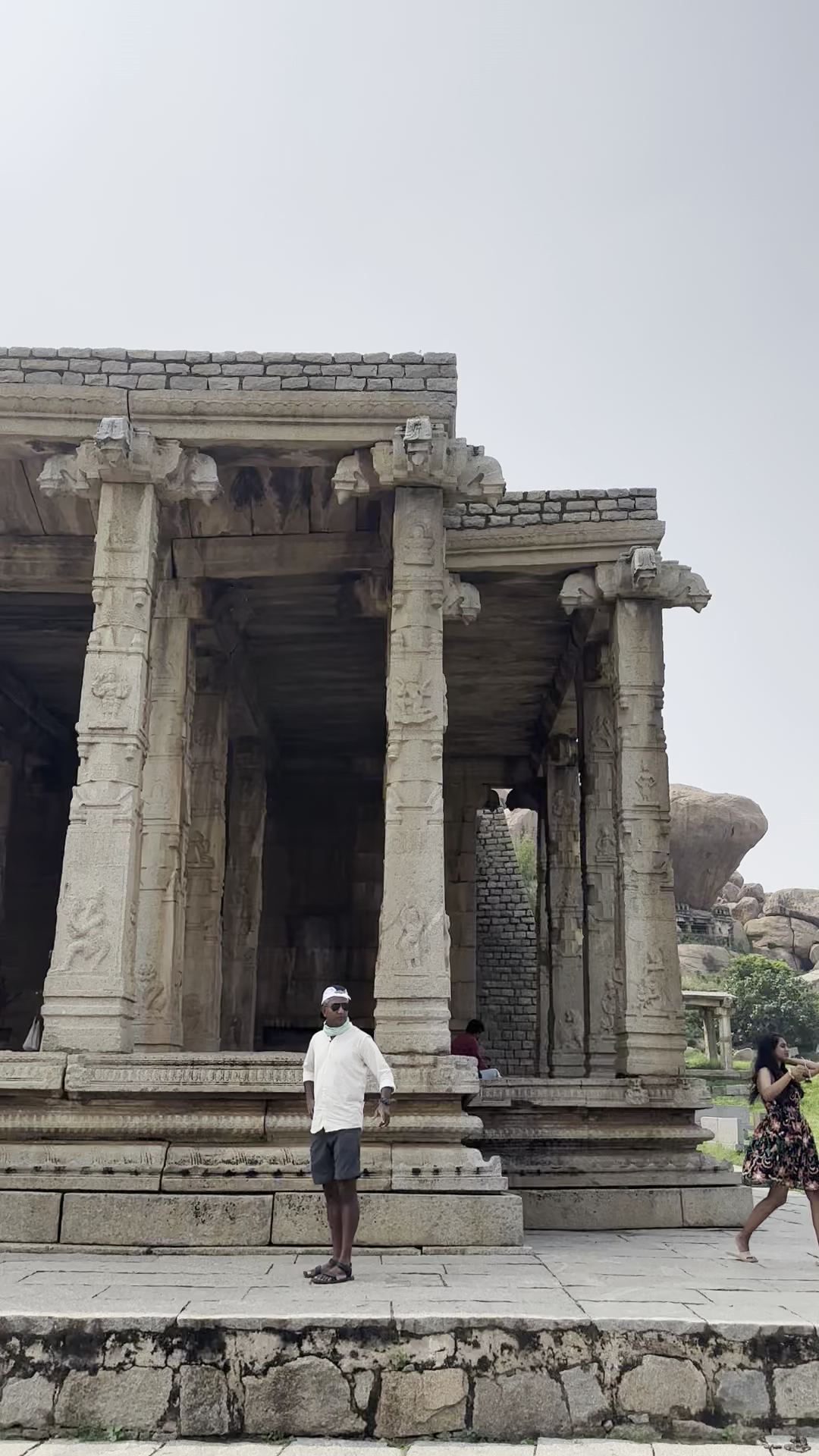
The attraction of Kadalekalu Ganesha Temple, Hampi The temple of Kadalekalu Ganesha is a beautiful stone structure. The temple hall is decorated with tall and slender granite pillars standing in the hall. The pillars are decorated with various mythological characters and themes carved out on them.
The cubical pillars are constructed in the typical Vijayanagara style of architecture. The open hall of the temple leads to the inner sanctum where the tall statue resides.
The amazing view from Kadalekalu Ganesha Temple, Hampi Being situated on the slope of the Hemakuta Hill, the temple presents a mesmerizing view of the surroundings. Visitors can enjoy picturesque views of the Hampi Bazaar and the Matanga Hill while standing in the hall of the Kadalekalu Ganesha temple.
The calm ambiance of the temple makes it a wonderful place to spend some peaceful moments admiring the beauty of the temple in particular and the surroundings in general.
How to reach Kadalekalu Ganesha Temple Kadalekalu Ganesha Temple is one of the most visited destinations in Hampi. The location of the temple can be easily accessed by visitors from all parts of the ruined town.
By Air
Hampi has no airport of its own. Visitors can reach Hampi by air by taking a flight to the nearest airport situated at Bellary. The Bellary airport stands at a distance of about 64 km from Hampi. The airports at Belgaum (190 km) and Bangalore (353 km) are other options for you to reach Hampi by air. There are other means of transport to reach Hampi from the airports.
By Rail
There is no railway station in Hampi. The nearest railway station is located at the town of Hospet. Hampi can be easily reached from Hospet as there are frequent buses that ply between the two towns. There are also other local means of transport that connect Hospet to Hampi.
By Road
Hampi is well connected by the road network and can be accessed from several towns and cities by road. There are a number of buses that connect Hampi to the nearby places. Private cars and vehicles can also be hired from Bangalore or Mysore to...
Read moreKadalekalu Ganesha is a famous monolithic statue located in the ancient town of Hampi, Karnataka, India. This statue, carved out of a single granite boulder, stands at about 4.5 meters (15 feet) tall and is one of the largest sculptures in Hampi. It is situated on the slopes of the Hemakuta Hill, near the Virupaksha Temple complex.
Visitor Note: Location: The statue is situated on Hemakuta Hill, near the Virupaksha Temple in Hampi. It is a short hike from the temple complex.
Best Time to Visit: -Morning or Evening: To avoid the midday heat and enjoy the tranquil atmosphere. Winter Months (October to February): The weather is more pleasant for exploring Hampi.
Entry Fee: There is no specific fee for visiting Kadalekalu Ganesha; however, some nearby monuments in Hampi may have entry charges.
Photography: Photography is allowed and highly recommended to capture the intricate details of the sculpture and the surrounding architecture.
Accessibility: The site requires a bit of walking and climbing steps. Wear comfortable footwear and carry water, especially during warmer months.
Cultural Etiquette: Maintain silence and respect the sanctity of the site, as it is a religious place. Avoid touching the statue or carvings to preserve their integrity. Dress modestly in keeping with the spiritual significance of the location.
Tips for Exploring Nearby: Visit the Hemakuta group of temples located nearby for a panoramic view of Hampi’s landscape. The Virupaksha Temple and Sasivekalu Ganesha are within walking distance.
Carry your Water bottles and snacks as not much shops are available. Please DONOT litter the place.
About Temple: The name "Kadalekalu" translates to "Bengal gram" (a type of lentil) in Kannada, as the belly of the Ganesha statue resembles the shape of this legume. The statue showcases the Vijayanagara style of architecture, known for its intricate carvings and monumental sculptures. The sanctum housing the statue is surrounded by a beautiful pillared mandapa (hall), featuring ornate carvings depicting mythological themes, floral motifs, and traditional stories. Kadalekalu Ganesha is a testament to the rich cultural and religious heritage of the Vijayanagara Empire, which ruled the region in the 14th-16th centuries. Lord Ganesha is widely worshipped as the remover of obstacles, and this statue is a significant site of devotion for pilgrims and tourists visiting Hampi. Visitors often marvel at the craftsmanship and serene ambiance of the site, which offers a panoramic view of the rocky terrain and ruins of...
Read more