Mahabalipuram Temples, Tamil Nadu❤️❤️❤️🙏
Although the ancient history of Mahabalipuram is unclear, numismatic and epigraphical evidence and its temples suggest that it was a significant location before the monuments were built. It is speculated that it is the seaport of Sopatma mentioned in the 1st-century Periplus of the Erythraean Sea or Ptolemy's port of Melange in his 2nd-century Geographia. Another theory posits that the port of Nirppeyarvu mentioned in the Perumpanarrupadai from the late 19th century to early 20th century may be Mahabalipuram or Kanchipuram.
In his Avantisundari Katha, the 7th–8th century Sanskrit scholar Daṇḍin (who lived in Tamil Nadu and was associated with the Pallava court) praised artists for their repair of a Vishnu sculpture at Mamallapuram.However, Daṇḍin's authorship of this text is disputed.The medieval Sanskrit text mentions the Mamallapuram monuments, an early tradition of repairs, and the significance of Vaishnavism
When Marco Polo (1271-1295 CE) arrived in India on his way back to Venice from Southeast Asia, he mentioned (but did not visit) "Seven Pagodas" and the name became associated with the shore temples of Mahabalipuram in publications by European merchants centuries later. It appeared in Abraham Cresques' 1375 Catalan Atlas as "Setemelti" and "Santhome", a crude map of Asia but accurate in the relative positions of the two ports; the former is Mamallapuram and the latter Mylapore.Venetian traveler Gasparo Balbi mentioned the "Seven Pagodas" and "Eight Pleasant Hillocks" in 1582, which Nagaswamy suggests refers to the monuments. According to Schalk, Balbi called it the "Seven Pagodas of China" (a re-interpretation of Henry Yule's reading of Balbi which considered Balbi unreliable, followed by a selective correction that it probably meant Mamallapuram).
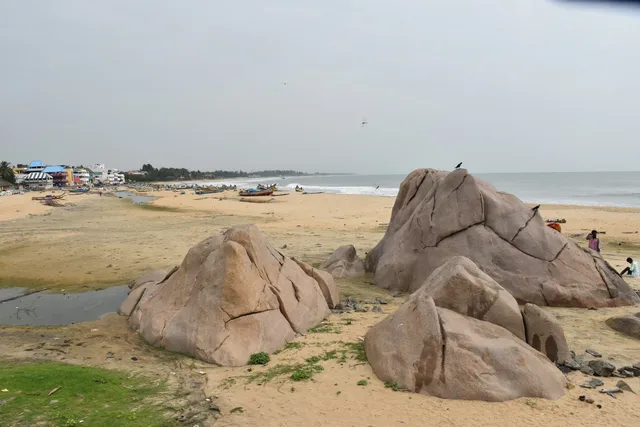
Since there are now fewer than seven towers, the name has inspired speculation and argument.The December 2004 tsunami briefly exposed the beachfront near Saluvankuppam (now north of Mahabalipuram), revealing inscriptions and structures. Badrinarayanan said in a BBC report that they dated to the 9th century and may have been destroyed by a 13th-century tsunami. The tsunami also revealed large structures on the seabed about a kilometer offshore, which archaeologists speculate may be the ancient Mahabalipuram.According to a Science article, the tsunami exposed rocks with an "elaborately sculpted head of an elephant and a horse in flight", "a small niche with a statue of a deity; another rock with a reclining lion", and other Hindu religious iconography. Marine archaeologists and underwater diving teams have explored a site east of the Shore Temple, one of the monuments, after the 2004 tsunami. This has revealed ruins of fallen walls, a large number of rectangular blocks and other structures parallel to the shore, and the forty surviving monuments.
Modern reports Edit European sailors and merchants who pioneered trade with Asia after the 16th century mentioned the site. Early reports, such as those by Niccolao Manucci (who never visited the site, but saw the monuments from a distance and heard about them) conflated Chinese and Burmese Buddhist pagoda designs with the Hindu temples and assumed that the temples were built by the Chinese. According to Anthony Hamilton's 1727 "New Account of the East Indies", the site was a pilgrimage center and its outside sculpture was "obscene, lewd" as performance in Drury Lane. French writer Pierre Sonnerat was critical of European racism toward Indians, and theorized that the Mahabalipuram temples were very old.
William Chambers' 1788 literary survey of Mahabalipuram brought the monuments to the attention of European scholars.Chambers interviewed local residents and linked the monumental art he saw to Hindu texts, calling it remarkable and expressive in narrative detail. A series of 19th-century studies, such as those by Benjamin Babington and William Elliot, contained sketches of the monuments and impressions of the inscriptions.Some stories and speculation in Western...
Read moreMahabalipuram (or Mamallapuram), located along southeastern India’s Coromandel Coast, was a celebrated port city of the Pallavas. The group of monuments there consists of rock-cut cave temples, monolithic temples, bas-relief sculptures, and structural temples as well as the excavated remains of temples. The Pallava dynasty, which ruled this area between 6th and 9th centuries CE, created these majestic edifices.
The Group of Monuments at Mahabalipuram occupies a distinct position in classical Indian architecture. These majestic edifices mark the high quality of craftsmanship in the region during 6th century CE. The natural landscape was utilized in carving out these structures, thereby making the ability of the Pallava craftsmen universally known. The monuments may be subdivided into five categories:
The mandapas (rock-cut caves): During the time of Narasimhavarman-I Mamalla, new innovations were introduced in the rock medium in the form of cave temples. Notable examples of the cave temple are Konerimandapa, Mahishmardhini cave, and Varahamandapa. These rock-cut caves are richly embellished with sculptural representations known for their natural grace and suppleness. Noteworthy among them are Mahishamardhini, Bhuvaraha, Gajalakshmi, Tirivikrama, and Durga.
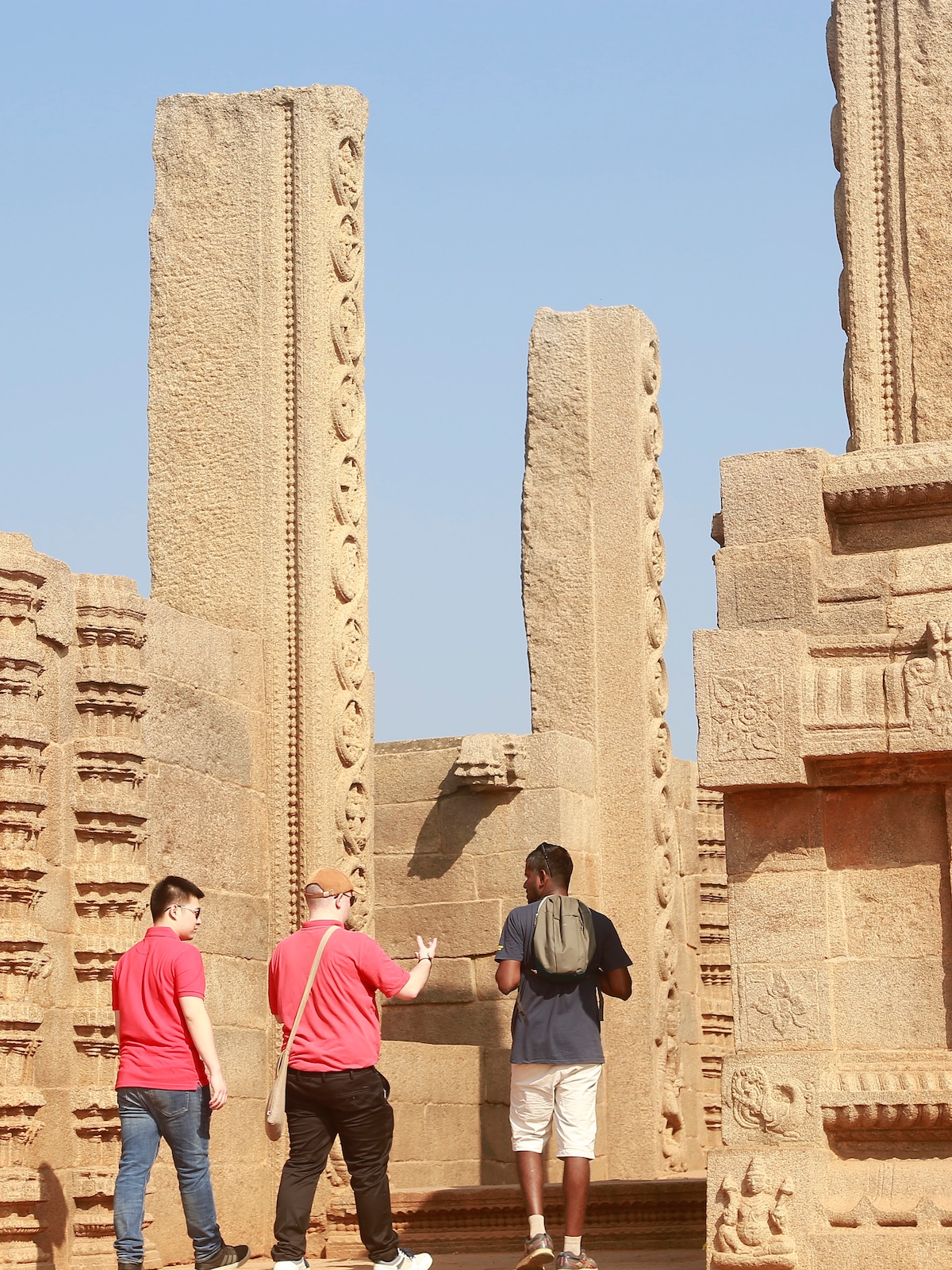
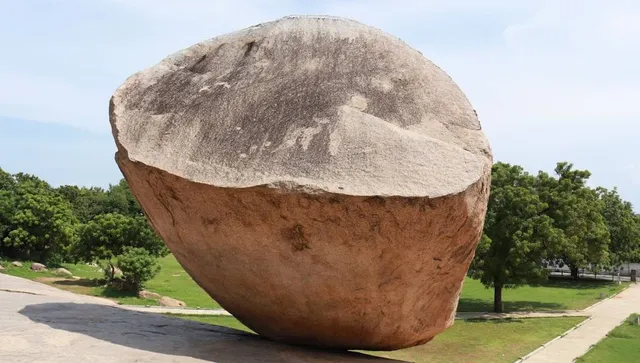
The rathas (monolithic temples): The monolithic temples are locally called “ratha” (chariot), as they resemble the processional chariots of a temple. These five monolithic temples are each hewn out of a huge boulder. They display the full form and features of the contemporary temple form and show variations both in ground plan and elevation. They are richly carved with artistic motifs and wall panels depicting many Hindu divinities and royal portraits.
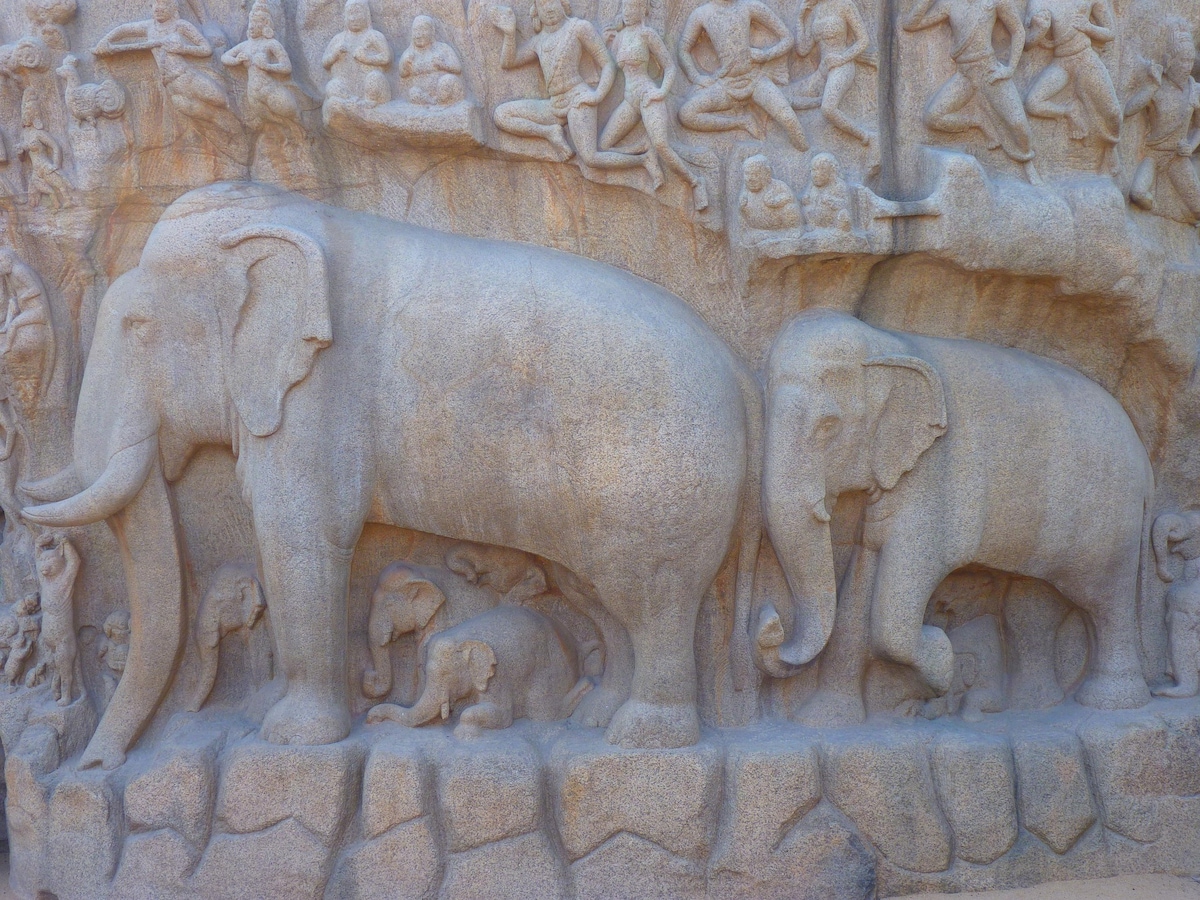
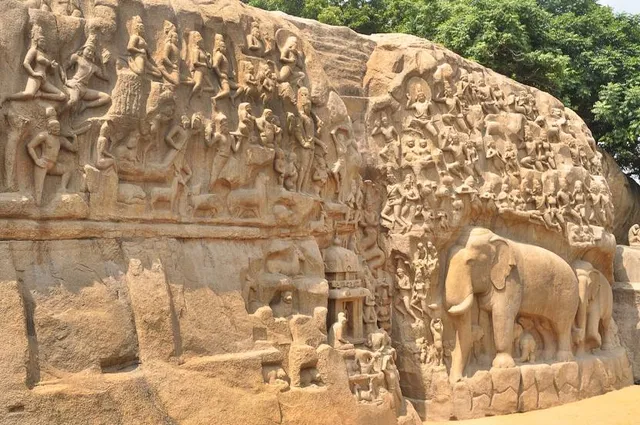
The rock reliefs: The sculptural bas reliefs are another very important class of masterly creations created during Mamalla’s reign. There are four such reliefs at Mamallapuram, the most noteworthy among them being the Arjuna’s Penance and Govardhanadhari.
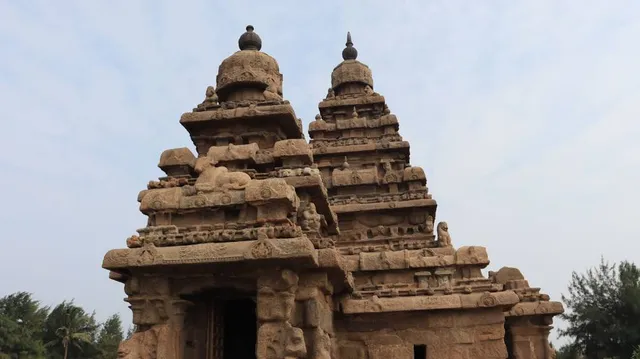
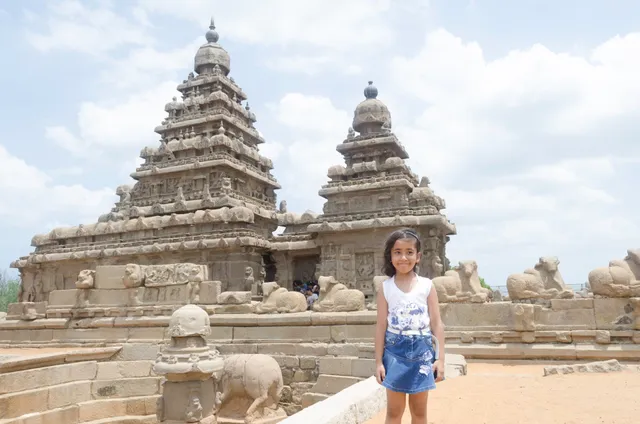
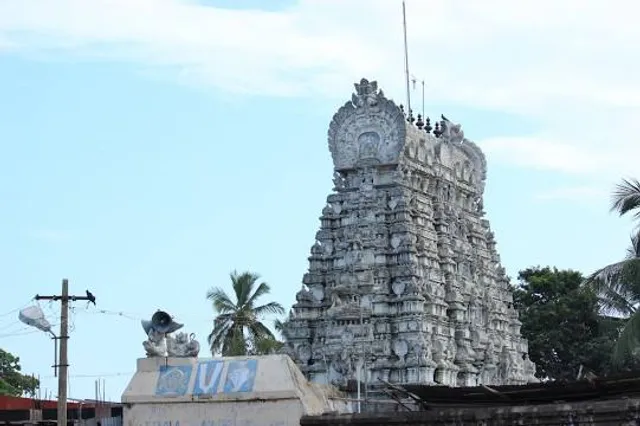
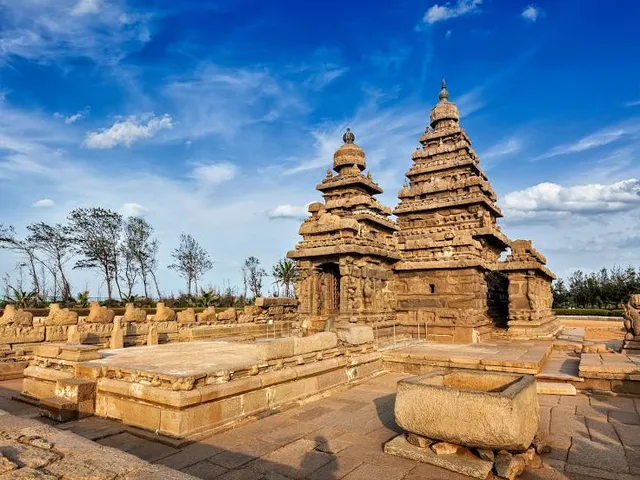
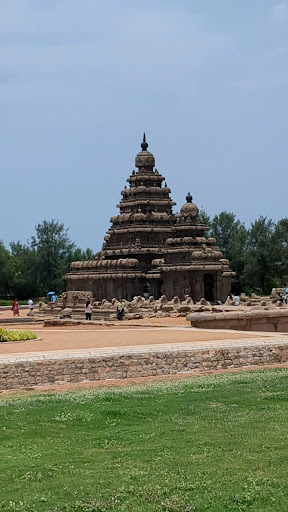
The temples: King Rajasimha introduced structural architecture on a grand scale. The earliest and most modest is the Mukundanayananar temple, followed by the Olakkanesvara temple, perched on a rock near the lighthouse. The tempo of structural edifices culminated in the creation of the famous Shore temple, having the most finite layout of a Dravida vimana, majestically fringing the sea.
The excavated remains: Sustained removal of the sand over a period of time has brought to light several buried structures around the Shore temple. Unique among them is a stepped structure, a miniature shrine, a Bhuvaraha image, a reclining image of Vishnu, and a well from Pallava King Narasimhavarman Rajasimha’s reign (638-660 CE), all of which are carved in the live bedrock. Remains of additional temples have recently been excavated, including one to the south of the...
Read moreThe Group of Monuments at Mahabalipuram, a UNESCO World Heritage Site, is one of India's most captivating historical and architectural treasures. Located on the Coromandel Coast of Tamil Nadu, it offers a fascinating glimpse into ancient Indian craftsmanship and religious art, especially from the Pallava dynasty.
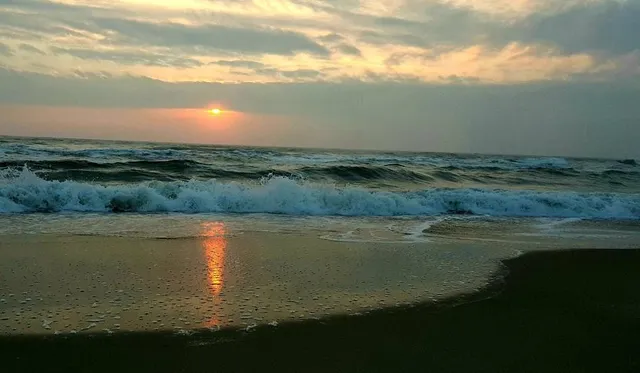
Key Highlights: Shore Temple: An iconic structure, the Shore Temple sits majestically by the sea, with intricate carvings and a serene atmosphere. The setting sun casts a beautiful golden light on the temple, enhancing its beauty. Pancha Rathas (Five Rathas): These monolithic rock temples are shaped like chariots, with exquisite bas-relief carvings. Each ratha is dedicated to a different deity, and the unique architectural style makes them a must-see. Arjuna’s Penance (Descent of the Ganges): A massive bas-relief sculpture that narrates the story of Arjuna's penance and the descent of the Ganges River. It’s one of the most impressive rock carvings in India, depicting gods, demons, and animals in intricate detail. Cave Temples: The cave temples, including those dedicated to Vishnu and Shiva, are carved into the rock with sculptures and inscriptions that showcase ancient religious practices and art. The Experience at 5:30 PM: Visiting the Group of Monuments around 5:30 PM offers a wonderful opportunity to enjoy the scenery and the evening light. As the sun begins to set, the monuments take on a warm, golden hue, making the carvings and sculptures even more enchanting. The breeze from the nearby ocean adds a refreshing touch, and the lower evening light provides the perfect conditions for photography. The crowds tend to thin out as the day progresses, allowing for a more tranquil experience of the site.
The atmosphere during this time is ideal for soaking in the beauty and serenity of Mahabalipuram. The soft evening light and cooler temperatures create an unforgettable ambiance, especially as the monuments become silhouetted against the setting sun.
Tips for Visitors: Timing: Arriving around 5:30 PM allows you to enjoy the monuments during the golden hour, which enhances the scenic beauty and the overall experience. Photography: The evening light is perfect for photography, so be sure to bring a camera to capture the stunning architecture and landscapes. Wear Comfortable Footwear: The site involves walking and exploring, so comfortable shoes are a must. Sunset Views: Don’t miss the sunset by the Shore Temple, as it offers one of the best views at the site. In conclusion, visiting the Group of Monuments at Mahabalipuram in the late afternoon, especially around 5:30 PM, provides a magical experience, combining the rich history and architectural marvels with the beauty of the evening light and the peaceful...
Read more